Long’s Peak and a Little Bit of Karma

Lily Lake, Rocky Mountain National Park

Flush with our success on Twin Sisters, we decided that our final day before the Longs Peak push should be easy. We were to meet our guide that afternoon, pack up, and generally do all the things you need to do before a four day backpacking trip – like laundry.

Hence, we started our day with a gentle couple of miles walk around Lily Lake, which is at the base of Twin Sisters and shares the same parking lot.

But the best laid plans and all that. After completing the circuit it became clear that M had a knee injury, probably exacerbated on Twin Sisters, that simply wasn’t going to permit her to do the Keyhole Route. After batting about various options, ultimately her sister, who was in dire need of her own vacation from the pandemic, was able to fly out from the west coast. S also managed to wangle the only free hotel room in Estes Park over the July 4th weekend. So while we missed having our full foursome for Long’s Peak, at least karma kicked in and a good time could be had by all. Just another life lesson – roll with the punches. I’ve never been quite sure what that means but it seems apropos here.

Late in the afternoon we met our guide in the parking lot of the gear store. It turned out we were also getting a trainee guide, who was extremely experienced in her own right (e.g., such things as living in the wilds building trails for six months). So with a ratio of 2 guides to 3 hikers we thought we should be well set.

However, in yet another one of those moments to test your flexibility, our guide, T, informed us that there was still significant snow in the Trough section of the route, and the rangers were warning folks not to try to summit without crampons and ice axes, which we did not have. We had always known this was a possibility as we were early in the season, but still….anyway, the ultimate decision was that we would simply go as far as was safe.

The next day dawned, and about 8 am a large van rolled up, piled with food, tent parts, sleeping bags, bear cans, and various and sundry other items to be crammed into our already full packs. We were mostly using the trekking company’s gear, on the theory that was easier than lugging it from Florida.

The night before J, S, and I had already eliminated about half of what we had planned to take, once we saw the size of our packs. Mine was 70 liters, J and S were both carrying 90 liters. Did I really need two pairs of hiking pants? No. How about that extra shirt? Absolutely not.

T left us to our own devices to begin to stuff the packs. She quickly realized that while J and I may have climbed a lot of mountains, our trips have typically been supported, and animals or other people help carry stuff on these very long treks. This became very evident when J managed to explode his water bladder while it was in his pack before we had even left the Airbnb. It was a good thing we had a dryer.

By the way, I had always wondered what a bear can was. For those of you with a similar lack of knowledge – it is a large plastic barrel with a locking top that should be left about 100 feet or so from a campsite. In it goes food and anything with a scent, even toothpaste. Bears are apparently not very discriminating.

Still fresh at the start!

Packs finally packed at weights of 35 pounds, 43 pounds, and 47 pounds, we were underway. Once at the trailhead the first destination was a couple of miles to Goblins Forest campsite, elevation 10,120 feet. It was slow going with our first day of heavy pack carrying; we went up, up, up the pine and fir lined trail and suddenly were at camp. We were the only campers there – well, except for the mosquitoes.

After setting up camp, the plan was to hike, sans packs, to Chasm Lake. We would be hiking that same route the next day, only with our big packs. There were multiple boulders to pick your way through and over, extremely high steps, and I spent a lot of time imagining what this was going to be like with an extra 35 pounds and an additional couple of miles to go. Daunting, to say the least.
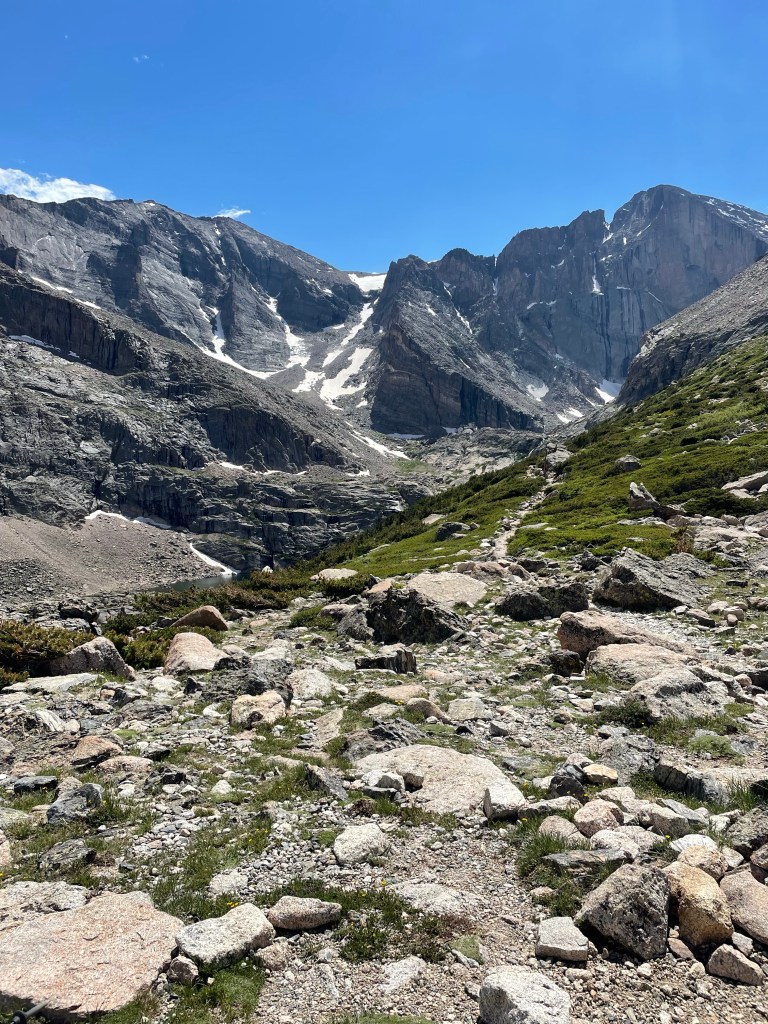
This was an easy part of the trail

We didn’t make it quite to Chasm Lake but turned around after a respectable distance, at about 11,000 feet. Dinner that night was a chicken curry. We, and the mosquitoes, all settled in. We knew the next day was going to be five or so miles, at altitude, with weight, on our way to Boulderfields, elevation 12,760.

My journal entry ends with the cryptic note – “I’m feeling the altitude more than I usually do.” More to come.

S at Goblins Forest

Colorado – Up, Up, and Away in Estes Park

On the road

After the angst of packing and extracting ourselves from work, we were finally on our way to the Rockies. Despite all the horror stories of Uber unavailability and cost, we obtained one with no issue and made it to the airport with time to spare. In fact, we were there ahead of M and S, which is an unusual circumstance, to say the least.

We had a relatively uneventful flight to Denver, which is always a good thing. The airport entry into Denver is surprisingly industrial, and looks more like Elizabeth City, New Jersey in the ‘80s than a gateway to the Rockies (no offense meant toward New Jersey). It’s not helped by the massive interstate construction project that has created a literal bombscape for much of the way.

But very shortly the cloudscapes of mountains start to appear in the distance. We took a toll-free route that led us right through Boulder (I kept thinking of Mork and Mindy), where we had a nice lunch of ceviche tostados at Wahoos. Not sure why I opted for a salad with tofu.

It wasn’t too far from Boulder to Estes Park, at elevation 7522’. The directions to our Airbnb were confusing, to say the least, but after many twists and turns, largely centered around looking for the Bank of Estes – which was the main landmark – we found our way to a very nice small house, just a short walk to town, with mountain views and a great night vista of the illuminated Stanley Hotel.

Estes Park itself is populated by throngs of tourists of all shapes and sizes, small restaurants, and an extraordinary number of candy shops (indulgence in which did not seem like a good idea as a precursor to Longs Peak). There’s a lovely river walk that goes along the banks of the Big Thompson and Fall Rivers, and ultimately we ended up at a pizza place just off the river for dinner. The pizza offered some truly unusual toppings. I treated myself to smoked trout, capers, and cream cheese, while S experienced a little bit of Hawaii with pineapple and red sauce. J and M had something more conventional.

The next day it was time to start some acclimatization hiking in preparation for the Keyhole Route. S had picked out the Twin Sisters trail, which reaches just over 11,000 feet with about 2475’ of elevation gain. Rocky Mountain National Park has timed reserved entries from 9 to 3, so it’s key to get there early – and that’s a necessity for Colorado weather anyway – as you’ll see.

We hiked up a dirt road from the parking area to the trail head. The beautifully maintained trail starts in tall Colorado pines and firs, with a sprinkling of wildflowers. Each uphill stretch was met with a period of relatively flat recovery, a far cry from the straight up treks in the Balkans.

We finally broke through the tree line and the terrain turned rocky, but it was still easy to pick our way through the boulders. Walking through clouds we reached the saddle between the two small summit peaks that were a few feet higher and just a short scramble. But we decided the saddle was summit enough as we started to hear the first claps of thunder.

Being good Floridians and heeding the warnings about exposure and lightning we decided it was time to go down. We were a little concerned about the youth group that we encountered close to the top. They’d broken up into several dispersed groups and the last we saw of them the youngest seemed to be scrambling to the summit as the rain started. Apparently they didn’t take to heart our admonitions that they might want to think about starting down.

Just as we approached the tree line, the real rain started. We managed to get our raincoats on but not our rainpants. Soon the rain turned to pellets of hail, which was to become a weather theme for our trip, although we didn’t know it then. It turns out hail really hurts when it starts to hit your face and hands.

J and I moved fast through three different sessions of hail, all the way to the bottom where, naturally, the sun was now emerging from the clouds. M and S were slightly ahead and we were all soaked. Fortunately the house had good laundry equipment which we took full advantage of.

We had a late lunch at a very informal spot called The Local. I tried the elk stew, which seems to be a specialty of the area. It was good, but frankly anything would have tasted good by then.

We managed to relax in the afternoon as more rain poured down, and did some additional gear shopping (which seems to be an integral part of such trips). I scored a great $13 long sleeved hiking shirt. It helps when you can fit into a boys large.

Despite large lunches we forced ourselves to choke down a good dinner at Claire’s, a nice restaurant where we could sit at the bar without a wait. We had read that Twin Sisters was a great training hike for Longs Peak, and were pretty pleased with our prowess. We were all feeling very ready to go. Were we?

Long’s Peak Loop, Colorado – Here We Come!

I’ve been promising an announcement – and here it is – Long’s Peak in Rocky Mountain National Park is to be this summer’s adventure!

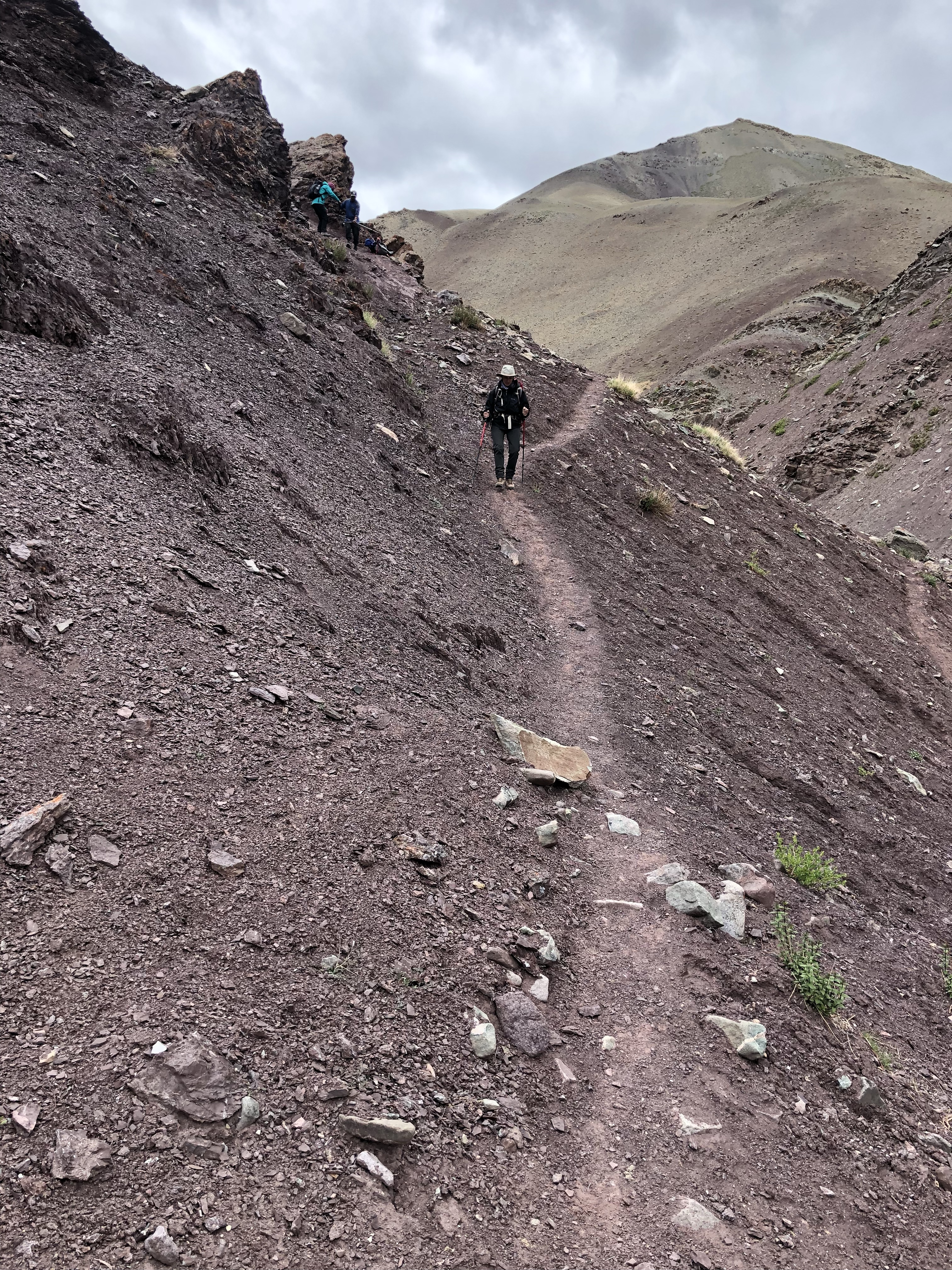
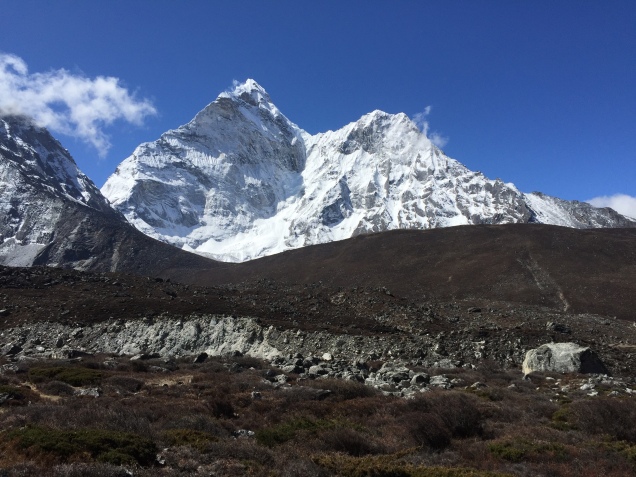
This is Ladakh, India but I couldn’t find a free Longs Peak photo to use!

When J and I began mountain climbing and trekking in 2011, we saw no point in starting with something small. So Kilimanjaro, at over 19,000 feet and the highest mountain in Africa, was our poison of choice. We’ve never been to Colorado or climbed a 14-er either – so why not start with one of the most difficult – Long’s Peak via the Keyhole route!

While not the tallest of the so-called 14-ers, at 14,254 feet this summit presents a number of segments of class 3 scrambling. The trail is broken up into sections, each labeled with forbidding names such as the Boulder Field, Ledges, Narrows, the Trough, and the Home Stretch.

J and I have watched any number of YouTube videos, many of which are taken with GoPros and whose goal appears to be to strike terror in the eye of the beholder. My favorite is an 8 minute long one, where the climber repeats at least three times, “it’s not really as bad as the GoPro video makes it out to be.”

While this plan may be slightly insane, we are not so insane as to try this on our own without a guide. We are returning to Wildland Trekking – the company we used for an absolutely perfect trek down the Grand Canyon back in 2013 – see fromswamptosummit.com/2017/02/20/journey-through-time-in-and-about-the-grand-canyon-part-2/

And intrepid hikers M and S will be accompanying us on this latest adventure. Last Saturday after an urban hike we all sat in the porch trying to get our heads around the amount of exposure on this hike – no easy feat when you are looking out at an ever so gentle slope down to a lake and only Florida flatlands beyond.

But where there is will there are ways, and yesterday’s foray to Blue Swan Boulders was the start of a new aspect of training designed to get us to the top. Aside from climbing a rock wall on a cruise ship (remember those?) many moons ago, neither J nor I has ever done any indoor climbing. An indoor bouldering gym consists of multiple walls at various inclines reaching up 15 or 20 feet or so, ornamented with hand and foot holds color coded by level of difficulty. There are no ropes – and you spend a lot of time practicing how to fall.

Only drew blood a couple of times.

Although we were clearly the oldest people there we loved it! Talk about a mindfulness practice – as you swing your center of gravity toward that next handhold while reaching with your foot – not much else you can think about. On day 1 we limited ourselves to yellow and beginning green routes – and may not advance much further – but mastering those should translate well for Long’s Peak scrambling.

We ended up with a few scrapes and are pretty sore today but plan to return on Monday. And the craft beer we rewarded ourselves with at the Ivanhoe Park Brewery afterwards was pretty good too!

Ivanhoe Park Brewing Company

Need a Summit – Acotango?

When last FromSwampToSummit wrote she was wandering through downtown Orlando, contemplating the eerie emptiness of the heretofore bustling streets and plazas. But after her husband questioned the sanity of continuing to go into the office each day, even by foot, the interests of marital harmony (especially under lockdown) took precedence over the walk to work every day goal. So those excursions have been circumscribed to once a week.

But what, you ask, does this have to do with Acotango, a potentially active volcano of over 19,000 feet located in Bolivia? (Photo of Acotango By Gerard Prins – Own work, CC BY-SA 3.0, https://commons.wikimedia.org/w/index.) Well, it turns out that it is very difficult to try to stay in shape without some goal ahead. The sheer pleasure of being in shape somehow isn’t enough to put up with the pain. And yes, Katahdin in Maine lies ahead in July, and presuming we can travel by then, I am sure will present a challenge – but somehow, not enough to keep these now 59 year old legs pumping.

Acclimatizing outside Leh, Ladakh, India 2018

Spur of the moment last weekend we picked up the phone and called our adventure companion S in Alaska, of Stok Kangri and Mt. Elbrus fame. See, among others, The Peak – Summit of Stok Kangri, India. He too is looking for that next expedition and between the three of us we have cobbled together the start of a plan.

Based on J’s research, it looks as though a trip through the salt flats of Bolivia and the world’s highest desert, capped by a non technical climb of Acotango could be in order. The landscape is dry and otherworldly – odd rock formations. And Acotango itself may still have life – apparently it erupted 10,000 years ago, which is recent in volcanic terms. So there’s still life in those old bones.

What better way to celebrate my 60th birthday next year and the 10th anniversary of our climbing career! Let the training begin.

Stones in My Pockets – Summits Sustained

Glacial beds on Stok Kangri Trek

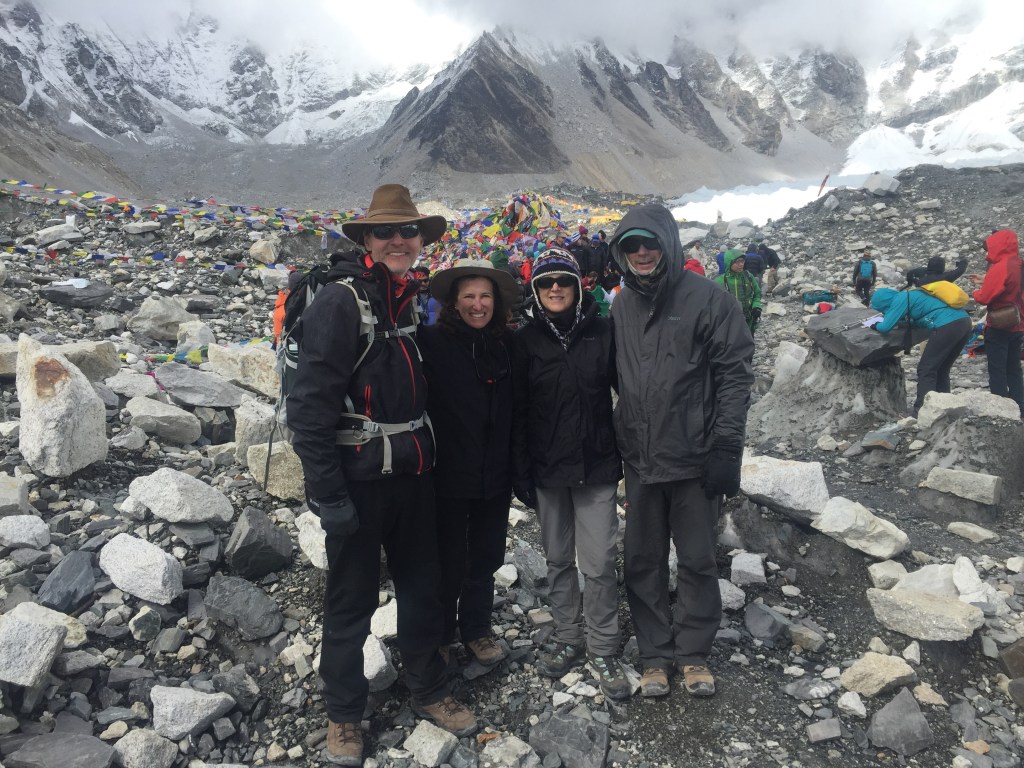
I will confess. I have a stone in my coat pocket, purloined from some exotic spot, I know not where. It could be from Ladakh, India on the way to Stok Kangri. Or I might have surreptitiously slipped it into my pocket on the trek to Everest Base Camp. Perhaps it dates even further back, to the more domestic but no less adventurous White Mountains of New Hampshire.

Everest Base Camp

Whatever its origin, I get enormous pleasure from touching its rough edges, rolling it between my fingers. The rock of unknown ancestry is the descendant of the lucky pecan I kept in my coat pocket for years. My lucky pecan was picked up on Minerva Avenue (what a name of a street to grow up on) and resided in my old Michael Kors jacket – bought at a Tuesday Morning, no less – until the sad day that said jacket disappeared, I think in California. I believe I was as upset about the loss of the lucky pecan as I was by the loss of the jacket. By then the pecan had grown smooth as silk from my rolling it around in my hand as I walked, like an organic worry stone. And I figured if I were ever stranded on a desert island perhaps I could eat it and survive, or plant it as a sign of hope for the future. Although admittedly, the latter probably wouldn’t improve my chances of survival.

But regardless, those talismans in my coat pockets make something concrete out of the virtual world in which we live. Our lives are comprised now of internet virtuality even more ethereal than the wispy clouds you zoom through when taking off in an airplane. There’s nothing to touch, and the world becomes like a memory.

One of my yoga teachers brought small polished stones to class the other day, for people to hold as they chose in class. I guess the same concept as my purloined rock. It makes those past summits real, just like the lucky pecan anchored where I grew up. And this small rock is now inspiring me to return to the stairs, backpack and all, to get ready to climb Mt. Katahdin in Maine.

Balancing – Green Belt, Austin

Whatever its source,

Between the Summits in the U.S.A.

Point Lobos, California, 2019

People keep asking me, “What’s the next one?” The reality is that we are in a between year. Trying not to make it sound like the doldrums (what a great word), but when I looked at my schedule for next year, I simply can’t find a spot for a two week trip plus weekends on either side. I am usually able to preserve that period of respite but this year’s judicial system apparently had other ideas in mind. Hmm.

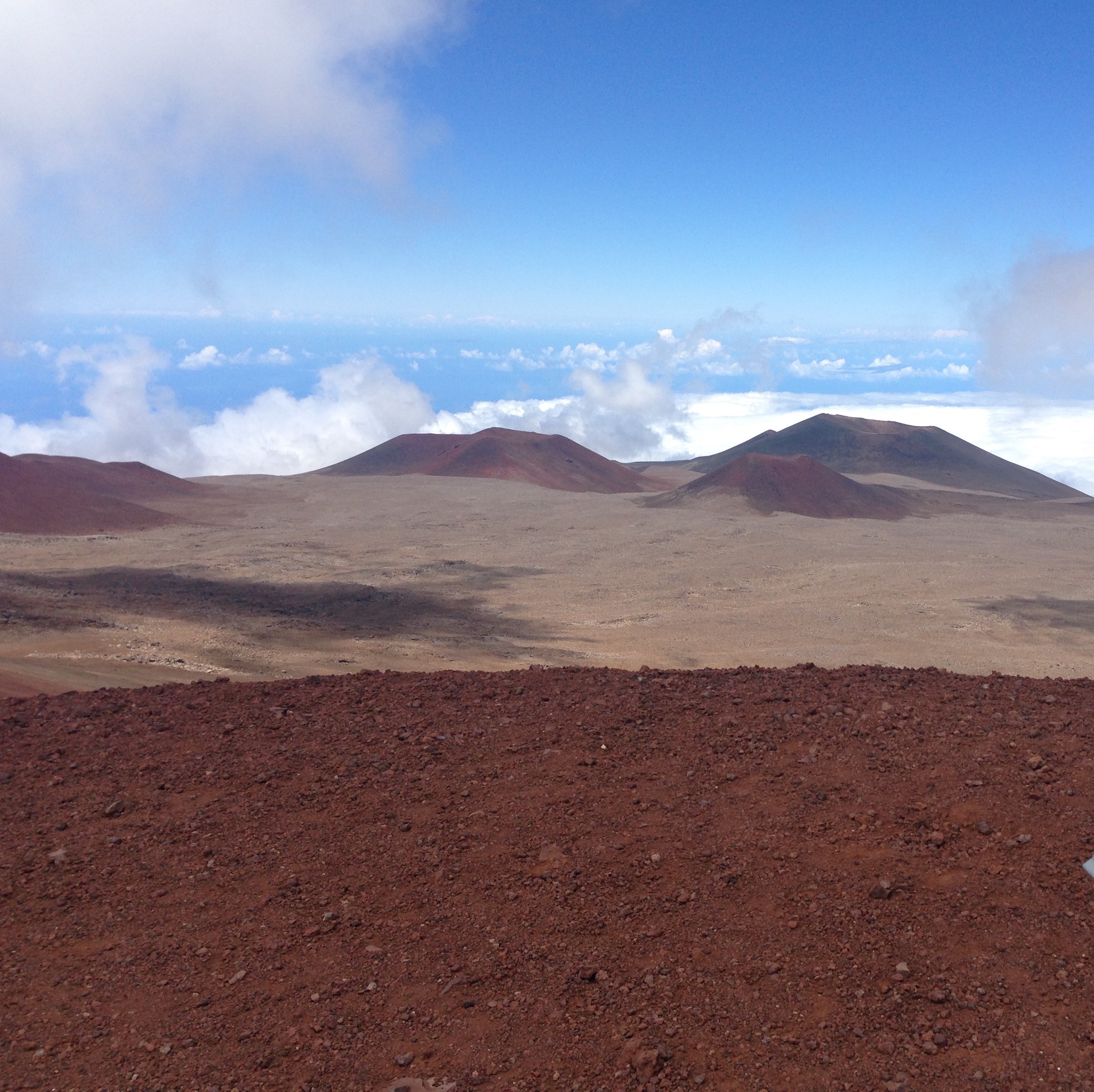
Mauna Kea, Hawaii, 2013

We haven’t had a between year for a while. In fact, I think since 2013 which somewhat inadvertently turned into one due to a virulent flu attack on J as we were about to embark on our Hawaii backpacking trip. Since then, we’ve climbed Elbrus, Ecuador’s volcanoes, hiked the Scottish Highlands and the Peaks of the Balkans, and summited Stok Kangri at all of its over 20,000 foot splendor.

Our home at Mt. Elbrus, Russia, 2014

So what will 2020 hold? The year itself – with its parallel numbers – must mean something. Thus far, the idea is a throwback – a week at the North Carolina beach with family and friends. Haven’t done that for years. And hopefully the daughters are now old enough to avoid sea kayaking accidents like the one many years ago that caused me to call 911 to everyone’s great embarrassment since they’d hauled themselves out of the ocean by the time the rescue team arrived. I suspect we are still black listed at the sea kayak rental place.

But as fun as that will be, there have to be some actual summits somewhere. It looks like work will take me to Seattle over spring break – and there appear to be some nearby hikes with a good 3500-4000 feet of elevation gain. And N, A’s boyfriend, has suggested we hike the northern part of the Appalachian Trail and summit Mt. Katahdin. It’s the highest mountain in Maine and he promises he knows the way to reach its 5,267 foot peak.

That sounds appealing. Given that the odds of our hiking the entire AT are probably close to nil we might as well cross the finish line first.

So, I may wrap the decade of my 50s with local summits. They are just as important as the others. But 2021 marks the 10th anniversary of the start of all my mountaineering and related adventures. Entertaining suggestions for another non (or at least mostly non) technical, over 20,000 foot mountain for my 60th birthday next year! Got to keep looking toward the future!

A and N looking toward the future from Mt. Washington, New Hampshire

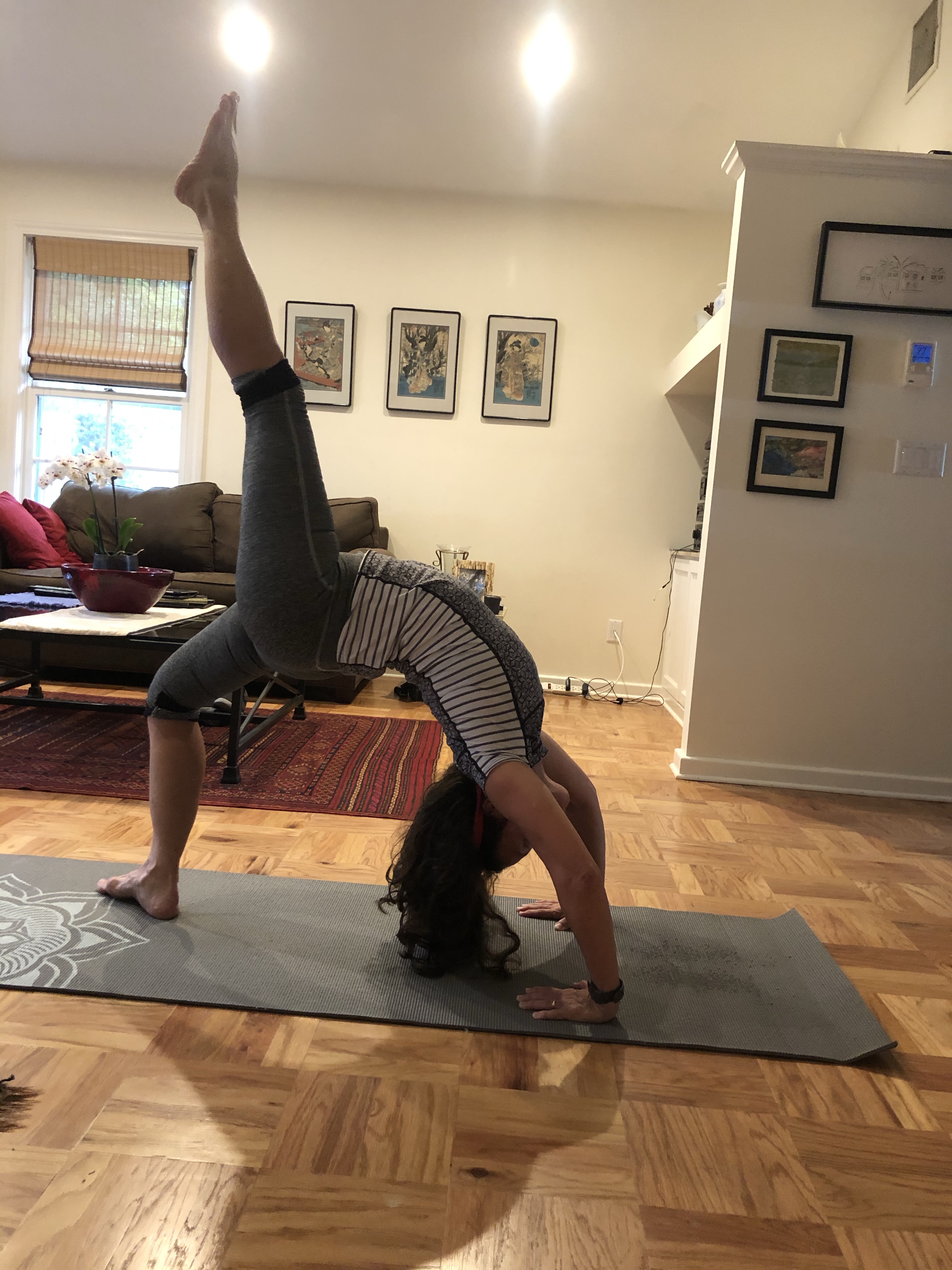
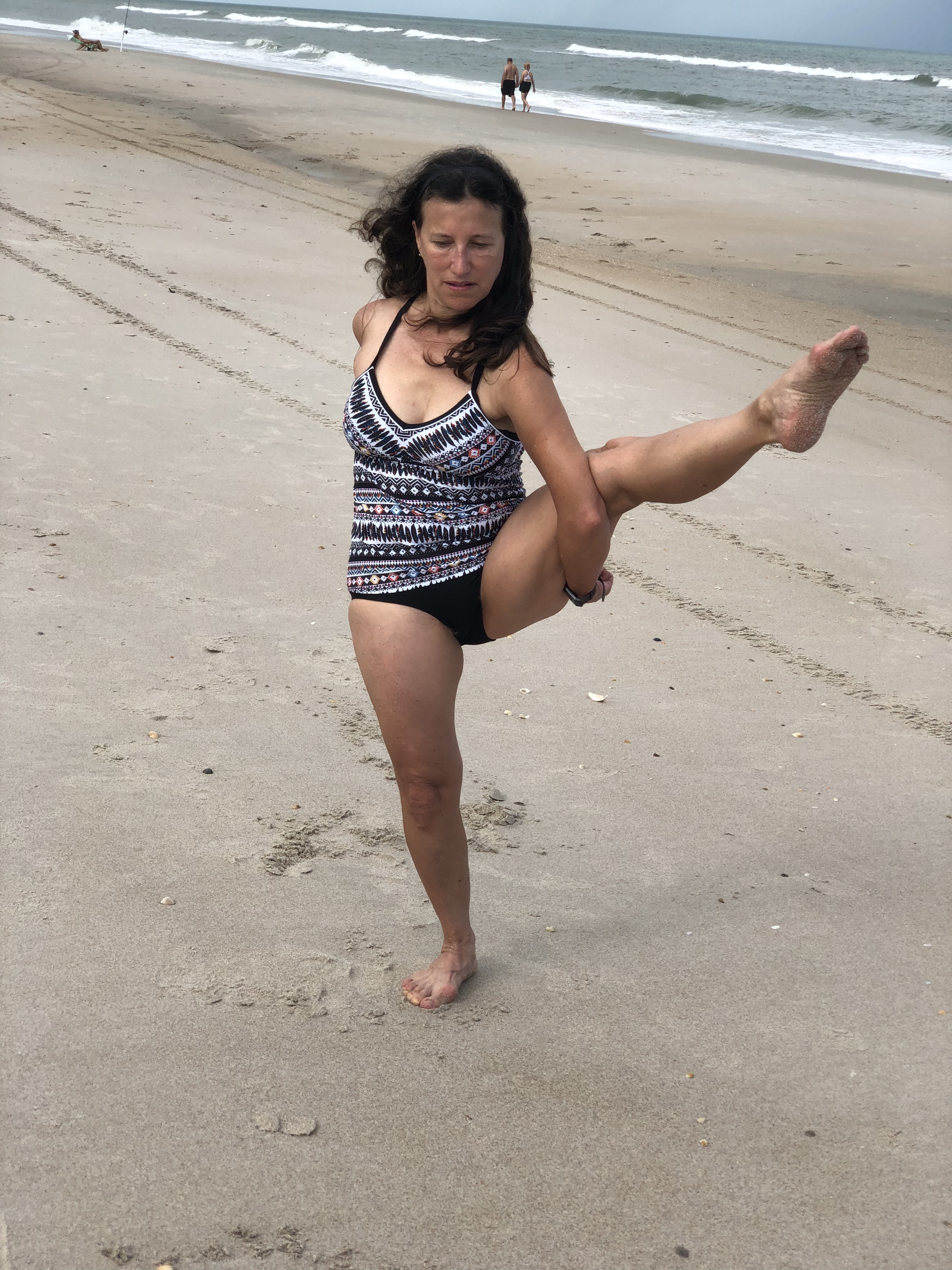
My Yoga Summits

Yoga. It’s been an underlying theme to this blog since the early days. In fact, I’ve tried to honor my practice by doing at least a few asanas on mountains and trails through all of our adventures – from the steep treks in Nepal to India to rocky riverbed hikes in Austin, Texas.

Over the last couple of weeks of silence on the blog – I promise I really haven’t been binge watching TV (well, I did finish Succession) – I have been spending at least a little time honing my thoughts on the topic.

I started practicing regularly at the Y back in the early 2000s, when my daughters were old enough that I felt I could take two hours respite from motherly, lawyerly, chief cook and bottlewasher duties on Sunday afternoons. I still remember my first yoga class. I positioned myself in the back row of the 30 or so yogis – that was pre the construction of the Y’s yoga studio and we practiced in the “Fitnasium,” a fancy word for a small gym. You could line yourself up with the various floor markings. My yoga teacher at that class remained my Sunday afternoon yoga teacher for almost 20 years until she recently stepped down. And I’ve been practicing with the guy next to me now for an equivalent length of time. He’s ten or so years older than I and I’m now older than he was when we first met.

There’s a community that forms in a regular yoga practice. Wednesdays and Sundays are my days of choice. While people come and go there been a regular core of us over the years. I refer to them as my yoga buddies. There’s something to be said for the sharing that goes on as you contort yourself into the next pretzel like position. And before or after class we can complain about our latest ache or pain or the state of the world in general. It’s those little interactions that build connection (karma?) that can carry you through your week and up your next summit.

Teachers – and I’ve been blessed with great ones – can add to the practice, but they really are guides, not yoga maestros. It’s the combination of energy and eventual calm of those in class that creates the yogic environment.

How, you may ask, does this relate to summits? Well, aside from the obvious physical benefits – clambering up rock frequently require flexibility – there’s a mindset that goes with you. It’s a degree of determination that you can in fact hold that posture for a few seconds beyond what you thought. It’s a focus on that next step in front of you instead of obsessing about whether there’s a fake summit a few hundred (but oh so long and steep) meters away. It’s keeping an intention in your mind, body, spirit that propels you upward. It works for work, too.

My Wednesday night yoga class is the one that lets me know I really can get through the rest of the week. My Sunday one brings the calm that lets me start a new one. Both summits, of a sort. Namaste.

Slow and Steady – Turtlehead Peak, Red Rock

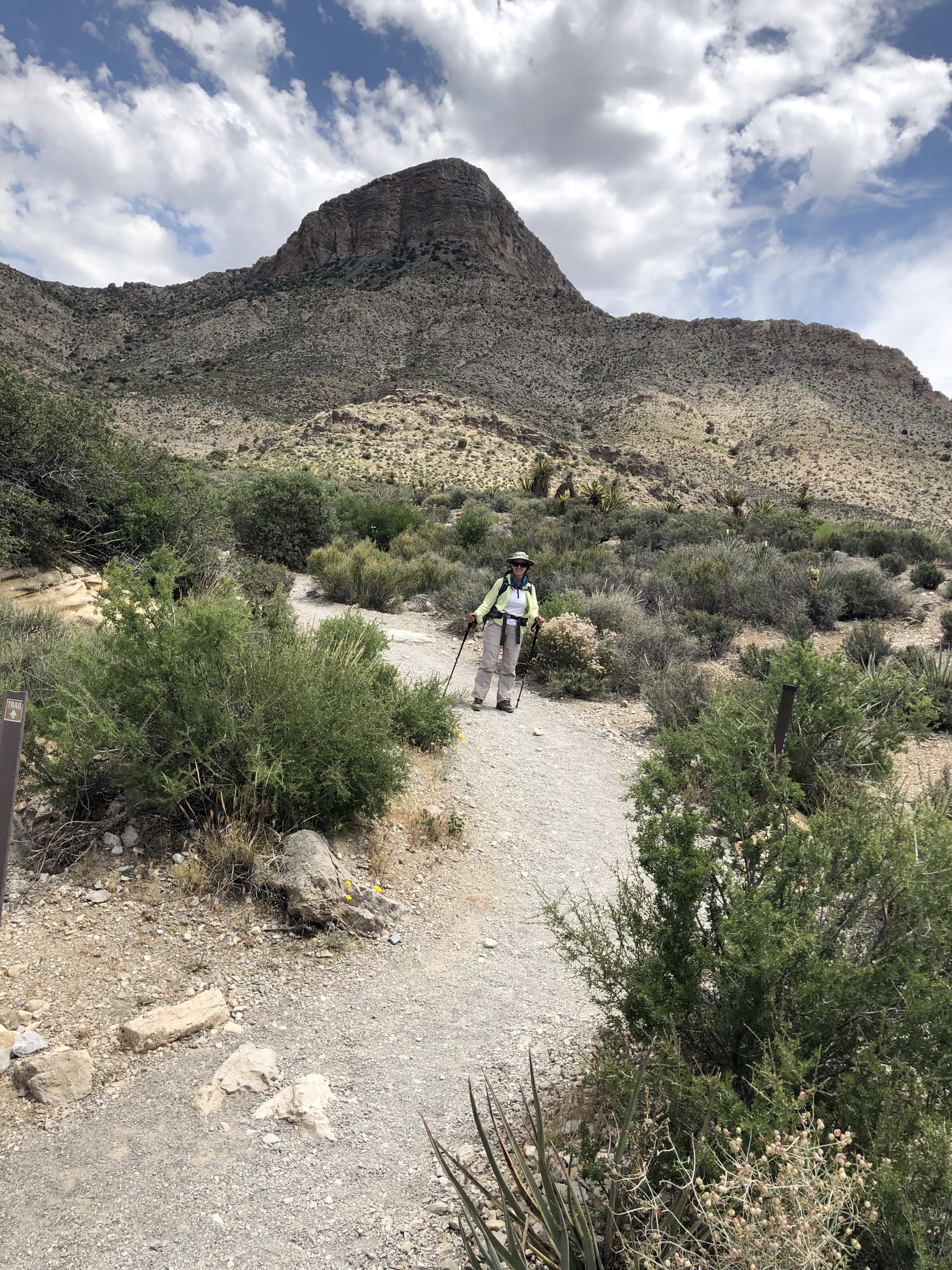
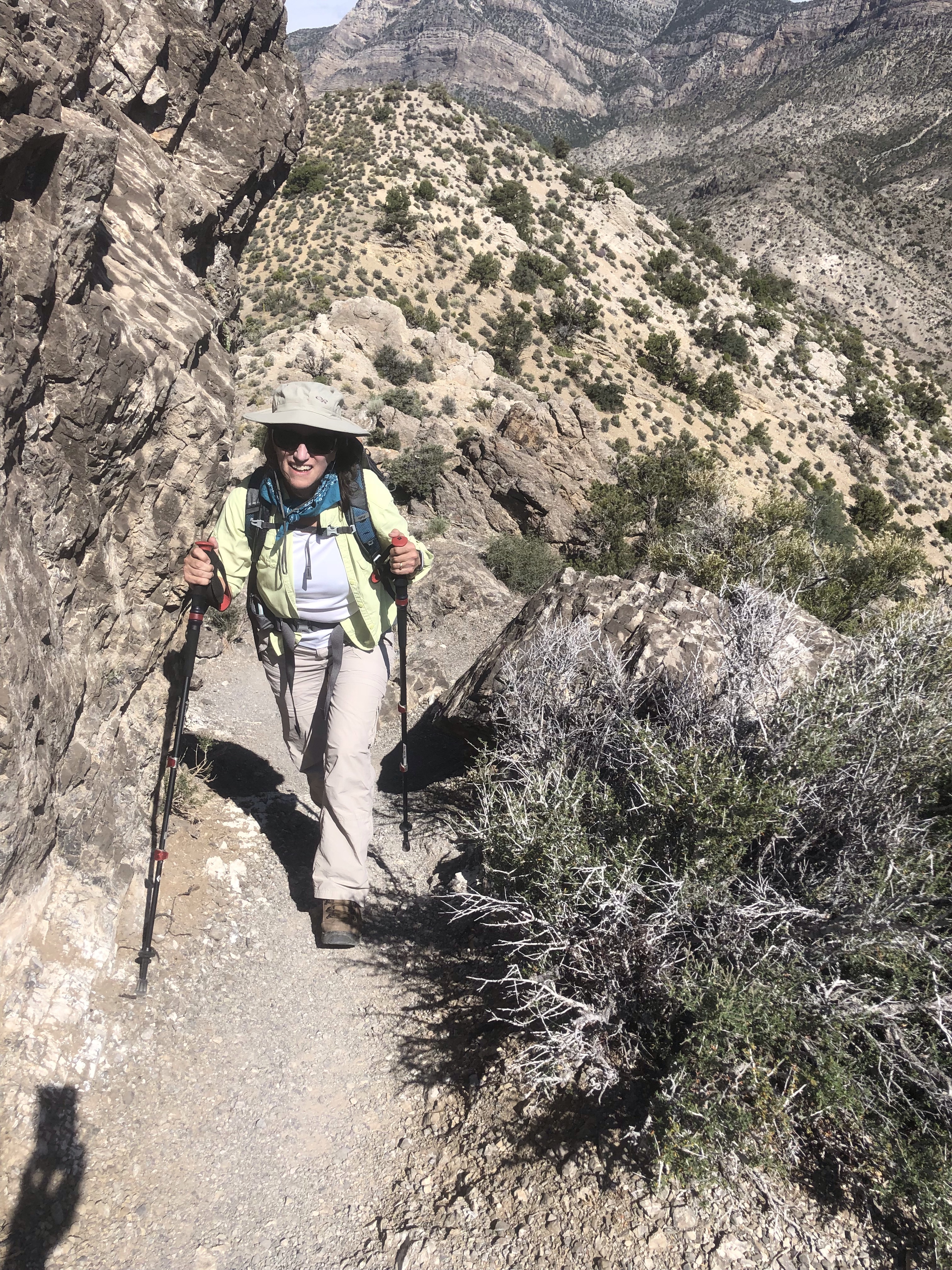
Three bruises, a blister, and a pair of ripped hiking pants.  But they were all worth it for the views at the top of Turtlehead Peak.  After an amazing dinner at what must be the only calm casino environment in Las Vegas (if not the world) — Sage at Aria — we were up at literally the crack of dawn to start our adventure in Red Rock Canyon.

I had my share of trepidation about this one.  I knew it was 2000 feet of altitude gain in 2 miles, 800 of which were in .4 miles.  Sounded steep, and it has been a full year since I’ve  managed to climb anything other than stairs.  And this was compounded by the fact that I managed to do quite a number on my feet on my last ten-miler and am paying the price of some badly treated blisters.  I was triply concerned when I exited our one-day rental car to start the hike  and realized I was limping!

But the adrenaline of being in the mountains kicked in and soon we were trotting along at a pretty decent pace.  The trail starts at an old stone quarry with monster chunks of limestone on either side.  From there, it gradually rises up.  Well, gradual for a while.

I was expecting a brown, dry, barren landscape.  But that’s not what we found.  A surprising number of low growing green shrubs flanked the trail, but even more remarkably, a ton of flowers – pinks, lavender, some bright yellows, and every now and then a brilliant red, sprouted up all around.  And interesting shapes, too.  Some dripping like crystals in chandeliers, others swollen seed pods, some wispy and feathery.

Turtlehead Peak is famous for its vanishing trail on the way up.  In fact, calling it a trail may be an exaggeration.  Once we got beyond the initial wash, the few trail markers seemed to disappear and we were confronted with a rocky, scree scramble heading toward the ridge. We’d encountered two other intrepid hikers (needless to say, a lot younger than J and me) and they were having an equally difficult time figuring out how to journey from the to the ridge.

I knew we were in trouble when J convinced me to go up and over a bluff – while I was certain the easier route lay below. After all, the lower route is exactly where the other hikers were. Nonetheless, up and over we went, only to be faced with another even steeper section. J, apparently believing left and up was always the right way, pushed on; I, certain a better way lay below, kept going along my own personal trail.  But after a bit – and seeing J well above me and the ridge towering above that – I realized I needed to get onto some semblance of a trail that would carry me on up.

So, with Ossy’s words (Shifting Winds Lead to Cotopaxi Summit) echoing in my ears, I started thinking to myself – right, left, right – just find your next step – and wend your way up the side.  I found myself on a couple of ledges and unstable spots – but shaky legs and all, eventually wound up next to J, with trail markers in sight. I’m pretty sure that little scramble is the source of the arm bruises.

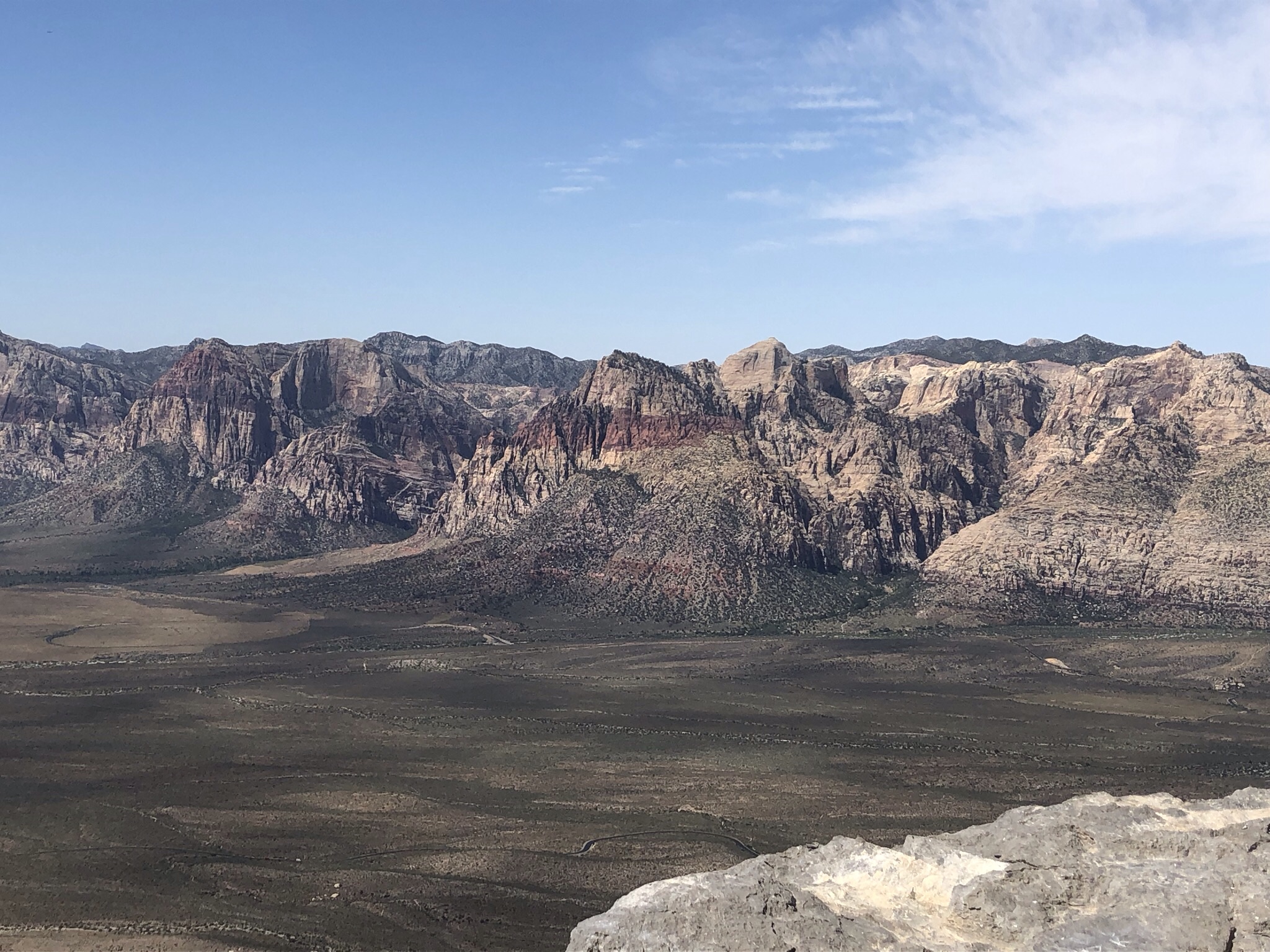
From there, it was simply a steep slog to the summit.  The foliage changed to small scarred trees (sort of like what I remember from the North Carolina coast).  Once we got to the top, and with the elation that even a 6300 foot peak can bring, I totally lost my concentration and managed to stumble on a relatively flat surface. Bruise #3, the leg bruise.

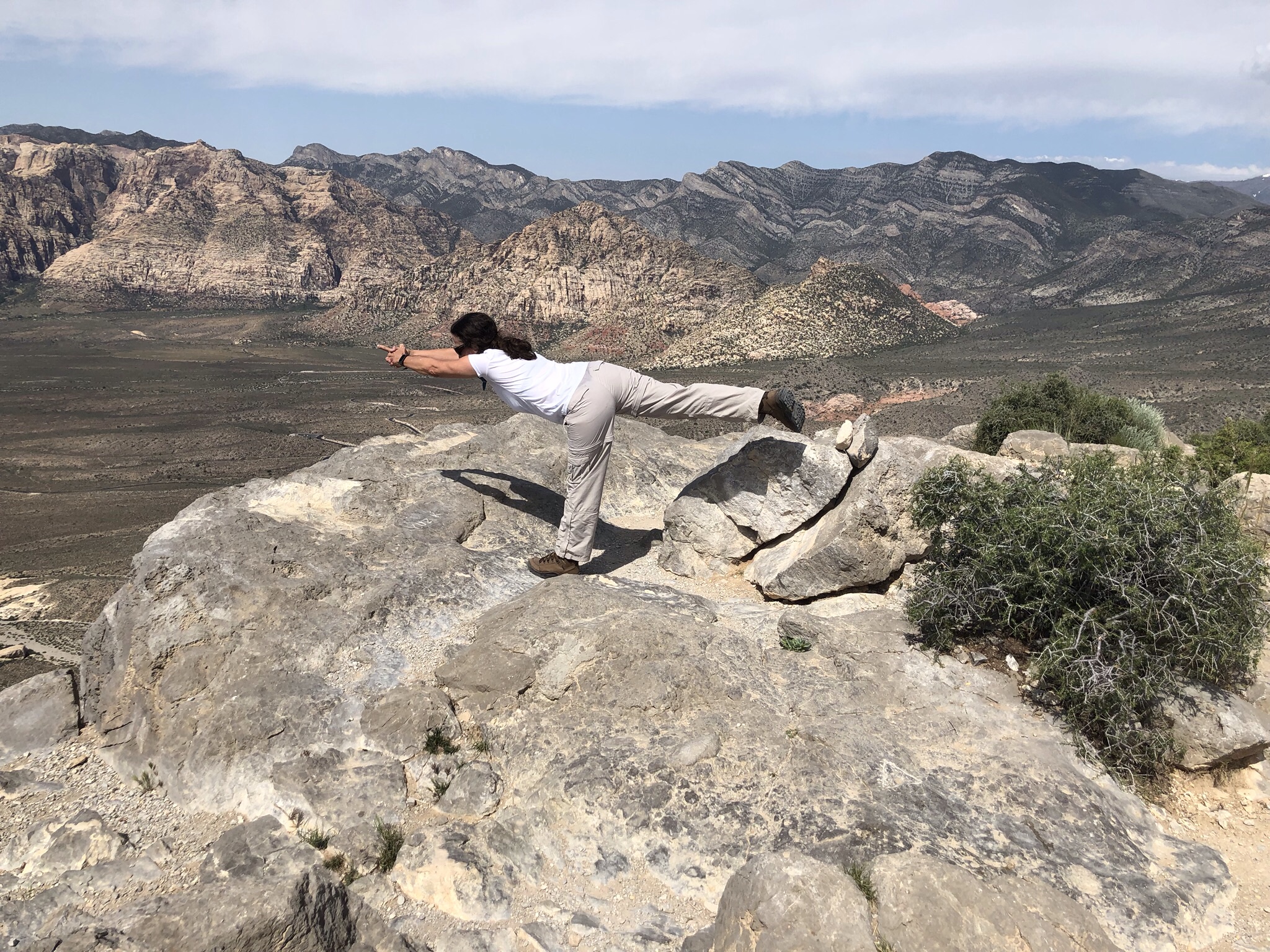
We spent about thirty minutes at the summit, ate our power bars, and took photos of the sculpted peaks surrounding us. A little yoga, of course.

What goes up must come down. Miraculously, we were able to see trail blazes the entire descent – which simply confirmed how far off the trial we (I) was on the way up.  The descent went much faster, but there was the one moment where I realized sitting down and then stepping onto the next rock was the best way down one section – resulting in that unique, not to be replicated – R -I-P – of your hiking pants. I knew it was a risk when I decided on that strategy. Those pants have been with me since Kilimanjaro in 2011, though, so what better way for them to meet their maker.

We hiked back to the parking lot by the sandstone quarry, watching the people who’d decided to try to climb the sandstone cliffs as opposed to hiking on up to Turtlehead Peak. It looked hot and miserable.  In fact, the way down was cooler than the way up, even though it was then close to noon, as the sun had retreated behind the clouds.

After finishing the 13 mile scenic drive through Red Rock Canyon (you have to, because the loop is one way only), we were back in Las Vegas in 40 minutes.  Back to the land of casinos and cards.  A red eye flight to Florida awaited us.  As well as a wedding of the son of dear friends M and S back in the swamp.


The Economics of Adventure Travel

Trekking in Nepal

When people ask about our next adventure, I know the real question they have is…how much does all this cost? I’ve been thinking about answering it for a long time, but perhaps it’s less awkward to do so in a blog post.

The internet is filled with blogs from twenty-somethings who grab their backpacks, buy rail passes, stay at youth hostels, and make their way around the world before embarking on a more sedate life to come, all apparently on the proverbial shoestring.

Backpacks are required – on the Speyside Way

But suppose that you’re well beyond your twenty-somethings, are well established on that more sedate life to come, and are now ready to do all the things that you didn’t do way back then. And while you may have more resources than you did years ago, you don’t want to spend every last bit of your savings on the possibility of making it up a 20,000 foot mountain somewhere — that is, unless you’re planning to retire on top of one.

So here are a few hints as to how we’ve managed over the last eight years to climb Kilimanjaro and go on a safari in Tanzania, climb Mt. Elbrus and visit Moscow, hike the Speyside Way in the Scottish Highlands, trek the Inca Trail in Peru and the Everest Base Camp Trail in Nepal, climb the Ecuadorian and Mexican Volcanoes (ok, we didn’t summit the Mexican one!), and make it to the top of Stok Kangri in India. And how we’re planning to trek through Montenegro, Croatia, Kosovo, and Albania with family and friends this summer.

  • Consider using a U.K. based company. While we have had fantastic experiences with some well-known U.S. companies, the reality is they are more expensive. You’re typically paying for a U.S. guide to be with you at all times, and I’m sure they would argue that there are higher standards of accommodation, safety, etc etc. And while on our beginning climbs we certainly wanted that, as we became marginally more experienced, we felt a lot more confident.
  • Our last few trips have been with three different U.K. companies that utilize English-speaking guides local to the area. They have been great. In Nepal our guide was the son of a gurkha. And in India our guide was a native of Ladakh, the site of Stok Kangri. Nothing could beat making a special trip to Upper Pangboche to celebrate Buddha’s birthday at an ancient monastery with our Nepalese guide.
Monasteries on Buddha Day in Nepal
  • Be flexible about accommodations. You really don’t need a five star hotel everywhere you stay. With the less expensive companies, we’ve typically had a very nice hotel in whatever major city we’ve been in, followed by a mixture of small guesthouses, tea houses (well, that’s all there is on the Everest Base Camp Trail), and this summer’s trip to the Balkans promises whatever are called “home stays.” I think one’s on a farm.
Yak ‘n Yeti Hotel in Kathmandu
Our accommodations in Ladakh
  • Don’t worry about the food. It’s fine. Quite frankly, I haven’t noticed any difference between the food on the more expensive trips than the less expensive. It’s really more a function of what the food is like in that location to begin with. On Mt. Elbrus, you’re stuck with whatever the cook decides to serve to the barrel dwellers that day regardless of who you’re traveling with. Some of the best food we ever had was in India, provided by a head cook and his two sons.
Barrel dining
  • Be willing to fly economy! I’ve travelled for 24 plus straight hours in economy class. On international flights there are free drinks. There are plenty of movies. It’s going to be miserable anyway, so you might as well wallow in misery in economy rather than spend thousands of extra dollars. (Ok, for those of you who are adept at frequent flyer points I do acknowledge there’s probably a better way, but I’ve never been able to make it work.
  • Gear is a one time cost. Admittedly, there’s a certain outlay to begin with, but the more you use it, the cheaper it is! HOWEVER, do not skimp on the cost of 1. hiking boots, 2. backpacks, and 3. hiking poles. You will be sorry if you do.

So how much money are we really talking about? Let’s get down to dollars and cents. Exclusive of international airfare, we paid less than $2500 each for a 12 day trip to India, inclusive of three nights at a hotel in Delhi, four plus nights at a hotel in Leh, domestic flights to and from Delhi, and trekking/camping with a team of 20 horses to lug our stuff around, not to mention a host of guides and cooks. As for Nepal, we paid less than $2500 per person for two weeks, inclusive of all lodging, food, and domestic flights (the famous flight into Lukla on the world’s shortest runway at 11,000 or so feet) for a private trip with J, M, and S, one main guide and two porters, arranged at dates of our convenience. And this summer? Eight days in the Balkans for $1,240 each.

It’s doable, both financially and practically. Don’t let the idea you can’t take two straight weeks off daunt you. I’m a lawyer and I connect via email for all but a few days on these trips, as I find that determining the world hasn’t ended without me actually reduces my stress. In the immortal words of Nike, just do it.

Letting Up the Pressure – Running and Walking Through the Holidays

Mt. Elbrus from the Baksan Valley

I started running in 2014. We had just summited Mt. Elbrus, but I felt I was too slow on the descent and needed to increase my cardio training. True, some of it could have been due to the third degree sunburn I had managed to achieve. But, regardless, we knew there were a number of higher mountains in our future – the Ecuadorian volcanoes were on the burner for 2015 – so the cardio was essential.

Making our way up Cotopaxi

I started slowly; fast I am not. And over the next several years I worked my way from a 5k to a bit over 7 miles. There were times I felt I could have gone further, but I just didn’t. My standard was a 5k on the treadmill Wednesday nights before yoga and a 5 to 6 mile run on Saturday mornings.

But all things change. This past summer we actually achieved our goal of summiting an over 20,000 foot mountain – Stok Kangri in Ladakh, India. My Wednesday yoga class time was moved up to 7 pm, making it practically impossible to get a 5k in between yoga and work. And more importantly, I felt I was getting slower and slower.

For Type As like me that means that Friday nights started to be filled with an existential dread (ok, not quite that bad) of how my run would be the next day. Could I achieve under 12 minute miles consistently? Why didn’t I ever get an under 11 minute like I used to? What’s wrong with me? Can 4 years of aging make a difference? What does this say about my next climbing or trekking expedition? You get the picture.

Then, a few weeks ago, I just stopped. I simply made the conscious decision, somehow justified in my head, that what I really needed to improve was my general walking speed. So I would just become a fast walker.

I started with a very brisk three mile walk to meet a friend for (of all things) a stroll through a “fairy door” exhibition in a nearby park, and realized I could keep my “splits” at 15 minutes per mile or less. After a few sessions of that, I decided to “walk” to the Y before a Saturday yoga class. And as I took off down the road, on what felt like a crisp day, at least to us Floridians, I suddenly realized I wanted to run. So I did. And it felt good to let my legs move freely without obsessing about what my Fitbit was showing. I’d run to the end of the block or the next tree or whatever the mark was and then keep going at a walking clip for a while – and then run again, whenever I felt like it. And ironically, I discovered that when I run I’m running faster than I did and overall end up with 13 to 14 1/2 minute miles and a decently elevated heart rate.

I’ve been using this run- walk technique for a few weeks now. And I’m looking forward to my Saturday morning training sessions again. Friday nights aren’t filled with worry. As I wend my way through the neighborhood, I’m noticing more things – a new home renovation project, which trees are blooming, the latest development in the never-ending series of drainage construction projects by the lake where we live.

It was like letting the air out of a balloon. But not in a disappointing way. Letting up on all that pressure let me enjoy it all again. I’m going to try to remember that as we enter the upcoming Thanksgiving to Christmas marathon.

Seen on the edge of the lake