Let It Go, Flow

image

Apologies to Paul Simon for the title (“never look back, Jack”). I’ve been writing an account of our trip to Iceland in early March – a travelogue of driving adventures, Nordic history, and stunning scenery. But all good sagas need intermissions – a time to break out the mead (or whatever it is the Vikings drank), roast some lamb (or whatever they ate) – and just generally sit around the fire and stare at the sky.

And so it is with my Nordic epic. I started this blog almost a year ago because I thought it would be the simplest way to share our then upcoming trip to Mt. Elbrus in the Caucasus Mountains with everyone who had expressed interest. But I rapidly discovered that I was getting something else out of it entirely – a chance to write outside of the tightly constrained boundaries of legal writing (my profession) and an opportunity to speak in what I like to think of as a more authentic voice.

Yet I can’t escape my Type A tendencies. As I faced writing this weekend about our final days in Iceland, I realized, “I really don’t feel like writing about that now.” And you know what? I don’t have to. I have to fight the impulse to turn everything into a homework assignment for myself, making this blog just one more weekly deadline to add to the numerous and all pervasive deadlines I deal with on a daily basis.

I’m a really disciplined person, in most ways. It’s what has enabled me to climb these mountains even though I started at age 50, and I’m soon to be 54. It takes a lot of will to climb up and down the world’s most boring staircase between two and four times a week almost every week since April 2010. No, I’m not kidding.

But it’s one thing to be disciplined and another thing to let it enslave you. The discipline of making myself write at least once a week here is one thing. But it’s another thing to feel I have got to write Part 4 of Iceland when I don’t feel like it, even when there’s no court or client demanding I do so. And it’s also another thing to feel compelled to publish this on a Sunday simply because I’ve arbitrarily imposed that internal deadline on myself.

So today I’m going to go with the flow. I did do my stairs today (in fact I wore my mountaineering boots and I’m sure I looked even more peculiar than usual), but I’m going to press publish tonight. Even though it’s Friday.

And how about you? How do you keep from turning things that are optional into obligations?

image

Summits – The To Do List

Part of the broken trekking pole

We have reached that point of every major travel adventure where the to do list seems as daunting and insurmountable as we fear the summits of Cotopaxi and Chimborazo themselves might be. So on Saturday I suggested to husband J, as he struggled with a new computer which seemingly has no spam filter, that perhaps he would feel more organized if he made a list. He didn’t follow this sage advice, and for that matter, neither did I. But I did think about what I would jot down in one of the many notebooks I have left over from the daughters’ school days that I use for such purposes (I can’t bear to throw away unused paper), if I were so inclined.

1. Go to Iceland. Now that may not be first on most people’s list of mountain climbing preparation, but it is a fact that we will be spending five days in Iceland in the beginning of March. And that upcoming adventure has created other subset of to do lists that I won’t even begin to address here.

2. The gear check. This is an inevitable part of any expedition and one that I both anticipate and dread at the same time. Certainly we are in much better shape than we were back on 2011 when we climbed Kilimanjaro but now we have broken gear to deal with and new and unusual gear to get. We are in good shape for crampons, but have never before had to buy any rope. Since the guide company supplies rope I’m still not sure why we have to have our own as well – an emergency supply in case we fall into a crevasse on the way to an outhouse? The possibilities are not reassuring. We have to call Travel Country to see if the balaclava/face mask I ordered has arrived and if climbing helmets in a smaller size are in stock yet. And we have to replace the trekking poles that somehow daughter #1 managed to break on Mt. Washington. I still don’t know how she hiked the last 5 miles not realizing that one pole was 12 inches shorter than the other. And this is just a fraction of the gear issues.

3. Order zinc for lips. As those of you who followed our climb up Mt. Elbrus know, it never occurred to me that my allergies to regular sunscreen meant that I couldn’t use Chapstick with any sort of sun protection. In fact, this didn’t occur to me until I was on the side of the glacier on summit day, realizing that I looked and felt like I had kissed a hot burner on a stove. Never again.

4. Write to do lists for work, training, family and trip. Yes, this is a circular blog post. But I can’t think of any other way to try to have some certainty about what remains to do for the next few months. Should it be one giant list, or multiple lists for each area? I’m trying to make some order out of chaos – but I’m afraid that if I overthink it I’ll be doing the reverse. Wish me luck.

An Ode to Airports – Terminals Aren’t Terminal

When I started this blog last April, one of my first posts was entitled, “Where am I going and where have I been?” It was made up of exactly one photograph, as at that point I was still working my way through the intricacies of things like figuring out that a tag wasn’t a piece of paper with a price written on it (and was a far cry from a backyard game).

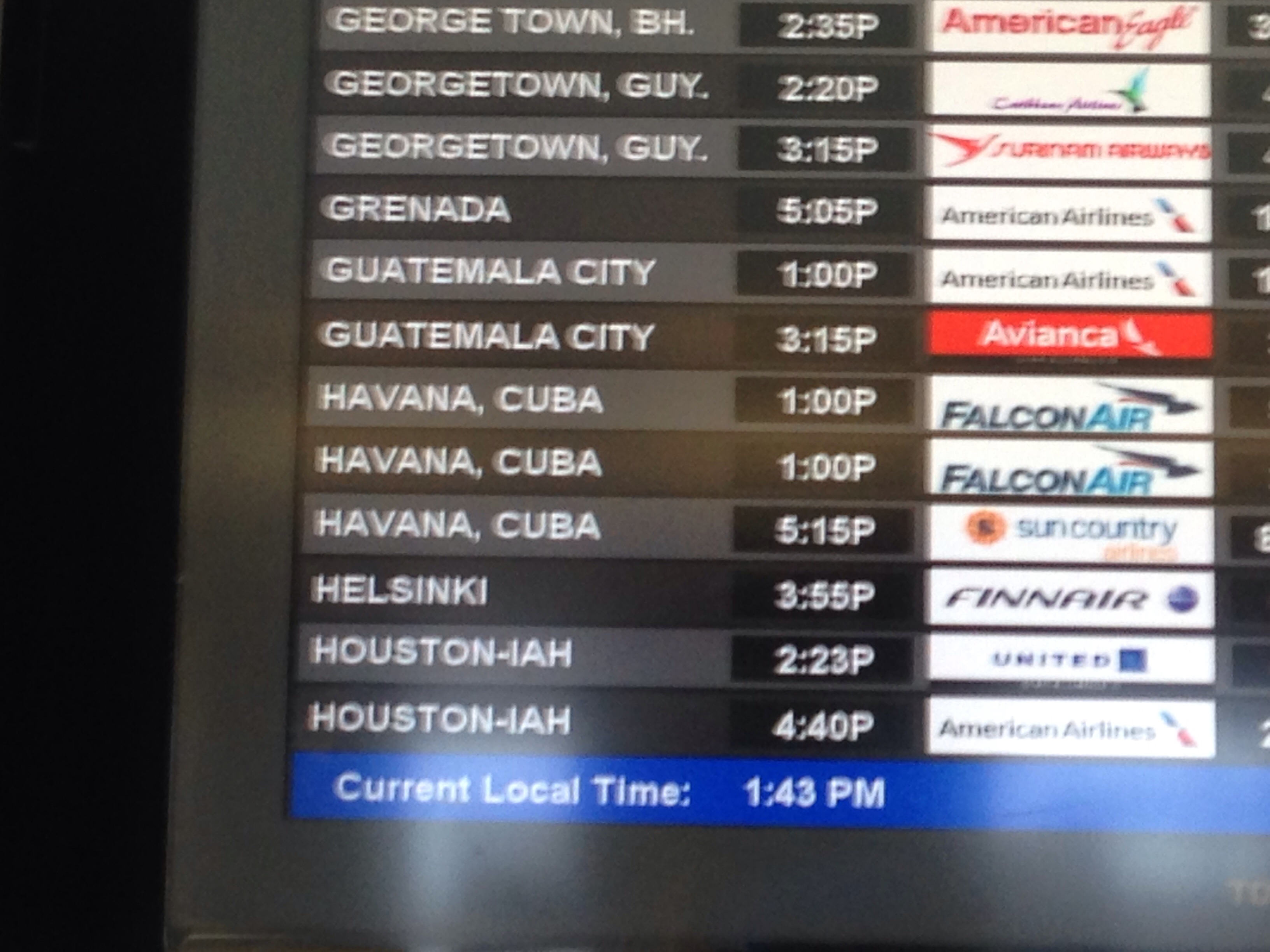
But a layover at the Miami airport this weekend provided the perfect graphic to answer that original question – at least for the next six months. As I looked at exotic destinations on the departures screen, many much more exciting than my 40 minute jaunt back to Orlando, I saw the below:

image

Where am I going? Quito, listed there near the bottom. (Or Orlando, depending on your time frame, shown just at the top of the screen.) And where have I been? Well, Raleigh-Durham – where I grew up – appearing right under Quito. (Or Orlando, once again, depending on your frame of reference.) For the record, “Raleigh-Durham” is a misnomer – I grew up in Durham!

Airports are like that. You can smell the adventure waiting at the other end of a flight. I still find it remarkable that 100 plus people can be sent 30,000 feet high at over 500 mph. At an airport, you can sum up the where you are and where you want to be in one screen shot.

image

Another example – note the Havana, Cuba destination. I’m not sure I can recall ever before seeing Havana listed on a departure screen, much less right above Houston, Texas. What better way to show a shift in geo-political realities.

When I was growing up in the 1960s and 1970s, my family always arrived at the airport dressed in Sunday best and several hours before any scheduled departure. My brother and I regarded the waiting at the airport as much a part of the trip as the actual journey. I still remember the iconic TWA terminal at JFK, and how slick and modern Dulles Airport was, rising out of what was then a rural area outside of Washington.

Photo by Joe Ravi, lic. CC-BY-SA3.0

As the reality of the Cotopaxi and Chimborazo climbs sets in (right now I am at the slightly terrified stage), I just need to take it one step at a time. And after the training – the next step is going to be at an airport. And whatever happens, I know that when I set foot in one of those ultra modern terminals, it’s not a terminal in the sense of an end. Yes, it will evoke memories of where I’ve been – but even more excitement over where I’m going.

Cotopaxi and Chimborazo – Where We Are Going

Volcanoes of Ecuador

So I did it. Last week, on Tuesday to be precise.  I emailed Mountain Madness, our trekking company, and just said yes to the Chimborazo extension. Now I recognize that some of you were pushing for the Galopagos Islands, but I simply couldn’t escape the fact that there will be no other point at which husband J and I stand a better chance of actually climbing a 20,000 foot mountain. I think I can manage the Galopagos in future years.

As I continue the grueling process of forcing  myself to run at ever faster paces and climb stairs with increasing amounts of weight – and of finding the time to do so – it occurs to me that I have not really described the two mountains that are engendering such passion (or foolhardiness). I’ve referred to them by name, but without much explanation.

Here’s what is inspiring me.

Both mountains are part of Ecuador’s Avenue of Volcanoes, named by 19th century German scientist Alexander Van Humboldt.  Due to a location just above and below the equator, the scenery is supposed to be reminiscent of the Scottish highlands or the Arctic tundra, at least according to our trekking company.  Both were first summited (at least by westerners) in 1882 by Edward Whymper, for whom some of the passes are named.

Cotopaxi last erupted in 1940 and some consider it the world’s highest active volcano.  It stands at 19,347 feet (5897 meters) and is located near Quito, which at 9400 feet is itself one of the world’s highest cities.  Cotopaxi has been worshipped as a sacred mountain, a bringer of rain and fertility.

We will acclimatize for the altitude first with a climb up Guagua Pichincha (just outside Quito, standing at 15,696 feet, last eruption 2004) and then what is described as an “enjoyable rock scramble” up Illiniza Norte (16,818 feet), with trekking, camping and stays at haciendas in between. Mules are supposed to help at certain points as we travel between and up the various mountains.  Once we are at Cotopaxi, summit day (summit night is a more accurate description) begins at 15,749 feet, where we will have been staying at the Jose Ribas Hut.  The glacier starts at about 17,000 feet, and according to Mountain Madness, we will be crossing snow bridges, avoiding large crevasses, and climbing “short, steep sections.”  Once at the summit of Cotopaxi, we should be able to peer into a perfectly round caldera, the origin of the steam you apparently can sometimes see boiling up.

I have found a lot less written about Chimborazo. It is famous for being the point closest to the sun, due to the bulge of the earth at the equator. As I mentioned before, I hope our attempt to climb it is not too Icarus like. It is currently inactive, with a last eruption in 550 A.D. or so.  It reaches a whopping 20,564 feet (6268 meters) and is the highest mountain in Ecuador. Chimborazo can sometimes be in very bad condition – with unstable snow, big crevasses and high risk of rock fall. The itinerary states that if Chimborazo is not climable, we are to attempt Antisana. It’s only 18,714 feet high, but from what I’ve read is even more technically challenging, as it is completely covered by glaciers, and is not climbed very frequently.

Despite all this, you may still be left wondering – but “why?” Well, a summit goal, for me at least, gives me something to focus on, look forward to, and lifts me out of the drab tension of the day to day working world.  And the other reason is simply a variation of the “because it’s there” phrase – because there is something about standing on a summit that gives a high that doesn’t come from anything else.

Ascent Up Holiday Mountain

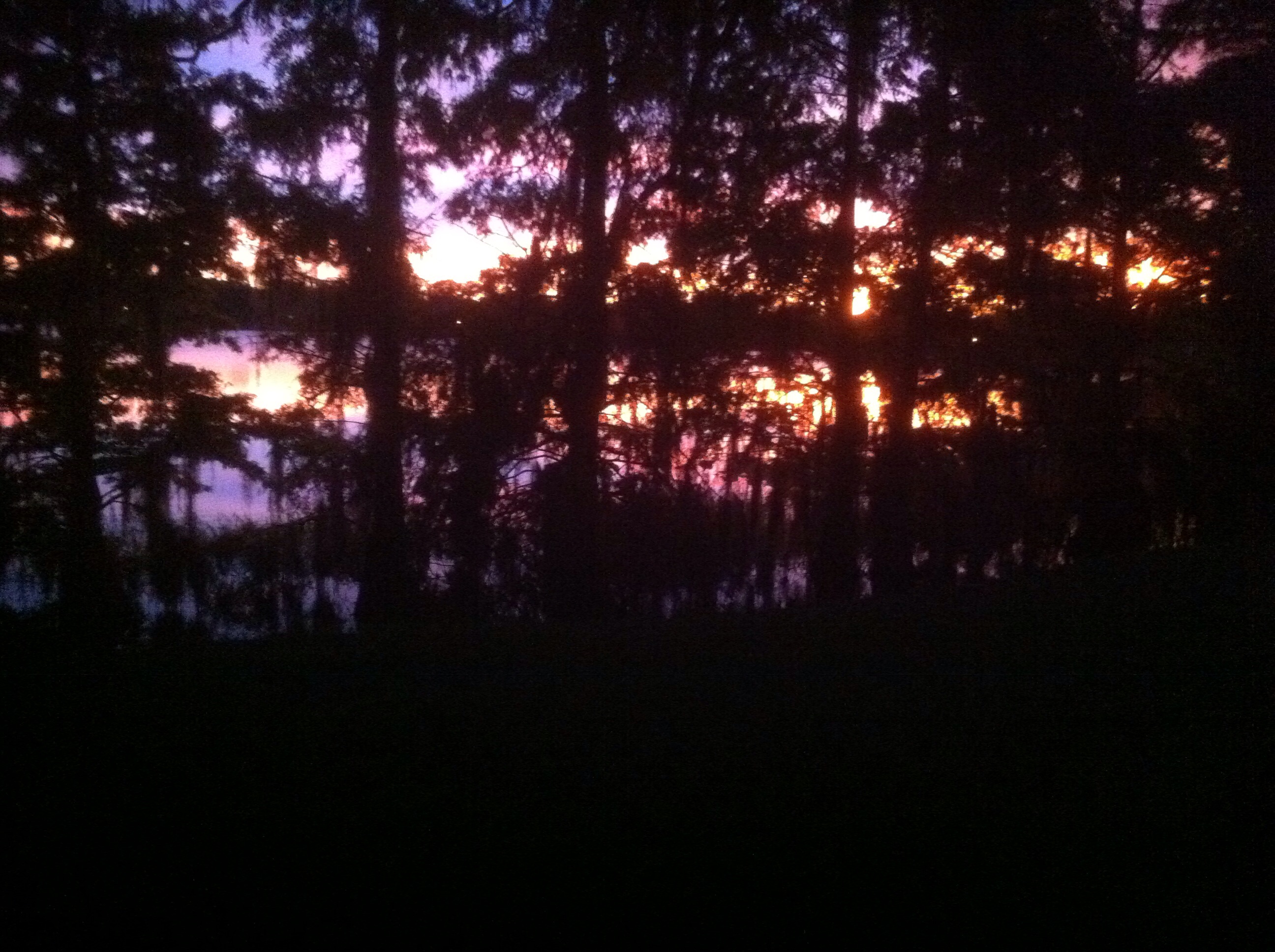
Lake Ivanhoe
Lake Ivanhoe

Summits, as I’ve implied before, are hard to find here in Florida.

But starting in October, the holiday season stretches on and up like the long trudge up parts of Kilimanjaro. And, of course, trying to fit work and training in between both hosting and attending the social functions of the season can create a stress level no less intense than the oxygen deficits you feel at over 14,000 feet.

Here in the U.S., at least, it starts with Halloween. Even though the daughters are no longer among the bands of ghosts and goblins marching through our neighborhood in search of treats, for over 20 years now we have shared the evening with the parents of two other children of identical age (and I do mean identical because we met in Lamaze class).

A short three of four weeks after that is the annual trek to California for Thanksgiving – see earlier post about Point Lobos – and trying to cram as much time as we can with family and friends into a barely four day visit. Let’s see, that works out to how many minutes a person?

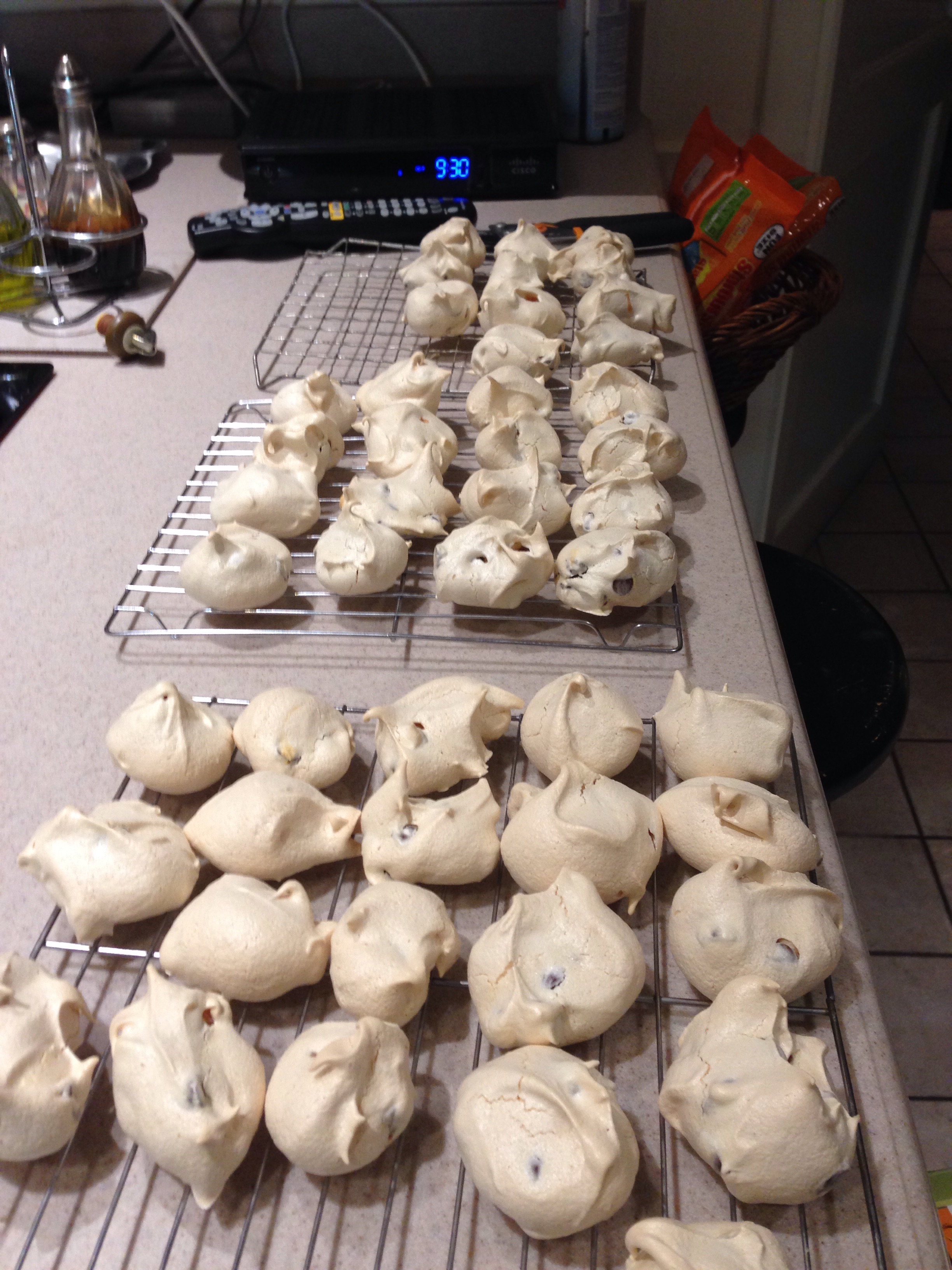
The Cooking Operation- Making Meringues

The return from California starts the cycle of my work party, the husband’s work party, the book club party, the women’s group party, various and sundry parties, and then one I host to prove that I too can do something other than practice law and climb mountains. This one was particularly challenging since it came on the heels of an unexpectedly extended out of town business trip. Always make sure the day 1 jacket will match the day 2 skirt to create something that looks vaguely different for day 3.

I suppose everyone feels the holidays should culminate in a summit at Christmas or New Year’s – as immense and amazing as that incredible spot at the top of Mt. Elbrus  – or perhaps, to use a more accessible image, the fantastic ice castle at the top of the mountain in Disney’s Frozen.  But maybe it is really the gentle valleys hiding somewhere amid all the revelry that give the holidays some meaning – the few quiet moments where you can sit for a few minutes, meditate, and watch the sun reflect on the summits that surround you, whether real or metaphorical. Happy holidays, everyone.

image

The Inca Trail – Pre-Trail or Pre-Trial – Part One

IMG_7342

Our trek along the Inca Trail in May 2012 started off as a natural follow up to Kilimanjaro in 2011. Granted, it wasn’t a summit per se, but it certainly was a well-known hike, seemingly had a degree of challenge, and besides, we were able to convince our daughters, then 19 and 21, to accompany us. But what we didn’t realize was that the trip would be as much of a cultural experience as it was a climb. Many mountains are remote and you are more exposed to the insular world of the mountaineer and whatever wildlife lives above the tree line than you are to any local residents. But Machu Picchu surprised with the many, many people we saw every mile of the way – from the beer hut on day 2 or so to the women riding donkeys with bushels of cut herbs on their backs.

The trip began rather inauspiciously – for some reason the husband and two girls thought that Mexican food and margaritas at the Orlando airport was an appropriate way to kick off a trip to Peru. Not so, and all I can say is they suffered quite a bit for it, while my salad and wine seemed to agree quite nicely, thank you very much. We flew on Copa Air – the Panamanian airline, and like most non US airlines, it was quite pleasant – although we had bad weather in Panama City and landed with quite a bump. Ran to the next gate and just made our flight to Lima, where we landed about midnight. But you would never have known it was the wee hours of the morning from the hustle and bustle of the Lima Airport. It might as well have been late afternoon on a Saturday of holiday weekend. All the shops open, people dining.

Had to recheck our bags at the LAN counter – our airline for for the trip to Cusco – and got to the gate about 2 a.m. Together with a number of other intrepid travelers, we each found a section of seats to crash on for a few hours, backpacks within touching distance. We arrived in Cusco in early morning, and could feel the change from sea level to 11,000 feet. We stayed at the beautiful Hotel Marquesas – a 16th century residence converted to hotel. A courtyard in the center; walls about a foot or more thick. The husband and I had a balcony overlooking the street from which we could see the cathedral. The girls had an interior room that felt like a cave. Because we had arrived so early, the rooms weren’t ready and we were immediately offered – and accepted – coca tea – which does in fact help with sudden altitude change.

Hotel Marquesas, Cusco

Travel hint. Only bring new bills to Peru. Currency exchanges will not accept anything with creases or tears. And they are serious about it. Sight seeing was the order of business for the first day or so. The cathedral’s wonderful painting of the Last Supper where a guinea pig substitutes for the bread embodied for me the peculiar marriage of local and foreign cultures. And the food! For lunch I had potatoes in a red pepper cream sauce. (Peru has, I believe, more varieties of potatoes than anywhere else in  the world.) Dinner – chicken stuffed with goat cheese and elderberry sauce; local trout; poached pears with cinnamon ice cream. And you can’t forget the pisco sours – like a gin fizz made with a brandy.

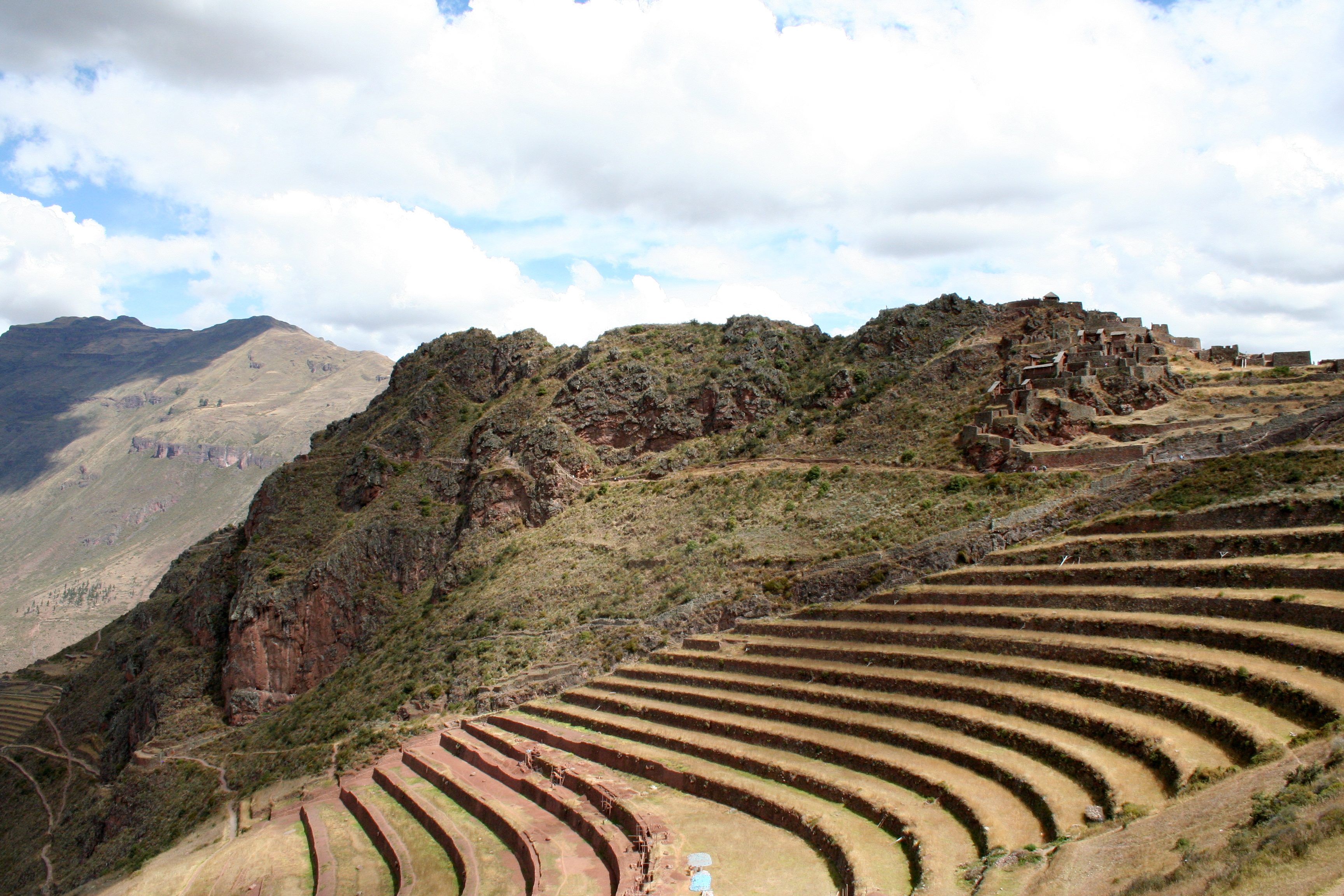
We spent the next day on a bus tour of the Sacred Valley. Although it was supposed to be for both Spanish and English speakers, we seemed to be the only English speakers and it was remarkable how ten minutes of Spanish could turn into about two sentences of English.  Nonetheless, the ruins were remarkable, the Andes amazing, and we were struck by the authenticity of the people and places we were driving through.

IMG_7394

That night the four of us did a mini gear check, getting ready for a van to pick up us up at  5:30 am to drive to the fabled Kilometer 82 – the start of the trail. Next post – the start of the hike.

IMG_4116

Journey to Another Planet – Mauna Kea

Mauna Kea
Mauna Kea

Mauna Kea isn’t particularly well-known as a destination hike. Most people get to the top by car. But after my husband became the only person in Hawaii to come down with a severe case of flu in the middle of August 2013, thus putting the kabosh on our plan to backpack the Muliwai trail (more on that later), Mauna Kea seemed an attractive alternative.

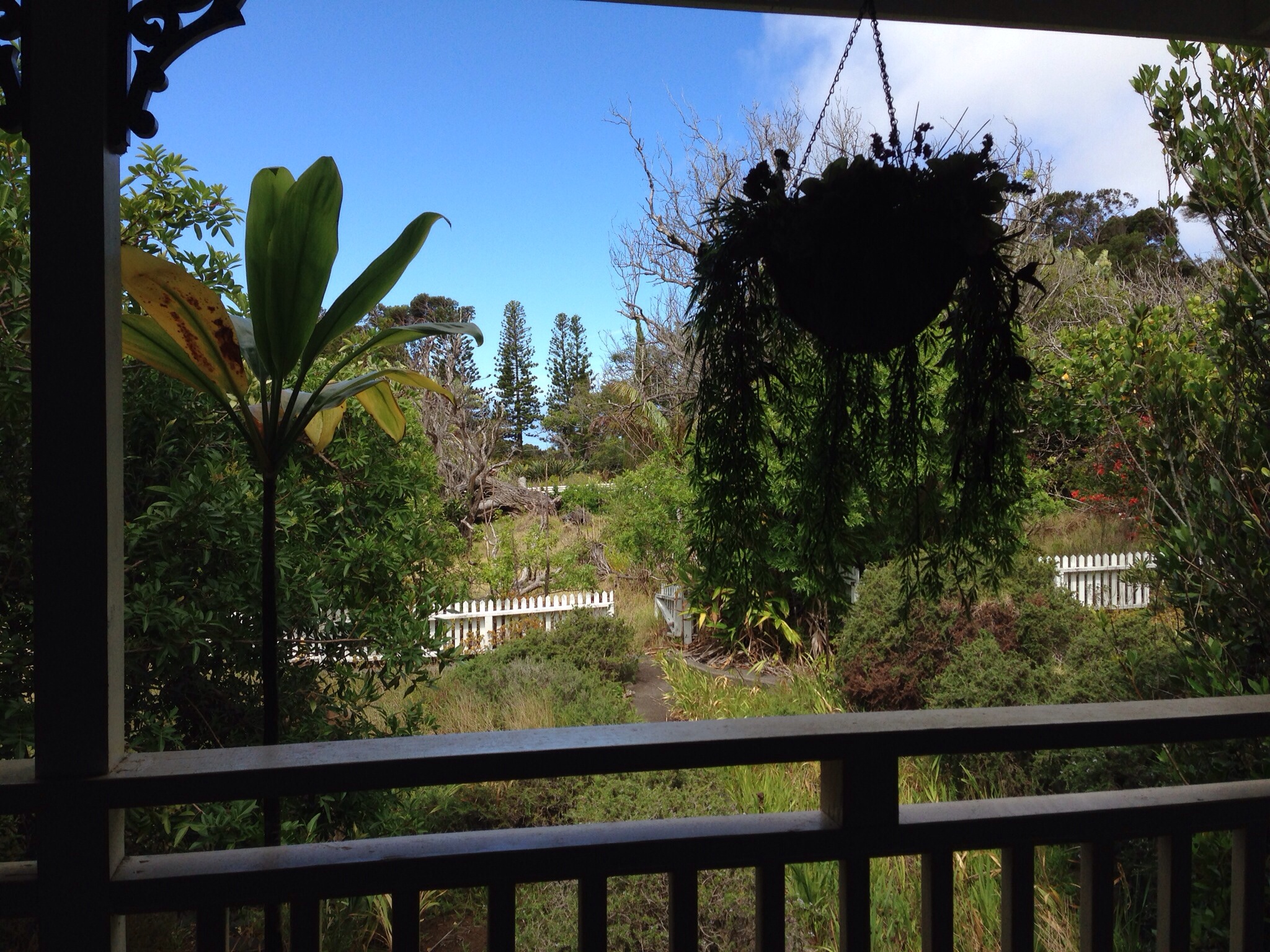
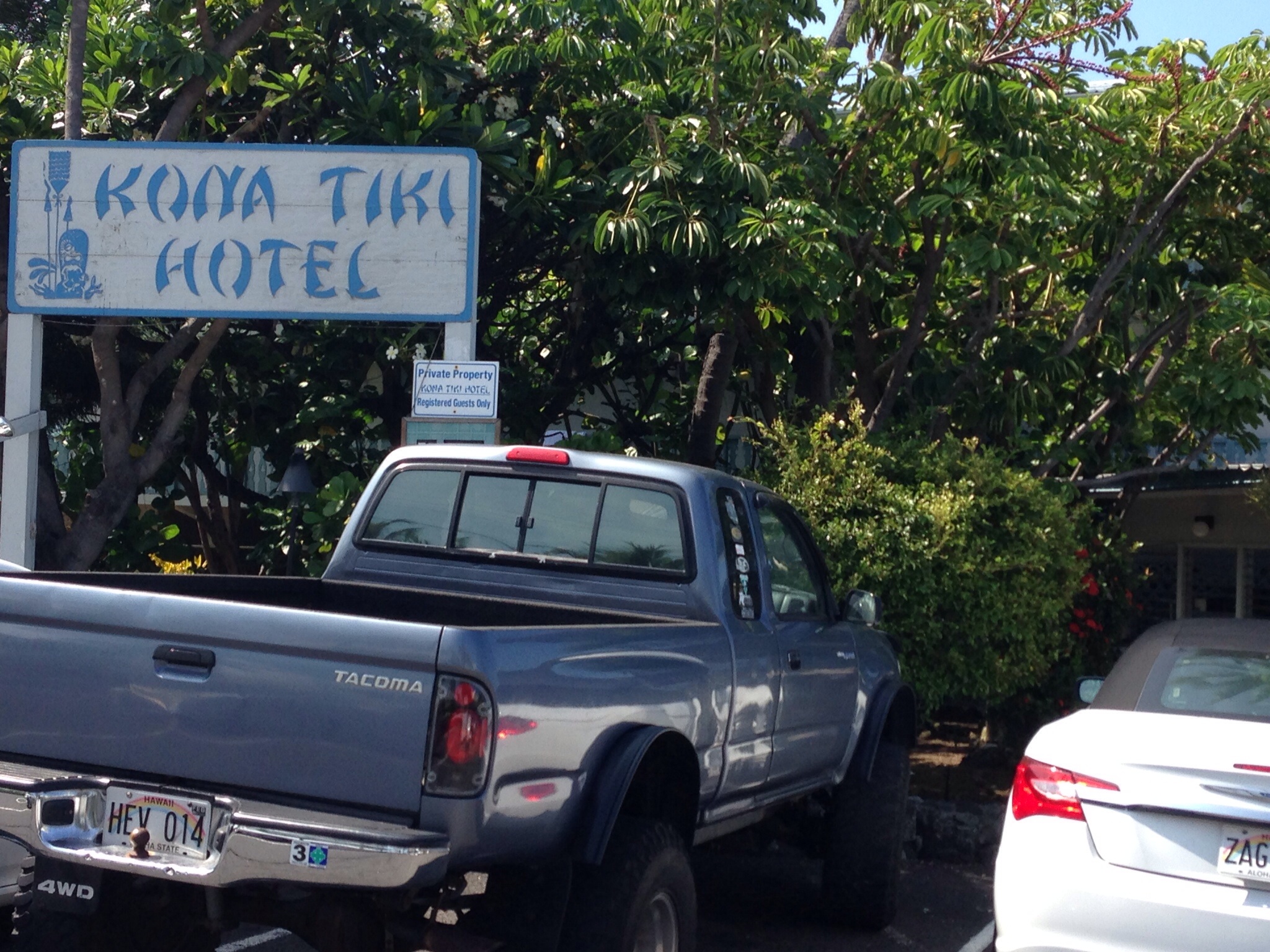
Due to the unexpected change in plans we had several wild card nights – no reservations, no nothing. Two nights before we climbed Mauna Kea we stayed at a 1970s hotel on the edge of Kona, complete with kitchenette and ancient dinette table. Ocean front was an understatement as the second floor unit we were in was bombarded with large waves throughout the night – unclear what the decibel level was. The next night we returned to the semi rundown estate of the Rockefellers outside of Waimea, now converted to a somewhat quirky bed and breakfast – without the breakfast.

View from our porch at the former Rockefeller estate in Waimea
Kona Tiki Hotel, Kona

The next day we awoke early to an hour or so drive along Hawaii’s oh so well maintained road to Mauna Kea. We parked at the ranger station at approximately 9200 feet elevation about 7 am and signed in. Little did we know that only two other hikers would sign in that entire day.

After the first bit of the hike – some fields, some green – we might as well have been hiking on Mars, or at least my idea of Mars. Black and red lava rocks, occasional prehistoric (maybe) cairns of rocks, and very little that resembled vegetation. The temperature varied between extremely hot and downright chilly during the few moments when the sun went behind the clouds.

One of the more peculiar features was that even though the road up would occasionally pop into view I felt more isolated on Mauna Kea than anywhere on Kilimanjaro, much less Mt Elbrus. The trail wasn’t always well marked and it was not hard to imagine being found years later after suffering an unhappy death from dehydration.

Making the trip even more interesting was the rapid elevation gain – literally sea level to almost 14,000 (13,796) feet – in about six hours. I usually don’t feel anything at 14,000 feet but I definitely started to have a headache near the top, combined with some dehydration.

As you approach the top, all of a sudden you start to see the telescopes. Peering up over the orange landscape and the gradual volcanic cones, it is as though you have inadvertently wandered off course and ended up on Another Planet. There’s also a set of porta-potties, a nice reminder of earth, however. I kept thinking of the novel Cloud Atlas – one part of which involves an adventure at the top of Mauna Kea by the observatories – “you’re crazy. There ain’t nothing on Mauna Kea but Old Georgie and his temples hid in ‘closure walls. He’ll not let you in unless you’re ‘ready died an’ your soul is his.”

Telescopes on Mauna Kea

There we encountered the only two other hikers we saw the entire day. But the last mile or so up requires walking along the side of the road, with cars whipping past you. Resentment toward the motorists kicks in – they hardly deserved the summit! The summit itself involves a trek down one indentation and then up to the peak – flat on top – with various offerings to the Hawaian volcanic gods placed on a small stone altar. The wind is much more intense and as we had no idea how long it would take to go down we didn’t stay long.

It turned out our fears were unfounded. While we hiked to the summit in under 5 hours we got down in just over two – scree skiing most of the way. The sun went in and we had a good 45 minutes of walking through clouds – very refreshing after the blazing sun of earlier.

Clouds on the descent

Once at the ranger station, we were met by bus loads of tourists there for night sky observation tours. While it wasn’t exactly a return to a space station, our seven hours of hiking felt like light years.