Galopagos [http://www.flickr.com/people/59888966@N00 Pete]We’re still musing about whether to add Chimborazo to our Cotopaxi climb this summer.
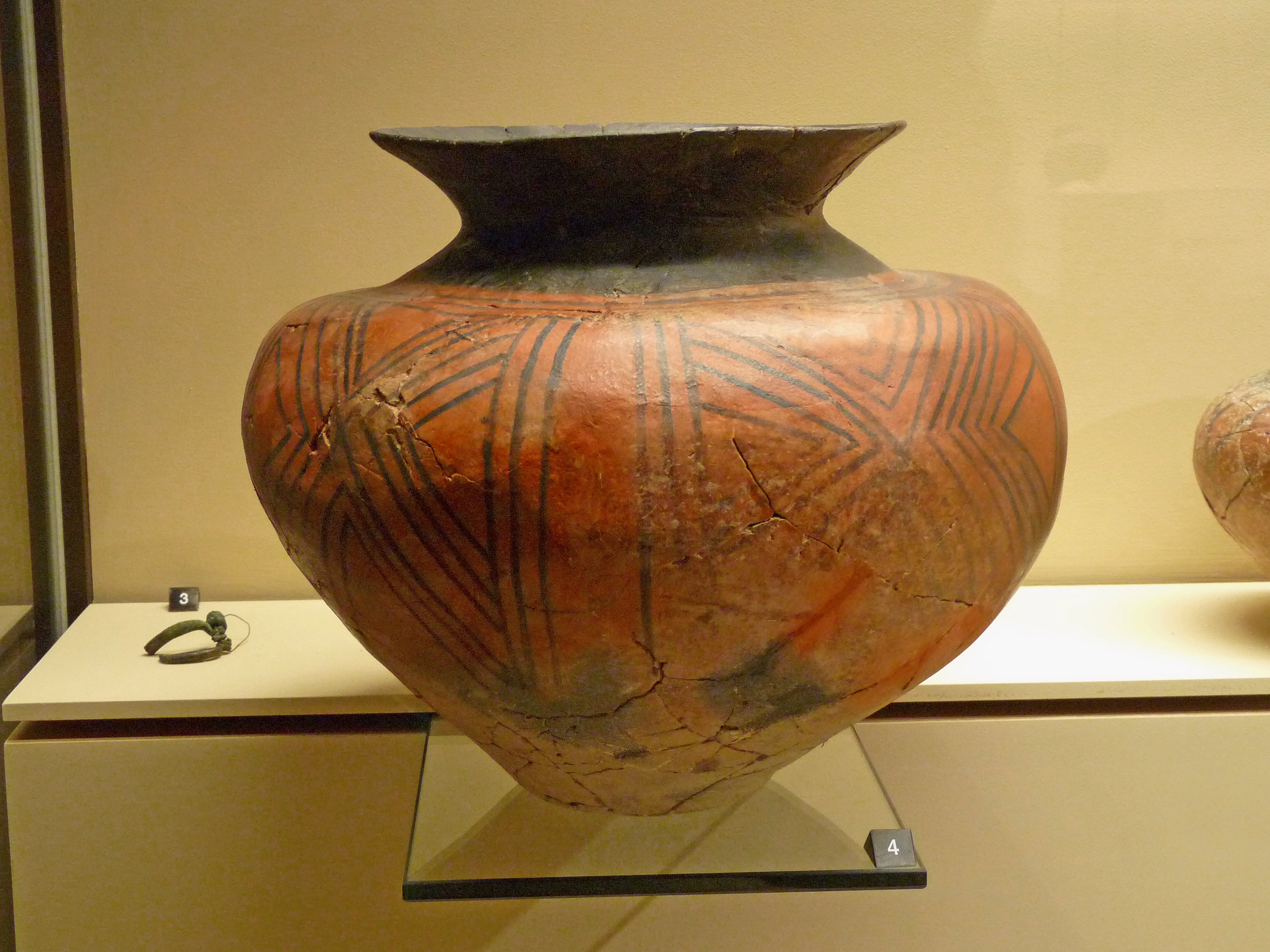
Last night we went to a combination birthday/retirement party for a dear friend. Among other presents – was an URN. Not an urn for a plant, or to carry water or wine, and it wasn’t even Grecian – rather it was the repository for ashes after the inevitable end. And what made it even more remarkable – it was a USED urn. I did not inquire too deeply of the circumstances that had led to the removal of one set of ashes and the apparent preparation for another occupant.
Tonight we had dinner with another old friend who was singing the praises of the Galopagos Islands. And one of my yoga buddies wore his Galopagos Islands t-shirts to yoga today. What I haven’t mentioned before here is that Chimborazo isn’t our only possible trip extension – Galopagos is there also.
Connection with urn? Back to the only live once phenomenon. On the urn – as John Keats told us – the characters are immortalized in time and art. The husband and I clearly aren’t going to be. Life is now or never. So now we’ve added a third decision point – we KNOW Cotopaxi is in – I have already submitted my application although the husband is dilly dallying with his. But now – no extension, Chimborazo – which would stretch mind, body and soul, or Galopagos? I should be happy to have such first world problems. Thoughts, fellow travelers?
Point Lobos is like a summit turned on its side, lying on the deep blue bed of the Pacific. This Thanksgiving, as almost always, the husband and I made the trek to and from Florida and California on the busiest travel days of the year – Wednesday before Thanksgiving and Sunday after – to meet up with daughters one and two and an assortment of brothers, sisters, cousins and friends in the Monterey area.
One tradition has always been a Thanksgiving Day excursion of some sort. It used to be what we called sand sledding on the large sand dunes that overlooked both highway and ocean near aptly named Sand City. Kids and adults alike would zoom down the steeply angled dunes on pieces of cardboard – usually wiping out somewhere before the bottom, only to clamber back up and try it all over again. Thanksgiving didn’t seem complete without sockfuls of sand that would appear in odd places for several days after.
As the children got bigger and the adults creakier, sand dunes shifted to hikes. We’ve done several at the Garland Ranch. During one of the first, daughter one (and possibly daughter two) and I managed to get separated from the rest of the contingent, and spent an extra couple of hours wandering lost through the chaparral. Finally we saw a rather dressed up family whose outfits clearly showed they weren’t off for a long distance hike and we were able to follow them back to civilization. Another hike – when we were training for Kilimanjaro – was up in the Soberanes Canyon – and by up I mean steep! For some reason I had brought hiking boots, but no hiking appropriate jacket, not realizing how cold it would be. A common mistake when going to California. I ended up wearing my black Michael Kors raincoat for the whole thing. I’m not sure whether I cut a dashing figure or looked like some eccentric character out of a vampire novel.
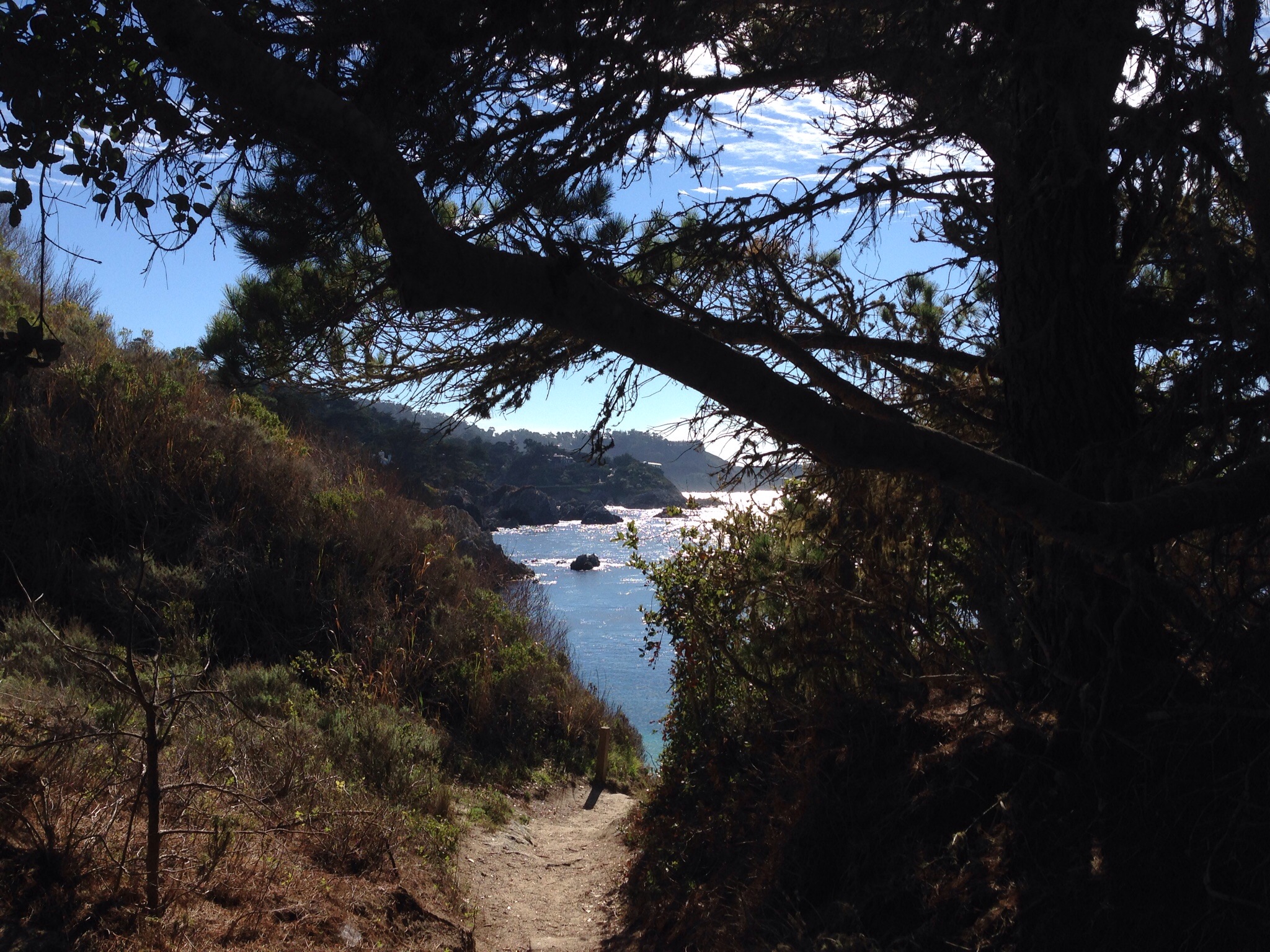
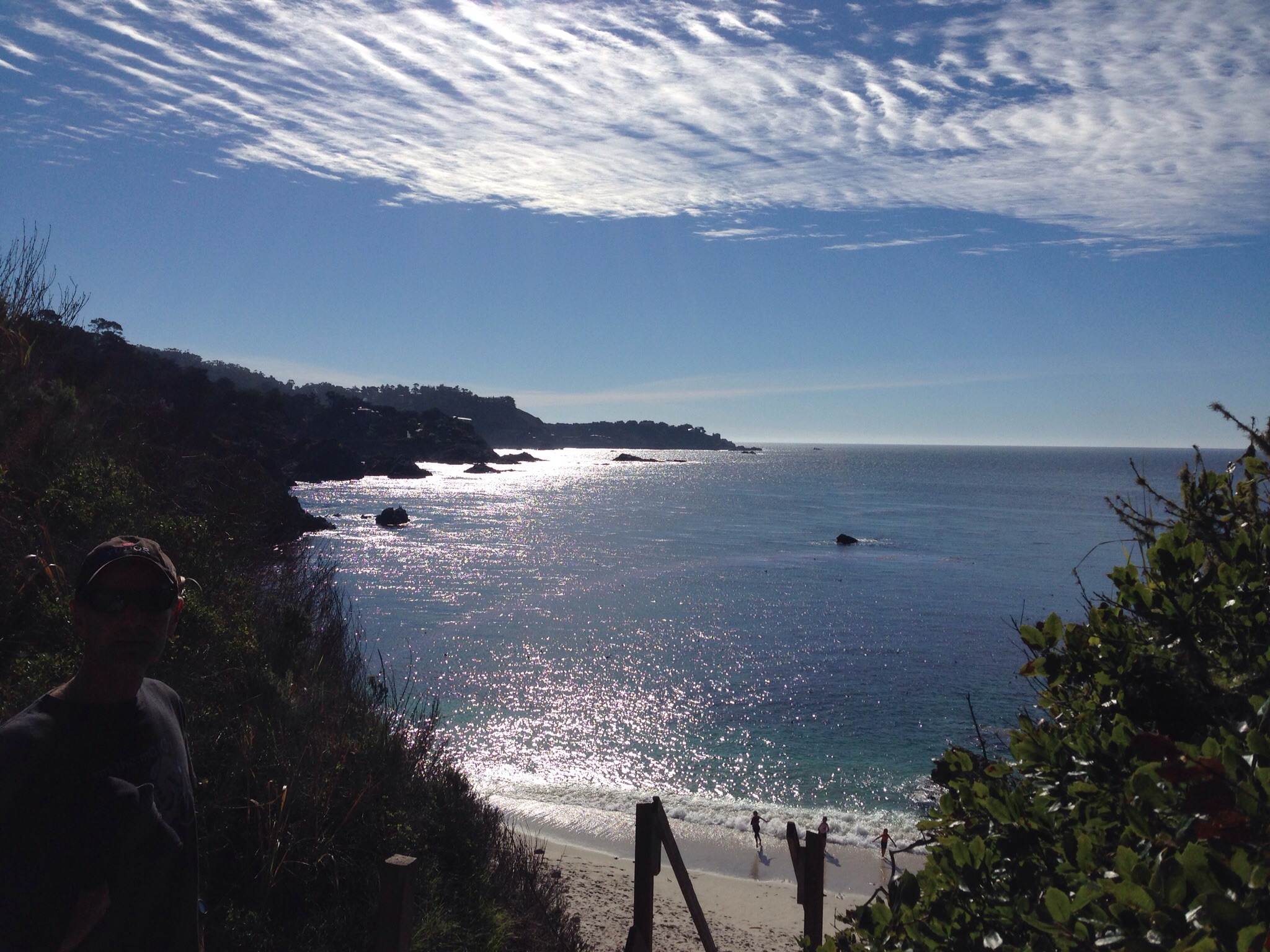
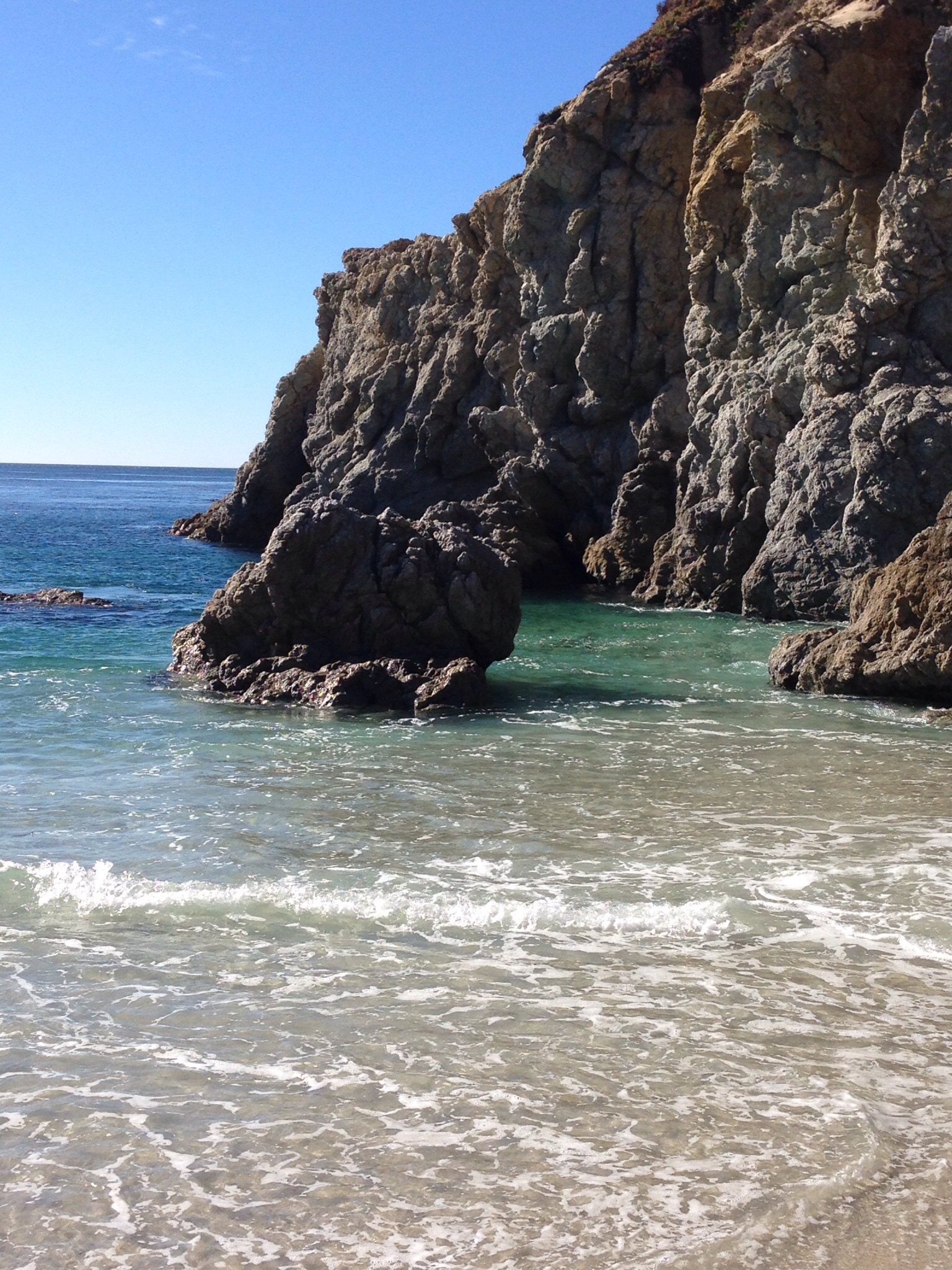
This year we returned to Point Lobos. Just south of Carmel, near the start of Big Sur, the spectacular coastline between Carmel and Santa Barbara. Trails wander through coastal woods, and lead to cliffs that manage to be both rocky and sandy at the same time. Cypress trees are silhouetted against an open skyline, and out in the ocean rocks form classic arches that create pathways for the waves to pool and then crash. Along the route, numerous white sand beaches nestle between the cliffs. They are only reachable by rickety wooden stairs that wash out in every storm of any significance.
These hikes aren’t really for training and they aren’t even really to see or experience anything new. What makes them special is our family and friends, many of whom we only see once a year. We’ve been to these spots together any number of times. But as each year passes, the lens I view them through changes. The daughters launched into their twenties; the nieces with babies and boyfriends. Yet despite the ever growing cascade of years — the pelicans are still in flight; the sun glints off the water; the flat silver half dollar of the ocean is tossed by the roar of the waves. Still a peak experience, of sorts.
As an English major and daughter of two now retired English professors, I was raised in a house filled with thousands of books. We didn’t just have one copy of a book – we would have triplicate, because, I suppose, you can never have too much of a good thing.
But reading has always powered my imagination – and imagination is probably behind my starting this whole mountain climbing thing in the first place. Well, to be more precise, it was a 1991 movie called K2 that I saw on TV. In fact checking for this post, I discovered it was largely panned by the critics, but I still remember the drama of preparation (one of the climbers was a lawyer) and the critical moments on the mountain where one climber had to make the decision to leave his injured companion behind. The husband found the film absolutely appalling. But for some reason, the adrenalin junkie in me found the battle of man versus the elements completely fascinating.
A good book about the mountains – or any adventure travel – brings you that one step closer to making the summit your own reality. Lots of books have given me that little last push up that extra flight of stairs. Here are some of my favorites and I’d like to know yours – I’m currently perfecting my Kindle reading technique for stair climbing.
The Seven Summits by Frank Wells and Dick Bass. This may be where it truly started. A work colleague of mine lent me this book back in the 1990s, and, true confessions, I never returned it. It’s the tale of the original two who climbed the seven summits in one year, 1983, the year I graduated from university. Easy reading and puts the mountains within reach.
Paths of Glory by Jeffrey Archer. The story of George Mallory’s fateful trip to Everest, starting with his days climbing church steeples. The mystery remains – did he or did he not summit?
Mark Horrell’s travel diaries – these are available very inexpensively in Ebook format. He seems to have climbed everything and his very detailed accounts of mountains ranging from Cotopaxi to Elbrus are quite reassuring to a novice climber.
Into Thin Air by Jon Krakauer. Need I say more.
And, to finish up, The Orchid Thief by Susan Orlean. Ok, it’s not about summits but it is about swamps., Possibly the most beautiful prose ever written about the adventure of hiking through the wild Florida of the Fakahatchee swamp and the search for rare orchids. Inspirational for swamp dwellers who want to see more than the concrete of Florida development.
As I sit here on a weekend, waiting for the plumber to take his interminable time to arrive (three hours late, thus far), we have some decision-making to do. As hoped, the work schedule cleared up, freeing the way to commit to some June 2015 dates for our next mountain climbing endeavor. And I’ve already contacted the guide company that successfully led us up Elbrus, so that’s done.
But here’s where the itch of mountain climbing – or you could say hubris – sets in. It turns out for an additional four days and a few more dollars, we not only could climb Cotopaxi, but also climb Chimborazo – the highest mountain in Ecuador and one that reaches my long dreamed of goal of a 20,000 foot mountain. Well, long dreamed of if you count 2011 as a long time ago, since that’s when all this started. This would mean acclimatization hikes up Guagua Pichincha and Illiniza Norte, followed by Cotopaxi at 19,348 feet and three days, later – Chimborazo. At 20,564 feet, Chimborazo is harder than Cotopaxi. It’s one degree south of the equator, and because of the bulge of the earth, is the farthest point away from the earth’s core and the closest point to the sun. Hubris is the right word. Think Icarus.
I hadn’t really considered doing the extension. But then yesterday, in the midst of multiple levels of work related issues and general lawyerly stresses – and perhaps in reaction thereto (what a good, lawyerly phrase) – I suddenly found myself saying, “hell, yes.” Not out loud. But a lawyerly phrase, nonetheless.
If not now, then when? I’ll be 54 by next June. There’s no doubt that if we make this commitment it will require the highest level of training either the husband or I have tried to achieve. Sometimes mountains – and summits of all sorts – whether at work or at play – throw the gauntlet down before you and just ask to be climbed, and climbed hard. But I still think I better have a serious talk with the guide company.
Mountains do not rise up from the earth like isosceles triangles. And most things in life don’t have that perfect equilibrium either. Like this week – everything just a little off.
It started when I unpacked a gigantic box containing a keyboard that had belonged to an uncle and now had wended its way to Central Florida. In reaching down into the thousands of styrofoam peanuts that surrounded said keyboard in order to ensure we had located all its bits and pieces, the husband pulled out a carefully wrapped plastic package. I cut it open, expecting a plug or some similar piece of equipment, only to find – a string of pearls! A visit to the jeweler the next day confirmed they weren’t real, but now I still face the task of contacting UPS to see if they there is any report of missing pearls in peanuts.
That set the tone for the rest of the week.
One of our elderly Westies continues to be profoundly deaf and is proving not very capable of learning sign language. His brother has decided he can only eat dry dog food if scattered on the floor outside of his bowl. And the ancient cat continues to believe he is a mountain lion and to attack dogs.
My dearly beloved ten year old car blew the same fuse for the second time in six weeks. Who knew the same fuse that controls the radio controls the ignition. But combined with a very leaky convertible top, the prospect of having to change fuses on the side of the interstate while driving to an out of town meeting on Monday was enough to cause us to finally buy a new car.
At least events of tomorrow should determine my schedule sufficiently that we can actually book our Cotopaxi trip. At yoga last Wednesday night the moon was full but for a slice off one side, teetering against the black sky. I’m hoping that this next week – with the next summit firmly chosen and set – restores equipoise.
For several years I have had a semi-inflexible yoga schedule. What I call “regular” yoga on Wednesday nights and Sunday afternoons, with some cardio thrown in on the step mill or treadmill, accompanied by Bikram on Saturday afternoons. But all things change, and my long beloved 4 pm Bikram class is, at least for now, no longer. What’s a girl to do?
True, I could go to a 10 am class, which I have occasionally done, but I find my balance is not nearly as good in the morning. Somehow I need the day to be underway before I have the necessary focus.
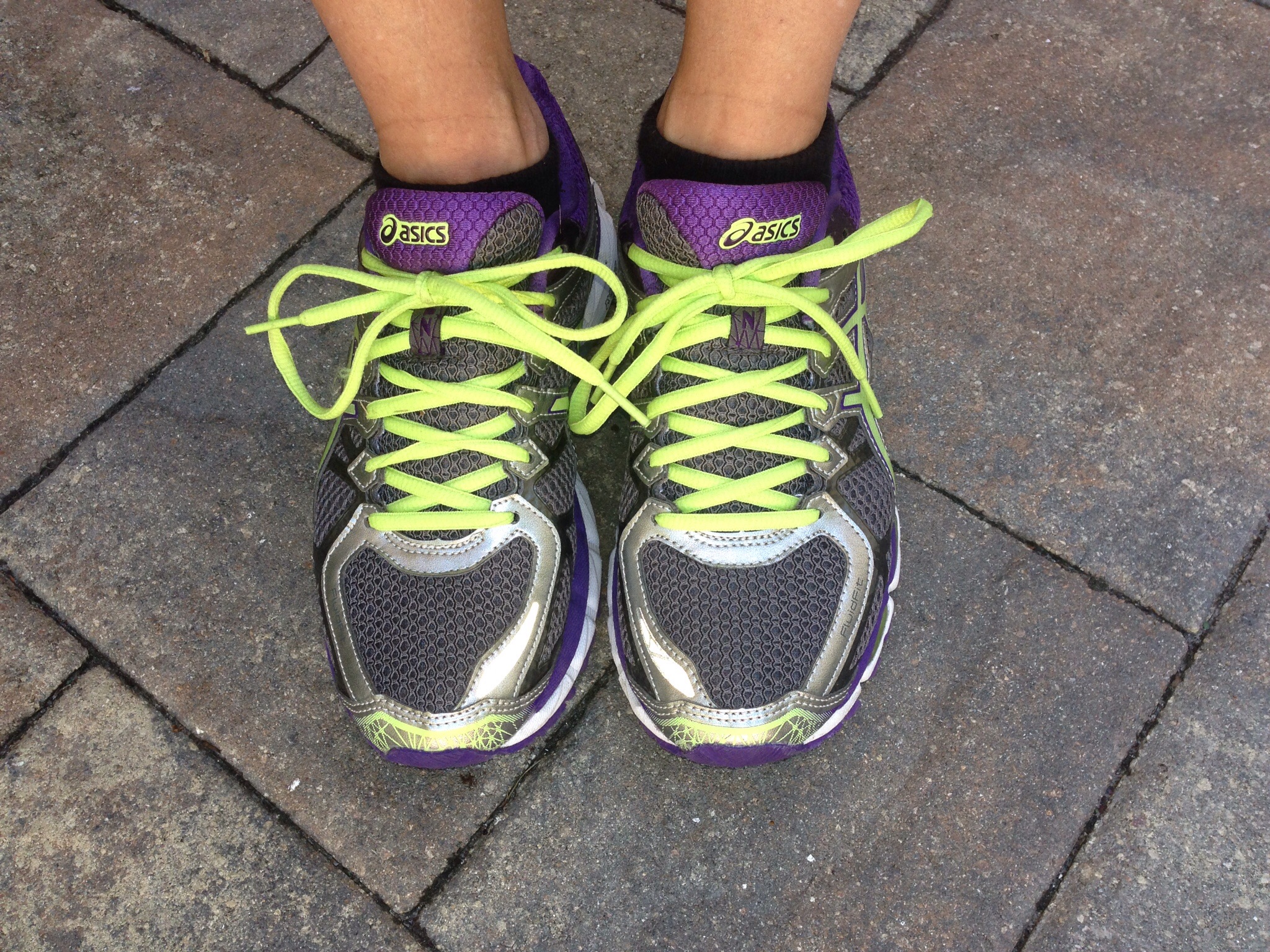
So, without making any commitments one way or the other to what my new Saturday routine will be, yesterday morning I ventured off to a high end running shoe store. It’s one of those places where customers are called guests, and you’re assigned a salesperson (although I’m sure they call them something else) as soon as you walk in. The process starts with extensive foot measurements, followed by a video of you running along the sidewalk in front of the store so they can frame by frame analyze how your foot strikes.
At the end, I was the proud owner of a remarkably expensive pair of Asics, together with super feet insoles. But I don’t mind spending money on those things – the cost of shin splints or otherwise wrecking your feet, legs, or back is way too great when you have mountains to climb.
And it turned out to be worth it. Fall finally fell in Central Florida and my new shoes and I went for a 4 1/4 mile run around the lake we live on. The difference between running in 90 and 65 degrees should have been self-evident, but I was still surprised by it. There was a decent breeze that was behind my back for a bit, not a cloud to be seen, and the pink seed casings of the tabebouia trees served as a very acceptable substitute for fall leaves.
Ok, so my left hip now hurts and maybe I really shouldn’t have used my new insoles for the first time on a four mile run against instructions, but whatever. Letting go of one training routine and opening up some new possibilities – I think that’s the flexibility it’s going to take to get up all 19,500 feet of Cotopaxi.
We are now back in flat Florida following a three day adventure in New Hampshire via Boston (Somerville, to be more exact). After a bumpy flight, we checked into our AirBnB. For those of you not in the know, wannabe hoteliers or innkeepers who have enrolled in the program can let out their spare room – or their whole apartment or house if it’s going to be vacant – for varying lengths of time and at reasonable rates. Our 20 something daughter had urged us to try it. Of course, it’s an app. Once we got used to the idea that we were staying in someone else’s temporarily empty studio apartment – surrounded by all their books and other possessions – it worked out well. I guess we should have tried Uber on this trip as well.
A Portuguese breakfast – climbing food?
After breakfast at a Portuguese restaurant – which involved cod, shrimp and fish cakes, rice and beans – the husband, the older daughter, her boyfriend and I left rainy Boston for the three hour drive to Jackson. Our transportation was the boyfriend’s aged Previa minivan with 168,000 miles, including at least two trans-continental trips. As we got closer to New Hampshire the grey clouds lifted and we entered Jackson under crystal clear blue skies – as well as a city-worthy traffic jam in North Conway. We clearly weren’t the only people with the idea of a long New Hampshire fall weekend.
We stayed at the Inn at Jackson, the former vacation home of the Baldwin family (as in pianos, for you musicians out there). Charming rooms with a very nice communal living room, roaring fire, board games, and all of the things that we Floridians associate with fall in New England. That night we had dinner at The Wentworth, a sprawling hotel coping with what seemed to be an unexpectedly large number of diners.
The Inn at Jackson
Sunday morning was our summit day. Our hosts had kindly put out breakfast food for us since we were hoping for an early departure – but somehow – due more to the husband and me than the other two members of our party – we still didn’t take off until 30 minutes later than planned – a pattern that unfortunately pervaded the entire climb.
We started from Pinkham Notch visitors center. The boyfriend bought me a three dollar map – which my daughter had said would make me happy. It did that, but more importantly, it actually served a much-needed traditional map function later in the day.
Mount Washington – and the Tuckerman Ravine Trail in particular- is rocky. The first couple of miles consisted of a wide path of semi steep ascents over what looked to be a rocky river bed. The half way point was Hermit Lake Shelter. Ironically, that was the windiest point of the whole day and caused us all to don extra layers that we spent the next few hours shedding. We stopped there for a mid morning snack. We may have been the only people climbing the mountain with a loaf of whole wheat bread, a hunk of cheese, a hunk of salami and a full jar of grey poupon mustard. Oh, and we had some left over GUs from Elbrus.
Below Hermit Lake Shelter
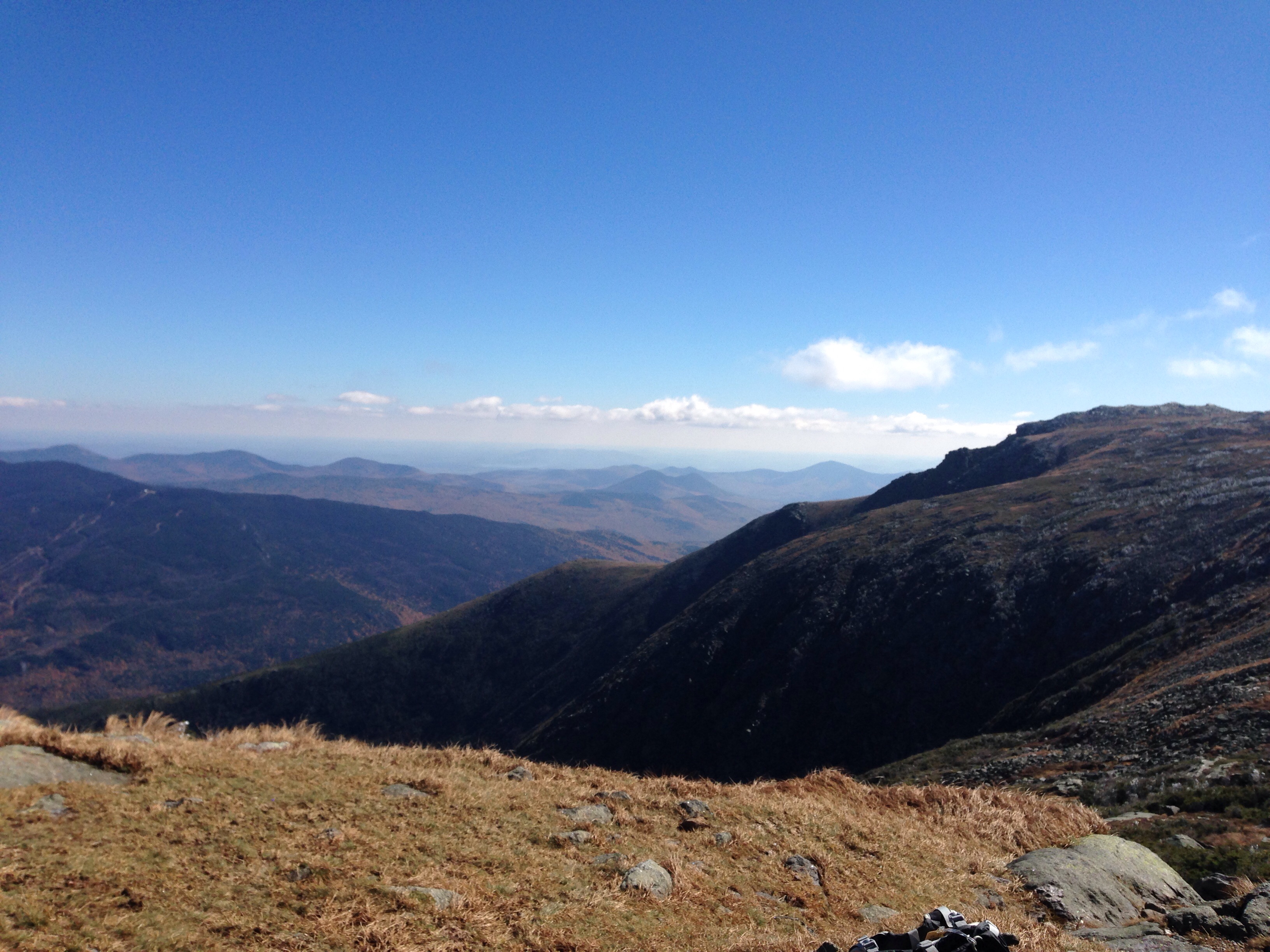
We had spectacular weather. Most of what I had read about Mount Washington had focused primarily on the horrible weather and didn’t spend much time at all on the difficulty of the trail. So while we were very prepared – in fact, over prepared – for the weather, we hadn’t actually taken into account the steepness and rockiness of the trail. After the half way point, we basically spent the next couple of hours scrambling up large boulders, some of which were quite wet from the waterfalls and streams that cross the trail. We were also slowed by the hordes of international tourists speeding up to the summit in terribly coordinated hiking outfits whom we felt compelled to let pass. In retrospect, we might have been better off had we been less polite.
And speaking of clothes – the ill-fated pants with the dysfunctional zipper (see earlier blog entries) reared their ugly legs again. I swear this was their last excursion. About an hour or so from the summit I realized the pants were constricting my left knee every time I stepped up – to the point I had developed a good sized blue bruise right below my knee. Finally I gave in, recognized the pants for what they were and stripped down to my light weight hiking pants that I had the foresight to wear underneath. My mobility increased enormously.
We finally reached the summit about 2 or so – well later than we should have, given that sunset was at 6:05. Nonetheless, we stopped for a while and had some hot tea in addition to our second meal of salami and cheese. The summit is a total tourist area. There’s a train that chugs its way up there. Others drive up on the “auto road,” and of course there are scores of people who actually climbed. There’s a museum, a gift shop and a snack bar. Remote, it is not.
Finally we started back down. We took Tuckerman Ravine Trail for a little bit, then veered left to the Lion Head trail. All of a sudden the crowds thinned, and the landscape grew wilder. It was much steeper than the other trail, and marked almost exclusively by stone cairns. We hiked through tunnels of dwarfed evergreens and slid ourselves down several rock chimneys. A number of the drops were steep enough that the daughter and I resorted to the good old fashioned sit down on your rear method of descent. At a couple of points the trail seemed to disappear into nothingness at the edge of a cliff – and all of a sudden you’d see a tiny little path down.
Lion Head Trail
Eventually that trail arrives back at Hermit Lake Shelter and rejoins Tuckerman Ravine Trail – at which point we realized we were out of water. We’d made a really stupid mistake of not refilling our bottles at tourist central at the summit, thinking we had enough. The boyfriend valiantly volunteered to run what we thought was a short distance to the water pump – only to find it wasn’t a very short distance and the pump required numerous pumps before anything came out of it. By then it was clear the sun was rapidly on its way down and we got out our headlamps to be ready.
We were now off the steeper and more beautiful trail back to the river bed of rocks. Actually there was a real river beside us much of the way. I finally took the lead since down is usually my strong suit – that is, when I am not having to slide down rocks on my rear – and we made extremely good time at first. Still, the only other people on the mountain now seemed to be professional trail runners who literally jumped over the rocks like moths flitting from light to light. Once the sun was down, any pretense we’d had to speed was done – one wrong step and turn of the ankle and that would be it. In the dark it’s easy to question where you are – especially since I had a strong tendency to want to follow the water runoffs – which looked awfully trail like to me – and the daughter seemed to want to turn right regardless of location. The three dollar map became very useful to provide some confirmation we were actually heading in the direction of the lights from the visitors center that occasionally flickered in the distance.
Finally – and almost suddenly – our journey through the night ended and there we were at the Previa. Injuries : some blisters – daughter and boyfriend; bruises – daughter and me (both banging legs on rocks and pants injury). Damaged equipment – somehow the daughter’s hiking pole had flipped open, the bottom part fell off, and she didn’t notice until we were at the bottom! She said it had seemed a little shorter. A Black Diamond, no less. Rewards: meeting a challenge head on with a team that included not just the husband and me but the daughter and boyfriend. When the husband and I are old and grey and sitting by the fire I hope they’ll remember we weren’t always that way.
So, lessons learned. In the broader scheme of things the husband and I remembered we really like sheer mountain climbing better than rock climbing – which can still sometimes trigger my innate fear of heights. We are rethinking the Grand Teton and are now seriously thinking again about Cotopaxi in Ecuador. It’s another almost 20,000 foot glaciated mountain that is awfully appealing.
And on the smaller scale of things we were reminded that you can make stupid mistakes on even 6200 foot mountains and regardless of how many you’ve climbed. You’ve got to be humble in the face of a mountain.
Inca Trail part two. I have realized that this experience was at least a trilogy, so part 3 will follow. Today’s installment – the “village” part of the hike, followed by “Challenge Day” and the Dead Woman’s Pass.
We met our fellow hikers at about 5:30 a.m. in front of the Hotel Marquesas in Cusco. We had briefly encountered each other the previous day during an introductory briefing session at the trekking company’s office. We were a diverse lot – our family of four, newlyweds from Boston exploring Peru, an English couple traveling around the world for a year, accompanied on this leg of the journey by a sister, a couple of salesmen from Texas, a doctor and his wife, also from Texas, and one man from California and another from Germany. Fifteen in all – it was a large and unwieldy group.
After what seemed like a very long bus ride, we stopped for breakfast in the small town of Oyelltambo. The restaurant was most notable for highly elaborate rabbit cages in its garden. It was very early in the morning but I think I am remembering this correctly.
We journeyed on to Kilometer 82 – the official beginning of the trail (or trial, depending on your perspective). We were struck by how agricultural it all was. Women on donkeys carrying bushels of herbs; local people selling water or other items at about every rest stop. The mountains on either side of the trail were green, capped with snow. And flowers everywhere. I hadn’t realized before that begonias grew in the wild. Views of the ruins of Llactapata – a settlement of 100 or so buildings that would have housed soldiers and others traveling the trail. Our trekking company did not scrimp on food. Trout for lunch. Apparently inspired by lunch, our guide then had to explain to one of our fellow hikers that the “no hunting” restrictions also meant “no fishing” with the fishing line he had brought from Texas.
Permits for the Inca Trail are strictly controlled and only a couple of hundred people can enter the trail on any given day. You also have to go with a trekking company – no independent forays along the hundreds of years old stone path.
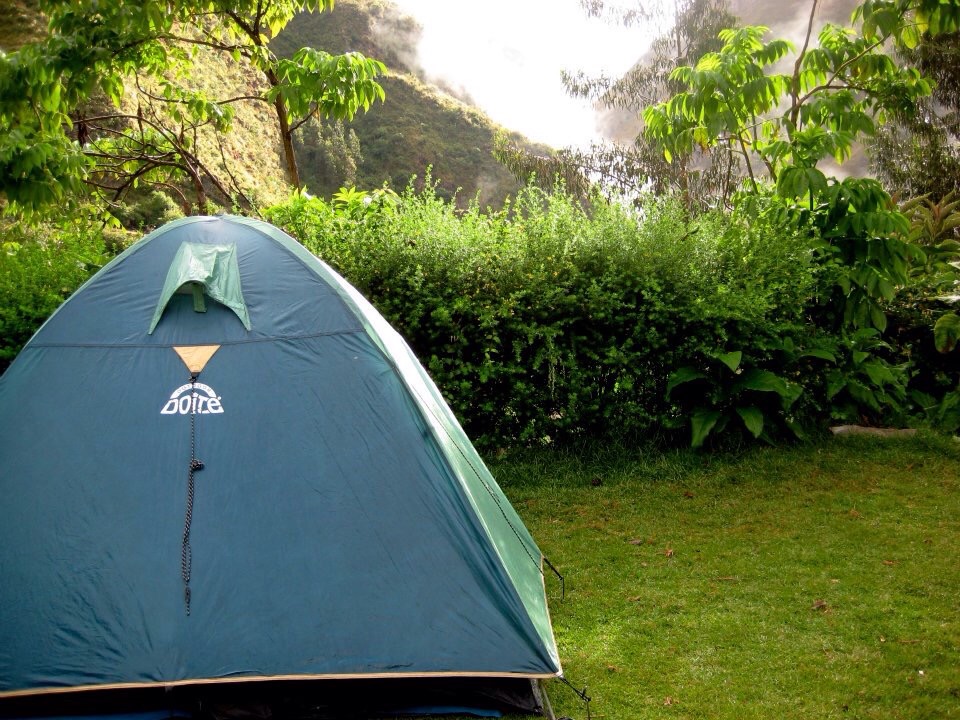
The first campsite, Wayllabamba, 3000 m, was in the heart of the agricultural area; in fact, local people were selling all different beers and drinks from aluminum containers. Dinner was a highlight – chicken with flaming bananas! But even with the semi-village feel of the campground, the remoteness kicked in with the southern hemisphere of evening stars – visible without any city lights. This was our first time camping with our daughters. Since we hadn’t reinvented ourselves as climbers until age 50, they had never experienced this growing up. But they were good sports and settled into their own tent well – although quite greatful we had made them bring long underwear.
The next day, day 2, I finally started to feel I had found my hiking rhythm. That day we reached the highest pass in the trail – Dead Woman’s Pass – at 4200 m. It was overcast and drizzly and suddenly the layers of clothes that had seemed too warm in Cusco felt right.
It rained on and off the whole way, the grey punctuated by the yellow orchids we saw every now and then. The up was ok, if steep, but the down hard on the knees. By now hiking on the carved square stones of the trail – some replacements, but some the same the Incas hiked on those hundreds of years ago on missions no one, to this day, totally understands. There was no written tradition.
Yellow orchids – michi michi
Of course, as we were accompanied on this hike by the daughters I had to assume both my mother and hiker persona – not always compatible. In fact, the maternal one is also known as Mommy the Packhorse and as usual I ended up carrying many of the layers that belonged to the two girls. A lesson to be learned: the younger one decided to prance well ahead of the rest of the family on the steep approach to Dead Woman’s Pass, leaving her rain gear and warm jacket with her sainted mother. We found her 45 minutes or so later shivering and cold as the rain and wind picked up.
Dead Woman’s Pass
The tree line was about 10,000 feet. Dead Woman’s Pass, at close to 14,000 feet, was cold, rainy, and very windy. Only a few hundred of feet below it was much warmer. Still, our camp site that night – Pacamayo, 3600 m, was very cold. Gone were the villagers. We were in a non cell phone service area, completely disconnected, and with only the grey shades of the ancient Incas for company.
To come – day 3 and 4: the placing of rocks on a cairn, Incan funereal rites, daughter number 2 gets really sick, sunrise (almost) over Machu Picchu, and the van ride back and the attack of the mysterious wild animal. Stories to come.
Our trek along the Inca Trail in May 2012 started off as a natural follow up to Kilimanjaro in 2011. Granted, it wasn’t a summit per se, but it certainly was a well-known hike, seemingly had a degree of challenge, and besides, we were able to convince our daughters, then 19 and 21, to accompany us. But what we didn’t realize was that the trip would be as much of a cultural experience as it was a climb. Many mountains are remote and you are more exposed to the insular world of the mountaineer and whatever wildlife lives above the tree line than you are to any local residents. But Machu Picchu surprised with the many, many people we saw every mile of the way – from the beer hut on day 2 or so to the women riding donkeys with bushels of cut herbs on their backs.
The trip began rather inauspiciously – for some reason the husband and two girls thought that Mexican food and margaritas at the Orlando airport was an appropriate way to kick off a trip to Peru. Not so, and all I can say is they suffered quite a bit for it, while my salad and wine seemed to agree quite nicely, thank you very much. We flew on Copa Air – the Panamanian airline, and like most non US airlines, it was quite pleasant – although we had bad weather in Panama City and landed with quite a bump. Ran to the next gate and just made our flight to Lima, where we landed about midnight. But you would never have known it was the wee hours of the morning from the hustle and bustle of the Lima Airport. It might as well have been late afternoon on a Saturday of holiday weekend. All the shops open, people dining.
Had to recheck our bags at the LAN counter – our airline for for the trip to Cusco – and got to the gate about 2 a.m. Together with a number of other intrepid travelers, we each found a section of seats to crash on for a few hours, backpacks within touching distance. We arrived in Cusco in early morning, and could feel the change from sea level to 11,000 feet. We stayed at the beautiful Hotel Marquesas – a 16th century residence converted to hotel. A courtyard in the center; walls about a foot or more thick. The husband and I had a balcony overlooking the street from which we could see the cathedral. The girls had an interior room that felt like a cave. Because we had arrived so early, the rooms weren’t ready and we were immediately offered – and accepted – coca tea – which does in fact help with sudden altitude change.
Hotel Marquesas, Cusco
Travel hint. Only bring new bills to Peru. Currency exchanges will not accept anything with creases or tears. And they are serious about it. Sight seeing was the order of business for the first day or so. The cathedral’s wonderful painting of the Last Supper where a guinea pig substitutes for the bread embodied for me the peculiar marriage of local and foreign cultures. And the food! For lunch I had potatoes in a red pepper cream sauce. (Peru has, I believe, more varieties of potatoes than anywhere else in the world.) Dinner – chicken stuffed with goat cheese and elderberry sauce; local trout; poached pears with cinnamon ice cream. And you can’t forget the pisco sours – like a gin fizz made with a brandy.
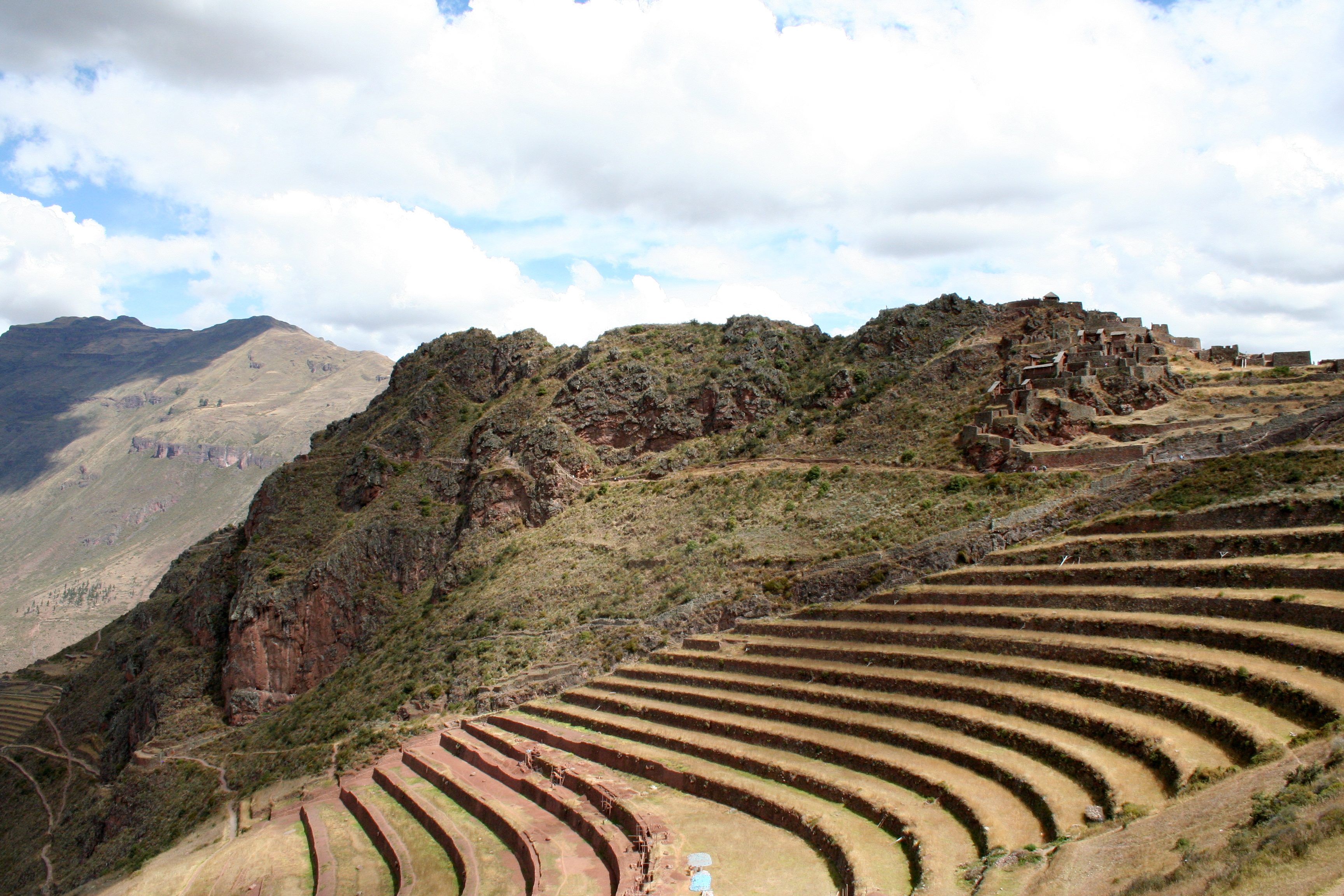
We spent the next day on a bus tour of the Sacred Valley. Although it was supposed to be for both Spanish and English speakers, we seemed to be the only English speakers and it was remarkable how ten minutes of Spanish could turn into about two sentences of English. Nonetheless, the ruins were remarkable, the Andes amazing, and we were struck by the authenticity of the people and places we were driving through.
That night the four of us did a mini gear check, getting ready for a van to pick up us up at 5:30 am to drive to the fabled Kilometer 82 – the start of the trail. Next post – the start of the hike.
Boots with soul
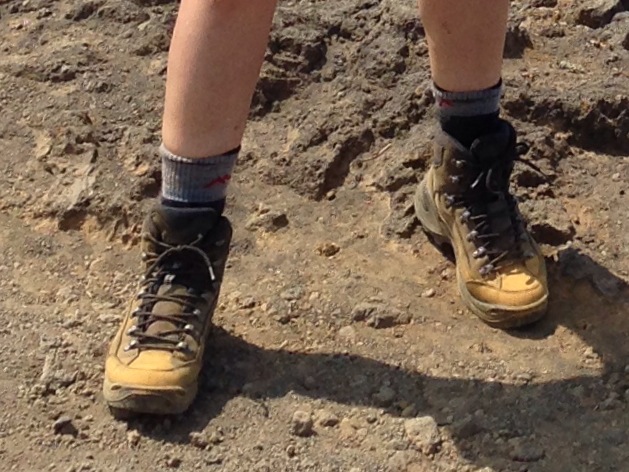
This coming week I’m planning to lug the hiking boots back to my office so they can start to climb stairs with me again. They are full leather Lowa Renegades that I bought in 2010. You could tell back then if a climber was from Central Florida because those were literally the only full leather boots being sold in the area.
I figure that it’s a good idea to be back in hiking boot mode before the Mt. Washington trip in a few weeks. And I know my daughter, who is going along for this trip, is tired of me telling her to do some hiking in her hiking boots – but since I don’t think she has done so for any length of time since the Inca Trail in May 2012, I certainly think it’s advisable.
Each time I put on my boots I see just a little bit of dirt or dust from treks past. Some days after the Boston Marathon bombing occurred and the bombers identified, I was climbing up and down the stairs in my office building. We had just returned a few weeks before from hiking down and up the Grand Canyon – South Kaibob and Bright Angel Trails. There was still red, copper dust ground into my boots that reflected the rusty color of the stair rails. The burnt colors around me, and the cavernous recollection of descending down into the canyon converged and I was overcome with the tragedy of how the two brothers could have so missed the point of the mountains and sun and whether they even realized what they had done.
I dragged around dregs of Kilimanjaro for months on my boots. The husband and I hadn’t bothered to take advantage of the repeated offers to clean our boots when we were in Africa – hence, even when we returned, my navy blue boots had a grey ashy sheen that outlasted multiple rainstorms. Each time I put them on I felt a little bit again the magic of that moment if stepping on the summit.
Elbrus didn’t make as big a mark on my boots as it did on me. Probably because once at the Barrels – the converted oil barrels where climbers stay at 12,000 feet – we were in our double plastic boots and crampons. But my boots still bear a little dust of the Caucasus mountains, especially the fields of wildflowers on the observatory hike and the dried salty sweat from the horses as we went horseback riding. And I’m sure that somewhere hidden in the creases of my boots there is a bit of olivine sand from Green Sands Beach in Hawaii, or the deep rich soil of the Inca Trail.
I’m hoping my boots have a lot more miles in them – although when I looked at the soles they have lost a fair amount of their grip. But grip or no grip – they have a lot of soul.

![Galopogos [http://www.flickr.com/people/59888966@N00 Pete]](https://fromswamptosummit.com/wp-content/uploads/2014/12/image3.jpg)








 FromSwamptoSummit