A Pilgrimage to St. Wolfgang, Austria

It was October 12. The next stage of our Austrian adventures involved a hike from St. Gilgen to St. Wolfgang and a ferry to Strobl. Incidentally, one of the many things I learned on this trip is that you can download any language from Google translator onto your phone and use it even when you don’t have Wi-Fi or cell. That turns out to be invaluable when you’re in a German speaking country and your only German consists of Gesundheit.

Once again, a very nice breakfast buffet at our St. Gilgen hotel (Kendler Hotel). J and I are getting used to the pushed together twin beds, each of which has its own duvet. It turns out that minimizes a lot of arguments about who has pulled the covers off of whom. This coffee machine was exceptionally good, with at least six plus types of coffees, and once again, many types of breads (you are given a basket, just so you can completely carbo load), meats, cheese, eggs, fruit, yoghurt.

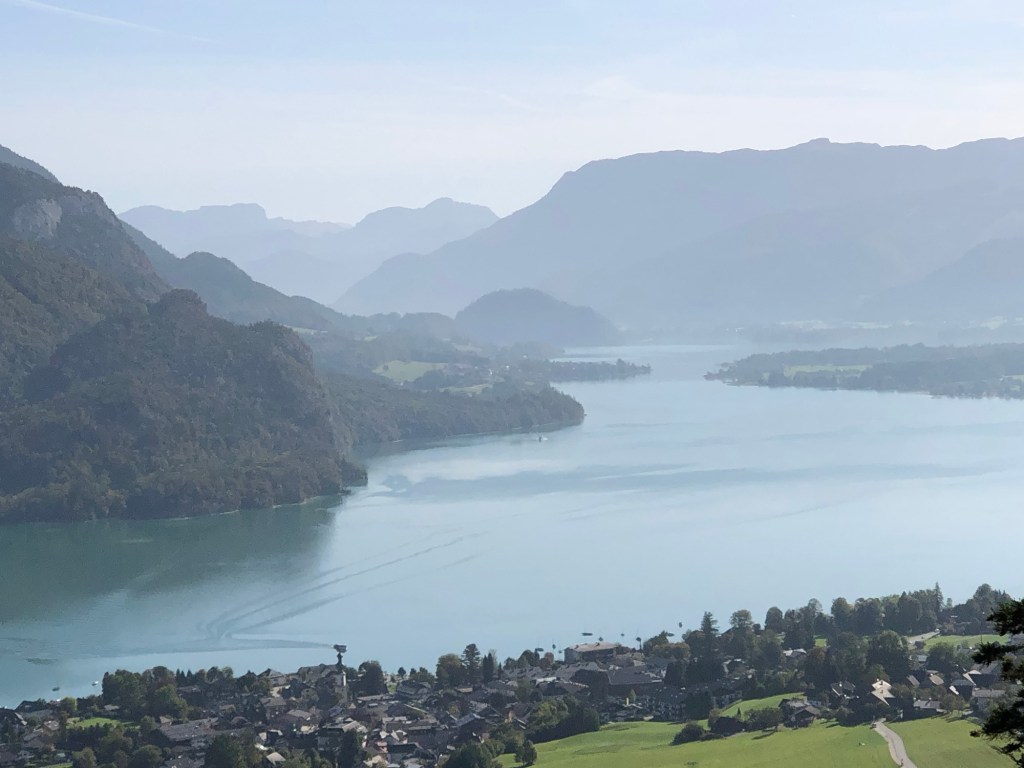
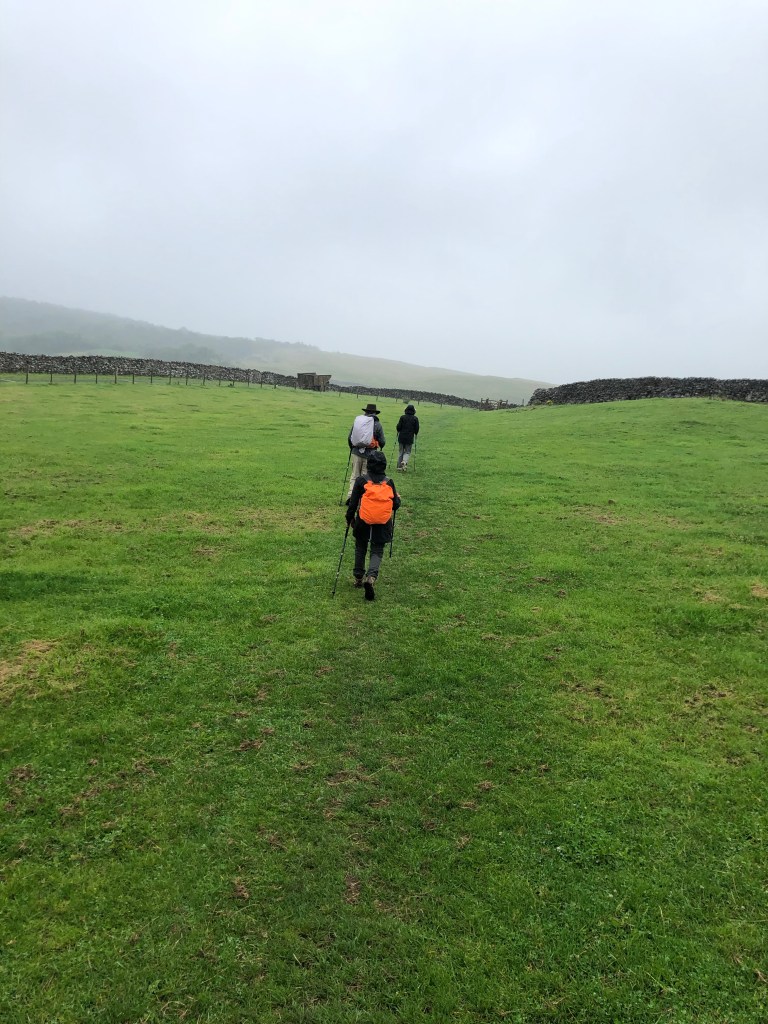
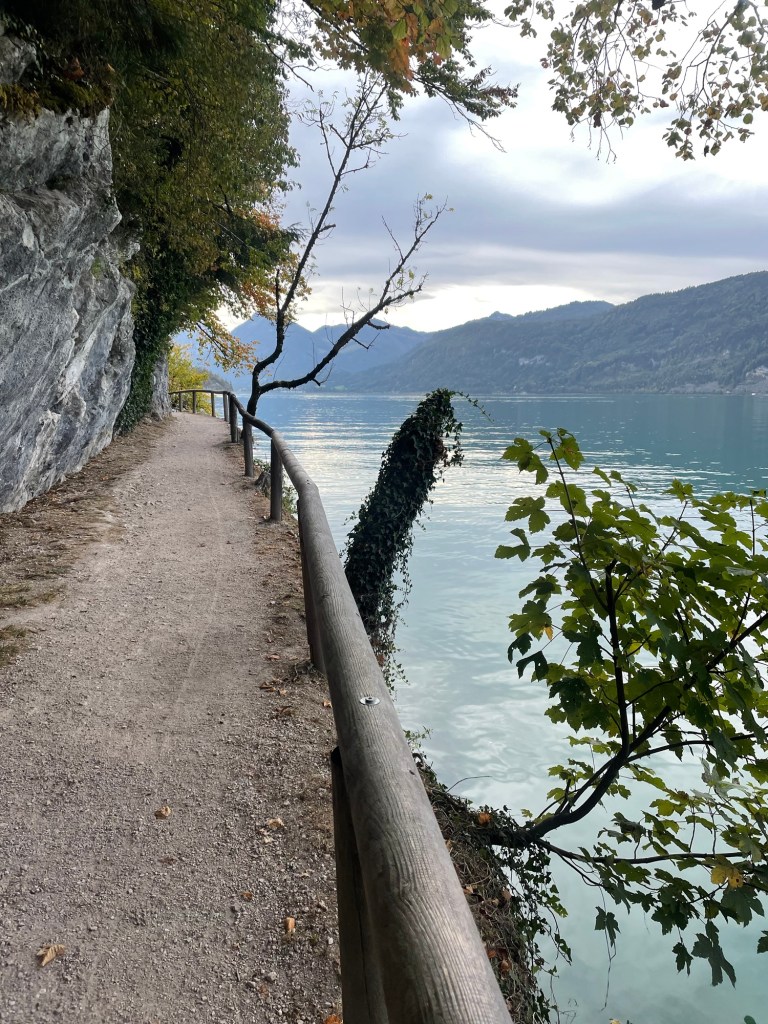
The hike from St. Gilgen to St. Wolfgang is an actually a pilgrimage route for St. Wolfgang himself. He lived as a hermit, later founding a monastery in St. Wolfgang. Lots of information boards along the way told his story, including in English at first…but then someone clearly became tired of translating and they were in German only.

Some very steep uphills made the trail markers that depicted pilgrims carrying heavy crosses quite appropriate. A small white church stood at the peak, right by a spring (shrine) that was supposed to have healing properties. Although I felt I could use some healing properties by that point, I resisted the urge to take off my boots and dabble my feet. The trail had a nice mix of up and down, and reminded me a bit of the Balkans.

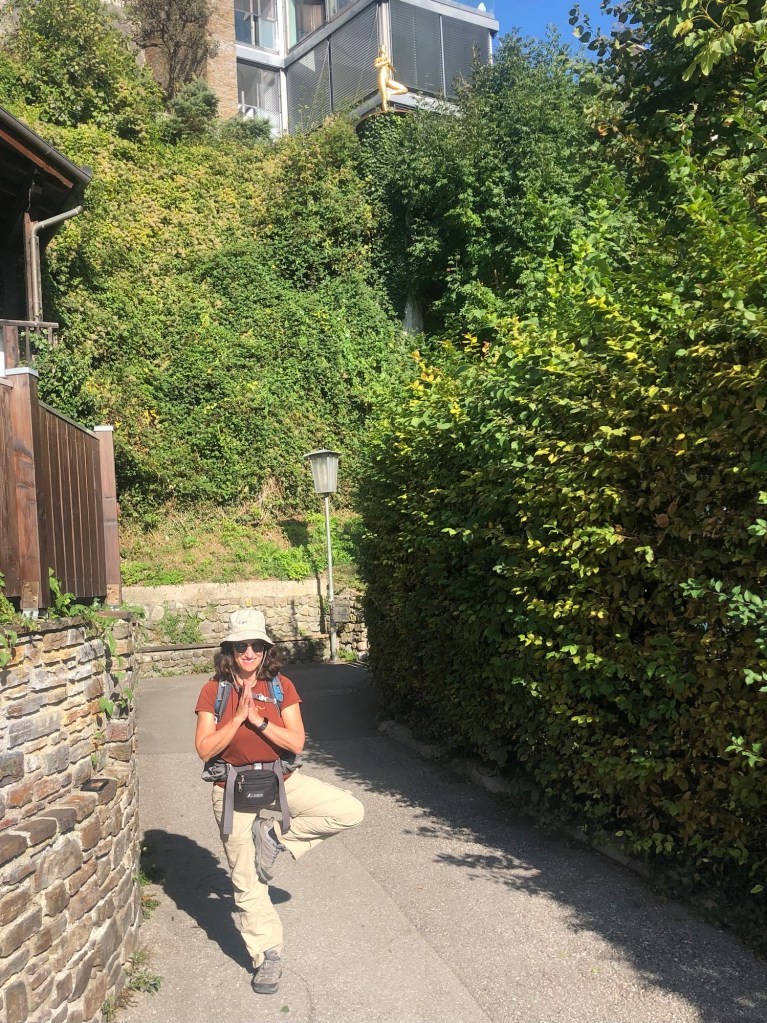
One of many Virgin Mary shrines
Two Yogis – Look Closely

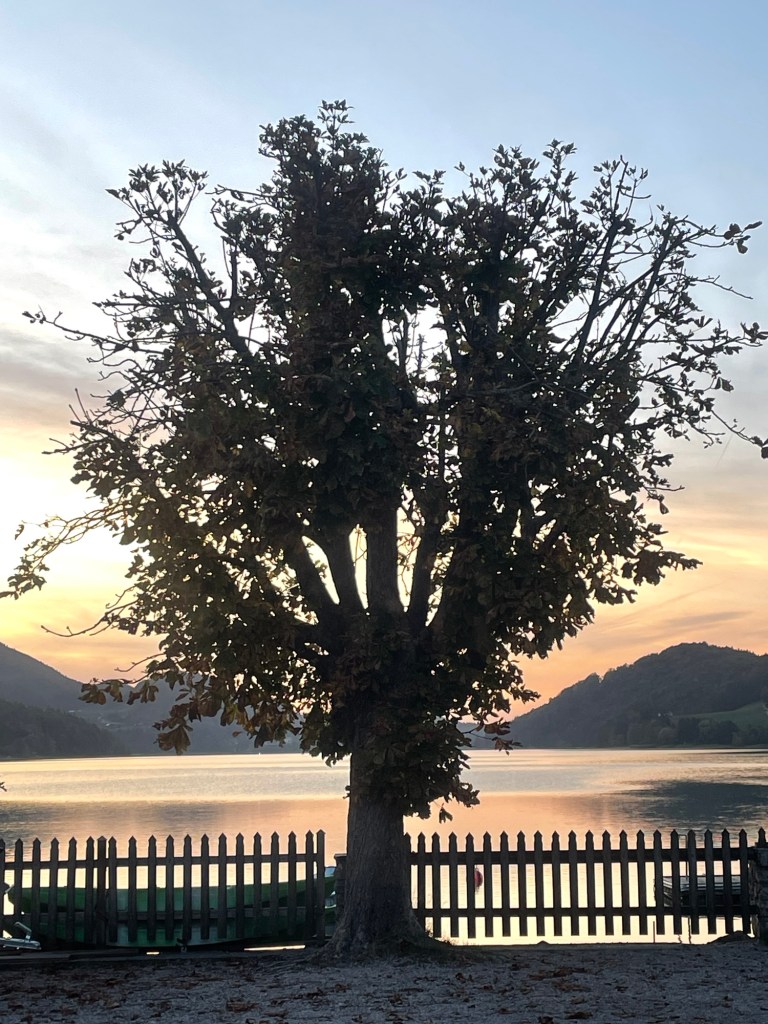
We reached St. Wolfgang in time for lunch at a cafe by the church. The very young servers seemed overwhelmed, so it left a bit to be desired. St. Wolfgang is quite the tourist spot, but still retains a lot of charm. Nice little boathouses line the lakeside; it looked like you could rent them. And I was amused by all the statues of yogis! It was quite the contrast to the Virgin Mary icons we were seeing everywhere, at stops on trails, above front doors.

The 15th century church, right beside the lake, was amazing – painted ceilings, multiple carved alters.

We bought our ferry tickets online and took the 15:45 to Strobl, where we were to stay for two nights. Like the buses, the ferries leave right on the dot. It was about a 20-25 minute ride across the lake to the far end. Strobl feels smaller than St. Wolfgang, although it looks bigger on the map. I think it’s just less touristy.

A fair number of places were closed for the season. We stayed at the Hotel Strobler, very nice and convenient, but right by the church which rings its bells every 15 minutes, 24 hours a day. Our window looked out on a well-maintained and colorful graveyard, decorated with flower gardens atop each grave.

After a walk down to Lake Wolfgang (Wolfgangsee), we had dinner at a brewery with very interesting food. I had a vegetarian meal of baked potato with sour cream, root vegetables and chestnuts. J had Wiener schnitzel (not so unusual). Sleep was a bit hard to come by, with the church bells clanging every 15 minutes.

The next day was Friday the 13th. After our somewhat disrupted night, we made it to a grocery store to pick up lunch food for our day hike. We started off by passing the elementary school track races; lanes had been marked off by the lake, and there was lots of excitement.

The start of the Burgl Panaramaweg (Trail) is neat. In contrast to the ancient Wolfgang pilgrimage we had taken the day before, it opened in 1982. The trail starts off on a boardwalk tethered to the side of a mountain as you round the Burgl Rock. It then meanders through a valley (replete with very nice cows, all wearing bells), and though a pass and up, up, up to the Schwarzensee (see means lake).

On the way, we walked through beautiful mossy areas that looked like fairy spots, biodiverse forests, followed by spread out tall pines with light dappling through. The lake seems small compared to the others, but it’s large enough when you walk around it.

We had a nice picnic lunch in a secluded spot on the banks, and made it back to St. Wolfgang (where we’d been the day before) in time to catch the same 15:45 ferry.

As I wrote this diary entry, we were enjoying a drink in the garden at the Hotel Strobler while vaguely watching the only other Americans we’ve seen (two men, investments bankers?), who were also on the ferry, trying to figure out how to order drinks.

Our final night we had dinner at Kirchenwirt – we even made reservations. J had a goulash, and I had spinach dumplings. Fortunately we were either so tired or so used to the every 15 minute church bells we didn’t even hear them that night. A good thing, because the next day was 9 miles to Bad Ischl.

On the Way to Fuschl Am See

It does sound a bit like “I Had Trouble in Getting to Solla Sollew,” for those of you who remember the 1965 Dr. Seuss book…but Fuschl am See was our next destination after our couple of nights in Vienna. (“See” means lake; “am” means “at the”.) This entailed trains and buses and trails, oh my, and a few wrong turns along the way.

Actually, we were about to embark on the hiking phase of our trip — about a week exploring the hills surrounding the Salzburg Lake District. Our adventure started with the subway to the main train station in Vienna, a long wait, and then a train to Salzburg. Fortunately, it was easy to find the bus from Salzburg to Fuschl am See, although getting off the bus proved more difficult.

We bought tickets for the 2:15 bus and boarded almost immediately, except for the delay occasioned by some woman who insisted we put our suitcases in the cargo area below. I knew we must be in the right place, since one of the few passengers on board was wearing a native green Austrian hat, festooned with feathers and insignia. See photo above. We clearly weren’t in Kansas anymore.

We had looked at all the stops listed on the electronic display on the bus and there seemed to be only one Fuschl stop. Although this was not consistent with my previous research, we thought we better go with the real time indication on the bus and get off at that one. I should have relied on my research, as we ended up disembarking a full four stops too soon. It turns out that having Fuschl in the name of a place was not much of an indicator…there were multiple stops labeled Fuschl and the electronic display simply hadn’t shown them yet!

Anyway, we exited the bus at what was a suspiciously remote stop on the side of a highway, after making quite a production since the bus driver had to help us get the suitcases out from the cargo hold. The fact no one else got off should have been another hint. It didn’t take more that a couple of minutes before it was clear something was terribly wrong. I checked GPS (which, by the way, works without cell data or Wi-Fi) and realized we were a good three miles from our destination. Since pulling our luggage along the side of a two-lane highway without sidewalks didn’t seem like a very good idea we were happy to learn the next bus was only 20 minutes away. The bus driver rolled his eyes when we got back on but let us use the same tickets…clearly chalking it up to incompetent Americans. This time we did not put our suitcases in the cargo hold!

After three more stops, we arrived at the correct Fuschl stop and located the Hotel Jakob (which also seemed to have a moniker of the Triathlon hotel). And indeed it was aimed at triathletes and cyclists, with bikes on display and biking gear for sale. The town was quite small – on a beautiful lake surrounded by mountains. J and I strolled through town and had a gin and tonic at a nice lakefront cafe, and made a dinner reservation for the attached restaurant, which was recommended for local fish.

The temperature dropped; we returned to the hotel to change. This is when we figured out that Austrians, at least in the country, eat early – between 6 and 7 p.m.! I can only describe the restaurant as staid, lots of older people (it was a weeknight in the off season), all seated at tables lined up around the sides of the room so we could all inspect everyone else as they ate their meals….I had three types of fish all from the lake – a filet whose name I didn’t catch, arctic char, and perch, served with carrots and leeks.

The next day we finally started the hike, but only after an amazing breakfast buffet featuring salmon, cold meats, cheeses, breads. I managed to mess up the coffee machine by using too small a cup for my latte (you can imagine what happened), but discovered that the coffee machines in Austria rivaled those in Spain. America needs these!

After we checked out of the hotel, we started to follow the “blue line” on our downloaded GPS map, just as we had done in the Yorkshire Dales. The first part, through a valley, was a trail themed around gnomes, with little signs up everywhere telling a story of some ill fated gnome. The landscape really does explain where the Brothers Grimm got their tales.

It was only about a five miles to our next stop, although there was a decent uphill and down, and I did miss my hiking poles – but there was no way to fit them into the luggage. One thing to get used to were all the Catholic shrines and chapels along the trails. Every couple of miles there would be a shrine with candles lit, typically for the Virgin Mary. I’m assuming the candles were battery operated.

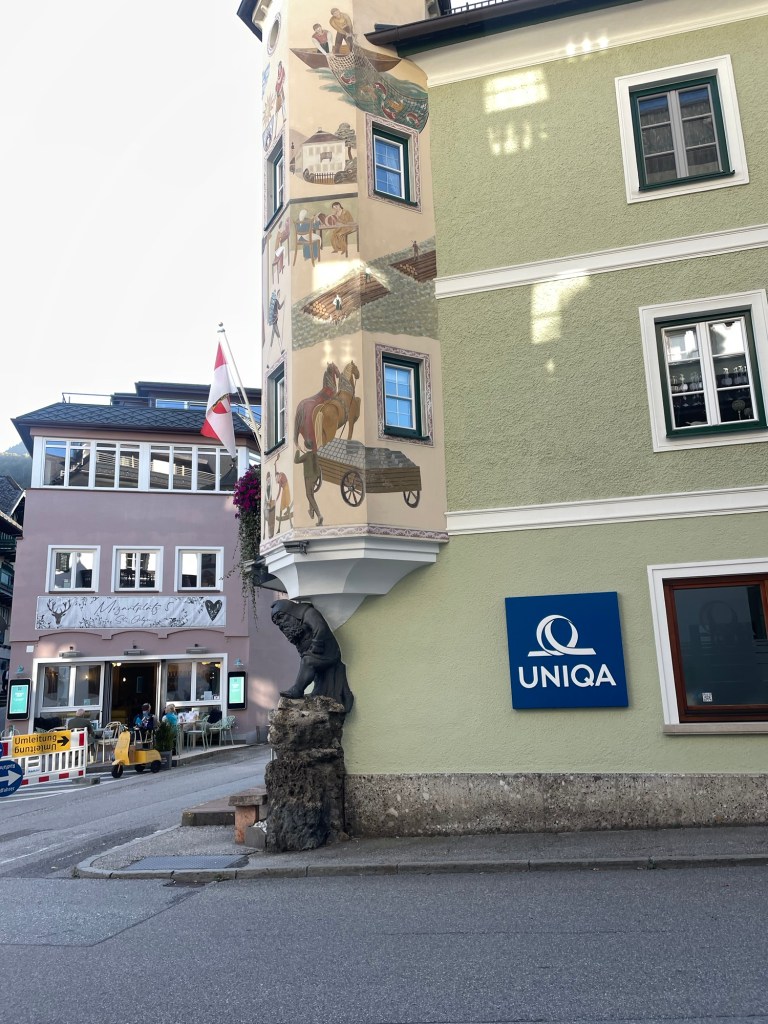
After some good scrambling and beautiful views from Mozartblik, we descended into St. Gilgen, which is on Lake Wolfgang. It’s a very wealthy summer town, but many places were closed for the season, which had ended a couple of weeks before. It was almost too quaint, painted buildings and Austrian architecture.

We had lunch by the lake, followed by a power nap, since we still weren’t exactly on the right time zone. After a long walk through town, we capped off the day with a drink at a bar across the street, which featured someone wearing lederhosen along with many tattooed bikers. That theme continued at dinner – again, the restaurant was practically empty by 7 – where we enjoyed watching four very elderly men, clearly on their weekly outing, each wearing lederhosen with the appropriate jackets.

J and I retired early. The next day was going to introduce yet a new mode of transportation – a lake ferry.

Road Trip U.S.A – Yellowstone and the Battle of the Elks

We awakened on day two of our Yellowstone adventure to a view of two elks grazing and head butting only ten yards from our rooftop tent. You could actually hear their antlers clacking against each other. It didn’t look like serious business – they’d go at it, like very large puppies, for a bit, and then tire of that game and eat some more grass. Eventually they meandered out of the campground, as comfortable as you please.

This was our day for the “must see” Old Faithful, which required a trip to the western side of the park. There’s a great visitors’ center, with good explanations of volcanoes – especially how we were sitting right on top of one. We then took a decent hike up to an observation spot to see Old Faithful itself. Fortunately, we saw a pretty good eruption. We saw it erupt a second time later in the day, and it simply sputtered.

Next stop was the “prismatic falls.” A navigational error ensued, and we turned off the road too early, which took us along a rather odd hike on the perimeter of the area toward the Fairy Falls. We could see people in the distance on boardwalks, but had no way to get there. Nonetheless, we could still see the billowing multi-colored smoke – pink and turquoise. We were going to try to get to the actual location, but the traffic was simply too much. A lot of Yellowstone is still digging out from the floods of last year, and although the crowds weren’t bad, a weekend day was all that was needed for the traffic snarls to start.

A big rain storm had started so we headed to the Lake Village lodge again to wait it out. There, sitting on the porch, we met someone who was born in Derbyshire, of all places, then moved to the U.S. with his family, and now was a film editor on one of my favorite TV shows, Naked and Afraid! It was he who told us about Deadwood….

After a “grocery store” trip (to the extent a national park general store can be described as a grocery store) we had our last camping night in Yellowstone, and celebrated with an odd concoction of mac’n cheese, precooked bacon, and green beans. As I was cooking I noticed a fellow camper who’d left his chair too close to his campfire on that very windy evening – fortunately I was able to call out to him before it got incinerated. I felt like a veritable Smoky Bear!

The next morning we managed to pack up all the debris we’d been accumulating. Those bear box pantries are a real luxury. We left camp by 10 a.m. and drove to Fishing Bridge, just north of Lake Village and out of Yellowstone via the East Entrance. There was a lot of elevation gain, and evidence of many forest fires, lots of downed, white trees.

There was a full day of driving ahead of us. Our route was going to take us through Cody, into the Big Horn National Forest area, and finally into Deadwood which was as peculiar a place as its name implies.

Road Trip U.S.A. – The Northern Loop of Yellowstone, an Encounter with a Bear, and a Grand Canyon

Leaving the Grand Tetons

Yellowstone National Park is GIGANTIC. There’s no other way to put it, except to use capital letters. And especially when you have just arrived from the much smaller Grand Teton National Park.

It’s an easy trip from Jackson up to Yellowstone. You drive through the eastern side of the Grand Teton National Park (beautiful views of the Grand Teton peak itself, which does tower above the others). We had previously explored the western side so it was interesting to see the other part of the park. The granite mountains looked like rows of jagged shark teeth biting the blue sky.

After a while, the Tetons peter out, and you leave the park for a few miles – only to enter Yellowstone, the oldest of all the national parks (although I think Hot Springs also claims that honor…). It is gorgeous. We drove along a river and through a canyon, on to West Thumb, which is part of the massive Yellowstone Lake. Nothing here is small.
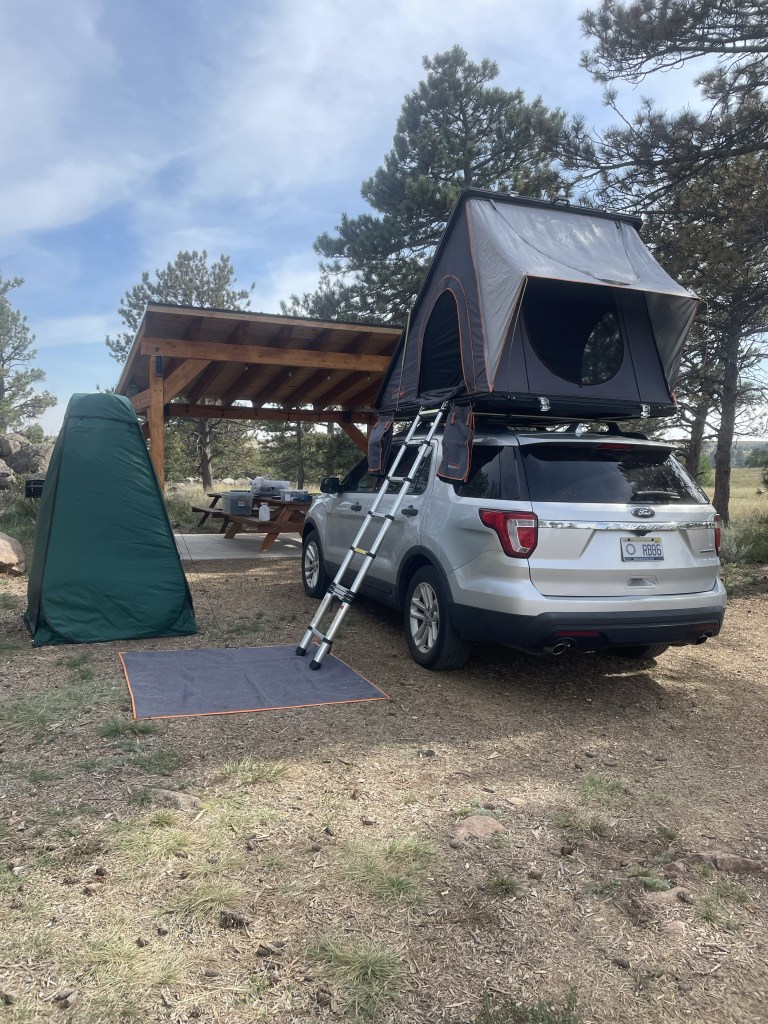
We finally reached the Bay Bridge Campground, where the person checking us in was from Melbourne, Florida! In keeping with everything in Yellowstone, the campground was huge, but each site was a good size and it was a great place for people watching. For example, the European threesome of two men and a woman – one of whom jumped rope for at least 30 minutes before dinner while the woman looked on wearing a fur vest. We even saw a few other rooftop tents.
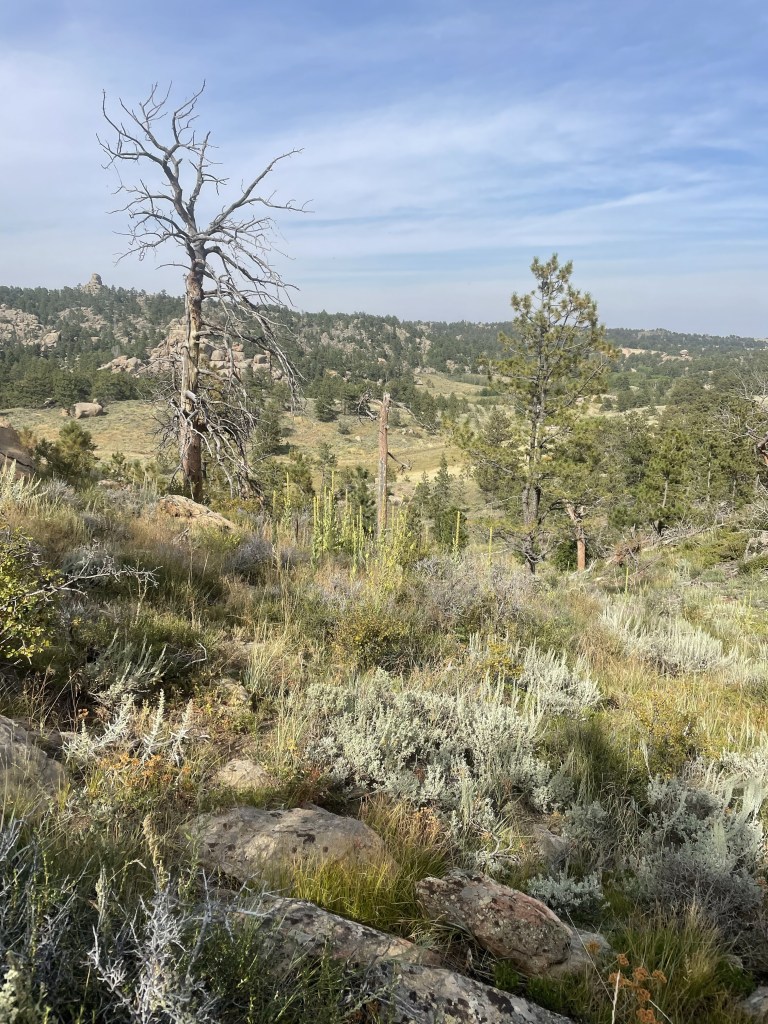
We set up camp at what was to be our home for the next three nights, taking particular advantage of the built in bear box, which made a great pantry. We then drove to the Lake Lodge, the closest of the lodges where we sat on the porch with a drink (and Wi-Fi) enjoying the views of the lake.

Sleep that night was not easy. It started off with the sound of some creature making high pitched noises and grating sounds. I was terrified that the empty water cooler (BTW, a completely useless purchase, gallon jugs work way better) was being dragged around by some unspecified creature of the night. J asked if we should look out of the tent to see what was going on, and my response was “absolutely not.”

The next morning I noticed one of the logs that delineated the parking area by our site bore fresh (and large) scratch marks, and heard one of our neighbors saying they had seen a mother bear and her cub visiting the campground right by our tents. This was not reassuring.

Our first day we decided to explore the northern loop, parts of which are among the least traveled. This took us by the Mud Volcano – a nice boardwalk passing over the steaming and roiling fumeroles and mud pots. You have the sense of earth moving under your feet.

From there, we drove through the Hayden Valley, lush green and yellow grasses – flat plains with brown mountains in the background. The yellow tones coordinated well with the sulphur from the geothermal activity. There we saw a herd of bison wading in the ponds. We stayed at the prescribed distance, mindful of the five people last year who were gored by bison.

Canyon Village was our next stop. It’s a very large “town” in that part of the park where we indulged in some souvenir shopping, followed by a drive along a very windy road and a high pass to Tower Roosevelt, on the way to Mammoth Springs.

The one thing not to go see in Yellowstone- the petrified redwood tree. After seeing numerous signs advertising it, I had visions of a preserved and immense tree….only to find something that looks like a stump of tree rock at the end of a dirt road.

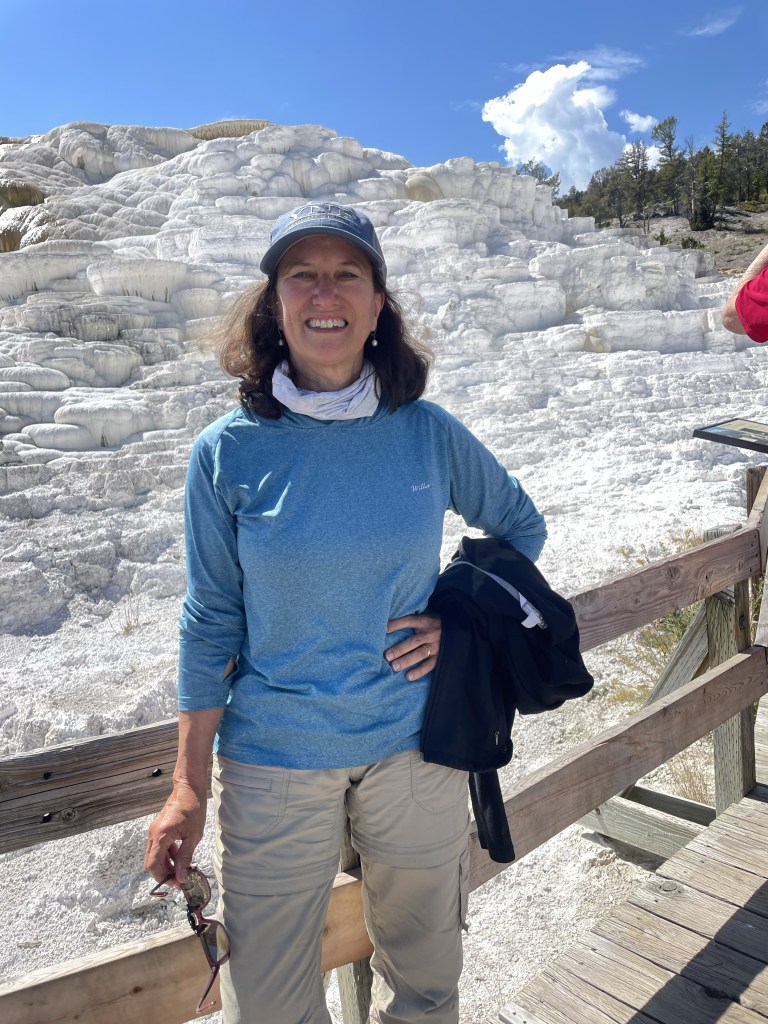
Mammoth Hot Springs consists of hot springs bubbling up into layers of calcium that form terraces of white travertine. It’s a lot like Pamukkale in Turkey, which we saw in 1989. In the 19th century people would dip objects into the hot springs to coat them in travertine and apparently you can still find some of these objects in antique shops. They don’t let you do that anymore.

From the marbled Mammoth Springs we worked our way to the Grand Canyon of Yellowstone. It is an amazing gorge, turquoise water below, a huge waterfall, and gradated orange and grey cliffs. It’s possibly the most beautiful area in the whole park.

And on the way back we encountered a female elk crossing the road right in front of us. That was a precursor to the next day.

Road Trip U.S.A. – A Taste of the Tetons

Jackson Hole may be best known for skiing, but snowless summer months offer plenty of entertainment.

Although we are hardly equestrians, J and I have gone horseback riding during many of our travels. So far we have managed trail rides in South Africa (that one also involved zebras), Hawaii, Russia, Croatia, and Arizona, to name a few. The Tetons seemed an appropriate addition.

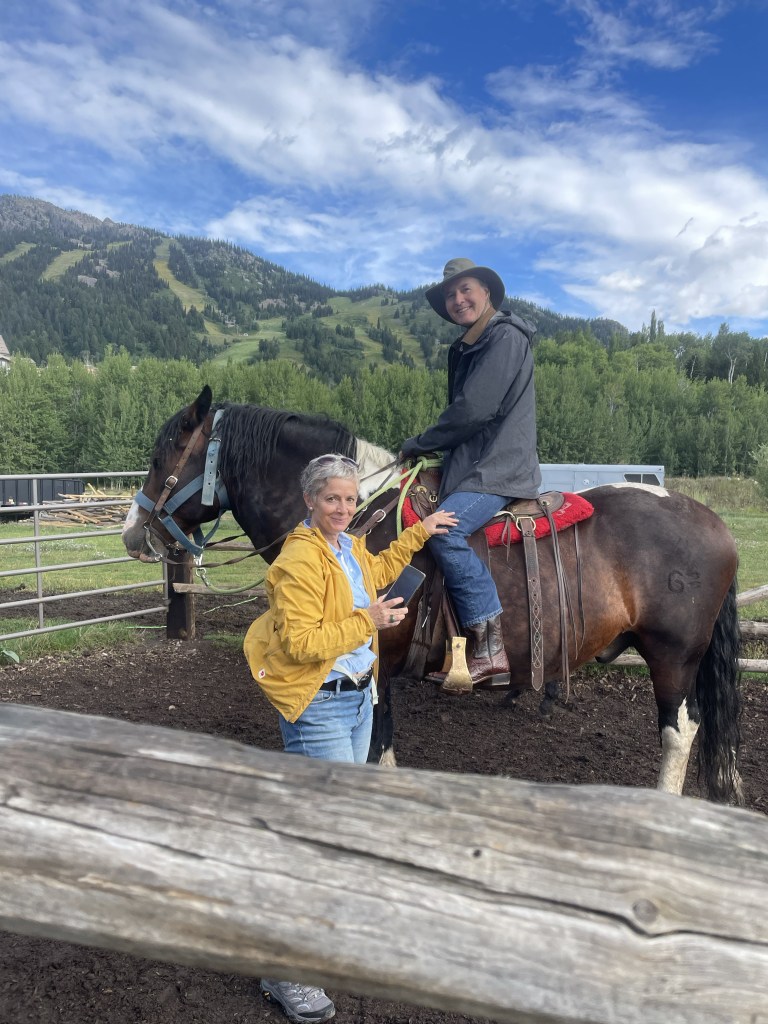
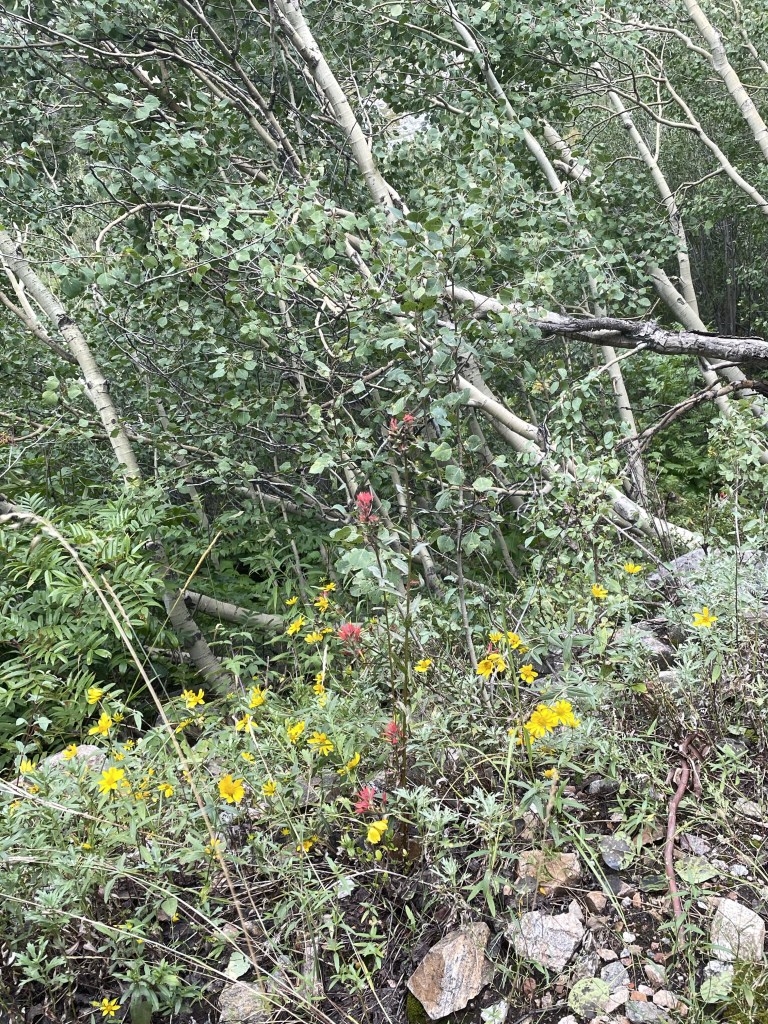
We met up with our niece, F (who really does live near Nice, France), as she was the only of our family group willing to brave the large four legged creatures that were to take us up one of the nearby mountains. She rode a very hungry “Chuckles,” J had a chunky “OT” (for Overtime), and I was blessed with Rhinestone. Apparently the trail company has over a thousand horses between Grand Teton National Park and one other location. Beautiful wildflowers, including lots of Indian Paintbrush, which is the Wyoming state flower. My favorite part was when our guide instructed us to get a move on so our horses weren’t spooked by the nearby bear cub who had climbed a tree, with Mama Bear right below.

Next up was a drive around the beautiful Lake Jennie loop. It was rainy but that didn’t keep us from enjoying sandwiches and a beer at Dornans, a long time Jackson establishment. And saw another bear. Bears were sort of a theme in the Tetons.

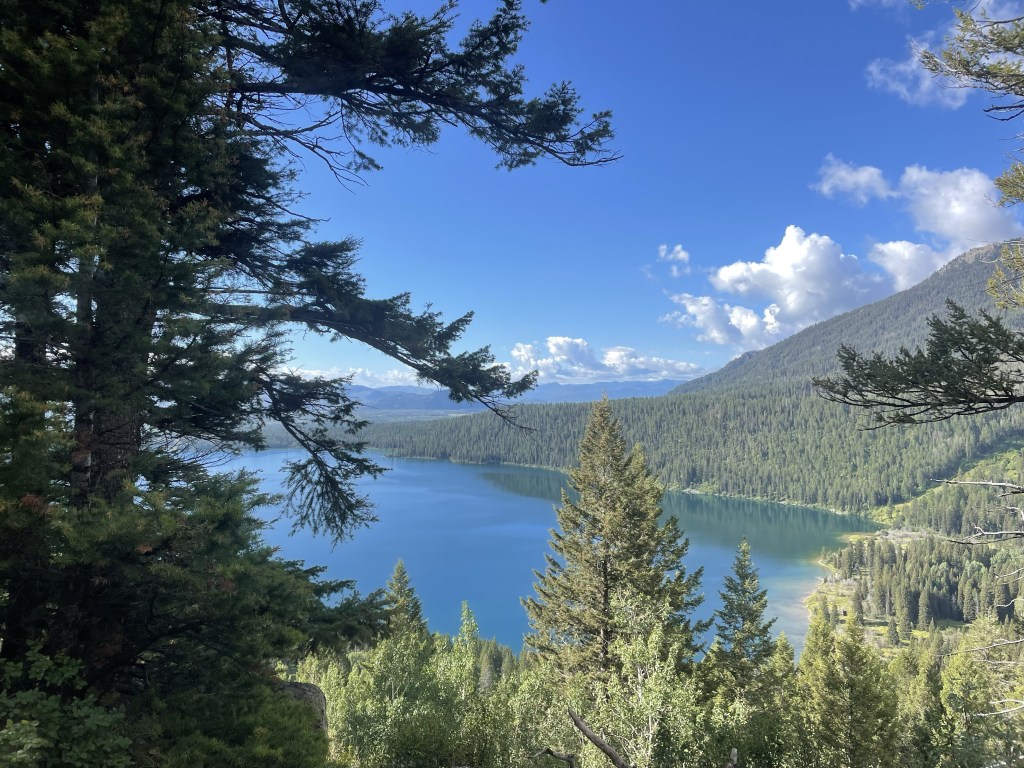
The afternoon saw a short but fun Lake Phelps hike. This part of the park is on the Lawrence Rockefeller Preserve. The Rockefellers, who had built a large estate on the property, donated it all to the park on the condition that all man made structures were to be torn down and the area returned to nature. Towering mountains peering over at a serene mountain lake. And on the way back we encountered a very large moose.

The following day, which was beautifully sunny, our hiking party consisted of my sister in law, T, J and me. I think the others were turned off by the fact the trail bore the auspicious name, Death Canyon. After driving through some of the many road construction sites (it seems as though most of the USA is currently building roads), we entered the park and ventured just beyond Phelps Lake. The trail starts wooded and a bit of an uphill, and then a very steep downhill, which you unfortunately know you will face up on the way back. You cross a number of boulder fields, but the trail is so well constructed you aren’t even aware of the exposure. Meadows of yellow daisies and purple thistles (which are not native, apparently), periwinkle blue flowers that looked like bluebells, and deep purple wild snapdragons. We walked alongside a river that cascaded into waterfalls before encountering a long uphill slog to the saddle right below Static Peak, at the patrol station. We keep going until the IPhone promised us we were at 8000 feet. I’m not sure what our total elevation gain was but it seemed considerable.

We pulled out our Maasai blanket from Tanzania and had a great picnic, which fortified us for a fast downhill followed by the uphill section we knew was coming. 

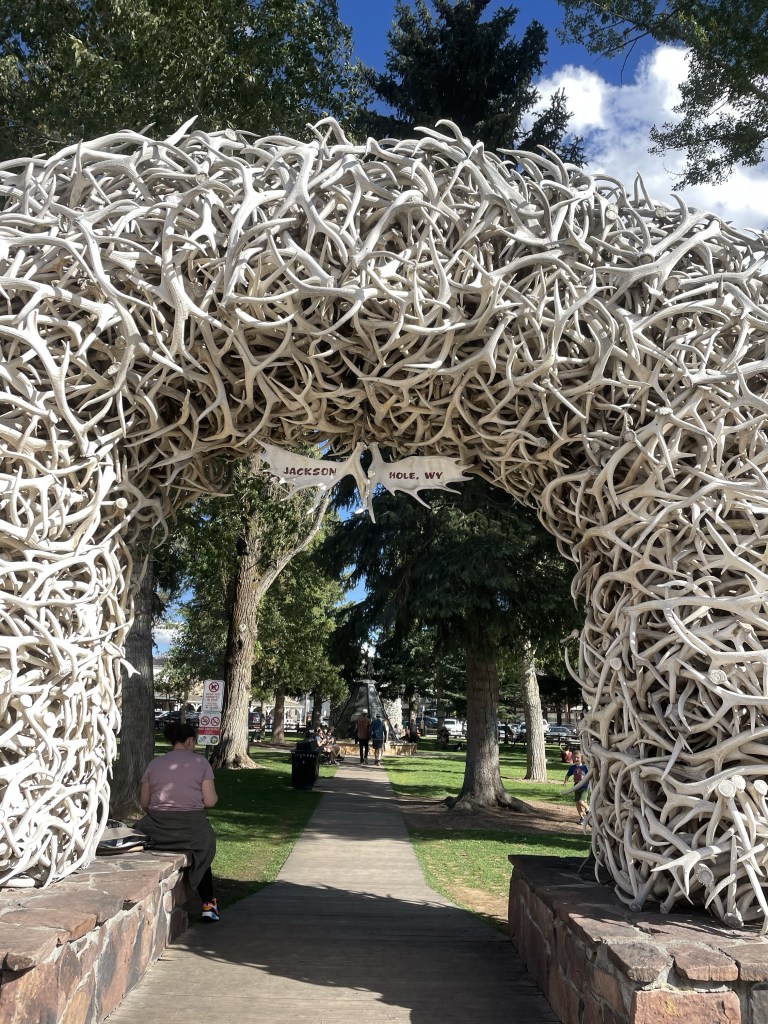
We couldn’t leave Jackson without some exploration of the town. Yes, we did see the iconic antler arches, browsed through a mountaineering store, and took advantage of the Snake River Brewery.

A very fun spot, and even the fact I left a hiking sock in T’s dryer didn’t seem that important. I guess it met up with the hat left in the Yorkshire Dales and the visor left in Hot Springs. I’m considering a blog post called “things I left behind on sabbatical.”

Road Trip U.S.A. – Camping and Canyons in a Rooftop Tent

Once we left Golden, CO the temperature had crept far enough below three digits that we had no excuses left. Rooftop tent camping had to begin. After all, we had already lumbered a couple of thousand miles from Florida with the thing stuck on top of our car roof. It was time to do something with it.

Another set point on our road trip was the start date of an AirBnb in Jackson Hole, Wyoming, where we were meeting up with family members. Hence, day 1 of camping had to be somewhere between Golden and there.

We managed to reserve a Hipcamp in Buford Canyon, Wyoming, just west of Cheyenne. After a quick stop at a Colorado grocery store (with the unlikely name of “King Soopers” – but that was actually a Kroger’s), we had miles of driving north through Colorado. The burgeoning development outside of Denver reminds me in an unfortunate way of Florida, but then we shifted into high prairie and desert, multiple shades of yellow. Plus the wind picked up…no wonder Kansas had a song called Dust in the Wind. (Incidentally, the Spotify playlist for Kansas contains only two tolerable songs. It was J’s bright idea that’s what we should listen to while driving across the prairies.)

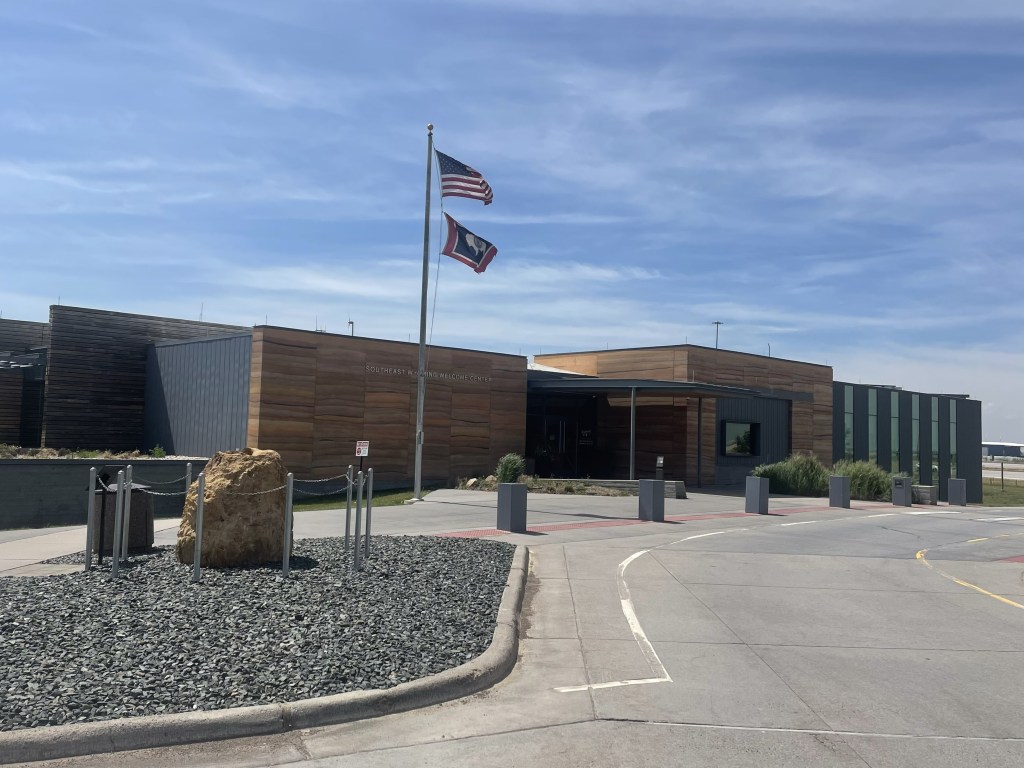
We stopped at the very modern Wyoming State Welcome Center. It’s more like a museum than a welcome center, with lots of interesting displays. The wind blew everything off our picnic table…

We decided to drive through Cheyenne, but there wasn’t much to see other than the capitol building and a very inactive downtown. Even though it was Sunday, I don’t think that was the problem.

Our campsite was about a mile off of the very heavily trafficked I-80. This part of the country is apparently home to the freight train industry with one plus mile long trains. I didn’t even know such things existed.

The campsite was absolutely stunning. A beautiful shelter for a picnic table, with a “designed by” plaque commemorating the architect. A spotless composting toilet and two sites with tiny houses. We set up camp, and walked around the interesting rock formations on the property, and over the ladder the owner had placed to allow entry into state land and the canyon itself.

After a brief scare when we couldn’t get the lighter to work we managed a pretty good first night camping dinner of steak and asparagus. The night sky was a spectacular tapestry of silver and black. The only downside was the I-80 traffic and train noise, which was constant. But it was more than made up for by the convenient and beautiful location. Elevation was about 7600-7800, and we could feel it.

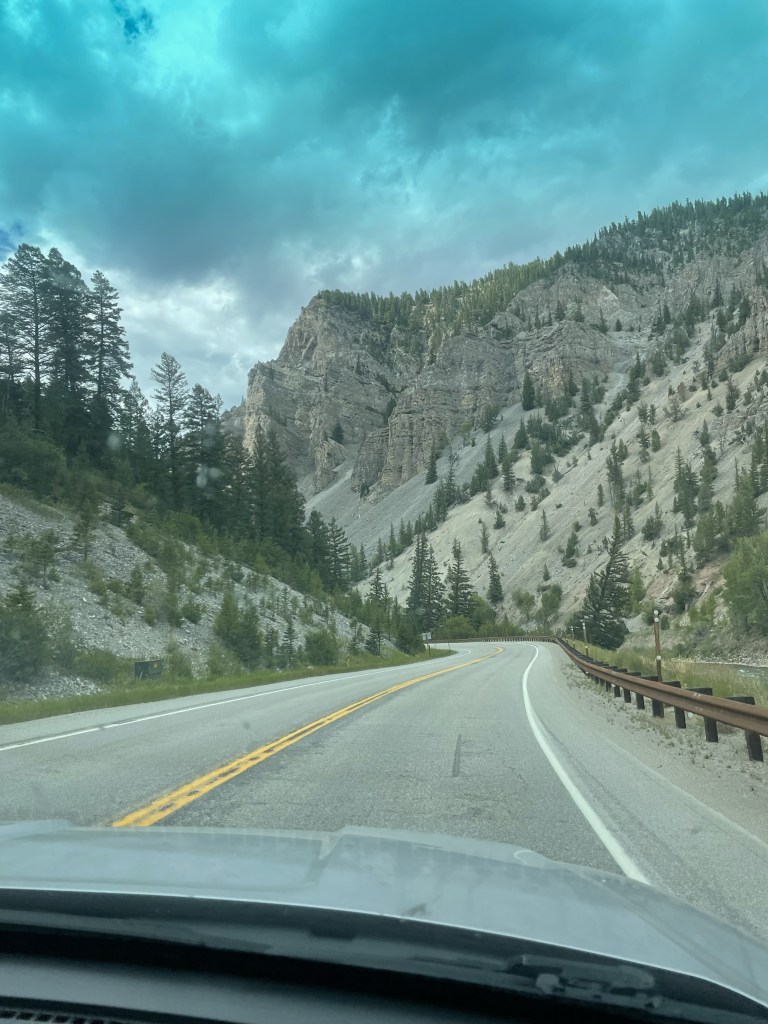
The next day was a long day of driving the length of Wyoming. After we broke down camp, we drove through high desert with the Wind River mountain range on one side. Unfortunately much of the drive was on I-80, with 18 wheelers careening in the wind, and my fingers were sore afterwards from my white knuckled driving.

Some of the area looked like what I would call salt flats. Very desolate, with tiny hamlets of only 100-200 people. I especially liked the truck stop called “Stinker.” We even went through a small town called Eden, which had a few green fields.

Eventually we climbed higher and higher, suddenly saw evergreens, and the next thing we knew we were approaching the Tetons and Jackson.

We located our AirBnb in Teton Village, a major ski resort with lots of condos. What a change from what we had been driving through. J and I managed to get cleaned up – after a night of camping and days of driving we were pretty grimy – and rendezvoused with family. Time for a few days of real R&R – hiking and the like, and a nice break from the road.

Road Trip U.S.A. – Tasting the Waters From the Mississippi Delta to Hot Springs

Unfortunately, this blog has only taken us thus far to Clarksdale, Mississippi, and there is much more of the country to cover before J and I leave again in a couple of weeks for Europe.

After we woke up in the Mississippi Delta in our gentrified sharecropper’s cabin, we met a ZZ Top looking guy who must have been a home health person because he’d come to check on our neighbors, who seemed to be permanent residents (that is, unless they were traveling with a cat). He immediately asked what we’d heard the night before but recognized that Tuesday wasn’t the best night for music in Clarksdale. His wife was from Wyoming so he provided some travel hints for the upcoming weeks. He clearly resided in Clarksdale just for the music, and we vowed to come back over a weekend or during a festival.

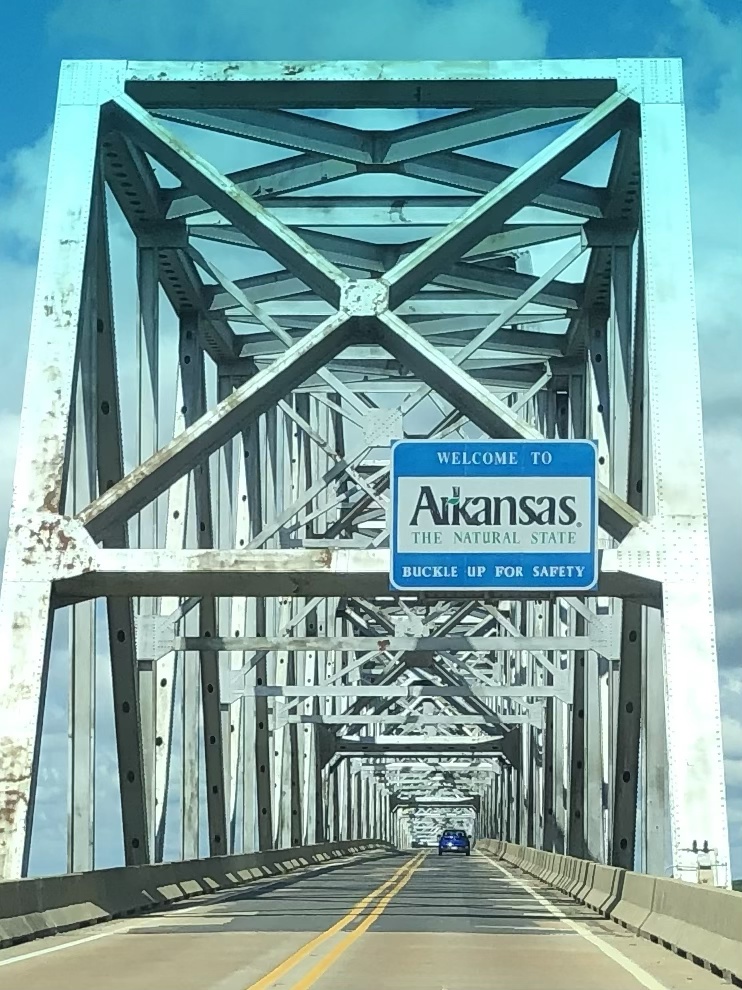
After repacking the Explorer in a more logical fashion, we drove miles upon miles of Mississippi Delta fields of cotton and soy…and finally crossed the Mississippi River itself, which divides Arkansas and Mississippi. The bridge was two lanes, no shoulder, and very high – just like the ones that terrified me as a child when we crossed the Tombigbee or Black Warrior Rivers when going to visit my grandparents. Once across, the roads improved and it seemed – almost imperceptibly – a little less flat.

More and more agriculture but no sight of the opulent plantation towns we’d been traveling through in Mississippi. Our “grey” road finally merged onto I-40 outside of Little Rock. It was awful, and our rapidly learned lesson was to avoid interstates whenever possible on a cross country trip. There was nothing but huge truck traffic, an unfortunate contrast to the rural roads we’d been traveling.

Ultimately we exited I-40 and I-30 (even worse than 40), onto U.S. 70 and into Hot Springs, also the site of Hot Springs National Park (which must be one of a kind). What a place. Verdant green and rolling hills. Apparently my grandfather came here in the 1940s to “take the waters.”

In the 1830s, well before the national park system, the federal government took control of four sections of land as a “national reservation” due to the alleged healing properties of the hot water bubbling up from the ground below (and I can personally vouch for the fact that it is hot). The park itself is shaped like a doughnut, with the town in the center. One side of the Main Street (Central Avenue) is part of the national park, and is lined with seven or more of the original “bath houses” that are still in operation of various kinds. One is still used for spa treatments and bathing, another is a visitor center/museum, another is a brewery, and some are still waiting to see what the future brings.

At one point, the poorer folks were so upset they couldn’t afford the “spas” that they started their own “ral” (short for “neuralgia”) camps to bathe in the 135 degree waters up on the hills above the spas. Ultimately federal troops arrived to stop them from “corrupting” the waters, but in some type of concession, erected some free bath houses.

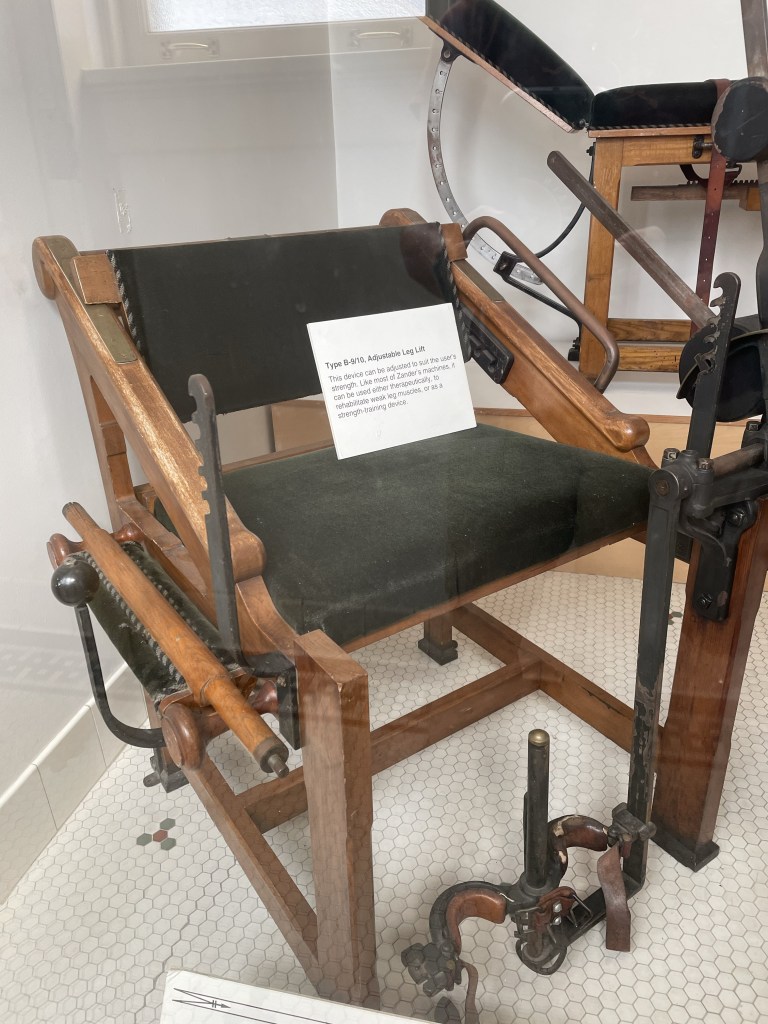
What struck me was how before their time some of these “treatments” were – mechanized machines (tension and resistance) that are only a step removed from the machines we use at the Y today.

After a thorough inspection of the museum, which truly was fascinating, we walked along the Grand Promenade on the hill behind the bath houses, which is of a much more recent vintage, up the Peak Trail to the Mountain Tower. I steeled myself and J and I climbed the 21 flights up the metal staircase to the observation deck. I didn’t look down once. We did take the elevator down.

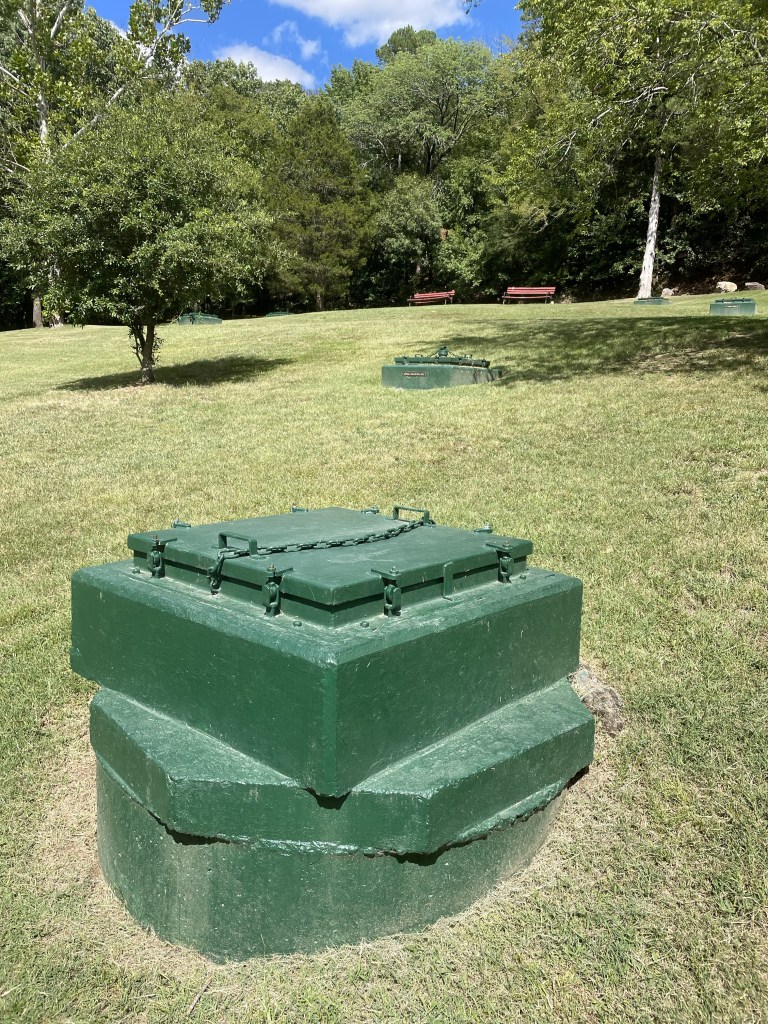
The entire area is checkered with green metal boxes that serve as collection sites for the water. Which, by the way, we tried at the visitor’s center and it tasted like plain H2O.

After a quick descent down the trail, we decided to take advantage of the Superior Bath House Brewing Company, which uses the thermal water to make the beer. I’m pretty sure it is now also are the home of my visor, which was never to be seen again after our visit.

After a beer, we located our AirBnb, not an opulent section of town, but quite nice. Back on the main Street, we stumbled upon the Brick Grill, a very reasonably priced and pleasant restaurant – many here were quite expensive.

Coming up – out of the flatlands and into the “steep and crooked” Ozarks.

Road Trip USA – Deep South Reveries

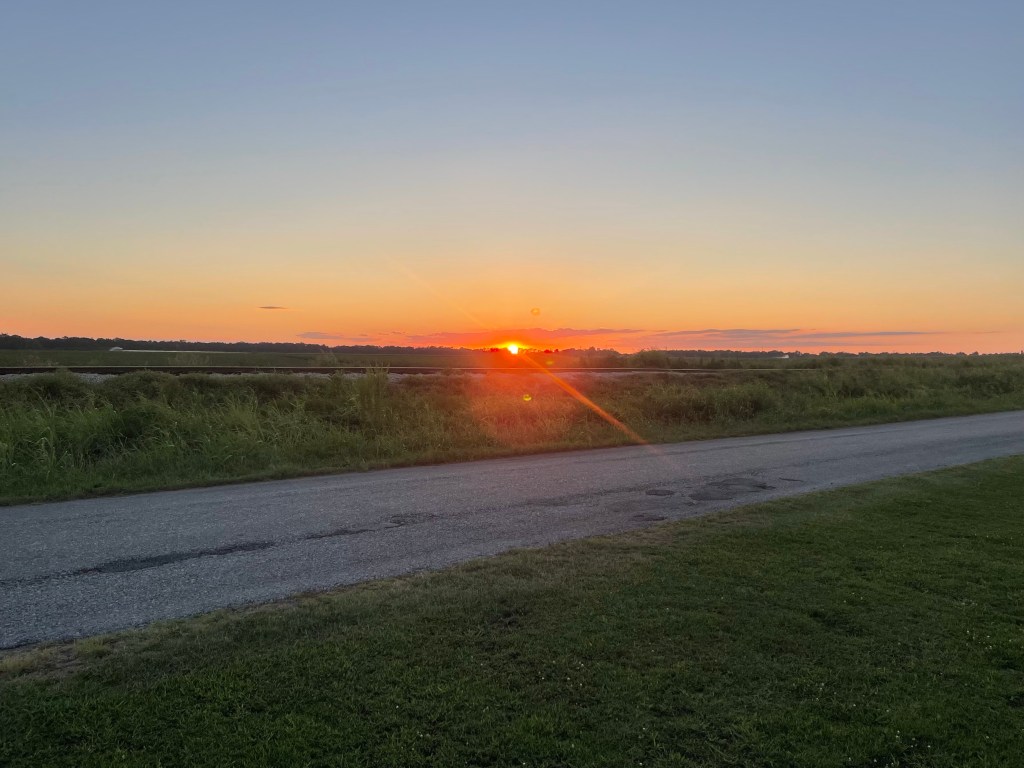
Clarksdale, Mississippi. I was watching the sun set over flat delta cotton fields. Pink blossomed into deep peach while rich grape paintbrushed the sky.

After two weeks at home in Orlando after our England and Spain adventure, we took off again on Sunday, August 13, this time by way of our 2016 Ford Explorer with a rooftop tent, as opposed to the airline that shall not be named. Both J and I lay awake the night before thinking about what we’d forgotten to pack for a four week road trip, what we should be taking instead, etc etc.

We finally got off about 9:15, driving along the turnpike to I-75 into Georgia. The turnpike was as excruciatingly boring as always. Ultimately, we exited I-75 and made our way to US 82, which goes all the way to Tuscaloosa.

After the monotony of the interstate, 82 took us through many small Georgia towns, which made the drive much more interesting. Lots of peanut (I think) fields, a large and elaborately patterned black and gold snake that we narrowly avoided running over, the red brick Andrew Junior College in Cuthbert, Georgia, pecan tree groves, so uniform and graceful.

At some point we realized one of the eight bolts attaching the rooftop tent crossbars to the roof of the Explorer was missing. We stopped at the parking lot of – I kid you not – a BBQ place called “Hog ‘n Bonz” (apparently meant to reference Haagen Dazs?) to replace it. My three pound weight that I’d thrown in at the last minute, with some vague idea I could sit in the passenger seat and do arm exercises (not) served as a surprisingly good mallet to push everything back into place. Regular bolt checking quickly became part of our daily protocol.

We crossed the state line into Eufaula, Alabama – beautiful antebellum homes with a dying downtown. Eventually reached the outskirts of Montgomery – many boarded up and overgrown motels, clearly victims of Covid.

Around Montgomery we encountered a drenching Florida style rainstorm. Surmounting other problems – such as the demise of the weatherstripping around the Explorer’s front windshield (purely cosmetic, or so they say), we finally pulled into the driveway of my uncle R’s house, which, by the way, was designed by a student of Frank Lloyd Wright. That explains all the wood, curved walls, and long lines.

The next day R gave us a detailed walking tour of the huge U of A campus, including the stadium with statues of the winningest coaches, fraternity houses with more columns than you could count, the president’s mansion, and the new school of engineering which is as big as many a college campus.

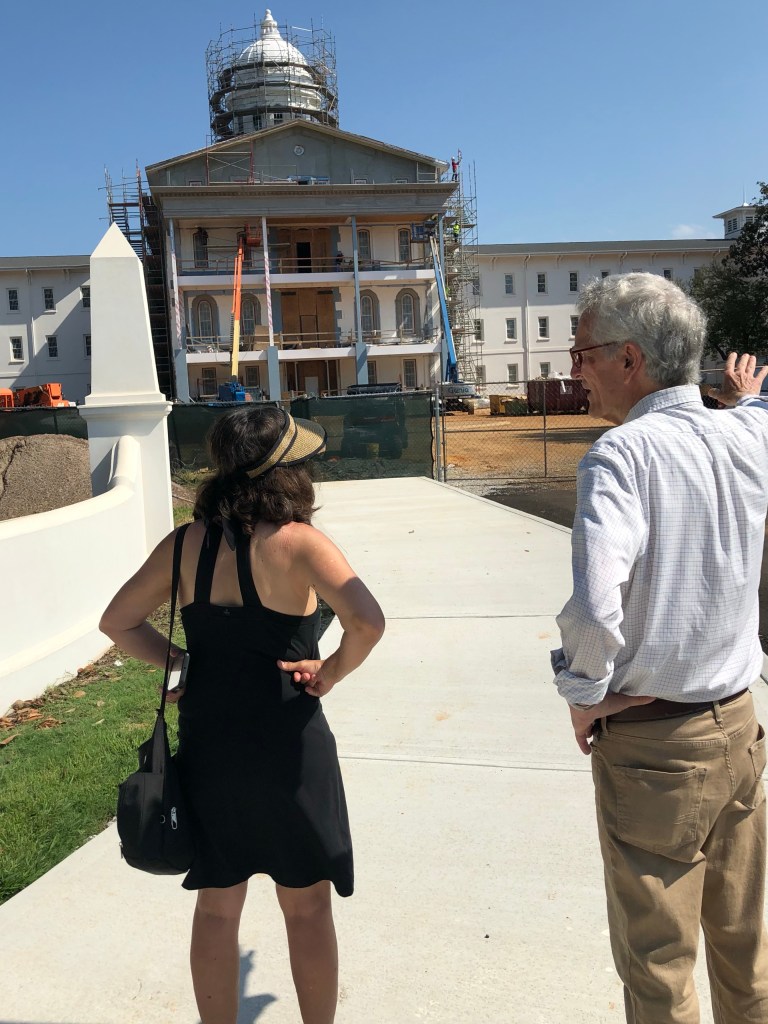
Most interesting – Bryce Hospital – which was originally a hospital dedicated to the moral treatment of the insane, a revolutionary theory for the mid 19th century. My uncle, an art historian, has done much of the work of mapping the hospital and its environs. Straitjackets and similar restraints were banned, each patient had their own room, and there were beautiful park grounds – the theory being that if you treated patients with dignity and respect in a calming environment they could recover. As they improved, they were moved into increasingly social environments. A surprisingly enlightened approach in days long before drug treatments and the like. The building is now being transformed into a museum and performing arts center.

We also enjoyed a visit to the natural history museum which houses the Hodges meteorite that landed on Elizabeth Fowler Hodges in Oak Grove, Alabama in 1954. She’s the only human known to have survived such an onslaught.

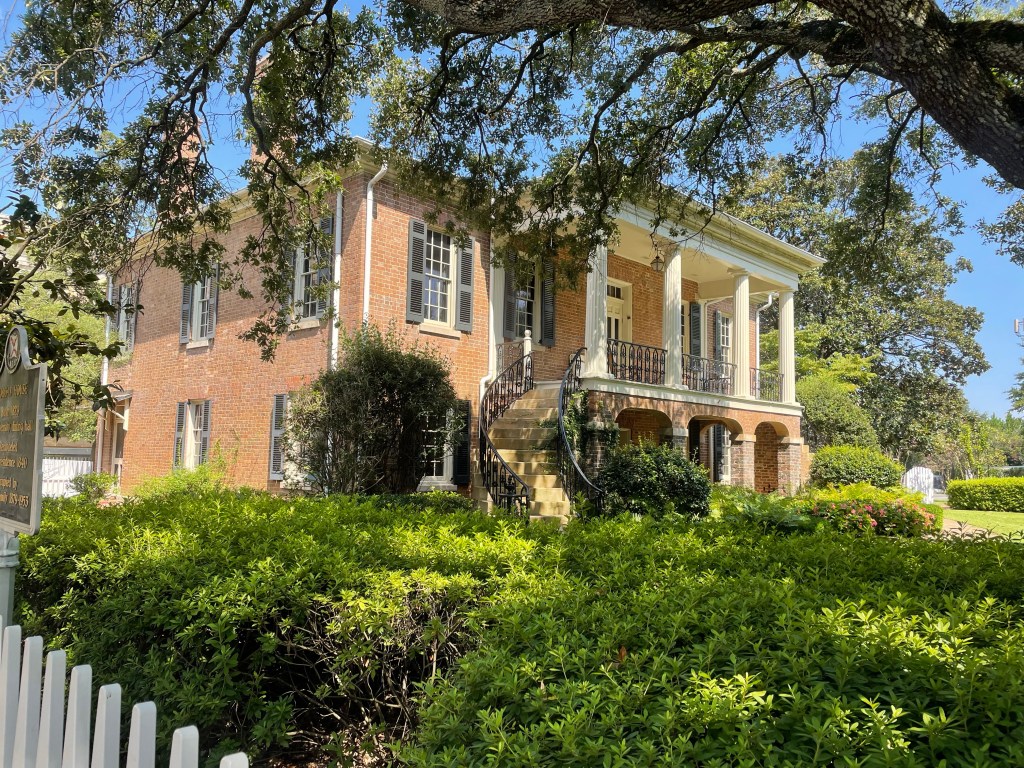
A surprise was the tour of the Gorgas House, lived in by the descendants of the 8th president of the university, until the 1970s or so. It was originally the dining hall for the university and is one of the few buildings to have survived the civil war. Accordingly to the posted chronicles, college students in the antebellum south were hardly paragons of good behavior, especially in the dining hall.

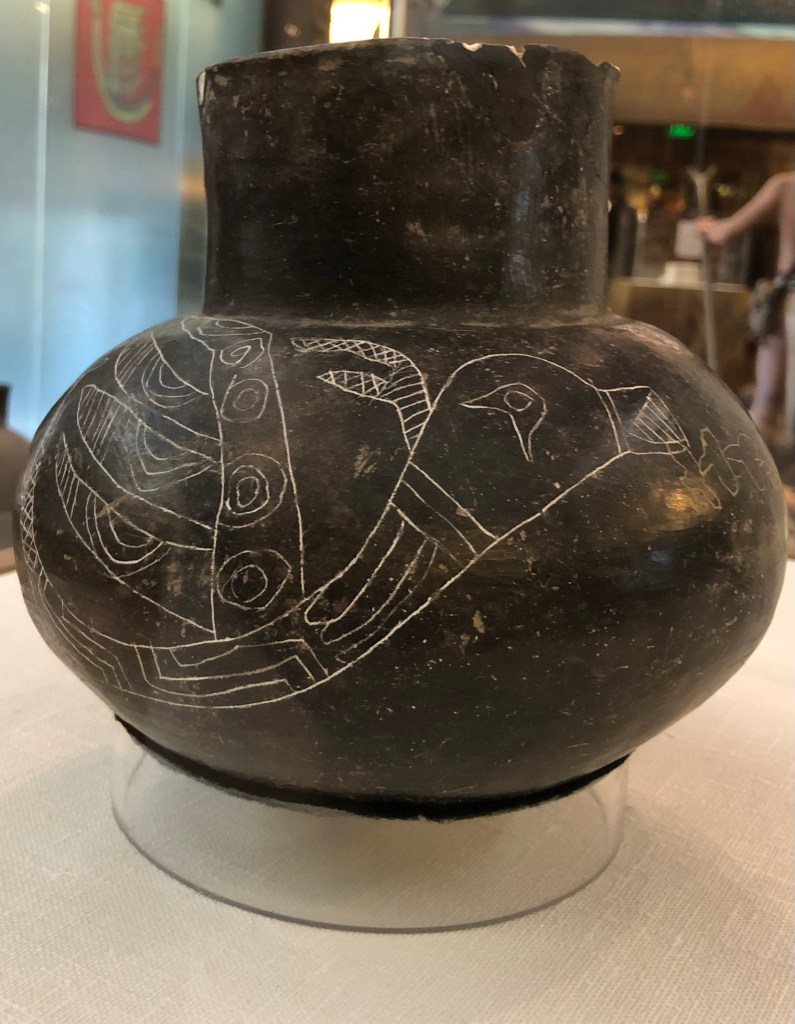
Next stop was Moundville – the site of a large city settled by indigenous people coming up from Central America hundreds of years ago. It ultimately became a political and burial site, and consists of large dirt mounds on which wooden structures rested. It was brutally hot, but we nonetheless climbed one of the mounds to see the view of what must have been a sprawling development. Their ceramics were masterful. Many depict a flying snake that my uncle thought might have reflected imagery of tornadoes common in the area.

As we drove back to Tuscaloosa, I was overwhelmed by the miles and miles of undeveloped, presumably privately owned land. That simply doesn’t exist in Florida.

The next day we headed for the Mississippi Delta, driving through thick Alabama forest, crisscrossing the Tombigbee River to Columbus, Mississippi. It’s chockfull of antebellum homes dating from the 1830s on, and is also the birthplace of Tennessee Williams.

The Southern Writers theme continued with a journey through the hill country to Oxford, Mississippi, where we stopped at William Faulkner’s home, Rowan Oaks. Although the town was crowded with newly arriving freshmen about to embark on their college careers at Ole Miss, we were the only visitors to Mr. Faulkner’s abode. The house was built in the 1830s and he bought it about a 100 years later. It’s very small, although Faulkner added a number of rooms, and has opulent grounds, including a riding stable. Apparently Faulkner’s wife commented on the nature of the light on the porch in August – the genesis of the title of the novel, Light in August. I think I’ll have to go back and re-read his tales of Yoknapatawpha County.

We finally reached the flat, soil rich delta and the Shackup Inn – our home for the night and a location that I discovered on the internet. It’s just outside of Clarksdale, and is a collection of old sharecroppers’ cabins that have been gentrified with electricity and bathrooms, but are totally quirky. Rusting farm equipment, old signs, and a large area for music festivals. We could have stayed in a cotton gin silo, but instead picked a cabin called “Shorty’s.” It’s one of the strangest places I’ve stayed since the barrels on Mt. Elbrus in 2014. ( https://fromswamptosummit.com/2014/07/02/looking-down-the-barrel/ )

We checked in and then drove down a pothole ridden road to Clarksdale itself. Clarksdale prides itself as the home of the blues, and hosts many festivals, but it was a little dead on a Tuesday night. The Delta Blues Museum is magnificent and moving. The entire place was a huge contrast to Columbus – here’s the home of the people on whose backs all that wealth was created. It was a left alone little town, enabling the blues to develop and flourish on their own terms. Photos weren’t allowed in the museum, otherwise I’d have posted a lot!

The temperature finally dropped about ten degrees. After a beautiful sunset, we were looking forward to a spectacular night sky.

Transitions – Back to the U.S.A.

When last I left this blog, J, S, M and I had just completed our 77 mile hike through the Yorkshire Dales. After our celebration in Kettlewell (where I am pretty sure I inadvertently donated my now no longer manufactured hiking baseball hat to the Bluebell Inn) and an overnight in Grassington, the next day we took a horribly crowded train back to King’s Cross in London. Our original train was canceled, which led to mass confusion on the next train for those who had reserved seats versus those who didn’t or originally did or….you get the picture.

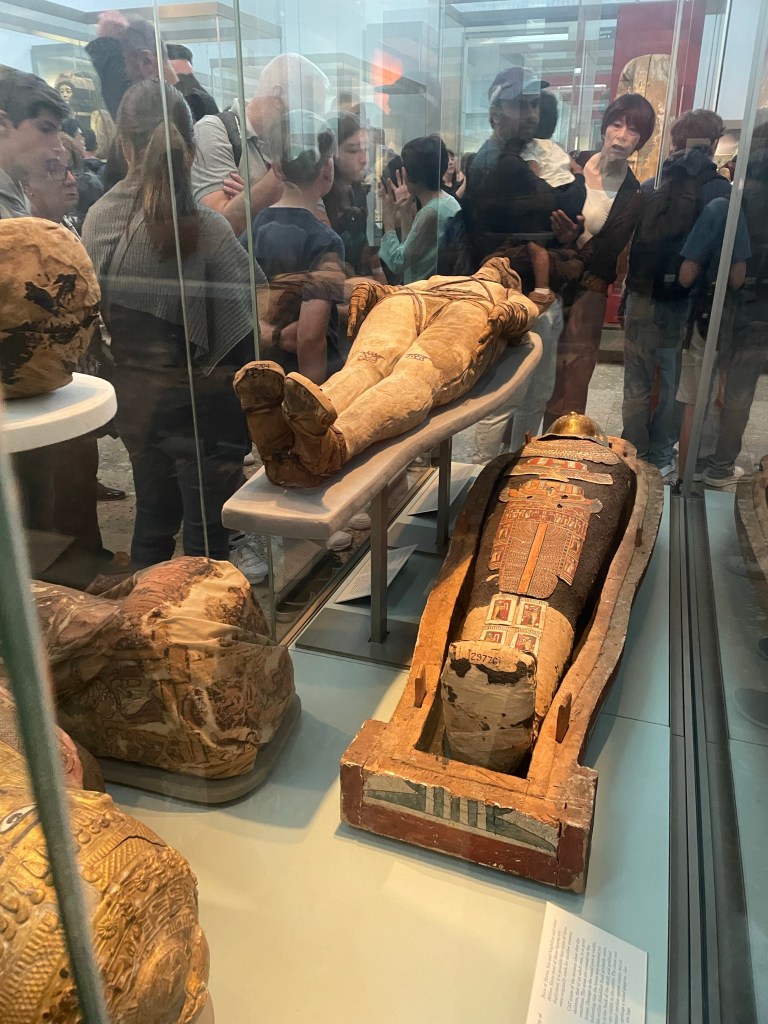
Once in London, M and S’s daughter, B (of Balkans fame) ( https://fromswamptosummit.com/2019/07/20/things-we-brought-to-the-balkans-were-on-our-way/ ) joined us and we all enjoyed a “cruise” down the Thames to Greenwich where S could indulge all of his astronomical interests by standing on either side of the Greenwich meridian at the Royal Observatory. J and I also had a look at the British Museum (incredibly crowded and apparently mummies are much more popular now than when I used to go inspect them in the 1970s). Also, the entire first floor is set up like a quasi shopping mall, which does cast the whole experience in a different light.

Regardless, I loved London as much as ever and J and I spent two of our three nights there going to the theater – Aspects of Love (really strange Andrew Lloyd Webber musical based on a novella by David Garnett) and a classic English comedy/farce, The Play That Goes Wrong.

Our final phase of the trip left a little to be desired. On an airline that shall not be named the following happened:

(1) Reached Orlando at the time of a massive thunderstorm that closed the airport;

(2) Circled Orlando until we were close to running out of fuel;

(3) Landed in Melbourne to refuel;

(4) Sat on tarmac because storm moved to Melbourne and it was too dangerous to refuel;

(5) So many hours had passed our crew was no longer legally able to work;

(6) Alternate crew was to be sent from Orlando via taxi;

(7) Were permitted into a secured hallway of airport (we hadn’t gone through customs) where the local airport officials doled out the world’s worst junk food from large cardboard boxes (think Combos filled with pizza cheese) – it was a bit like being one of the animals at feeding time in the zoo;

(8) After 6 hours in Melbourne the new flight crew arrived (to sardonic applause from the passengers);

(9) Flew 15 minutes at under 6000 feet to Orlando and landed;

(10) Were informed that we were so late that all the customs officers at the glitzy Terminal C had gone home;

(11) Taxied around the airport looking for a parking place (think looking for a spot at the mall during the Christmas shopping season [back when malls were a thing]); and

(12) Were finally welcomed at Terminal A in one of the Spirit gates. You know you’ve reached a new low when that’s your home port.

Regardless, a wholly successful phase one of sabbatical. Phase two was to start only two weeks later. The changing of the guards seems an apt metaphor for phase 2 – our U.S.A. Road Trip.

Visiting a Castle and Into the Clouds…Reeth to Aysgarth Falls to Kettlewell, Yorkshire Dales, U.K.

As we’d had several long and steep hiking days, we decided to knock off a couple of miles by avoiding a loop around something called Apedale Moor (which we couldn’t locate on any map anyway) on our way from Reeth to Bolton Castle and on into Aysgarth Falls.

This meant having the nerve to stray from the ever present blue GPS line that was our North Star to take a paved road called Hargill Lane practically the whole way. Just because it was paved, however, did not mean that it didn’t go up and down, and unfortunately, it was a quintessential long slog shin splint generator. Hargill Lane crossed windy, windy moors with absolutely nothing around but sheep and occasional cars that operated at the same speed as all the bus drivers – that is to say, fast.

Eventually the road descended into the conservation area for the Bolton Estate, lands that are still owned by the same family that held them hundreds and hundreds of years ago. There were many beautiful wildflowers, but they were interrupted by lots of warning signs for the quarry works on the other side of the road.

We reached the very well preserved Bolton Castle right at lunch time and had a nice meal in the tea room. The castle, built between 1378 and 1399, is quite intact, and M and I enjoyed the diagram that showed what each level of the structure was used for. There was also a lot of information about the castle’s architect, John Lewyn. Who knew castles had architects!

The walk from the castle to Aysgarth Falls was lovely. We did cross a field with another bull, which was actually starting to lunge at a couple on the other side of a wall who had a dog with them. (Incidentally, everyone in the Dales has dogs, and they are welcome guests in restaurants, pubs, shops, etc.) They had some long story about someone they knew who had recently been charged at by a bull and had to throw his dog over a wall….in any event, it turned out my bull fears were not unwarranted! While the bull was occupied with them, J, M, S and I managed to sneak over another section of the wall, unnoticed.

On the way, we also suddenly heard a huge roar overhead that practically shook the stone walls surrounding the fields. Two Typhoon RAF jets zoomed by, and made several passes. We soon learned that war had not actually broken out while we were in the solitude of the Dales, but that this was a popular location for the RAF to do low altitude training.

The Aysgarth Falls themselves were pretty, but by then we’d seen so many waterfalls, we were somewhat jaded, and just as glad to keep on moving up a steep hill to our next guest house — the newly renovated Aysgarth Falls Hotel. Despite three flights of stairs (thank God for those backpack straps on my suitcase!), it was really nice and we thoroughly enjoyed their pub and dinner and breakfast food.

That was good, because the next and final day turned out to be the most challenging yet.

The plan was to walk from Aysgarth Falls to Kettlewell, where we would meet a taxi at 5:30 that would transport us back to Grassington, for our travel to London the next day. We wisely chose the 12.6 mile route rather than the 15.3…..

We started with some easy walking through fields and what was described as some “unavoidable” road walking. But there was little traffic, and the flowers were pretty as we basically hiked the length of the valley. Despite its remoteness, a number of little cottages bore signs of construction.

Eventually the valley ended, and so did the road. A very nice farmer gave us directions (the blue line becoming somewhat cryptic at that point), and we were able to cross the river and start what was described as a “big up.”

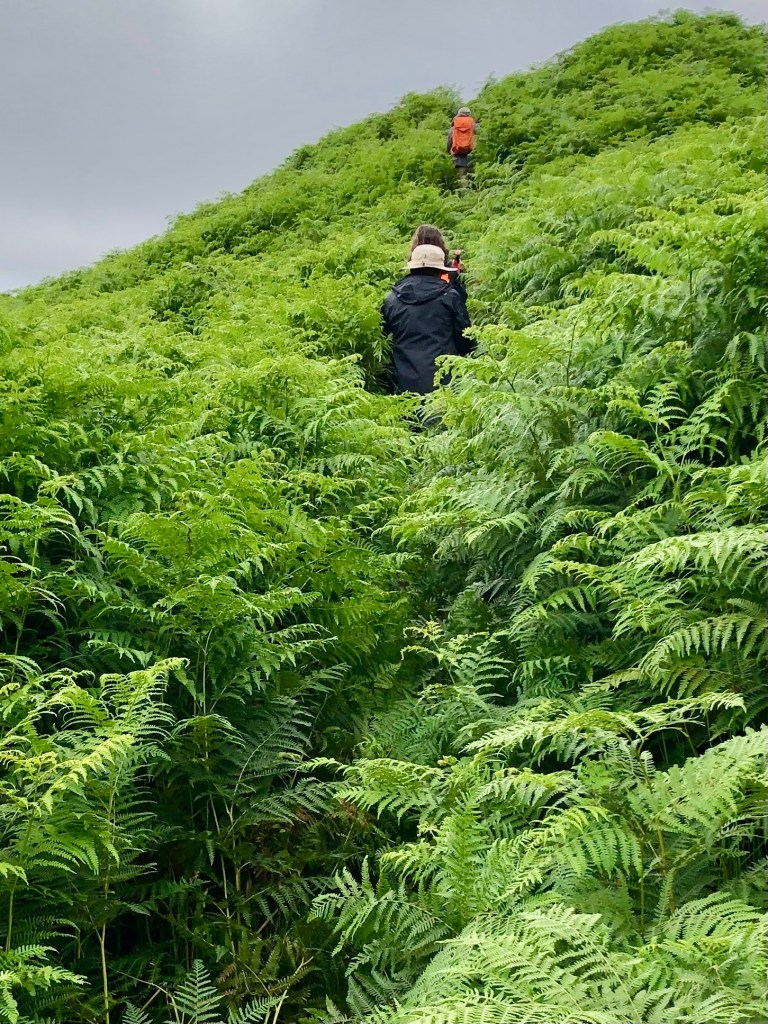
We were completely distracted from the steepness of our ascent because the almost imperceptible trail started to lead us through fields of five plus foot high ferns. They literally towered over us and I found I was using my body as a battering ram to push through. It felt way more like an Amazon jungle than the Yorkshire Dales.

Part of the way up, we realized there may have been a slightly more trodden path, but we were too busy bushwhacking and trying not to be swallowed by the ferns to have seen it.

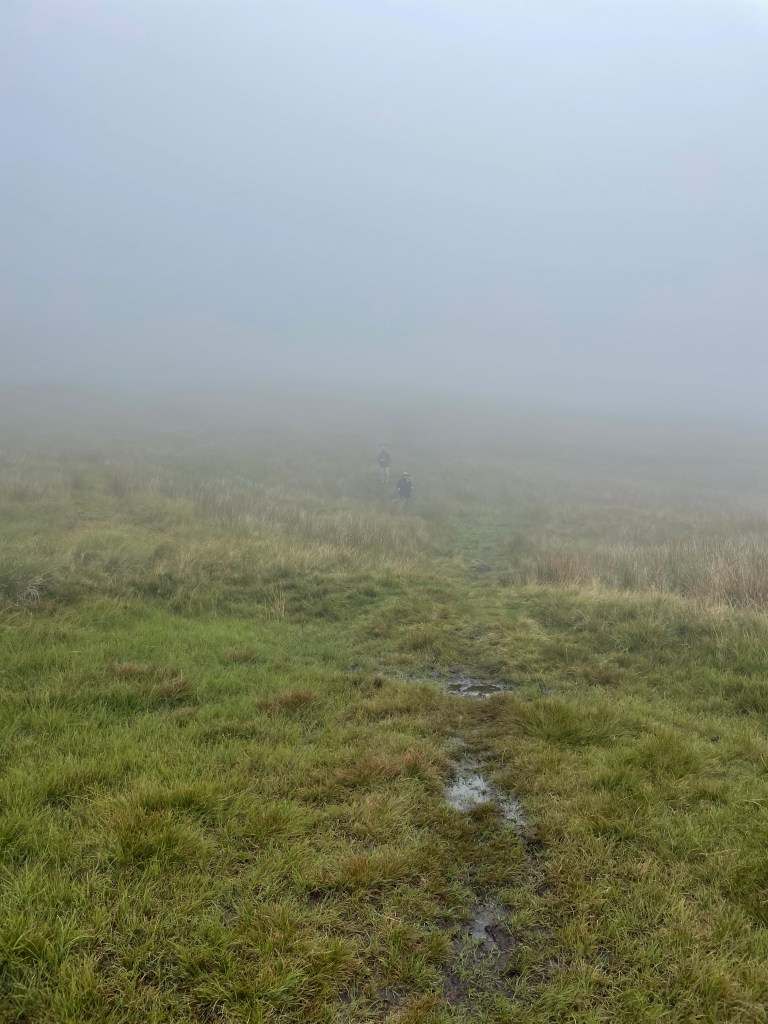
We finally cleared the fern field and continued to ascend. It was a very rapid elevation gain. Suddenly we found that we were no longer below the low hanging cloud we’d been observing all day, but were actually in it!

Yet still we continued to climb up. Visibility was starting to close and navigating the blue line was like flying a plane on instrumentation only. We encountered one group of young scouts using maps who were clearly doing some sort of orienteering exercise….they seemed infinitely better equipped for the challenge than we were.

We had no choice but just to stick to the GPS line as much as we could and aim toward the cairns and waymarkers that we could see. Finally, the scout leader passed us asking if we’d seen his charges anywhere – we were relieved to see him as proof that civilization existed somewhere in the direction we were aimed.

Visibility continued to get worse and the wind was whipping. We stopped for a brief break by a the first stone wall we’d even seen. But by then I was simply dedicated to getting down as fast as we could because it really was starting to feel unsafe. I was beginning to feel like a character in one of those Sierra Club magazine articles about what can go wrong while hiking….they usually end with hypothermia or broken bones.

Anyway, we finally reached what the itinerary termed a “snappy descent.” To the dismay of my fellow hikers, I actually found that part sort of fun – skipping around and over rocks, but with lots of grass cushioning on either side. Plus we were going down.

But we were still in the cloud, and M and S were just dots in the mist. All I could think about was that we had to maintain visual contact. You really could have gotten lost up there.

Finally we were below the cloud, and the world started to come back into focus. We could see the village of Starbotton at the bottom of the peak we were descending, and the wind that had whipped us as we crossed the ridges of the moors died down.

A steep descent down a stone road, and we were back in the valley, only 2 1/2 miles from Kettlewell. We had a quick bite of our sandwiches, and then walked through the fields that lined the valley for a straight shot to Kettlewell.

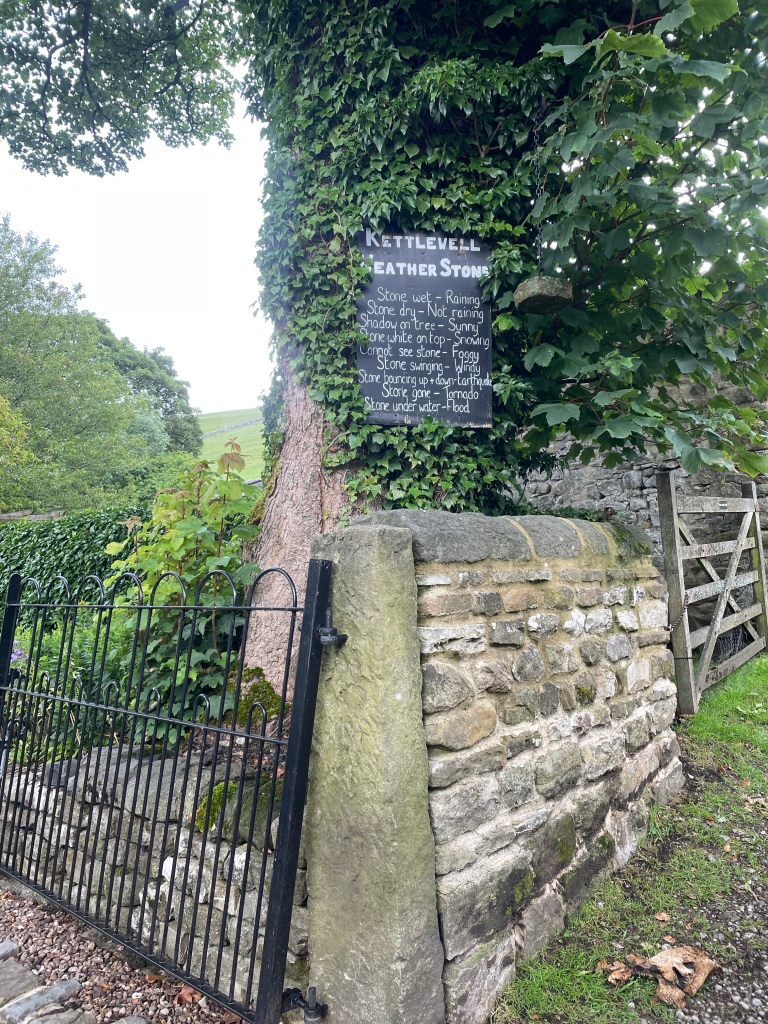
We had made it – all 77 plus miles! We walked through the village to the Blue Bell Inn where we were to meet the taxi in an hour or so. We had a celebratory drink to toast our most recent adventure. And even the fact that the taxi was an hour and a half late picking us up didn’t really matter.