Books for High Places – What to Read at 18,000 Feet

The
The “Old” Library

When most people think of climbing gear, they have in mind ice axes, crampons, helmets, and the other accoutrement needed to maintain life and limb at high altitude. But to me, an equally vital piece of equipment is whatever book I’ve selected to accompany me in whatever arduous spot I find myself in.

Believe it or not, there are a lot of opportunities to read while climbing high mountains. You’re typically going to bed as early as 7, especially if you are aiming for a midnight or 1 am departure for the summit. And that’s just summit day. On a lot of acclimatization days you find yourself collapsed in a hut or hacienda by mid afternoon following your first few forays over 14,000 feet. And, if you’re like me, you can’t sleep unless you’ve first consumed at least a few pages of a novel.

Now books for such trips must meet certain requirements, at least in my mind. First and foremost, they have to be available on a Kindle.  When every ounce you carry can make a difference, lugging paper around doesn’t seem like a particularly wise choice. They have to be of sufficient length to engage you. I love short stories but somehow they seem more suited for an evening jaunt in the neighborhood – not a multi-day expedition. And they have to be engaging. If your goal is to blot out an altitude headache, to forget how cold you are each time a part of you inadvertently slips out of the sleeping bag, and to screen out the assorted snores and noise of your fellow hut dwellers, you need something that transports you into some alternate world. The odd thing is that life on a mountain can be so surreal that the imaginary world of some novels can seem a more likely reality than the one you’re in.

The
The “New” Library

So, what are some of my top choices for high places?

Our first trek, in 2011, to Kilimanjaro, was accompanied by Abraham Verghese’s Cutting For Stone. The story of a doctor and his twin brother it globe trots from Africa to New York, and kept me enthralled at Crater Camp on the Western Breach, where we camped at 18,000 feet. It’s 690 pages long. Of course, I would have been in no shape to write a scholarly analysis of it at that altitude, but it was a good read.

On this summer’s trip to Ecuador I relied on the fantastic creatures and characters of Clive Barker’s Weaveworld to get me up the steep slopes of Cotopaxi. Yes, I do like science fiction and some fantasy, and the alternate reality of Weaveworld and its 768 pages (now you see why a Kindle is essential) fit the bill. Years ago, on a much tamer trip to California I read Barker’s Imagica, and I think it would be a equally suitable high altitude choice.

Some others? Consider:

And the Mountains Echoed by Khaled Hosseini – a story of a family in Afghanistan and elsewhere, covering multiple generations and places.

The Dust series by Hugh Howey – a post apocalyptic world – or is it? Be prepared.

The Flamethrowers: A Novel by Rachel Kushner – I will never forget the opening description of speed racing on the Bonneville salt flats.

These are only a few. What do you take with you on your travels? Let’s share.
Summits for Some – Special Olympics

image


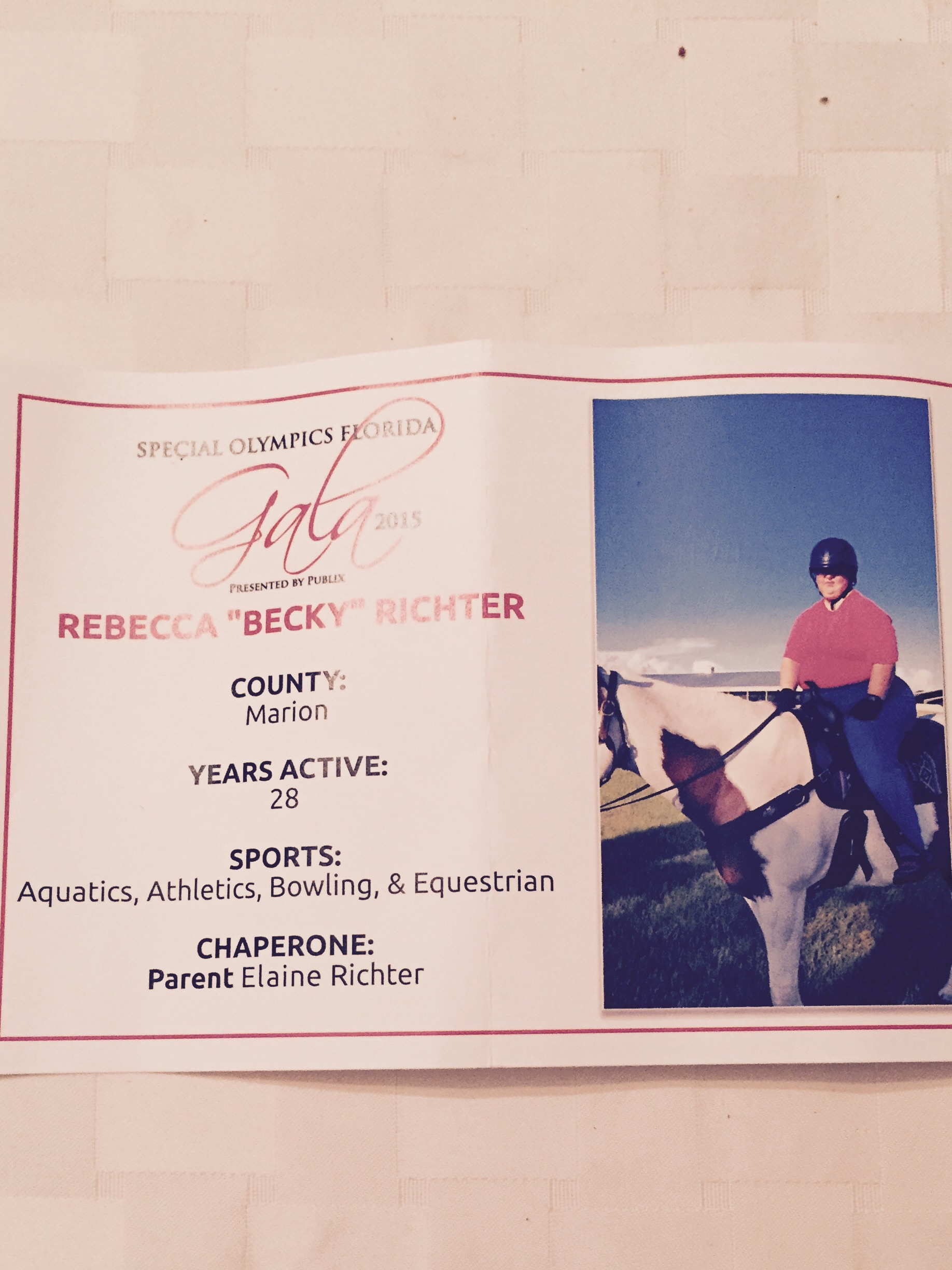
Some of my colleagues and I were invited to be guests at a Special Olympics black tie event last night. Now it’s been a while since I last attended such an affair, and it necessitated the husband, J, extracting his tuxedo from his closet – where it is surrounded by all the other suits he similarly doesn’t wear – to make sure said tuxedo still fit. When I told him that the theme for the gala was supposed to be “vintage” and “retro” he pointed out that his tux had been bought in the ’80s and was vintage in its own right.

I had a similar battle of my own finding something to wear that fit the description. But I ultimately settled on a rather Mad Men-esque looking dress last worn about ten years ago. It seemed to work. Especially when accompanied by a martini in one hand. A cigarette would have been perfect, but I don’t smoke.

All this has been while nursing some sore knees this week, topped off with a bizarre injury on Saturday that involved cutting some greenery in my yard in bare feet – pressing the side of my right foot hard into the edge of a paver as I leaned forward to pick up the clipping that had fallen – and ending up with a large purple swollen bruise all over the bottom of my foot.

But all these aches and pains that seem like such cause for concern simply take on a whole new light when you think about those involved in Special Olympics. We sat at a table last night with Central Florida’s Special Olympics’ equestrienne of the year. She’s 36 years old, has two older sisters, and attended with her mother. She’s got Downs’ syndrome. She’s also been a coach and inspiration to others in Special Olympics. The history of Special Olympics – created by Eunice Kennedy Shriver – and in honor of her sister Rosemary Kennedy – should remind us all of those who suffer from intellectual disabilities and how we can help.

Lots of time people don’t want to talk about these issues. It’s easier to talk about those who have physical problems. Somehow that doesn’t challenge us as much. But intellectual challenges are equally significant and we can’t and shouldn’t ignore them.

There are a lot of different summits. I need to remember they don’t all have to be over 18,000 feet.

Urban Hiking in Orlando – Art in Odd Places

Art in Odd Places
Art in Odd Places

My neighbor, known as A, and I share a fence at home and a wall at work. It’s a long story as to how we became both work and residence neighbors. Suffice it to say that this past Thursday we agreed we would walk the 2 1/2 miles to work, all so that the two husbands could drive one car downtown to meet us for the Art in Odd Places event – and, since it was Friday, happy hour.

It was a grey day, as they nearly all have been this summer, but at least the humidity didn’t coalesce and rain all over us. By now urban hiking in downtown involves a lot of looking at cranes and bulldozers that form the backdrop for the Ultimate I4 construction project – which the developers already admit will never solve Central Florida’s traffic problems.

But those cranes are second only to the cranes from the multitude of apartments springing up throughout the city like mushrooms. Nearly every vacant lot in the downtown area has now been filled with 3 to 5 story buildings, usually with retail on the bottom and residences in top. Where the heck are the people going to come from to live in them? It’s a mystery. We’ve in-filled practically the whole city – it has swelled up so much that one good prick and the entire bubble will burst. We’ll see.

Mushrooms by the Performing Arts Center

An urban hike, of course, can’t be complete without an adventure on the stairs with a backpack in an office building. Although A was eager to accompany me on a walk to work, strangely enough I’ve never succeeded in getting anyone to join me in the stair climbing/backpack toting portion of urban hiking. But I dutifully did my 108 flights up and 108 down (according to my FitBit, of course).

By now I’d managed to wear three different outfits at work – the morning walk to work clothes, the Friday casual ensemble, and the stair climbing gear. People in my office were presumably wondering if I’d done anything all day besides get ready for the next work out event.

As the end of the day rolled around it was time for outfit number 4 – the going out Friday night look. The two husbands successfully navigated their way through downtown to our building with one car and we embarked on the next stage of our urban hike – Art in Odd Places.

This was a curated collection of interactive visual, performance and sound pieces by artists from around the world, along several blocks of Magnolia Avenue.  Although we’d expected a cluster of events and installations, the works were scattered throughout the area – and some of them were indeed lurking behind walls or on fences. You did have to look, and just occasionally, would catch a glimpse of art in some everyday object that was not part of the show but that suddenly had taken on new meaning.  Orlando’s large homeless population, many of whom spend time at the History Center park where there were a number of installations, seemed to be enjoying the event as much as the expected hipster crowd.

Cemetery Flowers
Cemetery Flowers

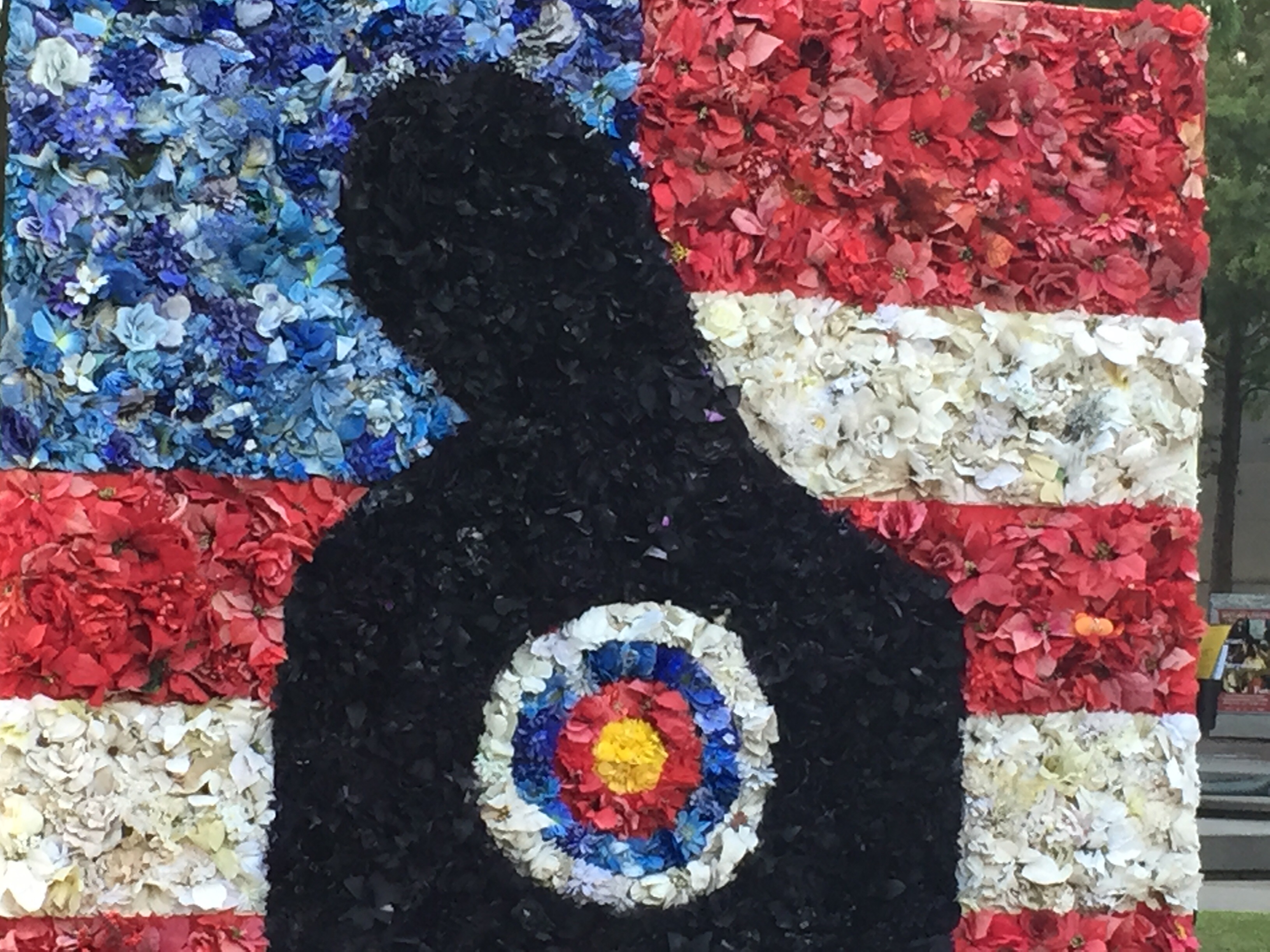
A series of hands emerged from drain pipes at various odd points on the city streets. A field of paper bag mushrooms dotted the grounds of the performing arts center. A collage of silk flowers from cemeteries was designed to raise awareness of policing in America (yes, I also wondered how the artist came to have other people’s memorial flowers). A bed of nails, also covered in pages from the Bible with all the text covered in gold paint except the parts about women. Live status updates from silent human mannequins. And those are only snippets.

Status Updates
Status Updates

Where else could you go from such an erudite event but to the TexMex restaurant on Wall Street. Half price appetizers and $3 margaritas. After that, The Celt, an Irish pub, was the only natural next stop. Steak and mushroom pie for the husband (the whole night did seem to have a mushroom theme) and mussels for me.

Bed of Nails
Bed of Nails

As we departed The Celt, we were greeted by a human cat in a cage – with a small black and white kitten on a leash standing guard nearby.

Who's in the cage? Photo - A. Luby
Who’s in the cage? Photo – A. Luby

To top the evening off, I had given daughter #1 carte blanche to book a place in Portland, Maine for our upcoming trip. Next thing I knew we had rented an AirBnB that seems to include chickens. It was one of those nights.

Pain and Train – Getting Ready for Orizaba

Rainbow on Cayambe descent

Now that Labor Day has passed, it is time to return to the backbone of any successful summit bid – and that is the long hard slog of training.  I haven’t stopped since Ecuador and our adventures on Cotopaxi, Illiniza Norte and Cayambe, but I have definitely taken it a bit easier.

For example, I treated myself to the luxury of stairs without a 25 pound backpack. I haven’t attempted a seven mile run. And I have not been at all diligent about any weight lifting. It’s been nice.

But, as the Walrus said In Jabberwocky, the time has come. So on Saturday, after much futzing around (you do need to make sure your sunglasses are adjusted just so, headphones properly positioned, etc.), I embarked on a five mile run. I’ve been running four milers, but if we want to have a hope of scaling Mexico’s 18,491 foot Pico de Orizaba in January, I need to be back up there at the seven mile plus level. The run actually felt good. And on Monday, I’m going to reload the pack with the weights from my weight vest and lug it back off to work where my 16 story office building awaits.

In the meantime, I’ve been reading excerpts from a book called Fast After Fifty. It’s aimed at athletes who are trying to maintain or improve after age fifty and emphasizes interval and anaerobic training. But – true confession – I didn’t really do anything particularly athletic until I was almost fifty! So I have some reservations as to how applicable those principles are to me….although that may just be a copout as I have no desire to run as hard as I can for thirty minutes to find my lactic threshold.

At least I can find some inspiration in the movie, Meru, which we saw last night. It’s a documentary based on alpinists Conrad Anker, Jimmy Chin and Renan Ozturk’s two attempts to climb Mt. Meru in the Himalayas – 21,000 feet above the headwaters of the Ganges River. It’s the sort of mountain that makes Everest seem like climbing for dummies. Over the course of the three years between the first failed attempt and the second successful one, one of them was in a near fatal snowboard accident, which resulted in a severely fractured skull, and another narrowly survived an avalanche. But they ultimately made it up what is called the Shark Fin – razer like slabs of granite so unstable Chin said he could feel them move under his fingers.

On the first attempt they got within 500 feet of the summit – but ran out of food due to an unexpected four days waiting out a storm in a small tent half way the mountain.

The physical and mental strength it takes to know when to turn around and when to keep going is huge. I may not be headed to the super high mountains of the Himalayas, but I’m keeping my fingers crossed that my Florida version of training can at least get me ready again for something higher than Mt. Dora. For those of you non-Floridians, that’s what we in Central Florida call a summit – it’s a whopping 184 feet above sea level.

Labor Day – Take a Deep Breath

Taking a deep breath - Mt. Washington 2014
Taking a deep breath – Mt. Washington 2014

Many things just seem to stop on Labor Day. Including my 24 year old refrigerator that has occupied a convenient niche in our garage for the last several years.

Since I started this blog back in May or so of 2014 I have tried to publish posts once a week – I’m old enough that I tend to regard blogs as the digital equivalent of a weekly print magazine. But occasionally those periods occur where labor (aka work) takes over, becomes all consuming, and unfortunately, training, this blog, and yoga all take a back seat.

But all things pass, and it’s appropriate that they do so in time for Labor Day. It’s time to take a deep breath, and look forward to the fall and next adventures. Just like that first gust of cool wind on a fall day. After a summer of Florida heat and humidity, there’s no describing how refreshing that is. Unfortunately, I know from 25 years here that September isn’t much better than August.

So what is upcoming after the excitement of this summer’s trip to Ecuador? Most immediately, a trip to Maine with daughter #1 and the boyfriend N, and a hike up Puzzle Mountain. And after that….God willing and the creek don’t rise – we are seriously considering a trip to Pico de Orizaba in Mexico the first week of January 2016. It’s the third highest mountain in North America at 18,491 feet. And of course, it’s a volcano. Has anyone out there done this trip? We can certainly use all the help we can get.

In the meantime, this year’s Labor Day has involved refrigerator replacement, re-planting the vegetable garden, and a four mile run. I’ve taken a deep breath. Now it’s time to set our sights on the next summit.

A Quick Trip to the Swamp – 24 Hours in New Orleans

Dat Dog - dare you try the Chef's Surprise?
Dat Dog – dare you try the Chef’s Surprise?

Despite a large number of work duties stretching ahead of me in the next week, I honored my original plan to visit daughter 2, also known as S, for what had to be one of the shortest in and out visits to New Orleans ever.

But as always, despite its brevity, any period of time in NOLA is worth it. This visit was no exception.

Of course, it started with a torrential downpour, and we were soaked after walking the two blocks from where we parked to the Dat Dog on Magazine Street. But as I’d probably brought the rain with me from Florida, this was hardly a novel experience. Plus, when looking for something dry to wear in S’s closet I discovered that she was the culprit who had taken one of my favorite dresses – well, it meant at least there was something to wear that fit.

Magazine Street balcony on a Sunday morning

S is now ensconced in an apartment right on Magazine. It’s in an old, two story building with balconies both at the front and back, one overlooking the street and the other a small rear courtyard. Magazine is one of my favorite New Orleans streets. Less overwhelming than St. Charles, it still has its share of huge, beautiful and sometimes slightly decaying houses, interspersed with bars and restaurants and eclectic shops. Age permeates everything in New Orleans – it’s as though the humidity cushions the city against the rigors of modern life.

After making several fairly unsuccessful house furnishing forays to not very exciting shopping centers, we met up with S’s friends (friend 1 and friend 2) for a great dinner at Dick and Jenny’s. They had just gotten their charbroiled oyster equipment (who knew there was such a thing) and last night was the very first time they’d served charbroiled oysters to guests. Fabulous sums it up.

Dick and Jenny’s is across the street from Tipitina’s, a New Orleans institution for live music. And what had inspired the trip in the first place was going to hear Rickie Lee Jones there. I’ve been a fan since the 1979, when her first album came out, and J and I were originally supposed to see her years ago, before the daughters were even born, at a sunset jazz series in Orlando. But, alas, she canceled (I have a bad history of that – the one time I was finally going to get to see the Greatful Dead the concert was cancelled) – so I’d been waiting for this opportunity for a long time. Her voice still sounded great.

Ricki Lee Jones at Tipitina's
Rickie Lee Jones at Tipitina’s

We rounded out the 24 hours with brunch at the Oak Street Cafe. It was a little surreal. Supposedly it featured live music – which consisted of an older woman mostly lip syncing to recordings from her own CD and doing what can only be described as interpretive dance. It was a bizarre combination of zydeco, funk and folk with bits of live accordion playing every now and then. The completely bald baby, accompanied by mother, father and grandfather, all sitting near us, was enthralled. The father’s and grandfather’s hats made a nice addition too – they were adorned with long feathers sticking up on either side. The whole experience was vaguely tribal.

Now back to work tomorrow. Its own special sort of summit.

Cotopaxi, Ecuador…..And the Volcano Erupted

20150701_074249
Cotopaxi viewed from Illiniza Norte

On July 3, 2015 J, our guide Ossy, and I stood on top on top of Cotopaxi, one of the highest active volcanoes in the world, blithely ignoring the sulfur fumes that had fortunately blown in a direction away from us. And on August 14, 2015, that very same volcano sent a two mile plume of ash, hot glass and fumes into the air, creating an ash shower for all the surrounding villages, some of which are now being evacuated.  (Apparently it is called a “pyroclastic flow.” Great name.)

This same weekend, I’ve read about a mountain guide who suffered a serious spinal injury while rock climbing in Ecuador. I believe that he’s someone we crossed paths with when we were in Ecuador – he was one of the guides working with the Climbing 4 My Donor team that we met both at Rucu Pichincha and Illiniza Norte.  (The Climbing 4 My Donor team consisted of heart/lung transplant recipients from the U.K. who were climbing in honor of their donors.  They were pretty inspirational.) There is a GoFundMe page for his medical expenses (Sebastian Carrasco).

E353138C-B7E6-4867-A66A-74F0156750CE
Rock climbing on Illiniza Norte

But recent dangers don’t appear to be limited to the summit. Down here in the swamp, this past week in Central Florida saw an absolutely horrendous accident — a woman swimming at a popular spot on a local river was pulled under by an alligator and lost her arm.

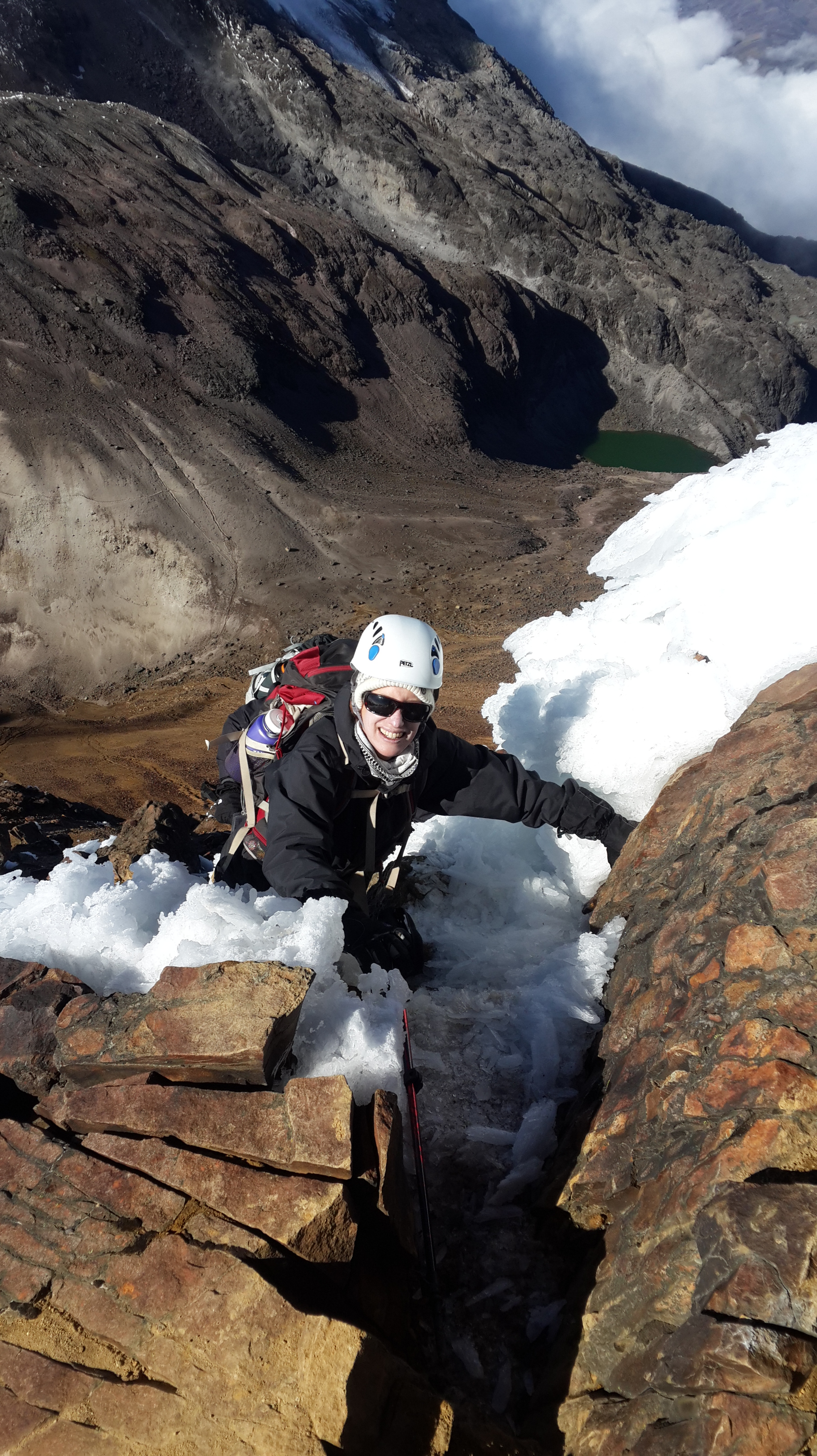
I tend to ignore the fact that my particular version of swamp to summit carries with it some degree of danger.  Even these recent events really only affect me in the sense of “oh wow, can you believe we were just there” or “we were just doing that.”  I think that’s part of the  journey – the danger is a given and it just becomes part of the landscape.  It certainly helps ratchet up the adrenaline, but when you’re on the mountain, you’re not thinking danger; you’re just thinking the immediacy of the moment and how to handle that which is in front of you.  Rock climbing up Illiniza Norte was a particularly good example of that.  In fact, I usually end up feeling more fear of physical failure than I do of external, more objective dangers.

For various reasons my Saturday run this week took me from downtown Orlando along a service road that parallels the now constantly under construction interstate.  It’s becoming increasingly overgrown, with many vacant lots.  I did briefly wonder whether this was actually the best place to be running by myself.  But the answer wasn’t to turn around.  I simply ran a bit faster.

Swamp Stories – Spiders and Skeeters and Flies, Oh My

image For a variety of complicated reasons, husband J and I found ourselves this weekend at the luxurious Ponte Vedra Inn, just south of Jacksonville. Founded in 1928, the inn has the same feel as the Santa Maria Inn in Santa Maria, California – big reception room replete with model sail boats, backgammon tables, and overstuffed furniture designed to look like it’s been in some blue blooded family’s estate forever. Over the fireplace, there’s even a spooky painting of two young boys holding recently caught fish — the colors fade toward the bottom so they seem almost to be floating in some netherworld.

Spooky kids....
Spooky kids….

So with a fancy spa, a golf course, three pools and a beach with servers eager to bring iced drinks with umbrellas, where more logical to end up than on a seven mile hike by an estuary, our only travel companions a variety of biting flies, gigantic spiders, and most unwelcome of all, ticks.

I’d actually looked up the Guana Tolomato Matanzas National Estuarine Research Reserve (what a name) before we left and we’d already committed to ourselves we were going to do this hike on Saturday morning. We almost lured a couple of friends who were attending the same weekend event but at 7:15 am they thought better of it.

The first challenge was finding the darn place. One of the reviews I had read cryptically mentioned the directions in the hiking app were not correct – which we too discovered as we made our way past the opulent Ponte Vedra oceanfront homes into the reserve. Although there are three parking lots, none of them is the location of the trailheads. But persevere we did, and eventually figured out where the loop hike started. We saw a total of three other people on the trail – and then only at the very beginning.  An amazingly uninhabited place — at least by humans.

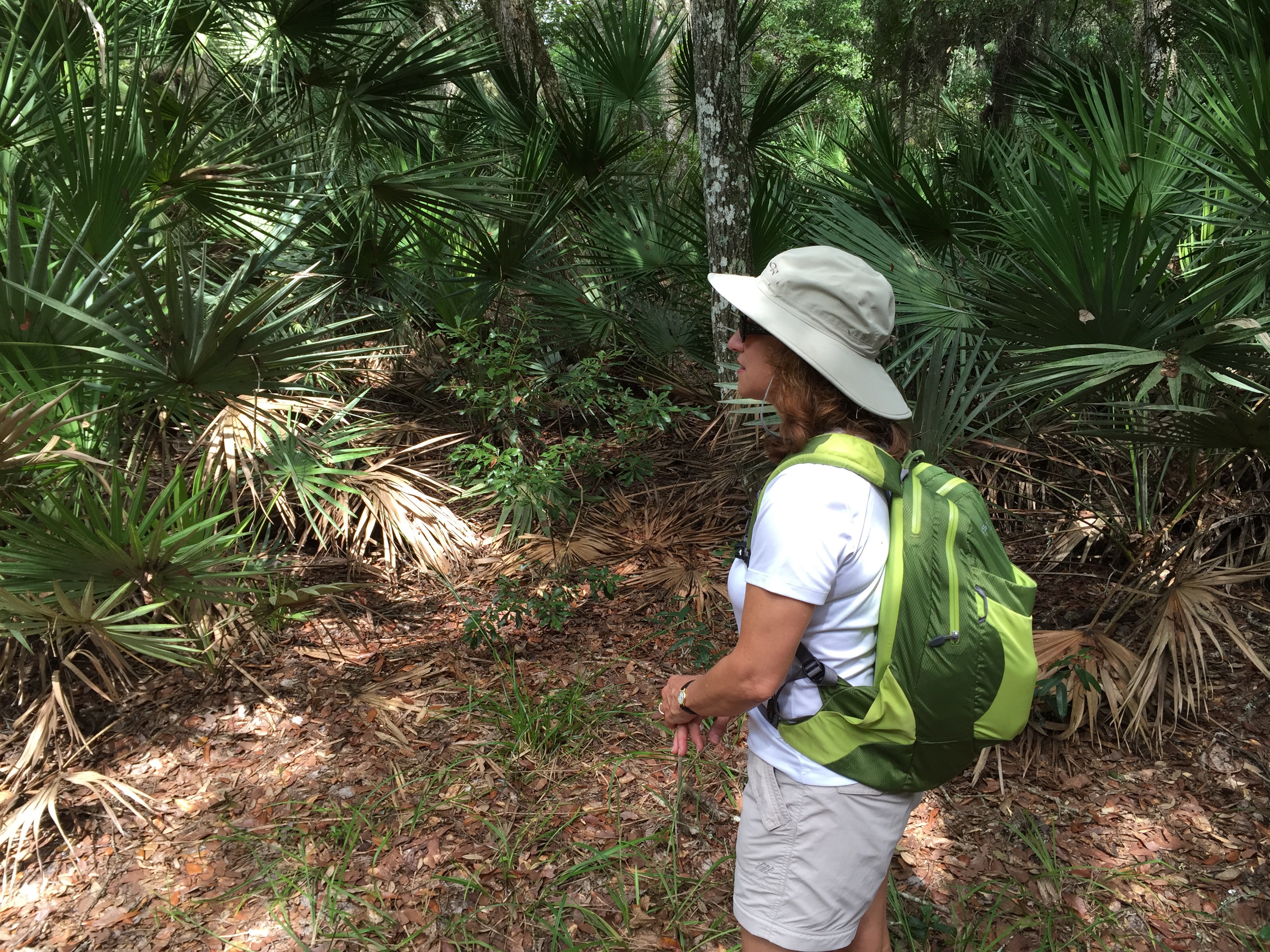
The trail starts off through classic Florida palm hammocks, framed by live oaks and swaying Spanish moss. It was beautifully shady and the temperature wasn’t bad. The shades of green ranged from neon to hunter, and the canopy over the trail made it almost as though we were walking under a pergola in a landscaped park.

We’d covered ourselves in heavy duty bug spray but at a certain point my sweaty body apparently became too much for the flies and ticks to resist and I found myself pursued by an onslaught of flying and jumping creatures. After I literally ran several yards, hiking boots and all, to escape I decided covering up was the only answer. So I dutifully zipped the bottom parts of my hiking pants onto the shorts and donned my long sleeved shirt. I may have looked a bit like one of those eccentric old ladies who wear winter clothes regardless of the season, but the heat was infinitely preferable to the attack of the flies.

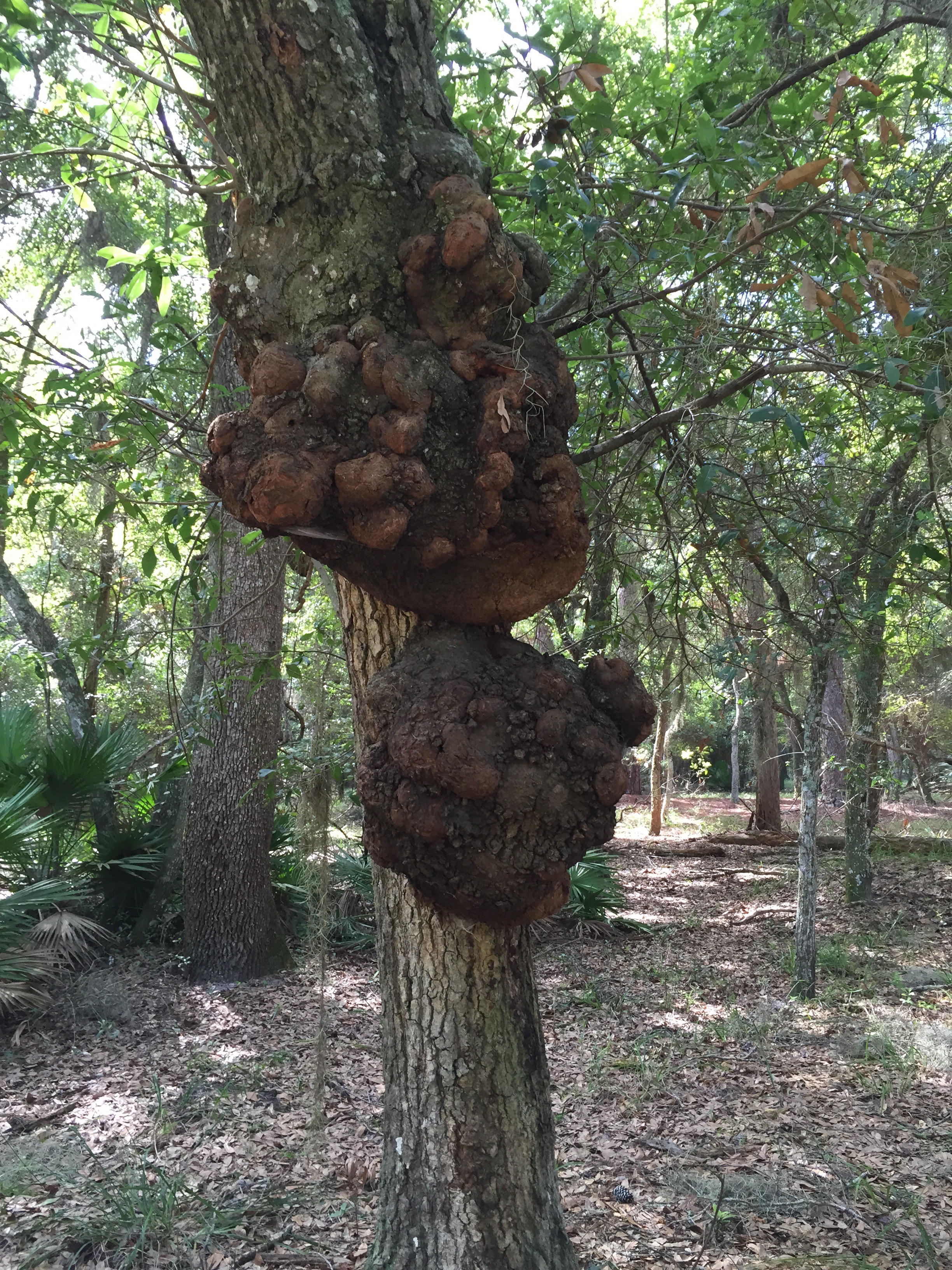
Shortly into the hike we passed a tree with two gigantic growths – if we were in Africa I would have thought they were some sort of termite mound, but here – perhaps overgrown mud dobber nests? Ideas? Photo is below.

image
The trail then winds its way by the edge of the river – part of the complicated intracoastal waterway system that hugs the east coast from Florida to Maine.  The green of the water grasses is pale and you start to see yellow flowers, a welcome sight as summer is not the best time for flowers in the Florida woods.

image

Most amazing were the huge yellow and black spiders we kept seeing everywhere. Fortunately their elegantly spun webs tended to be set high between the trees, meaning even J only had a few encounters. But the spiders were about two inches in length, and seemed to be quite well fed.

image

After almost 7 miles there was still a further loop we could have done, but by then the insect wildlife was starting to pursue J, who had made the mistake of hiking without full body armor in his backpack. So we called it a morning and headed back to civilization.

image

But as I type this on my phone (my iPad having encountered yet another problem that will require a trip to, horror of horrors, the Genius Bar), and look out on the red tile roof of the resort and the sliver of ocean I can see through our window, I do keep thinking how much more I’d really prefer to be looking at the pale green of the river grasses and the deep comforting trunks of the live oaks.

Ecuador – A Walk in the Cloud Forest

image

We returned from Cayambe on a Monday, with one day left to eke out every last remaining bit of our Ecuador experience before we returned to hot, humid and flat Florida. Of all the various options Ossy offered, a hike up into the cloud forest in the Pichincha range, into the Yanacocha Reserve, had the most appeal. Plus, he promised hummingbirds.

Now, I’ve had a hummingbird feeder for years. I’ve heard that Florida too has hummingbirds – but each time I spy such a potential winged creature, it turns out to be one of Florida’s special species of gigantic, winged bugs. Of course, the fact I have never bothered to put hummingbird food in the feeder probably doesn’t help.

So off we took, me, husband J, Ossy, and his wife. One fact I hadn’t realized before we left the U.S. was that our trip coincided with Pope Francis’s trip to Ecuador – and specifically Quito. Multiple roads were closed and police were everywhere.

On the way out of Quito we turned on the car radio and heard the Pope saying mass as we looked down on the crowd, half a million strong, in Quito’s Bicentennial Park. A little surreal.

A sea of people at Pope Francis' visit to Quito
A sea of people at Pope Francis’ visit to Quito

The sunny weather we’d brought from Florida had definitely turned and there was a steady downpour as we drove the winding roads up to the trailhead. Once we arrived at Yanacocha we all donned raingear, and I was profoundly greatful for my absolutely waterproof wind jacket (a Marmot that dates back to 2011) and pants (also Marmlot).

After a mile or so straight uphill through the paramo – the Ecuadorian highlands, we encountered our first swarm of hummingbirds. And I use the word swarm intentionally. There were so many of them darting back and forth to feeders that you could hear their wings. They shot past our heads as if catapulted from some sort of slingshot.

Not only were there small hummingbirds, but we saw several (I think) Great Sapphirewings, one of the largest hummingbirds, about the size of a cardinal, native to Ecuador. We also saw one hummingbird with a needle like beak almost as long as his body.

After we hiked through hummingbird central, we turned a corner – and there, growing on the side, was a fully blooming orchid, exactly (well, bigger and healthier) like one I have at home.

image

Even though it was still pouring, we ventured up the steeper section of trail as it didn’t seem too slippery. Of course, nothing seems slippery after a glacier. Nonetheless, by this point it had started to hail, and chunks of ice were accumulating and forming small banks of snow.  Ossy could have used a machete as there was a fair amount of trail breaking involved as moved further into the dense jungle of cloud forest. Flowers were everywhere, purple lupines, flame colored trumpets, white daisies growing close to the ground, all framed against a canopy of outsized leaves.

We finally reached a turnoff that would have taken us down a steep section to circle back to where we’d started – but that path did seem very muddy and by then we were all pretty well soaked. So we opted for what looked like a wider trail, despite the fact no one present had ever gone on it before.  The trail exited the cloud forest and took us back into the highlands – where we continued to climb up and up and up – even though it really seemed we should be going down and down and down. There were ultimately some long switchbacks, and we passed a few people working on the roof of a tumbled down structure of some sort, so we knew that at some point we should rejoin civilization.

Just after that, we suddenly realized we were walking across a field that was surrounded by a barbed wire fence – we were apparently on the wrong side of it. After we scrambled under the barbed wire, we looked back to see a large keep out sign barricading the area we’d been blithely strolling across.

image

But, our faith in Ossy’s mountain guide instincts was justified. Within another mile of so we hooked up with the “main” road and ended up exiting just a little below the spot we’d parked the car.

image

It was still raining, and we could all squeeze puddles of water out of everything we had on. J had on his customary too many layers of shirts and was able to lend Ossy one for the drive back. Apparently it’s illegal to drive without a shirt on in Ecuador. And besides, the Pope was there so I suppose it would have been unseemly in any event.

We made a quick pit stop back at the Hacienda Rumiloma to change – and dry off. The next order of business was a trip down into Quito for Chinese food – hot and sour soup never sounded so good. The Pope’s presence and road closings seemed to have resulted in an eerily quiet city, and we were able to park directly in front of the restaurant.

Hummingbirds, orchids, Chinese food, the Pope, and crawling under barbed wire. What better ribbon for wrapping our four Ecuadorean mountains in eight days?

Cayambe Calling

Checking out this route from outside the hut at Cayambe
Checking out the route from outside the hut at Cayambe

Four mountains, including one at 19,347 feet and another at 18,996 feet, in eight days, is a lot. I knew I was in trouble when I started to cough the night before we attempted Cayambe.  And how did we end up at Cayambe in the first place, you ask? You’ll recall the original plan was to follow our Cotopaxi climb  (second highest peak in Ecuador) with Chimborazo, the highest peak and the point on earth closest to the sun.

Well, the worldwide rise in temperatures is affecting Chimborazo as much as the next glacier. Have you seen photos of Kilimanjaro recently? Very different than 2011 when we were there. Warm glaciers create greater risk of avalanches and rock fall (not to mention the difficulties of slushy snow). Chimborazo is also a long drive from Quito and it’s one heckuva big mountain. So, prudence being the better part of valor we decided, with guidance from Ossy, not to let the wax on our wings melt by attempting to fly too close to the sun and instead to try Cayambe, Ecuador’s third highest peak at just under 19,000 feet, as the final mountain of our Ecuador trip.

After our peak (literally) experience on Cotopaxi — even two weeks later I keep re-living it in my head  — Cayambe was a logical choice. It’s just a little lower than Cotopaxi, perhaps steeper in spots (but for shorter sections), and has some rock to climb at the beginning. We had summited Cotopaxi at 9:05 am on July 3. After a rest day in Quito on July 4, we left the next morning to drive to the hut at Cayambe. Unlike the other huts at which we stayed, at Cayambe you can “drive” – if that’s the right word – right to the door of the hut.

Road to Cayambe hut - and this was the good part!
Road to Cayambe hut – and this was the good part!

The road to Cayambe beats about any road I have ever travelled on for ruts, rocks, and steep precipices.  It doesn’t resemble anything on which any self-respecting automobile should drive. We’d all learned our lesson by then about my issues with winding roads and cars, so I sat in the front. Ossy spent a lot of the time sticking his head out the side window to see exactly which snow, mud or ice covered rut would best create traction for the four wheel drive.

Eventually we made our way to the hut and checked in. For the first time during our trip we were sharing the hut with another team, a large group of nine or so climbers with four guides.  All males and considerably physically larger than I. As we settled in at a table in the main room we traded stories  about what we’d been climbing – and I must say it was 100% satisfying to say “yes” when they asked if we’d summited Cotopaxi, which they hadn’t yet attempted, and to be met with some very bemused looks. For a five foot, one and one-half inch woman (that half inch is very important), I felt a certain instant credibility. As Ossy said though, the pressure on all those guys to summit Cotopaxi had just increased immeasurably!

But Cayambe was the summit that was not to be. I still had not  completely recovered from whatever stomach issues had so gravely affected me the night after we climbed Illiniza Norte and had also developed a nagging cough. Plus I think I was still generally burned out from Cotopaxi. I had put my heart and soul into that climb, and I couldn’t help but regard Cayambe as a latecomer to the party.

We followed a similar routine – packed for the next day, went out and looked at the route we’d be taking, ate soup and something  sweet, and were in our bunkbeds by 6:30. I slept a couple of hours and we were up at 11:30 – this time with other climbers also packing up and getting ready to go. It did change the serenity of the moment. But, as the only woman, I got to have the entire women’s bathroom all to myself!

The night was spectacular; the moon had waned only a bit and there was scarcely any wind. But the downside of all that was that it was quite warm – in fact, we all wore a layer less than we’d originally planned. And the snow was soft, meaning  that once we were on the glacier we were sinking in and exerting a lot more energy than desired. Once we had scaled the rock area – which I had spent way too much time worrying about because it wasn’t that hard – we had to traverse through a scree and rock field and finally reached the glacier, where we could put our crampons on.

But as we roped up and took off I just couldn’t attain the same sort of steady rhythm that I’d been able to manage on Cotopaxi. Although at one point we were among the highest teams I made the mistake of looking up and seeing how incredibly steep and seemingly never ending the slopes above me were, and let myself get distracted by what the other climbers on the mountain were doing. All of which added up to a point where I was feeling dizzy and our pace simply was not what it needed to be if we were to summit early enough to avoid the risk of avalanche as the mountain heated up during the day.

Dawn breaking over Cayambe - photo by Oswaldo Freire
Dawn breaking over Cayambe – photo by Oswaldo Freire

Just then, one of the other teams that had passed us turned around after reaching a ridge line about 400 meters from the summit. We decided to go to the same point and then head back down. It turned out two other teams did make the summit but it took them 8 or so hours – an hour and a half longer than usual, due to the hard climbing conditions.

Our descent went well, even though the scree field we were hoping to slide down instead of rock climb was covered with snow. That meant we had to turn around and walk back up an area we had just hiked down – possibly the most dispiriting moment of the whole climb. But I did well on the rock climbing on the way down, no ropes needed.

Descent down Cayambe - photo by Oswaldo Freire
Descent down Cayambe – photo by Oswaldo Freire

And on the way down we were treated to a rainbow. Clearly a promise of future summits. Cayambe is still calling to me. I think we’ll be back.