Machu Picchu – Trail or Trial – Part Two

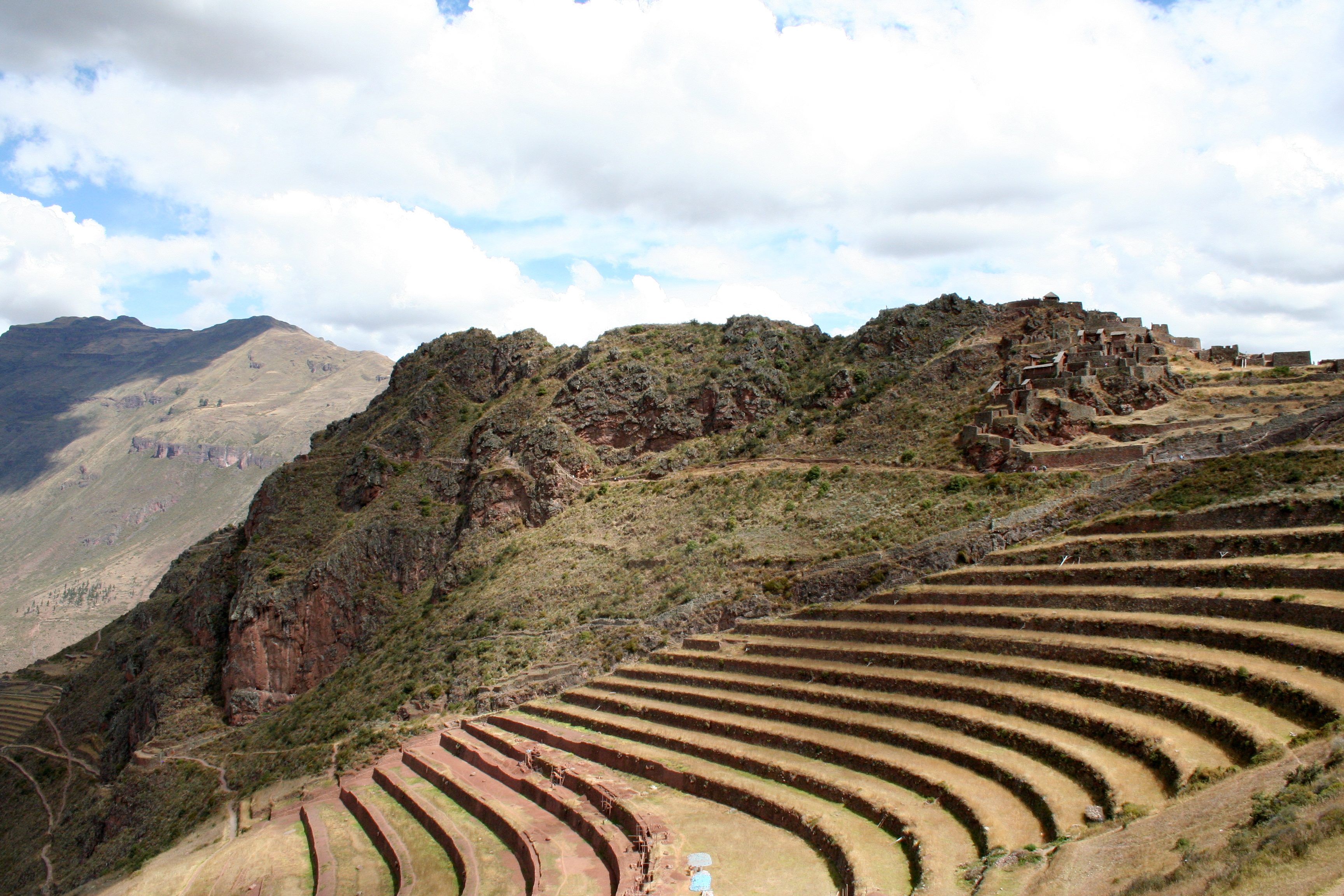
First campsite - Wayllabamba
First campsite – Wayllabamba

Inca Trail part two. I have realized that this experience was at least a trilogy, so part 3 will follow. Today’s installment – the “village” part of the hike, followed by “Challenge Day” and the Dead Woman’s Pass.

We met our fellow hikers at about 5:30 a.m. in front of the Hotel Marquesas in Cusco. We had briefly encountered each other the previous day during an introductory briefing session at the trekking company’s office. We were a diverse lot – our family of four, newlyweds from Boston exploring Peru, an English couple traveling around the world for a year, accompanied on this leg of the journey by a sister, a couple of salesmen from Texas, a doctor and his wife, also from Texas, and one man from California and another from Germany. Fifteen in all – it was a large and unwieldy group.

After what seemed like a very long bus ride, we stopped for breakfast in the small town of Oyelltambo. The restaurant was most notable for highly elaborate rabbit cages in its garden. It was very early in the morning but I think I am remembering this correctly.

We journeyed on to Kilometer 82 – the official beginning of the trail (or trial, depending on your perspective). We were struck by how agricultural it all was. Women on donkeys carrying bushels of herbs; local people selling water or other items at about every rest stop. The mountains on either side of the trail were green, capped with snow. And flowers everywhere. I hadn’t realized before that begonias grew in the wild. Views of the ruins of Llactapata – a settlement of 100 or so buildings that would have housed soldiers and others traveling the trail. Our trekking company did not scrimp on food. Trout for lunch. Apparently inspired by lunch, our guide then had to explain to one of our fellow hikers that the “no hunting” restrictions also meant “no fishing” with the fishing line he had brought from Texas.

Permits for the Inca Trail are strictly controlled and only a couple of hundred people can enter the trail on any given day. You also have to go with a trekking company – no independent forays along the hundreds of years old stone path.

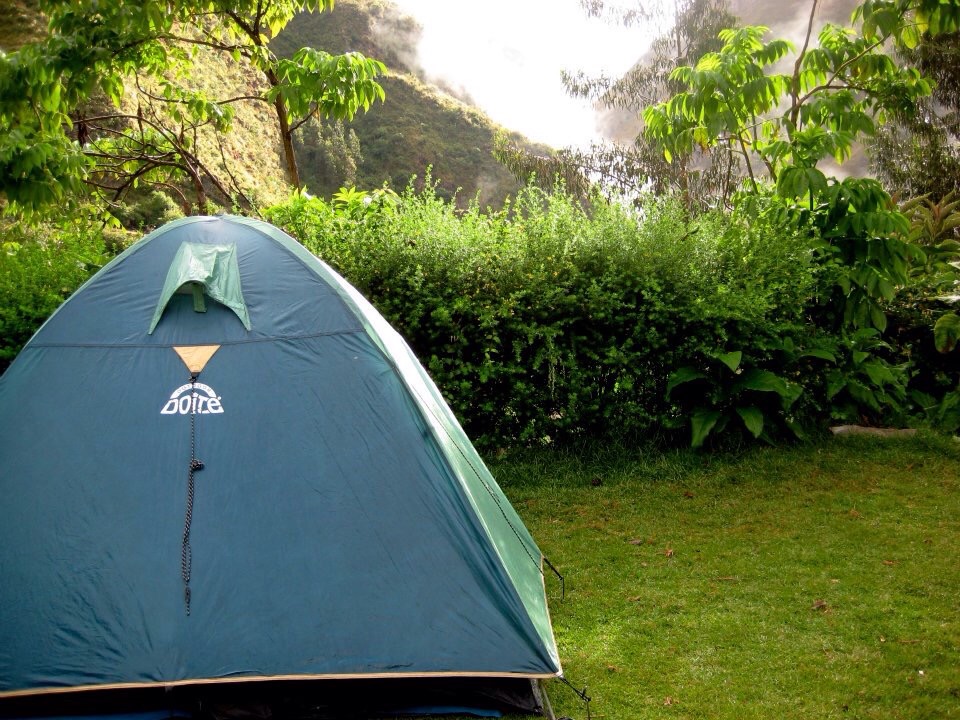
The first campsite, Wayllabamba, 3000 m, was in the heart of the agricultural area; in fact, local people were selling all different beers and drinks from aluminum containers. Dinner was a highlight – chicken with flaming bananas! But even with the semi-village feel of the campground, the remoteness kicked in with the southern hemisphere of evening stars – visible without any city lights. This was our first time camping with our daughters. Since we hadn’t reinvented ourselves as climbers until age 50, they had never experienced this growing up. But they were good sports and settled into their own tent well – although quite greatful we had made them bring long underwear.

image

The next day, day 2, I finally started to feel I had found my hiking rhythm. That day we reached the highest pass in the trail – Dead Woman’s Pass – at 4200 m. It was overcast and drizzly and suddenly the layers of clothes that had seemed too warm in Cusco felt right.

It rained on and off the whole way, the grey punctuated by the yellow orchids we saw every now and then. The up was ok, if steep, but the down hard on the knees. By now hiking on the carved square stones of the trail – some replacements, but some the same the Incas hiked on those hundreds of years ago on missions no one, to this day, totally understands. There was no written tradition.

Yellow orchids - michi michi
Yellow orchids – michi michi

image

Of course, as we were accompanied on this hike by the daughters  I had to assume both my mother and hiker persona – not always compatible. In fact, the maternal one is also known as Mommy the Packhorse and as usual I ended up carrying many of the layers that belonged to the two girls. A lesson to be learned: the younger one decided to prance well ahead of the rest of the family on the steep approach to Dead Woman’s Pass, leaving her rain gear and warm jacket with her sainted mother. We found her 45 minutes or so later shivering and cold as the rain and wind picked up.

Dead Woman's Pass
Dead Woman’s Pass

The tree line was about 10,000 feet. Dead Woman’s Pass, at close to 14,000 feet, was cold, rainy, and very windy. Only a few hundred of feet below it was much warmer. Still, our camp site that night – Pacamayo, 3600 m, was very cold. Gone were the villagers. We were in a non cell phone service area, completely disconnected, and with only the grey shades of the ancient Incas for company.

To come – day 3 and 4: the placing of rocks on a cairn, Incan funereal rites, daughter number 2 gets really sick, sunrise (almost) over Machu Picchu, and the van ride back and the attack of the mysterious wild animal. Stories to come.

The Inca Trail – Pre-Trail or Pre-Trial – Part One

IMG_7342

Our trek along the Inca Trail in May 2012 started off as a natural follow up to Kilimanjaro in 2011. Granted, it wasn’t a summit per se, but it certainly was a well-known hike, seemingly had a degree of challenge, and besides, we were able to convince our daughters, then 19 and 21, to accompany us. But what we didn’t realize was that the trip would be as much of a cultural experience as it was a climb. Many mountains are remote and you are more exposed to the insular world of the mountaineer and whatever wildlife lives above the tree line than you are to any local residents. But Machu Picchu surprised with the many, many people we saw every mile of the way – from the beer hut on day 2 or so to the women riding donkeys with bushels of cut herbs on their backs.

The trip began rather inauspiciously – for some reason the husband and two girls thought that Mexican food and margaritas at the Orlando airport was an appropriate way to kick off a trip to Peru. Not so, and all I can say is they suffered quite a bit for it, while my salad and wine seemed to agree quite nicely, thank you very much. We flew on Copa Air – the Panamanian airline, and like most non US airlines, it was quite pleasant – although we had bad weather in Panama City and landed with quite a bump. Ran to the next gate and just made our flight to Lima, where we landed about midnight. But you would never have known it was the wee hours of the morning from the hustle and bustle of the Lima Airport. It might as well have been late afternoon on a Saturday of holiday weekend. All the shops open, people dining.

Had to recheck our bags at the LAN counter – our airline for for the trip to Cusco – and got to the gate about 2 a.m. Together with a number of other intrepid travelers, we each found a section of seats to crash on for a few hours, backpacks within touching distance. We arrived in Cusco in early morning, and could feel the change from sea level to 11,000 feet. We stayed at the beautiful Hotel Marquesas – a 16th century residence converted to hotel. A courtyard in the center; walls about a foot or more thick. The husband and I had a balcony overlooking the street from which we could see the cathedral. The girls had an interior room that felt like a cave. Because we had arrived so early, the rooms weren’t ready and we were immediately offered – and accepted – coca tea – which does in fact help with sudden altitude change.

Hotel Marquesas, Cusco

Travel hint. Only bring new bills to Peru. Currency exchanges will not accept anything with creases or tears. And they are serious about it. Sight seeing was the order of business for the first day or so. The cathedral’s wonderful painting of the Last Supper where a guinea pig substitutes for the bread embodied for me the peculiar marriage of local and foreign cultures. And the food! For lunch I had potatoes in a red pepper cream sauce. (Peru has, I believe, more varieties of potatoes than anywhere else in  the world.) Dinner – chicken stuffed with goat cheese and elderberry sauce; local trout; poached pears with cinnamon ice cream. And you can’t forget the pisco sours – like a gin fizz made with a brandy.

We spent the next day on a bus tour of the Sacred Valley. Although it was supposed to be for both Spanish and English speakers, we seemed to be the only English speakers and it was remarkable how ten minutes of Spanish could turn into about two sentences of English.  Nonetheless, the ruins were remarkable, the Andes amazing, and we were struck by the authenticity of the people and places we were driving through.

IMG_7394

That night the four of us did a mini gear check, getting ready for a van to pick up us up at  5:30 am to drive to the fabled Kilometer 82 – the start of the trail. Next post – the start of the hike.

IMG_4116

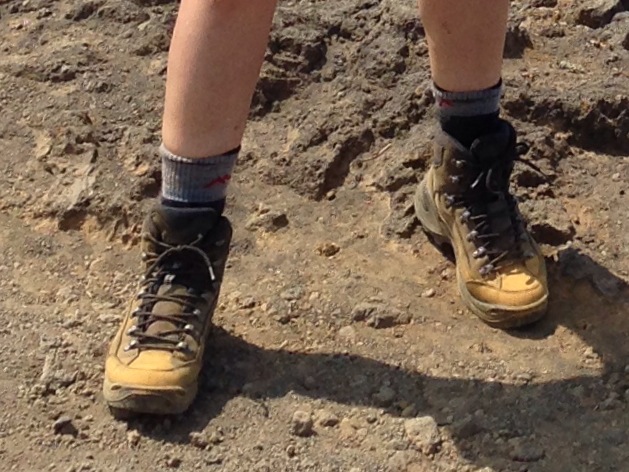
Boots With Soul

Boots with soul
Boots with soul

This coming week I’m planning to lug the hiking boots back to my office so they can start to climb stairs with me again. They are full leather Lowa Renegades that I bought in 2010. You could tell back then if a climber was from Central Florida because those were literally the only full leather boots being sold in the area.

I figure that it’s a good idea to be back in hiking boot mode before the Mt. Washington trip in a few weeks. And I know my daughter, who is going along for this trip, is tired of me telling her to do some hiking in her hiking boots – but since I don’t think she has done so for any length of time since the Inca Trail in May 2012, I certainly think it’s advisable.

Each time I put on my boots I see just a little bit of dirt or dust from treks past. Some days after the Boston Marathon bombing occurred and the bombers identified, I was climbing up and down the stairs in my office building. We had just returned a few weeks before from hiking down and up the Grand Canyon – South Kaibob and Bright Angel Trails. There was still red, copper dust ground into my boots that reflected the rusty color of the stair rails. The burnt colors around me, and the cavernous recollection of descending down into the canyon converged and I was overcome with the tragedy of how the two brothers could have so missed the point of the mountains and sun and whether they even realized what they had done.

I dragged around dregs of Kilimanjaro for months on my boots. The husband and I hadn’t bothered to take advantage of the repeated offers to clean our boots when we were in Africa – hence, even when we returned, my navy blue boots had a grey ashy sheen that outlasted multiple rainstorms. Each time I put them on I felt a little bit again the magic of that moment if stepping on the summit.

Elbrus didn’t make as big a mark on my boots as it did on me. Probably because once at the Barrels – the converted oil barrels where climbers stay at 12,000 feet – we were in our double plastic boots and crampons. But my boots still bear a little dust of the Caucasus mountains, especially the fields of wildflowers on the observatory hike and the dried salty sweat from the horses as we went horseback riding. And I’m sure that somewhere hidden in the creases of my boots there is a bit of olivine sand from Green Sands Beach in Hawaii, or the deep rich soil of the Inca Trail.

I’m hoping my boots have a lot more miles in them – although when I looked at the soles they have lost a fair amount of their grip. But grip or no grip – they have a lot of soul.

Yoga and the Art of Climbing

image

I’ve been meaning to write this post for a long time. Certainly, when I have been training for various climbs and treks, adding cardio to my work out was an essential component of success. But much of climbing or trekking is the sheer grit of simply keeping on going even when every part of you is saying stop right now. And that’s where yoga has made all the difference – and here’s a shout out to my many, many yoga instructors over the years, whose voices were in my head on so many of these hikes. Elbrus on the long slushy slog on the way down. Mt. Hood, where the 60 mile an hour winds were blowing me into the mountain and I couldn’t see because the blinding snow had totally occluded all vision.

I remember my first Bikram yoga class in 2007 or so. At that time, Bikram Yoga Orlando was located next to an elevated expressway in an small old strip center (and I mean old – circa 1960s) next to a pet grooming place. That’s the reason I had seen it – I had dropped off the dogs (who are now 14!) and picked up a schedule from the pile outside the door. I’d been doing yoga for a long time and had heard of Bikram, but had never tried it. But I was then working long hours on an arbitration – the precise contours of which have long escaped me – and I thought, maybe this is just what I need as a break.

Bikram is supposed to be practiced at 105 degrees and 40% humidity – and at the new studio it is. But at that old place down on South Street I swear you could see clouds forming overhead and I am sure there were a couple of times rain drops actually came down.

After my first class – and I didn’t leave the room nor did I lie down, despite the heat – I thought – Ok, I’ll try this every other week. But the next week I was back. And, although I’ve kept “regular” Wednesday and Sunday yoga classes, pretty much every week I’m also at Bikram. For someone whose job is comprised of making decisions, to be in an environment where there is no decision except the one to go on is an incredible luxury. I follow what the instructors say; I know the dialogue; and each class I feel my body respond and become stronger. And there is a particular moment where listening to the dialogue and your own physical presence merge and become one – and for once, you can be in the present – no decisions to make except for the one to keep going.

And I don’t want to dismiss my so-called “regular” yoga classes either. Where else have I learned the ability to literally stretch my body into shapes and places it wouldn’t normally go. The beauty of Bikram is that it’s the same every week – but the beauty of the other yoga is that I’m challenged to see where I can move my body in space and create that extra last dimension around me and fill it with movement.

So why does this relate to summits? I’ve learned to control my breathing. On the mountain, I think – breathe normally, in slowly and out even longer. On Elbrus I recited the Bikram dialogue in my head. I went into that quiet place of the present that allows you to take those last few steps that lead to the summit – and just as importantly – that allow you to descend.

Journey to Another Planet – Mauna Kea

Mauna Kea
Mauna Kea

Mauna Kea isn’t particularly well-known as a destination hike. Most people get to the top by car. But after my husband became the only person in Hawaii to come down with a severe case of flu in the middle of August 2013, thus putting the kabosh on our plan to backpack the Muliwai trail (more on that later), Mauna Kea seemed an attractive alternative.

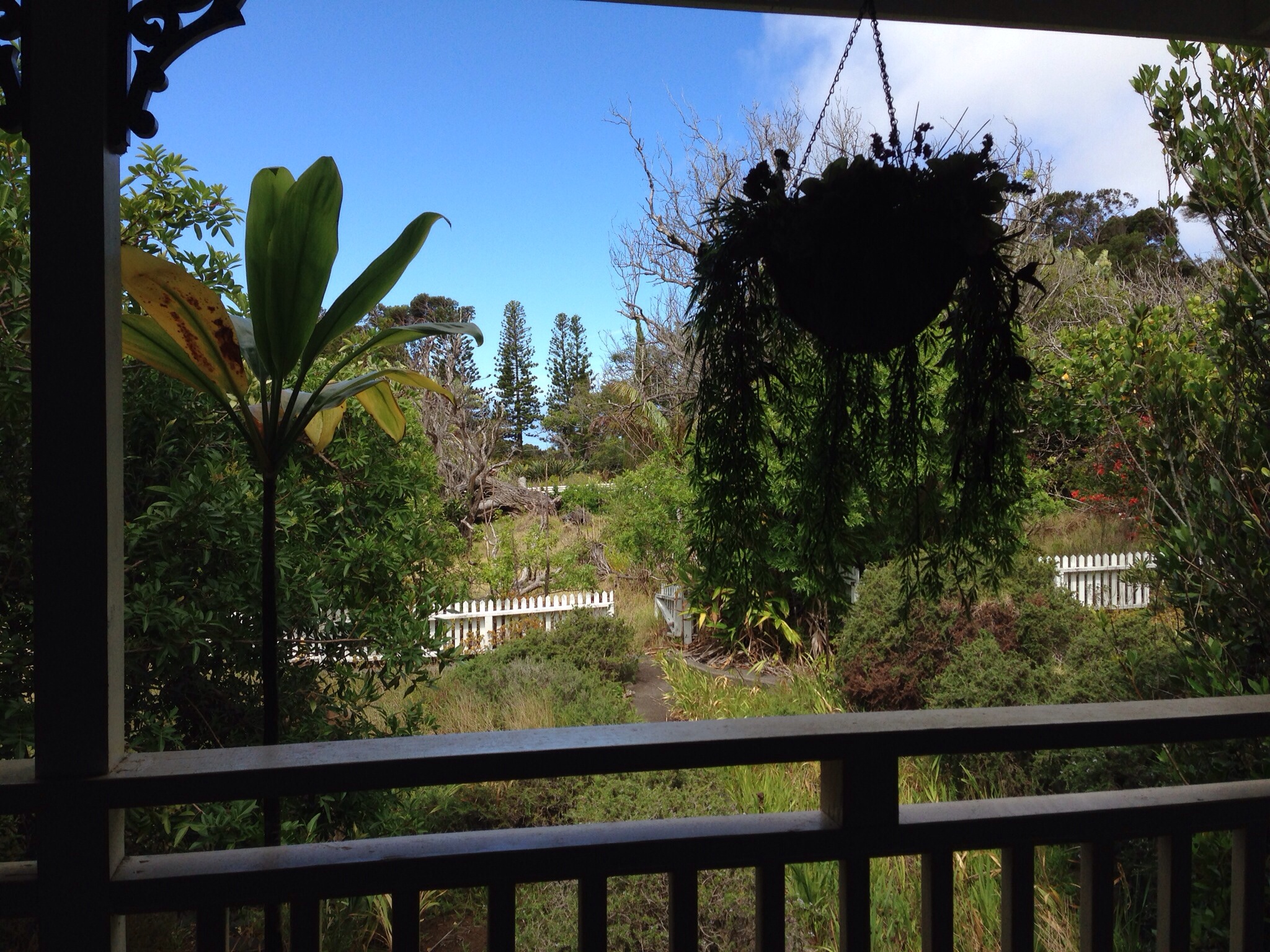
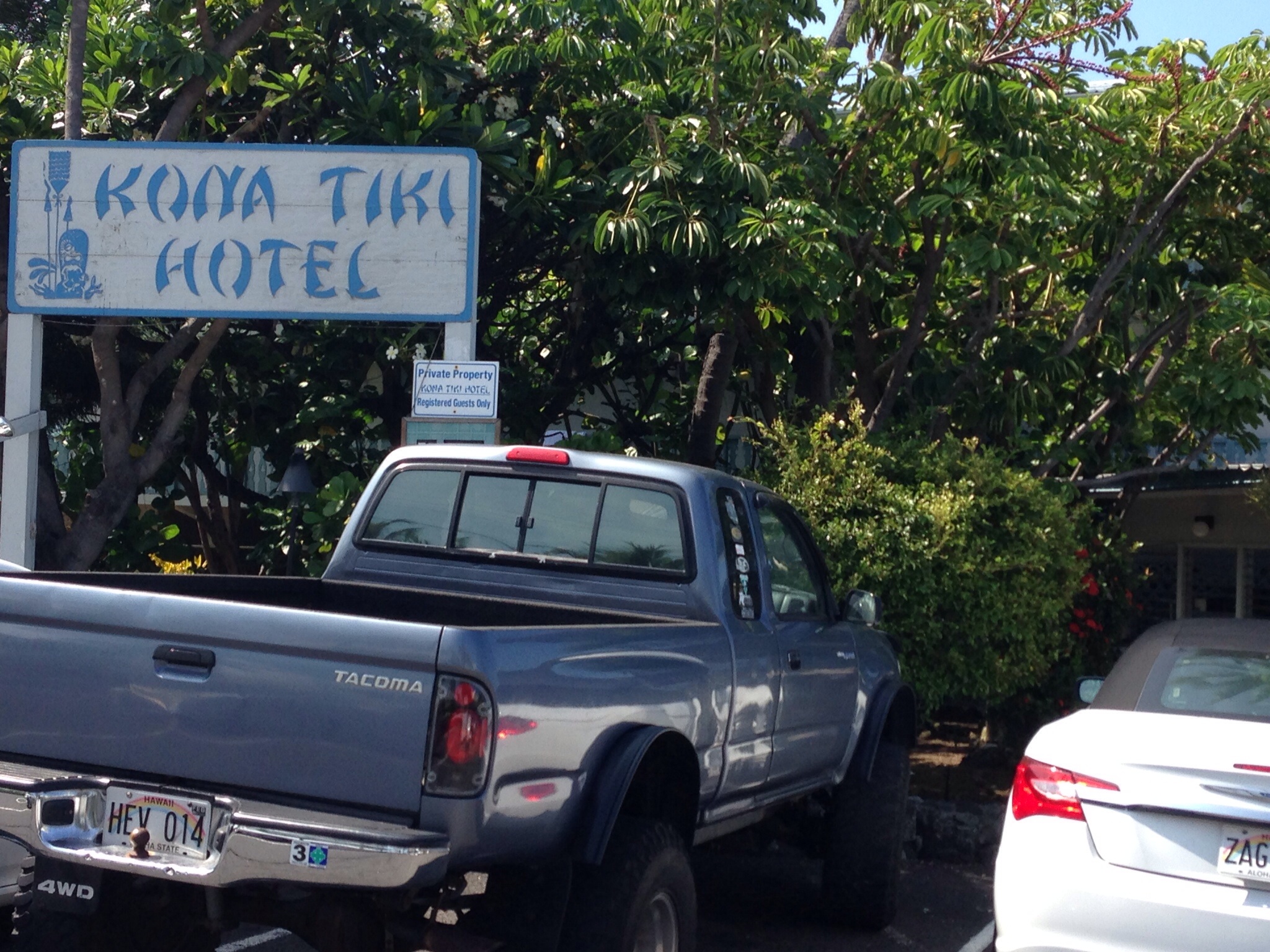
Due to the unexpected change in plans we had several wild card nights – no reservations, no nothing. Two nights before we climbed Mauna Kea we stayed at a 1970s hotel on the edge of Kona, complete with kitchenette and ancient dinette table. Ocean front was an understatement as the second floor unit we were in was bombarded with large waves throughout the night – unclear what the decibel level was. The next night we returned to the semi rundown estate of the Rockefellers outside of Waimea, now converted to a somewhat quirky bed and breakfast – without the breakfast.

View from our porch at the former Rockefeller estate in Waimea
Kona Tiki Hotel, Kona

The next day we awoke early to an hour or so drive along Hawaii’s oh so well maintained road to Mauna Kea. We parked at the ranger station at approximately 9200 feet elevation about 7 am and signed in. Little did we know that only two other hikers would sign in that entire day.

After the first bit of the hike – some fields, some green – we might as well have been hiking on Mars, or at least my idea of Mars. Black and red lava rocks, occasional prehistoric (maybe) cairns of rocks, and very little that resembled vegetation. The temperature varied between extremely hot and downright chilly during the few moments when the sun went behind the clouds.

One of the more peculiar features was that even though the road up would occasionally pop into view I felt more isolated on Mauna Kea than anywhere on Kilimanjaro, much less Mt Elbrus. The trail wasn’t always well marked and it was not hard to imagine being found years later after suffering an unhappy death from dehydration.

Making the trip even more interesting was the rapid elevation gain – literally sea level to almost 14,000 (13,796) feet – in about six hours. I usually don’t feel anything at 14,000 feet but I definitely started to have a headache near the top, combined with some dehydration.

As you approach the top, all of a sudden you start to see the telescopes. Peering up over the orange landscape and the gradual volcanic cones, it is as though you have inadvertently wandered off course and ended up on Another Planet. There’s also a set of porta-potties, a nice reminder of earth, however. I kept thinking of the novel Cloud Atlas – one part of which involves an adventure at the top of Mauna Kea by the observatories – “you’re crazy. There ain’t nothing on Mauna Kea but Old Georgie and his temples hid in ‘closure walls. He’ll not let you in unless you’re ‘ready died an’ your soul is his.”

Telescopes on Mauna Kea

There we encountered the only two other hikers we saw the entire day. But the last mile or so up requires walking along the side of the road, with cars whipping past you. Resentment toward the motorists kicks in – they hardly deserved the summit! The summit itself involves a trek down one indentation and then up to the peak – flat on top – with various offerings to the Hawaian volcanic gods placed on a small stone altar. The wind is much more intense and as we had no idea how long it would take to go down we didn’t stay long.

It turned out our fears were unfounded. While we hiked to the summit in under 5 hours we got down in just over two – scree skiing most of the way. The sun went in and we had a good 45 minutes of walking through clouds – very refreshing after the blazing sun of earlier.

Clouds on the descent

Once at the ranger station, we were met by bus loads of tourists there for night sky observation tours. While it wasn’t exactly a return to a space station, our seven hours of hiking felt like light years.