Lots of times on the way up a mountain it’s pitch dark. And even if you’re lucky and the path is lit by thousands of silver stars and perhaps the glow of a brilliant white moon, it’s pretty difficult to look around you to take it all in as you trudge up, all senses aimed at planting your feet so as not to take a tumble down hundreds of meters of snow, ignominiously ending up on a pile of rock.
Even in daytime it’s not always easy to take the extra moments to look about. By then you’re worried that the snow is softening, avalanche and rock fall risk getting greater, and you still have to clamber back down.
The last few weeks have presented just enough strange little coincidences that remind me, though, that sometimes it is worth taking those extra moments and noticing those connections you might otherwise miss. One thing about running as part of training – it gives you a lot of time just to observe – and basically to try and focus on anything other than how sore you feel.
I wrote about the first such coincidence a couple of weeks ago. That is, ordering a glass of Malbec at two restaurants over 1000 miles apart, two nights in a row – and being informed at each that was the last Malbec – not of the bottle but at the entire establishment!
This past week, I learned via Facebook on the same day that two unrelated people I know, one through work and one an old college friend, were both making their standup comedy debuts in a very far apart states on exactly the same night. I had not hitherto thought of stand up comedy as something hordes of people were lining up to do.
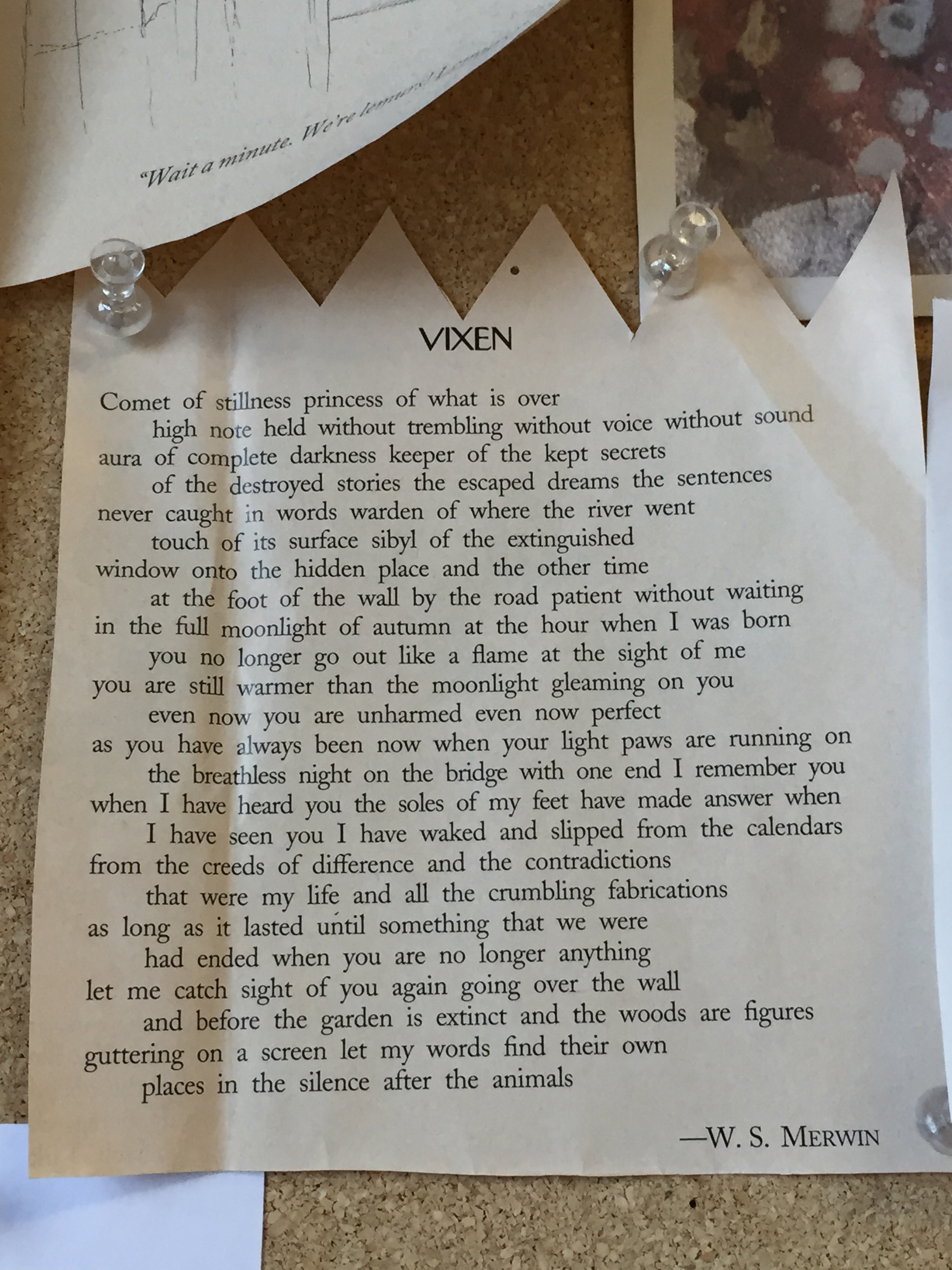
And just recently, while engaging in some unexpected dialogue about the poet W.S. Merwin, again on Facebook, of all places, a friend mentioned her love of his book, Vixen. Back in 1996 or so, I cut that poem out of The New Yorker when it was first published, and it’s been on my work bulletin board ever since. (Somehow I just add to the bulletin board. I never take anything off. It has an archeological feel by now.)
Now, any two things can look strangely connected if you examine them hard enough. And it certainly makes life more interesting to do so. But the reality is that there are an awful lot of fun things to look at out there that can liven up any part of a journey.
There was the incredible wild orchid I saw in Ecuador in our hike to see the hummingbirds. And on Friday when I walked home from work I was delighted to find an Italian restaurant that featured Hawaiian pizza and gyros. And as close as my own backyard are some tiny basil plants springing up volunteer. We’ll see how long they last in our Florida “winter.”
Taken through an IPhone rain cover – a little blurry!
We have just over two months before we attempt Pico de Orizaba. There will be a lot to look at before then.
Mysteries surround Puzzle Mountain, which was the site of last weekend’s Maine adventure.
After a successful rampage through the L.L. Bean clearance facility, we started the journey northeast to the weekend home of N’s parents. It’s a lovely old farmhouse near the Appalachian Trail. And on the way – the mysteries begin.
9. How does Google maps pick its prescribed route from point A to point B? Somehow we found ourselves taking a one lane road dotted with potholes through multiple small towns. Extremely scenic, but I’m sure there was a more direct route.
8. What’s a bean supper? Every small town in Maine seems to have one on Saturday night.
7. What are confederate flags doing in Maine? That was a really weird one to me. Here in the south, we spend a lot of time working to take them down, but they seem to be going strong up north.
6. How many ways can you cook apples? Daughter A is an expert pie maker (a skill she did not inherit from her beloved mother) and brought a delicious apple pie up to Maine, which she somehow carried on an Uber ride to a train station, on a train to Portland, and on our trip in N’s Previa up to Northwest Maine. She returned to Boston with another two bags of apples, picked fresh off the tree. Unclear what can be done with a hundred or more apples.
5. What mountain ranges can you see from Puzzle Mountain? We set off fairly early on Sunday for our trek up the mountain. It was a short drive to the trailhead, and the leaves were at their peak color. The trail climbs fairly steeply in sections, but is interspersed with enough flat sections to keep it interesting. The first part was all birch forest, pale yellow leaves set off against the peeling white bark of the somewhat spindly trunks. Finally, we came to an opening in the woods and could see across the patchwork valley to the White Mountains of New Hampshire and other unnamed ridges.
Birch forest
4. Where were all the people? It was Columbus Day weekend (or more correctly, Indigenous People’s weekend), and I would have expected at least some other hikers, if not the raging crowds we’d faced on Mt. Washington last year. But except for one other group who only made it to the first peak of the mountain, we saw absolutely no one.
Mount Washington in the distance
3. Where did the blue blazes go? Most of the trail is nicely maintained. But after we reached the second and highest peak (a whopping 3100 feet), we took a loop trail down that was considerably overgrown. At one point, coming out onto a rock outcropping, it simply petered out into a tree. Although there were some remnants of blue paint on the rock, and a very misleading cairn, it turned out the real trail was in a completely different direction. And it turns out that daughter A’s belief that always going left was the right answer did not work.
2. Which way is down? Now, this seems like a question with an obvious answer. But not so. The descending trail seemed to have as many uphill parts as down, and at one point I was convinced we were corkscrewing ourselves around the mountain.
1. Where is Puzzle Mountain? Some mysteries are best left unsolved. And I promised our hosts that I’d help keep it hidden!
From the top of Puzzle Mountain in Maine we could see the White Mountains of New Hampshire and the peak of Mt. Washington, which we had summited exactly 364 days before. But all good mysteries need plot development before they are solved. And Puzzle Mountain is no different. Our story starts on Friday, when we left Orlando at the ungodly hour of 7 am to travel to Portland, Maine, via JFK.
This mini vacation was what has become our annual fall trip to New England to see daughter #1, also known as A, and boyfriend N. Despite her tropical upbringing, this visit A explained that two winters in Boston had inured her to the hardships of snow and she no longer needed the down jackets her father and I donned as soon as we experienced under 50 degree temperatures. (To look at us, you would hardly think we were climbing glaciers three months ago or planned another ice related climb in January.)
Mysteries always start with a blast from the past. This one began with a passing suggestion on Facebook from an old friend from high school, whom I had not seen in 36 years, to let her know if our Maine trip would take us into Portland. So what could be more natural than to message her from the plane (hey, free wifi on JetBlue – although free bags are a thing of the past) that we would be landing in two hours.
Once we arrived at Portland’s small, moose themed airport, we received the best travel advice we’ve ever obtained from an airline representative. We had no assigned seats for our return flight on our Travelocity booked tickets, and thought we should try to get them in advance at the airport. Turns out, all that was available for no fee were center seats scattered throughout the plane. But, the customer service representative assured us, if we simply bided our time, all those empty $50 extra leg room seats would have to be given to those of us seatless passengers at no extra charge – and so they were.
In Portland, we didn’t follow the millennial pattern of taking Uber to the AirBnB. Yes, it was an Air BnB booked by the daughter (we were rejected from the one that had chickens but this one had enough unusual art to make it interesting), and instead took a taxi because we felt sorry for the driver. But after he couldn’t find the address we had second thoughts.
In any event, after enjoying the artisanal pastries left by the proprietress of our two bedroom flat, we walked a few rainy blocks to the mead tasting room. How else could one possibly start off a Maine weekend? There we met up with L, last seen in the summer of 1979, and managed easily to catch up on 36 years of kids, careers, and marriage, not necessarily in that order.
After tasting six varieties of mead (who knew?) – ranging from dry to apple to lavender to chai – we ventured into Portland proper. It’s not a big city, but has maintained a charming downtown, with retail shops, galleries, restaurants and bars, and an amazing number of not very expensive jewelry shops selling lots of hand crafted jewelry. Apparently there’s a long jewelry making tradition in New England. Again – who knew?
L then took us to MJ’s Wine Bar, where we met up with her husband. Daughter’s boyfriend also arrived, following a long drive up from south of Boston.
Another mystery. Thursday, at a restaurant in Orlando, I’d been offered the last glass of Malbec in house. Friday, at MJ’s, the same thing happened. There has to be a message.
Next day, following a very seafood oriented dinner – at the presumably now-Malbecless Dave’s Restaurant – we sampled more of Portland’s wares. Breakfast was Hilltop Coffee, a small coffee shop with excellent egg and cheese sandwiches a couple of blocks from our Air BnB in the arts area of Portland.
Portland, Maine, reminded me much of Portland, Oregon, with well kept gardens, two story clapboard dwellings, and lots of coffee.
We then walked down to the waterfront park, which houses the USS Portland monument. It was a chilly morning, but beautiful, and the view from the big old Victorians facing the waterfront must have been marvelous. The yard sale at one was particularly interesting and I’m sure A will treasure her one egg skillet for life.
Next stop was the Portland Art Museum. Although small, there is an excellent permanent collection, but we especially enjoyed the “You can’t get there from here” exhibit, featuring Maine artists. The installation of the bathtub and TV video of aging hippies rowing their way through ocean waves particularly spoke to me. It was also fun to lie on our backs on mats on the floor and look at the video screens of the sky moving overhead at one of the more interactive pieces.
After a trip to the sock shop (who doesn’t need a pair of fall socks decorated with marshmallows, hot chocolate mugs, and fireplaces), lunch was at the original Otto’s, a Portland pizza tradition. The Allagash saison draft beer didn’t hurt either.
But by then it was almost 2, and if we wanted to make it to the Mecca of outlet shopping, it was more than time to leave for LL Bean, in Freeport. Gear and work clothes are important. Freeport was packed. It’s a bit incongruous to find quaint B&Bs mixed with new outlets – I suppose one can enjoy organic muffins and spend the rest of the day bargain hunting for clothes made in China. But after inadvertently entering through the gun and ammo building (who knew how many varieties of camouflage there really are) we managed to help prop up the economy in the outlet store – and at least the Bean Boots I bought A were actually made in Maine.
It speaks for itself.
And that purchase brings intrepid shoppers and tourists alike to what will be the next blog post – rural Maine, confederate flags, and where in the world is Puzzle Mountain.
When most people think of climbing gear, they have in mind ice axes, crampons, helmets, and the other accoutrement needed to maintain life and limb at high altitude. But to me, an equally vital piece of equipment is whatever book I’ve selected to accompany me in whatever arduous spot I find myself in.
Believe it or not, there are a lot of opportunities to read while climbing high mountains. You’re typically going to bed as early as 7, especially if you are aiming for a midnight or 1 am departure for the summit. And that’s just summit day. On a lot of acclimatization days you find yourself collapsed in a hut or hacienda by mid afternoon following your first few forays over 14,000 feet. And, if you’re like me, you can’t sleep unless you’ve first consumed at least a few pages of a novel.
Now books for such trips must meet certain requirements, at least in my mind. First and foremost, they have to be available on a Kindle. When every ounce you carry can make a difference, lugging paper around doesn’t seem like a particularly wise choice. They have to be of sufficient length to engage you. I love short stories but somehow they seem more suited for an evening jaunt in the neighborhood – not a multi-day expedition. And they have to be engaging. If your goal is to blot out an altitude headache, to forget how cold you are each time a part of you inadvertently slips out of the sleeping bag, and to screen out the assorted snores and noise of your fellow hut dwellers, you need something that transports you into some alternate world. The odd thing is that life on a mountain can be so surreal that the imaginary world of some novels can seem a more likely reality than the one you’re in.
The “New” Library
So, what are some of my top choices for high places?
Our first trek, in 2011, to Kilimanjaro, was accompanied by Abraham Verghese’s Cutting For Stone. The story of a doctor and his twin brother it globe trots from Africa to New York, and kept me enthralled at Crater Camp on the Western Breach, where we camped at 18,000 feet. It’s 690 pages long. Of course, I would have been in no shape to write a scholarly analysis of it at that altitude, but it was a good read.
On this summer’s trip to Ecuador I relied on the fantastic creatures and characters of Clive Barker’s Weaveworld to get me up the steep slopes of Cotopaxi. Yes, I do like science fiction and some fantasy, and the alternate reality of Weaveworld and its 768 pages (now you see why a Kindle is essential) fit the bill. Years ago, on a much tamer trip to California I read Barker’s Imagica, and I think it would be a equally suitable high altitude choice.
Some others? Consider:
And the Mountains Echoed by Khaled Hosseini – a story of a family in Afghanistan and elsewhere, covering multiple generations and places.
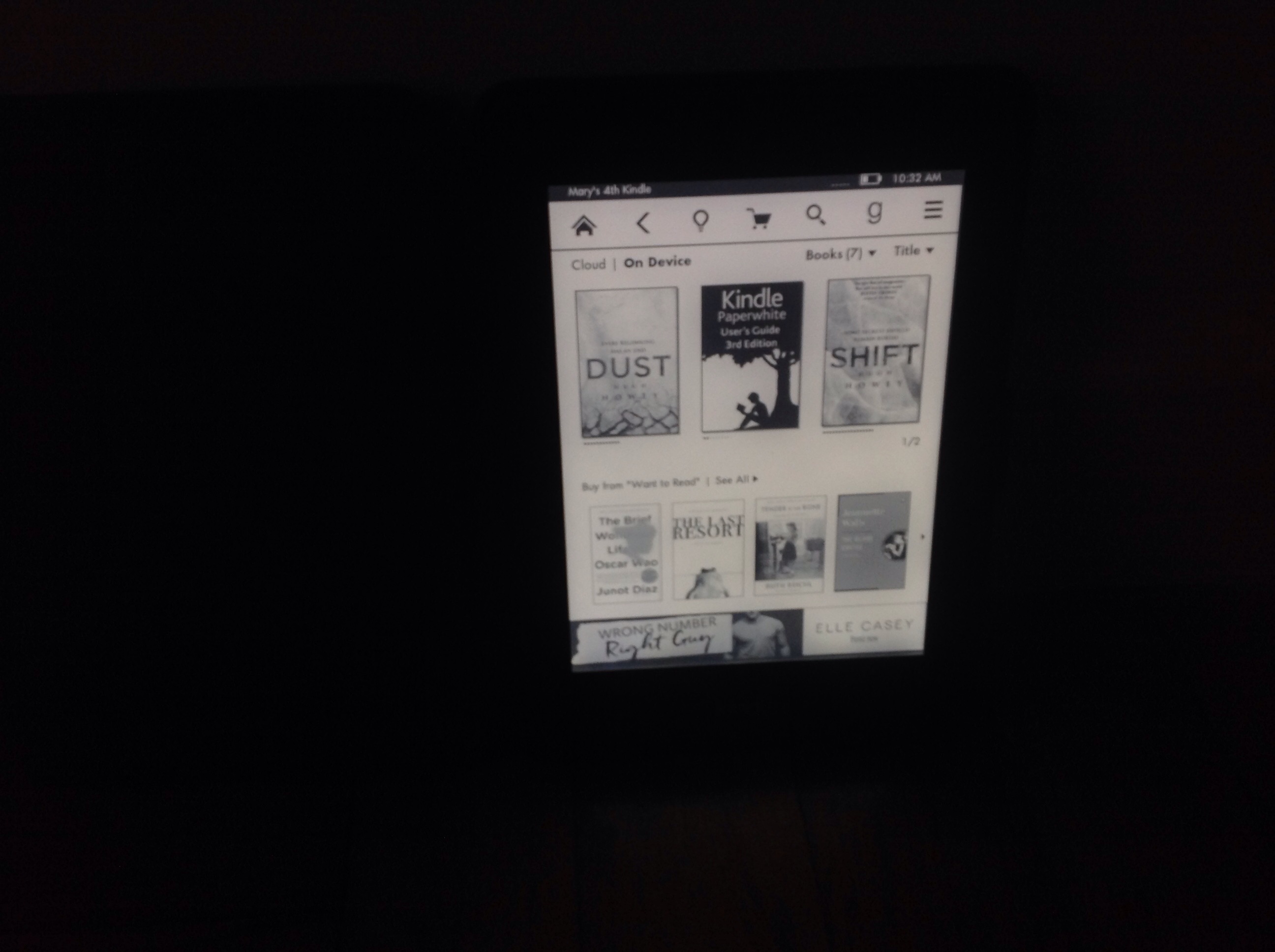
The Dust series by Hugh Howey – a post apocalyptic world – or is it? Be prepared.
The Flamethrowers: A Novel by Rachel Kushner – I will never forget the opening description of speed racing on the Bonneville salt flats.
These are only a few. What do you take with you on your travels? Let’s share.
Some of my colleagues and I were invited to be guests at a Special Olympics black tie event last night. Now it’s been a while since I last attended such an affair, and it necessitated the husband, J, extracting his tuxedo from his closet – where it is surrounded by all the other suits he similarly doesn’t wear – to make sure said tuxedo still fit. When I told him that the theme for the gala was supposed to be “vintage” and “retro” he pointed out that his tux had been bought in the ’80s and was vintage in its own right.
I had a similar battle of my own finding something to wear that fit the description. But I ultimately settled on a rather Mad Men-esque looking dress last worn about ten years ago. It seemed to work. Especially when accompanied by a martini in one hand. A cigarette would have been perfect, but I don’t smoke.
All this has been while nursing some sore knees this week, topped off with a bizarre injury on Saturday that involved cutting some greenery in my yard in bare feet – pressing the side of my right foot hard into the edge of a paver as I leaned forward to pick up the clipping that had fallen – and ending up with a large purple swollen bruise all over the bottom of my foot.
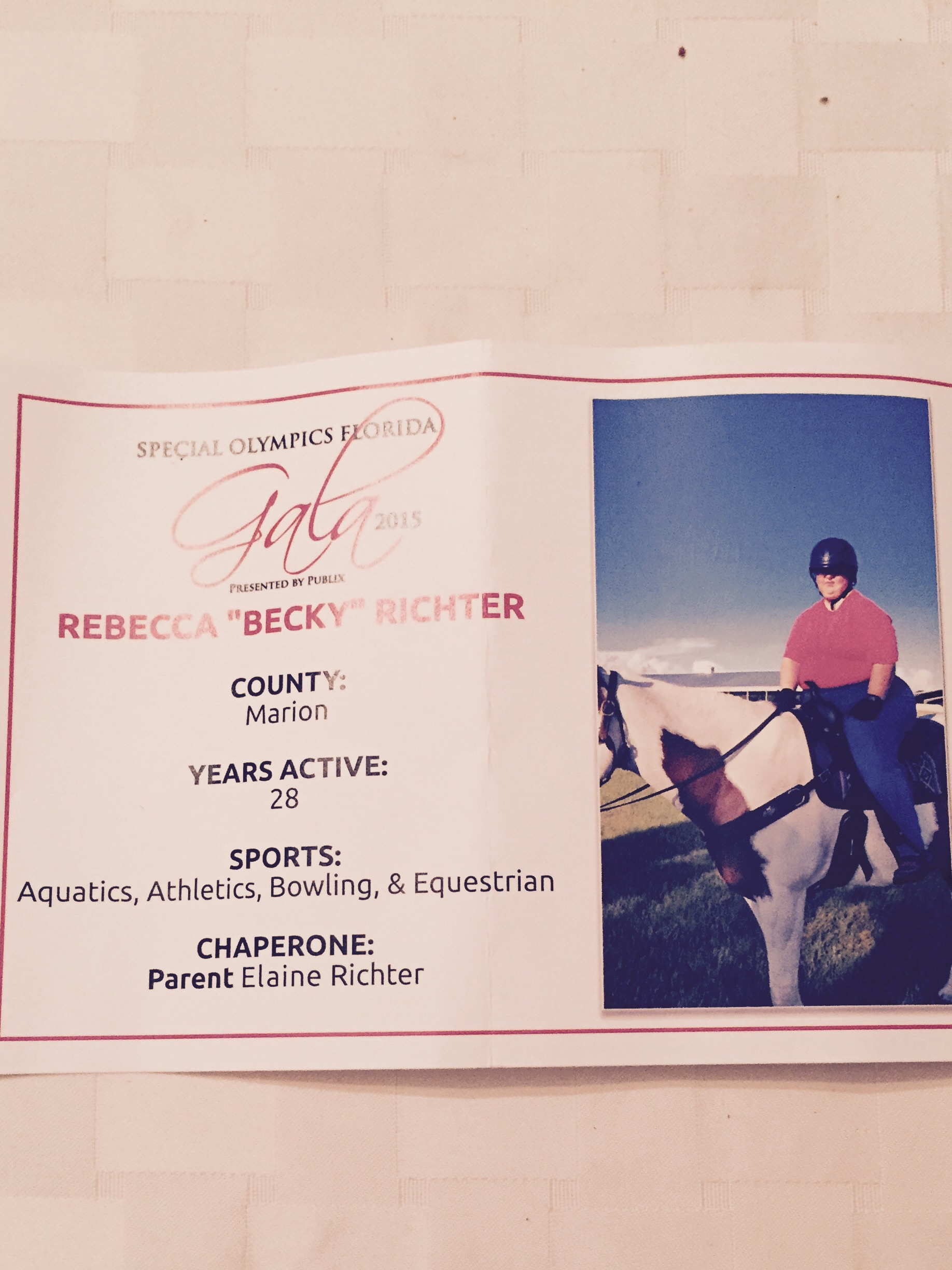
But all these aches and pains that seem like such cause for concern simply take on a whole new light when you think about those involved in Special Olympics. We sat at a table last night with Central Florida’s Special Olympics’ equestrienne of the year. She’s 36 years old, has two older sisters, and attended with her mother. She’s got Downs’ syndrome. She’s also been a coach and inspiration to others in Special Olympics. The history of Special Olympics – created by Eunice Kennedy Shriver – and in honor of her sister Rosemary Kennedy – should remind us all of those who suffer from intellectual disabilities and how we can help.
Lots of time people don’t want to talk about these issues. It’s easier to talk about those who have physical problems. Somehow that doesn’t challenge us as much. But intellectual challenges are equally significant and we can’t and shouldn’t ignore them.
There are a lot of different summits. I need to remember they don’t all have to be over 18,000 feet.
My neighbor, known as A, and I share a fence at home and a wall at work. It’s a long story as to how we became both work and residence neighbors. Suffice it to say that this past Thursday we agreed we would walk the 2 1/2 miles to work, all so that the two husbands could drive one car downtown to meet us for the Art in Odd Places event – and, since it was Friday, happy hour.
It was a grey day, as they nearly all have been this summer, but at least the humidity didn’t coalesce and rain all over us. By now urban hiking in downtown involves a lot of looking at cranes and bulldozers that form the backdrop for the Ultimate I4 construction project – which the developers already admit will never solve Central Florida’s traffic problems.
But those cranes are second only to the cranes from the multitude of apartments springing up throughout the city like mushrooms. Nearly every vacant lot in the downtown area has now been filled with 3 to 5 story buildings, usually with retail on the bottom and residences in top. Where the heck are the people going to come from to live in them? It’s a mystery. We’ve in-filled practically the whole city – it has swelled up so much that one good prick and the entire bubble will burst. We’ll see.
Mushrooms by the Performing Arts Center
An urban hike, of course, can’t be complete without an adventure on the stairs with a backpack in an office building. Although A was eager to accompany me on a walk to work, strangely enough I’ve never succeeded in getting anyone to join me in the stair climbing/backpack toting portion of urban hiking. But I dutifully did my 108 flights up and 108 down (according to my FitBit, of course).
By now I’d managed to wear three different outfits at work – the morning walk to work clothes, the Friday casual ensemble, and the stair climbing gear. People in my office were presumably wondering if I’d done anything all day besides get ready for the next work out event.
As the end of the day rolled around it was time for outfit number 4 – the going out Friday night look. The two husbands successfully navigated their way through downtown to our building with one car and we embarked on the next stage of our urban hike – Art in Odd Places.
This was a curated collection of interactive visual, performance and sound pieces by artists from around the world, along several blocks of Magnolia Avenue. Although we’d expected a cluster of events and installations, the works were scattered throughout the area – and some of them were indeed lurking behind walls or on fences. You did have to look, and just occasionally, would catch a glimpse of art in some everyday object that was not part of the show but that suddenly had taken on new meaning. Orlando’s large homeless population, many of whom spend time at the History Center park where there were a number of installations, seemed to be enjoying the event as much as the expected hipster crowd.
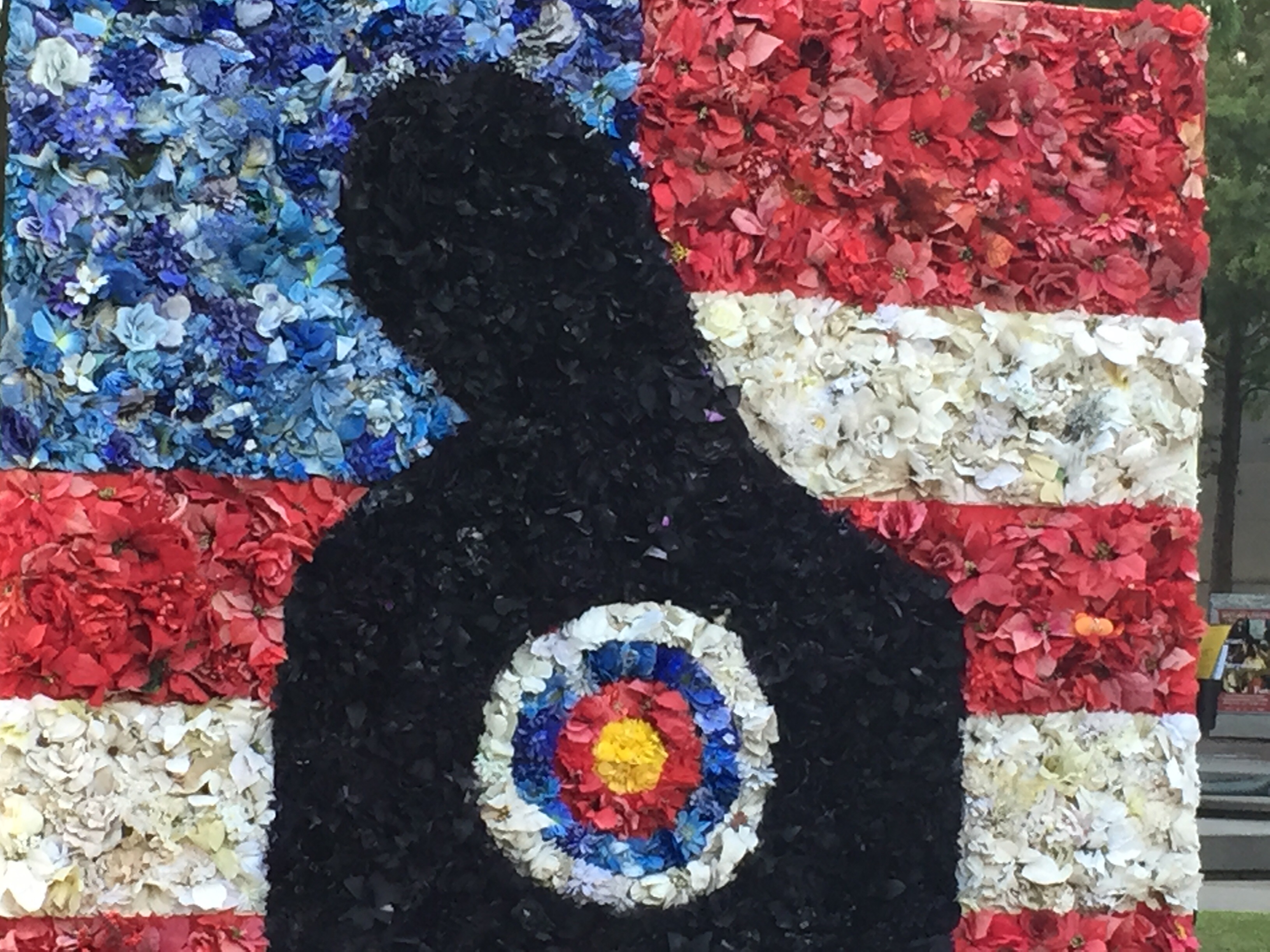
Cemetery Flowers
A series of hands emerged from drain pipes at various odd points on the city streets. A field of paper bag mushrooms dotted the grounds of the performing arts center. A collage of silk flowers from cemeteries was designed to raise awareness of policing in America (yes, I also wondered how the artist came to have other people’s memorial flowers). A bed of nails, also covered in pages from the Bible with all the text covered in gold paint except the parts about women. Live status updates from silent human mannequins. And those are only snippets.
Status Updates
Where else could you go from such an erudite event but to the TexMex restaurant on Wall Street. Half price appetizers and $3 margaritas. After that, The Celt, an Irish pub, was the only natural next stop. Steak and mushroom pie for the husband (the whole night did seem to have a mushroom theme) and mussels for me.
Bed of Nails
As we departed The Celt, we were greeted by a human cat in a cage – with a small black and white kitten on a leash standing guard nearby.
Who’s in the cage? Photo – A. Luby
To top the evening off, I had given daughter #1 carte blanche to book a place in Portland, Maine for our upcoming trip. Next thing I knew we had rented an AirBnB that seems to include chickens. It was one of those nights.
Now that Labor Day has passed, it is time to return to the backbone of any successful summit bid – and that is the long hard slog of training. I haven’t stopped since Ecuador and our adventures on Cotopaxi, Illiniza Norte and Cayambe, but I have definitely taken it a bit easier.
For example, I treated myself to the luxury of stairs without a 25 pound backpack. I haven’t attempted a seven mile run. And I have not been at all diligent about any weight lifting. It’s been nice.
But, as the Walrus said In Jabberwocky, the time has come. So on Saturday, after much futzing around (you do need to make sure your sunglasses are adjusted just so, headphones properly positioned, etc.), I embarked on a five mile run. I’ve been running four milers, but if we want to have a hope of scaling Mexico’s 18,491 foot Pico de Orizaba in January, I need to be back up there at the seven mile plus level. The run actually felt good. And on Monday, I’m going to reload the pack with the weights from my weight vest and lug it back off to work where my 16 story office building awaits.
In the meantime, I’ve been reading excerpts from a book called Fast After Fifty. It’s aimed at athletes who are trying to maintain or improve after age fifty and emphasizes interval and anaerobic training. But – true confession – I didn’t really do anything particularly athletic until I was almost fifty! So I have some reservations as to how applicable those principles are to me….although that may just be a copout as I have no desire to run as hard as I can for thirty minutes to find my lactic threshold.
At least I can find some inspiration in the movie, Meru, which we saw last night. It’s a documentary based on alpinists Conrad Anker, Jimmy Chin and Renan Ozturk’s two attempts to climb Mt. Meru in the Himalayas – 21,000 feet above the headwaters of the Ganges River. It’s the sort of mountain that makes Everest seem like climbing for dummies. Over the course of the three years between the first failed attempt and the second successful one, one of them was in a near fatal snowboard accident, which resulted in a severely fractured skull, and another narrowly survived an avalanche. But they ultimately made it up what is called the Shark Fin – razer like slabs of granite so unstable Chin said he could feel them move under his fingers.
On the first attempt they got within 500 feet of the summit – but ran out of food due to an unexpected four days waiting out a storm in a small tent half way the mountain.
The physical and mental strength it takes to know when to turn around and when to keep going is huge. I may not be headed to the super high mountains of the Himalayas, but I’m keeping my fingers crossed that my Florida version of training can at least get me ready again for something higher than Mt. Dora. For those of you non-Floridians, that’s what we in Central Florida call a summit – it’s a whopping 184 feet above sea level.
Many things just seem to stop on Labor Day. Including my 24 year old refrigerator that has occupied a convenient niche in our garage for the last several years.
Since I started this blog back in May or so of 2014 I have tried to publish posts once a week – I’m old enough that I tend to regard blogs as the digital equivalent of a weekly print magazine. But occasionally those periods occur where labor (aka work) takes over, becomes all consuming, and unfortunately, training, this blog, and yoga all take a back seat.
But all things pass, and it’s appropriate that they do so in time for Labor Day. It’s time to take a deep breath, and look forward to the fall and next adventures. Just like that first gust of cool wind on a fall day. After a summer of Florida heat and humidity, there’s no describing how refreshing that is. Unfortunately, I know from 25 years here that September isn’t much better than August.
So what is upcoming after the excitement of this summer’s trip to Ecuador? Most immediately, a trip to Maine with daughter #1 and the boyfriend N, and a hike up Puzzle Mountain. And after that….God willing and the creek don’t rise – we are seriously considering a trip to Pico de Orizaba in Mexico the first week of January 2016. It’s the third highest mountain in North America at 18,491 feet. And of course, it’s a volcano. Has anyone out there done this trip? We can certainly use all the help we can get.
In the meantime, this year’s Labor Day has involved refrigerator replacement, re-planting the vegetable garden, and a four mile run. I’ve taken a deep breath. Now it’s time to set our sights on the next summit.
Despite a large number of work duties stretching ahead of me in the next week, I honored my original plan to visit daughter 2, also known as S, for what had to be one of the shortest in and out visits to New Orleans ever.
But as always, despite its brevity, any period of time in NOLA is worth it. This visit was no exception.
Of course, it started with a torrential downpour, and we were soaked after walking the two blocks from where we parked to the Dat Dog on Magazine Street. But as I’d probably brought the rain with me from Florida, this was hardly a novel experience. Plus, when looking for something dry to wear in S’s closet I discovered that she was the culprit who had taken one of my favorite dresses – well, it meant at least there was something to wear that fit.
Magazine Street balcony on a Sunday morning
S is now ensconced in an apartment right on Magazine. It’s in an old, two story building with balconies both at the front and back, one overlooking the street and the other a small rear courtyard. Magazine is one of my favorite New Orleans streets. Less overwhelming than St. Charles, it still has its share of huge, beautiful and sometimes slightly decaying houses, interspersed with bars and restaurants and eclectic shops. Age permeates everything in New Orleans – it’s as though the humidity cushions the city against the rigors of modern life.
After making several fairly unsuccessful house furnishing forays to not very exciting shopping centers, we met up with S’s friends (friend 1 and friend 2) for a great dinner at Dick and Jenny’s. They had just gotten their charbroiled oyster equipment (who knew there was such a thing) and last night was the very first time they’d served charbroiled oysters to guests. Fabulous sums it up.
Dick and Jenny’s is across the street from Tipitina’s, a New Orleans institution for live music. And what had inspired the trip in the first place was going to hear Rickie Lee Jones there. I’ve been a fan since the 1979, when her first album came out, and J and I were originally supposed to see her years ago, before the daughters were even born, at a sunset jazz series in Orlando. But, alas, she canceled (I have a bad history of that – the one time I was finally going to get to see the Greatful Dead the concert was cancelled) – so I’d been waiting for this opportunity for a long time. Her voice still sounded great.
Rickie Lee Jones at Tipitina’s
We rounded out the 24 hours with brunch at the Oak Street Cafe. It was a little surreal. Supposedly it featured live music – which consisted of an older woman mostly lip syncing to recordings from her own CD and doing what can only be described as interpretive dance. It was a bizarre combination of zydeco, funk and folk with bits of live accordion playing every now and then. The completely bald baby, accompanied by mother, father and grandfather, all sitting near us, was enthralled. The father’s and grandfather’s hats made a nice addition too – they were adorned with long feathers sticking up on either side. The whole experience was vaguely tribal.
Now back to work tomorrow. Its own special sort of summit.
On July 3, 2015 J, our guide Ossy, and I stood on top on top of Cotopaxi, one of the highest active volcanoes in the world, blithely ignoring the sulfur fumes that had fortunately blown in a direction away from us. And on August 14, 2015, that very same volcano sent a two mile plume of ash, hot glass and fumes into the air, creating an ash shower for all the surrounding villages, some of which are now being evacuated. (Apparently it is called a “pyroclastic flow.” Great name.)
This same weekend, I’ve read about a mountain guide who suffered a serious spinal injury while rock climbing in Ecuador. I believe that he’s someone we crossed paths with when we were in Ecuador – he was one of the guides working with the Climbing 4 My Donor team that we met both at Rucu Pichincha and Illiniza Norte. (The Climbing 4 My Donor team consisted of heart/lung transplant recipients from the U.K. who were climbing in honor of their donors. They were pretty inspirational.) There is a GoFundMe page for his medical expenses (Sebastian Carrasco).
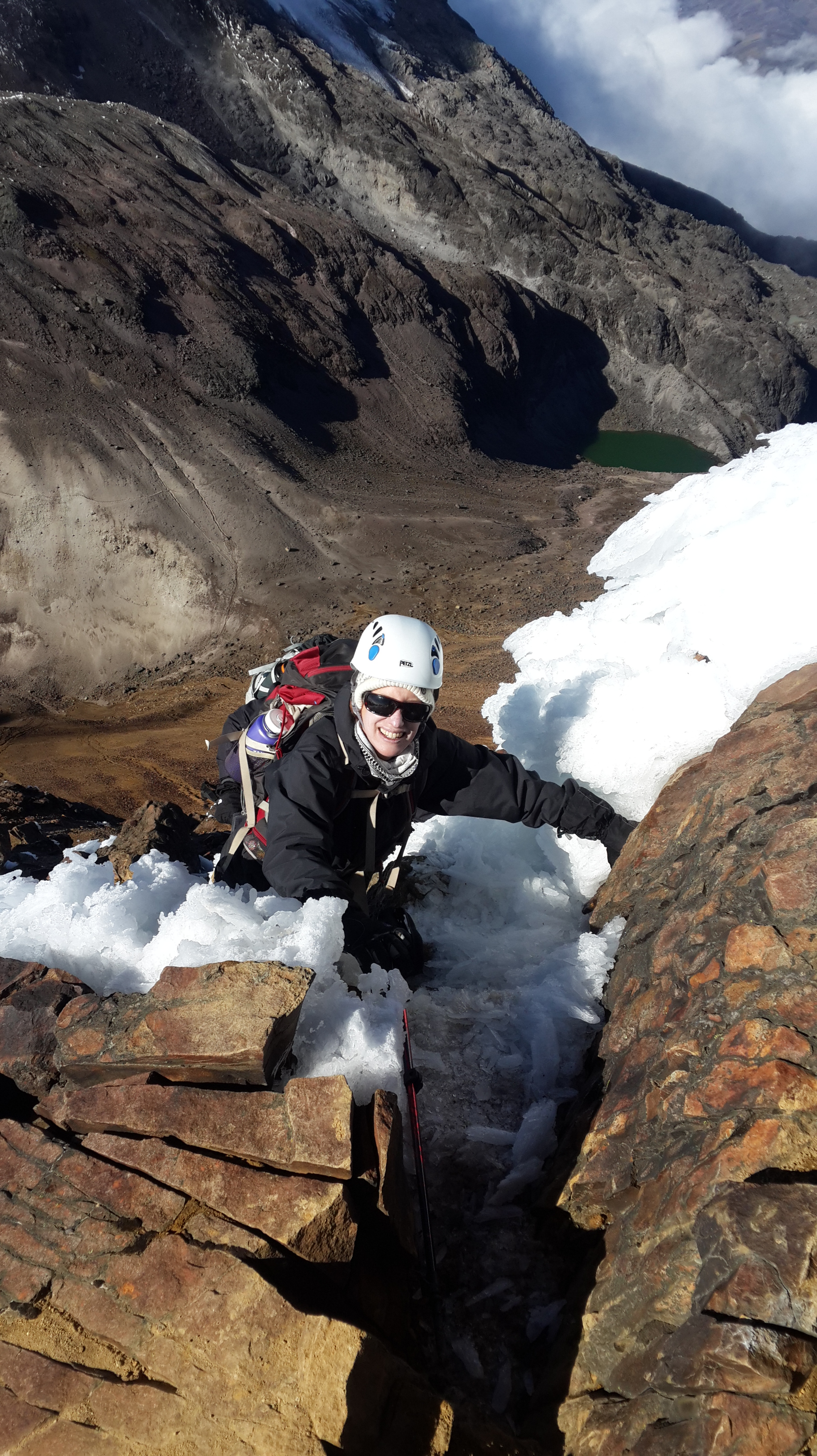
Rock climbing on Illiniza Norte
But recent dangers don’t appear to be limited to the summit. Down here in the swamp, this past week in Central Florida saw an absolutely horrendous accident — a woman swimming at a popular spot on a local river was pulled under by an alligator and lost her arm.
I tend to ignore the fact that my particular version of swamp to summit carries with it some degree of danger. Even these recent events really only affect me in the sense of “oh wow, can you believe we were just there” or “we were just doing that.” I think that’s part of the journey – the danger is a given and it just becomes part of the landscape. It certainly helps ratchet up the adrenaline, but when you’re on the mountain, you’re not thinking danger; you’re just thinking the immediacy of the moment and how to handle that which is in front of you. Rock climbing up Illiniza Norte was a particularly good example of that. In fact, I usually end up feeling more fear of physical failure than I do of external, more objective dangers.
For various reasons my Saturday run this week took me from downtown Orlando along a service road that parallels the now constantly under construction interstate. It’s becoming increasingly overgrown, with many vacant lots. I did briefly wonder whether this was actually the best place to be running by myself. But the answer wasn’t to turn around. I simply ran a bit faster.








 FromSwamptoSummit