Road Trip U.S.A. – Camping and Canyons in a Rooftop Tent

Once we left Golden, CO the temperature had crept far enough below three digits that we had no excuses left. Rooftop tent camping had to begin. After all, we had already lumbered a couple of thousand miles from Florida with the thing stuck on top of our car roof. It was time to do something with it.

Another set point on our road trip was the start date of an AirBnb in Jackson Hole, Wyoming, where we were meeting up with family members. Hence, day 1 of camping had to be somewhere between Golden and there.

We managed to reserve a Hipcamp in Buford Canyon, Wyoming, just west of Cheyenne. After a quick stop at a Colorado grocery store (with the unlikely name of “King Soopers” – but that was actually a Kroger’s), we had miles of driving north through Colorado. The burgeoning development outside of Denver reminds me in an unfortunate way of Florida, but then we shifted into high prairie and desert, multiple shades of yellow. Plus the wind picked up…no wonder Kansas had a song called Dust in the Wind. (Incidentally, the Spotify playlist for Kansas contains only two tolerable songs. It was J’s bright idea that’s what we should listen to while driving across the prairies.)
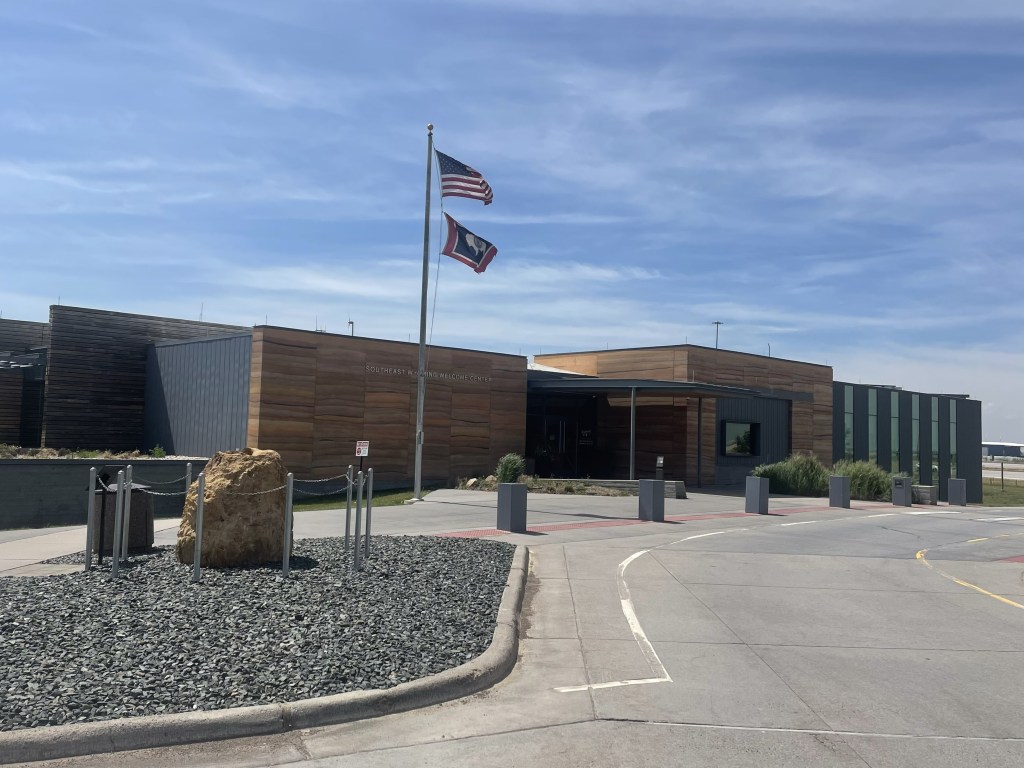
We stopped at the very modern Wyoming State Welcome Center. It’s more like a museum than a welcome center, with lots of interesting displays. The wind blew everything off our picnic table…

We decided to drive through Cheyenne, but there wasn’t much to see other than the capitol building and a very inactive downtown. Even though it was Sunday, I don’t think that was the problem.

Our campsite was about a mile off of the very heavily trafficked I-80. This part of the country is apparently home to the freight train industry with one plus mile long trains. I didn’t even know such things existed.

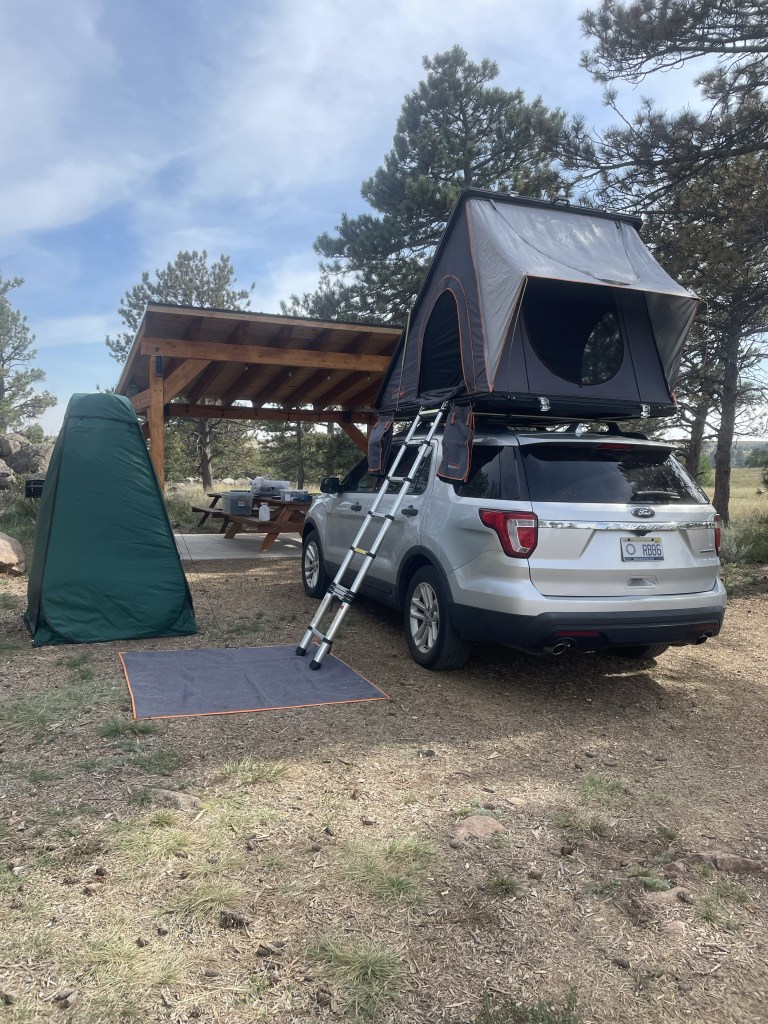
The campsite was absolutely stunning. A beautiful shelter for a picnic table, with a “designed by” plaque commemorating the architect. A spotless composting toilet and two sites with tiny houses. We set up camp, and walked around the interesting rock formations on the property, and over the ladder the owner had placed to allow entry into state land and the canyon itself.
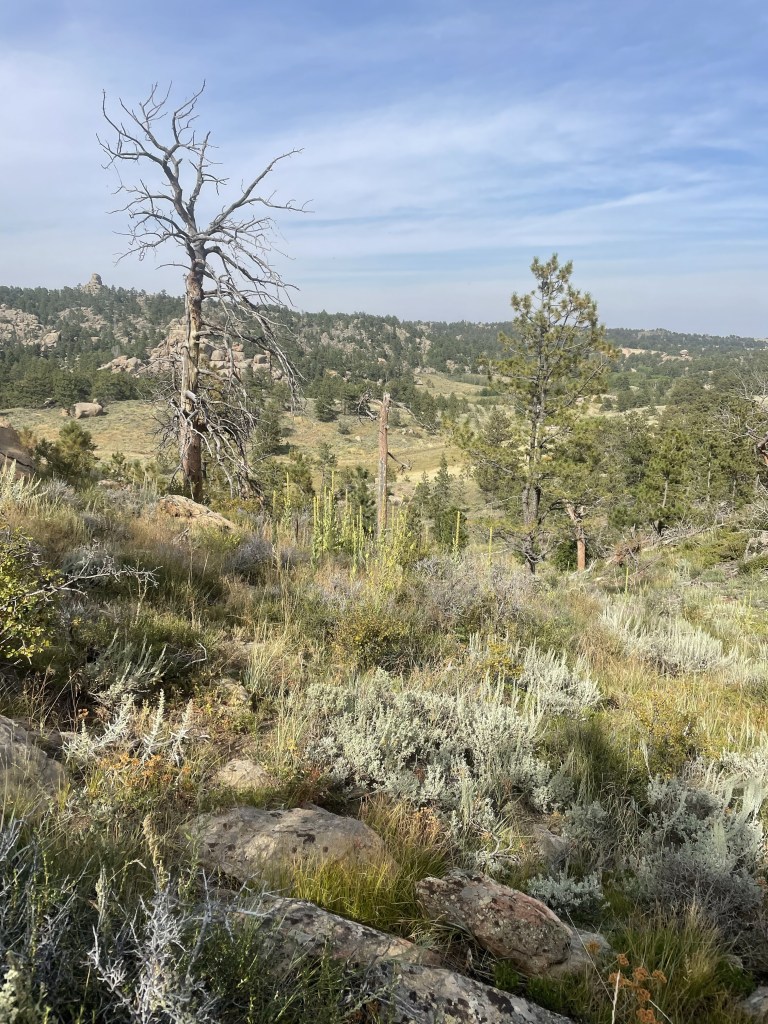
After a brief scare when we couldn’t get the lighter to work we managed a pretty good first night camping dinner of steak and asparagus. The night sky was a spectacular tapestry of silver and black. The only downside was the I-80 traffic and train noise, which was constant. But it was more than made up for by the convenient and beautiful location. Elevation was about 7600-7800, and we could feel it.

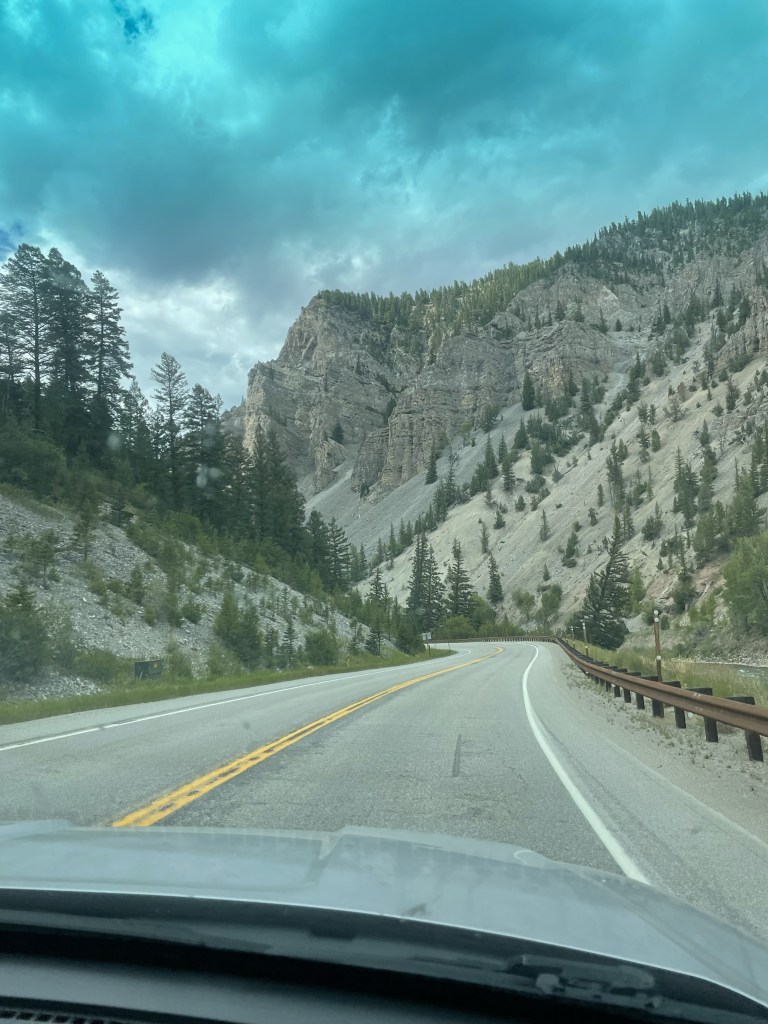
The next day was a long day of driving the length of Wyoming. After we broke down camp, we drove through high desert with the Wind River mountain range on one side. Unfortunately much of the drive was on I-80, with 18 wheelers careening in the wind, and my fingers were sore afterwards from my white knuckled driving.

Some of the area looked like what I would call salt flats. Very desolate, with tiny hamlets of only 100-200 people. I especially liked the truck stop called “Stinker.” We even went through a small town called Eden, which had a few green fields.

Eventually we climbed higher and higher, suddenly saw evergreens, and the next thing we knew we were approaching the Tetons and Jackson.
We located our AirBnb in Teton Village, a major ski resort with lots of condos. What a change from what we had been driving through. J and I managed to get cleaned up – after a night of camping and days of driving we were pretty grimy – and rendezvoused with family. Time for a few days of real R&R – hiking and the like, and a nice break from the road.

Road Trip U.S.A. – Zipping Our Way Over the Plains, Via A World Class Art Museum

One of the nice things about road trips is the freedom to stop where you want. OK, we did have certain set spots where our arrival time was sacrosanct (e.g., our campsite in Yellowstone), but between here and there there was a bit of flexibility.

One of those unplanned adventures resulted from our last minute decision to visit the Crystal Bridges Museum of American Art located in, of all places, Bentonville, Arkansas. Created by Alice Walton of Wal-Mart fame, it is the repository of an immense collection of American art of all genres and periods, and since there is free admission, it is an enormous gift to the public. One of her goals was to give access to art to those who had not had it before, and the visitors to the museum are a truly eclectic group.

Getting there entailed a trip through the mountain ranges bordering Hot Springs, the first being the Ouachita Mountains (and national forest). A sign aptly described the roads as “steep and crooked.” The mountains were heavily wooded, but occasionally opened up for vistas of multiple levels of ridges. Reminiscent of the Blue Ridge Mountains, except the color scheme was dark green textured against a blue sky. I don’t have any photos of the drive – I was too preoccupied with hanging on for dear life! The Ouachita were followed by another set of mountains – the Boston Mountains (who knows the reason for the name?) – which were still steep but with more gradual curves. The Boston Mountains took us into Bentonville, where we made a beeline for the museum.

Bentonville was surprisingly interesting. The museum area is a city unto itself, replete with apartment buildings, retail, sports fields, something called the Scott Family Museum (or Amazeum?), and, of course, the Wal-Mart Museum. But Crystal Bridges was our goal. It’s being doubled, if not more, in size, so there’s a lot of construction going on. The structure – low buildings bordered by lagoons and flowing water, blends into the landscape like a Frank Lloyd Wright building – sort of the opposite of the Guggenheim in Bilbao. The interior feels warm in tone and the art is thematically organized by great motifs in American art. There are also hiking trails and sculpture gardens, none of which we had time to sample – we had to reach Wichita!

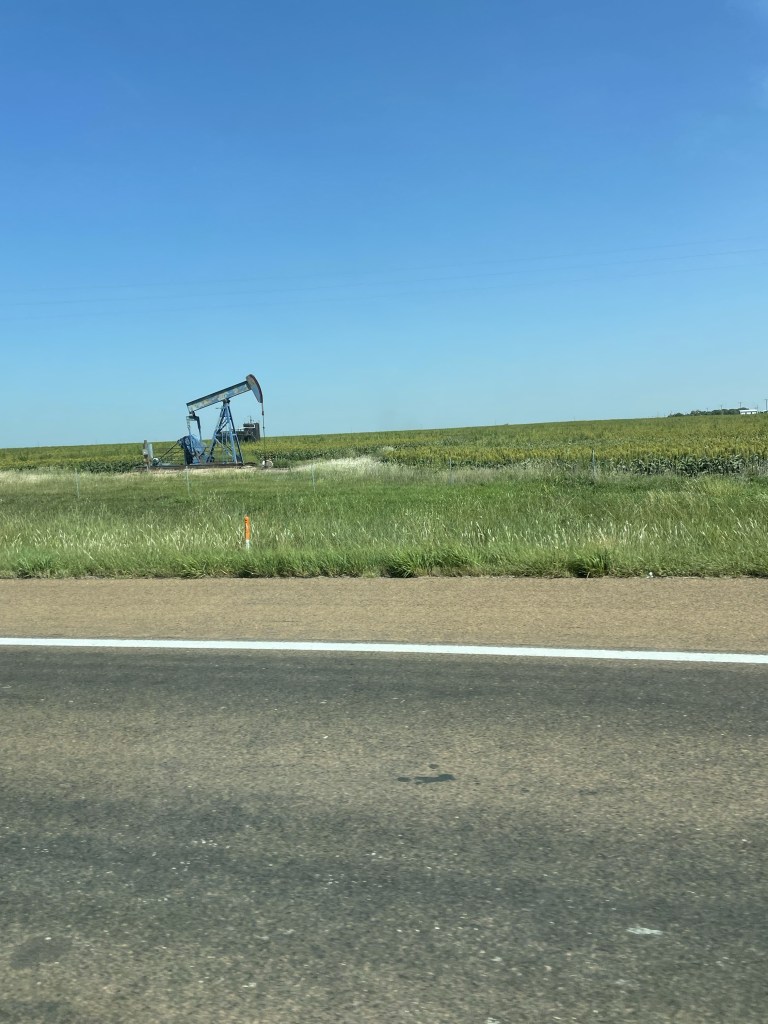
If you wonder why the eagerness to reach Wichita, one of our non-negotiable times was to make it to Golden, Colorado for a party our friends D & D were hosting. And Wichita looked like the mid-point. Miles and miles of corn fields, peppered with occasional oil drills. I never thought of oil drilling as a family business before….but I guess that’s the whole Beverly Hillbillies idea . . . Blue sky backed the fields and prairies. It was an exciting moment when we encountered a curve in the road.
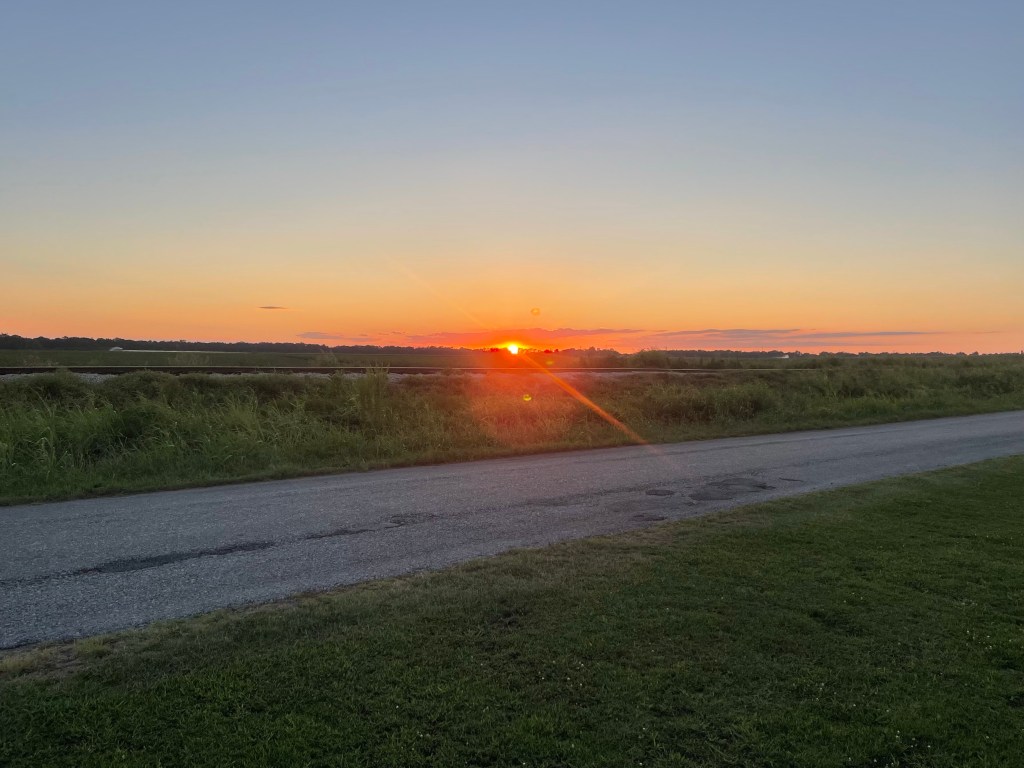
It turns out Kansas has great rest stops – probably because there are so few towns. My favorite was the one apparently erected in honor of the Benders, a 19th century family who lured unsuspecting travelers, and served them a meal in front of a curtain. In the meantime, one of the family would hide behind the curtain, cosh the unfortunate guests, and steal all their possessions. After the mysterious disappearance of a number of travelers the Benders went on the lam and no one knows what happened to them.

We stayed at a motel in Wichita just off the interstate. It was still too hot to pop up the rooftop tent and try our luck. We were so sick of driving by this point that we walked to the “Irish” pub next door. the only thing Irish was Guinness on tap. All the food was Mexican.

We got an early start the next day – there were still a lot of hours to go before Golden. More and more Kansas fields – we stopped in the charming town of Selina, which had some of the best Art Deco architecture I’ve seen anywhere. Lots of restaurants and a 1931 movie theater still operating as a theater. And we were able to purchase a “Tomahawk” steak as a house gift for D & D. Somehow that seemed an appropriate choice coming from Kansas.

Miles and miles more of driving, with little traffic until we hit Denver, where rain and a navigational error didn’t make it any easier.

But we made it to Golden just in time for the party which featured one of D & D’s friends, singer/songwriter Lynn Drury of New Orleans, who performed with the beautiful mountains in the background.

What better spot for a brief hiatus with friends before hitting the Wild West of Wyoming.
Road Trip U.S.A. – Tasting the Waters From the Mississippi Delta to Hot Springs

Unfortunately, this blog has only taken us thus far to Clarksdale, Mississippi, and there is much more of the country to cover before J and I leave again in a couple of weeks for Europe.

After we woke up in the Mississippi Delta in our gentrified sharecropper’s cabin, we met a ZZ Top looking guy who must have been a home health person because he’d come to check on our neighbors, who seemed to be permanent residents (that is, unless they were traveling with a cat). He immediately asked what we’d heard the night before but recognized that Tuesday wasn’t the best night for music in Clarksdale. His wife was from Wyoming so he provided some travel hints for the upcoming weeks. He clearly resided in Clarksdale just for the music, and we vowed to come back over a weekend or during a festival.

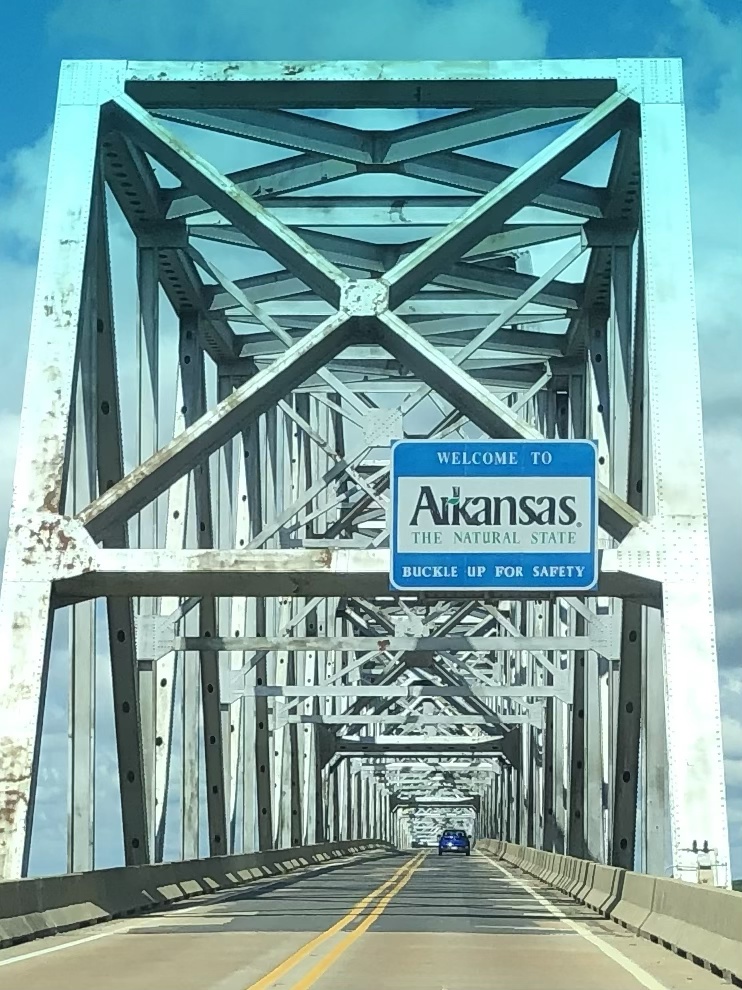
After repacking the Explorer in a more logical fashion, we drove miles upon miles of Mississippi Delta fields of cotton and soy…and finally crossed the Mississippi River itself, which divides Arkansas and Mississippi. The bridge was two lanes, no shoulder, and very high – just like the ones that terrified me as a child when we crossed the Tombigbee or Black Warrior Rivers when going to visit my grandparents. Once across, the roads improved and it seemed – almost imperceptibly – a little less flat.

More and more agriculture but no sight of the opulent plantation towns we’d been traveling through in Mississippi. Our “grey” road finally merged onto I-40 outside of Little Rock. It was awful, and our rapidly learned lesson was to avoid interstates whenever possible on a cross country trip. There was nothing but huge truck traffic, an unfortunate contrast to the rural roads we’d been traveling.

Ultimately we exited I-40 and I-30 (even worse than 40), onto U.S. 70 and into Hot Springs, also the site of Hot Springs National Park (which must be one of a kind). What a place. Verdant green and rolling hills. Apparently my grandfather came here in the 1940s to “take the waters.”

In the 1830s, well before the national park system, the federal government took control of four sections of land as a “national reservation” due to the alleged healing properties of the hot water bubbling up from the ground below (and I can personally vouch for the fact that it is hot). The park itself is shaped like a doughnut, with the town in the center. One side of the Main Street (Central Avenue) is part of the national park, and is lined with seven or more of the original “bath houses” that are still in operation of various kinds. One is still used for spa treatments and bathing, another is a visitor center/museum, another is a brewery, and some are still waiting to see what the future brings.

At one point, the poorer folks were so upset they couldn’t afford the “spas” that they started their own “ral” (short for “neuralgia”) camps to bathe in the 135 degree waters up on the hills above the spas. Ultimately federal troops arrived to stop them from “corrupting” the waters, but in some type of concession, erected some free bath houses.

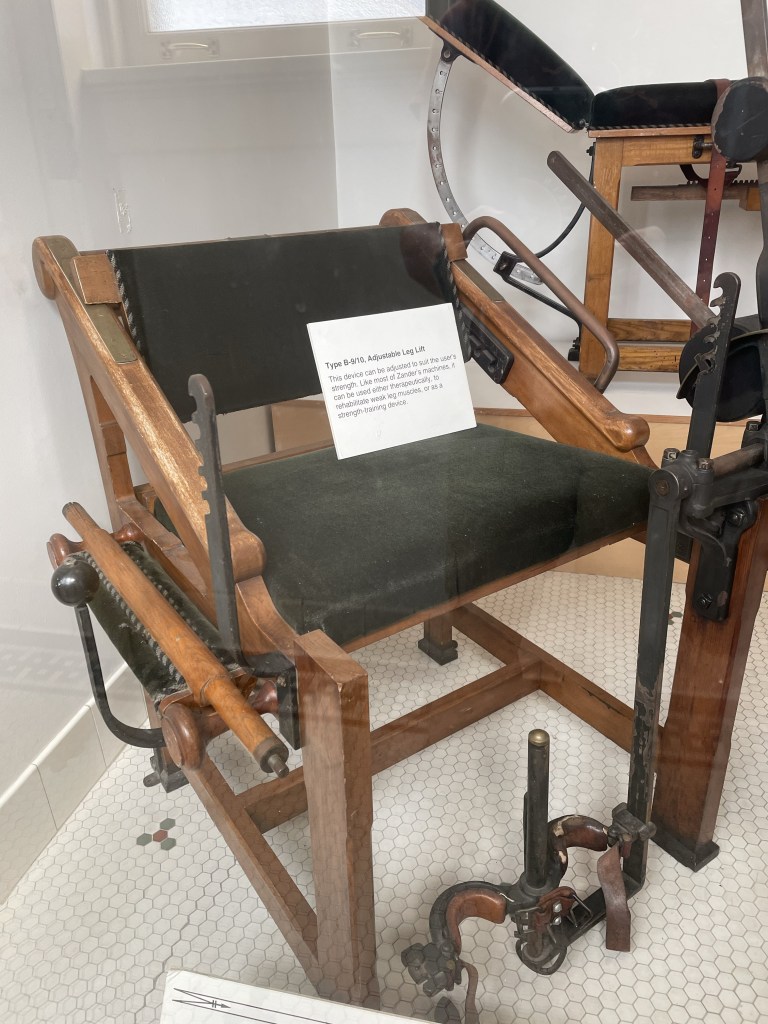
What struck me was how before their time some of these “treatments” were – mechanized machines (tension and resistance) that are only a step removed from the machines we use at the Y today.

After a thorough inspection of the museum, which truly was fascinating, we walked along the Grand Promenade on the hill behind the bath houses, which is of a much more recent vintage, up the Peak Trail to the Mountain Tower. I steeled myself and J and I climbed the 21 flights up the metal staircase to the observation deck. I didn’t look down once. We did take the elevator down.

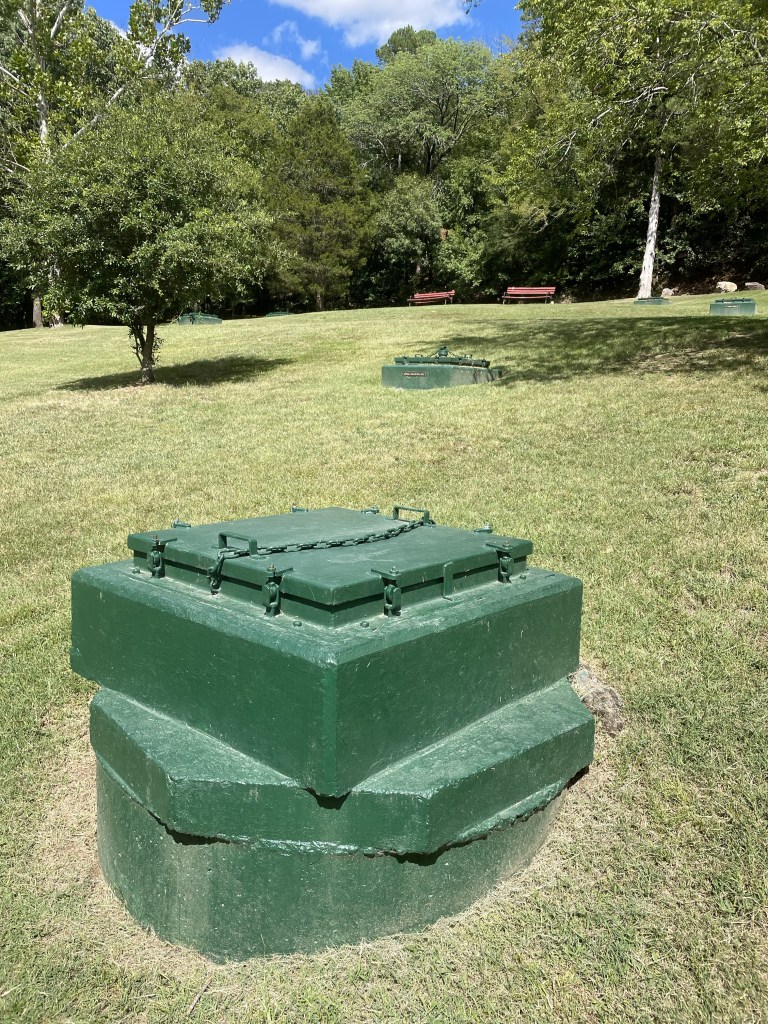
The entire area is checkered with green metal boxes that serve as collection sites for the water. Which, by the way, we tried at the visitor’s center and it tasted like plain H2O.

After a quick descent down the trail, we decided to take advantage of the Superior Bath House Brewing Company, which uses the thermal water to make the beer. I’m pretty sure it is now also are the home of my visor, which was never to be seen again after our visit.

After a beer, we located our AirBnb, not an opulent section of town, but quite nice. Back on the main Street, we stumbled upon the Brick Grill, a very reasonably priced and pleasant restaurant – many here were quite expensive.

Coming up – out of the flatlands and into the “steep and crooked” Ozarks.

Road Trip USA – Deep South Reveries

Clarksdale, Mississippi. I was watching the sun set over flat delta cotton fields. Pink blossomed into deep peach while rich grape paintbrushed the sky.

After two weeks at home in Orlando after our England and Spain adventure, we took off again on Sunday, August 13, this time by way of our 2016 Ford Explorer with a rooftop tent, as opposed to the airline that shall not be named. Both J and I lay awake the night before thinking about what we’d forgotten to pack for a four week road trip, what we should be taking instead, etc etc.

We finally got off about 9:15, driving along the turnpike to I-75 into Georgia. The turnpike was as excruciatingly boring as always. Ultimately, we exited I-75 and made our way to US 82, which goes all the way to Tuscaloosa.

After the monotony of the interstate, 82 took us through many small Georgia towns, which made the drive much more interesting. Lots of peanut (I think) fields, a large and elaborately patterned black and gold snake that we narrowly avoided running over, the red brick Andrew Junior College in Cuthbert, Georgia, pecan tree groves, so uniform and graceful.

At some point we realized one of the eight bolts attaching the rooftop tent crossbars to the roof of the Explorer was missing. We stopped at the parking lot of – I kid you not – a BBQ place called “Hog ‘n Bonz” (apparently meant to reference Haagen Dazs?) to replace it. My three pound weight that I’d thrown in at the last minute, with some vague idea I could sit in the passenger seat and do arm exercises (not) served as a surprisingly good mallet to push everything back into place. Regular bolt checking quickly became part of our daily protocol.

We crossed the state line into Eufaula, Alabama – beautiful antebellum homes with a dying downtown. Eventually reached the outskirts of Montgomery – many boarded up and overgrown motels, clearly victims of Covid.

Around Montgomery we encountered a drenching Florida style rainstorm. Surmounting other problems – such as the demise of the weatherstripping around the Explorer’s front windshield (purely cosmetic, or so they say), we finally pulled into the driveway of my uncle R’s house, which, by the way, was designed by a student of Frank Lloyd Wright. That explains all the wood, curved walls, and long lines.

The next day R gave us a detailed walking tour of the huge U of A campus, including the stadium with statues of the winningest coaches, fraternity houses with more columns than you could count, the president’s mansion, and the new school of engineering which is as big as many a college campus.

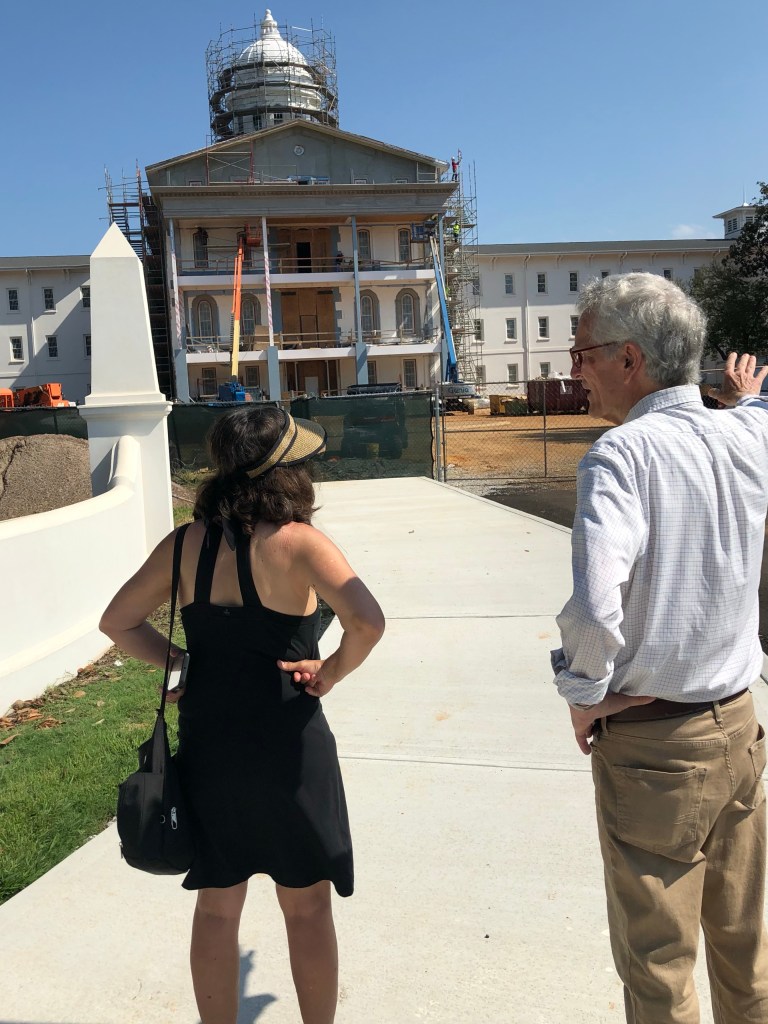
Most interesting – Bryce Hospital – which was originally a hospital dedicated to the moral treatment of the insane, a revolutionary theory for the mid 19th century. My uncle, an art historian, has done much of the work of mapping the hospital and its environs. Straitjackets and similar restraints were banned, each patient had their own room, and there were beautiful park grounds – the theory being that if you treated patients with dignity and respect in a calming environment they could recover. As they improved, they were moved into increasingly social environments. A surprisingly enlightened approach in days long before drug treatments and the like. The building is now being transformed into a museum and performing arts center.

We also enjoyed a visit to the natural history museum which houses the Hodges meteorite that landed on Elizabeth Fowler Hodges in Oak Grove, Alabama in 1954. She’s the only human known to have survived such an onslaught.

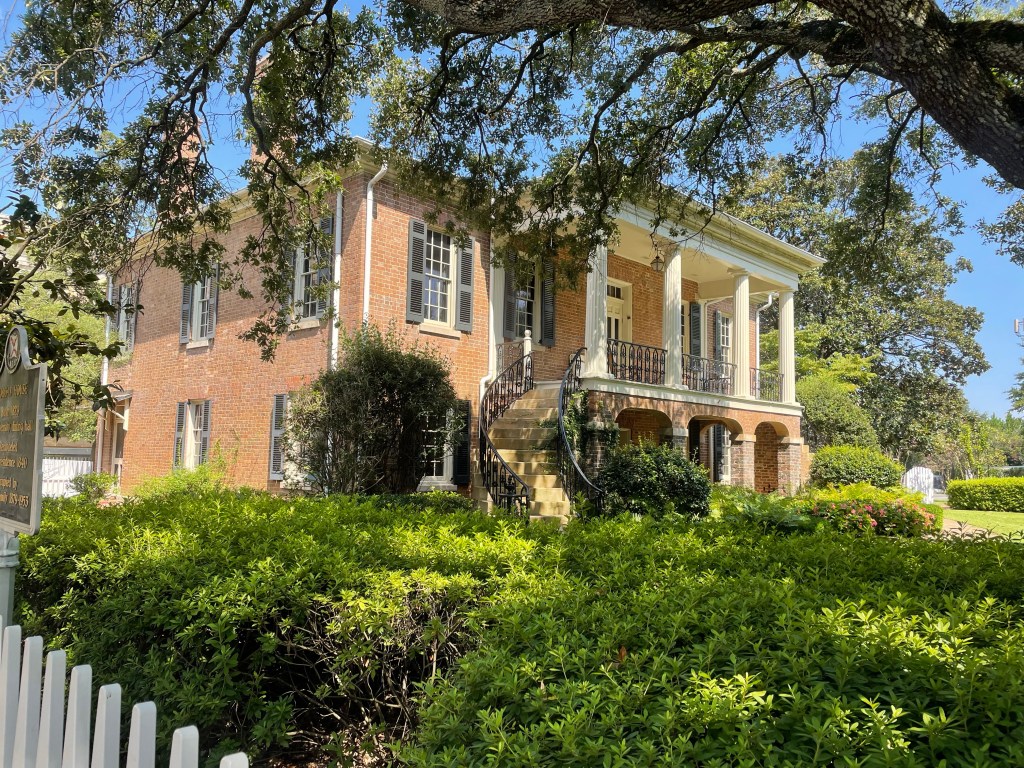
A surprise was the tour of the Gorgas House, lived in by the descendants of the 8th president of the university, until the 1970s or so. It was originally the dining hall for the university and is one of the few buildings to have survived the civil war. Accordingly to the posted chronicles, college students in the antebellum south were hardly paragons of good behavior, especially in the dining hall.

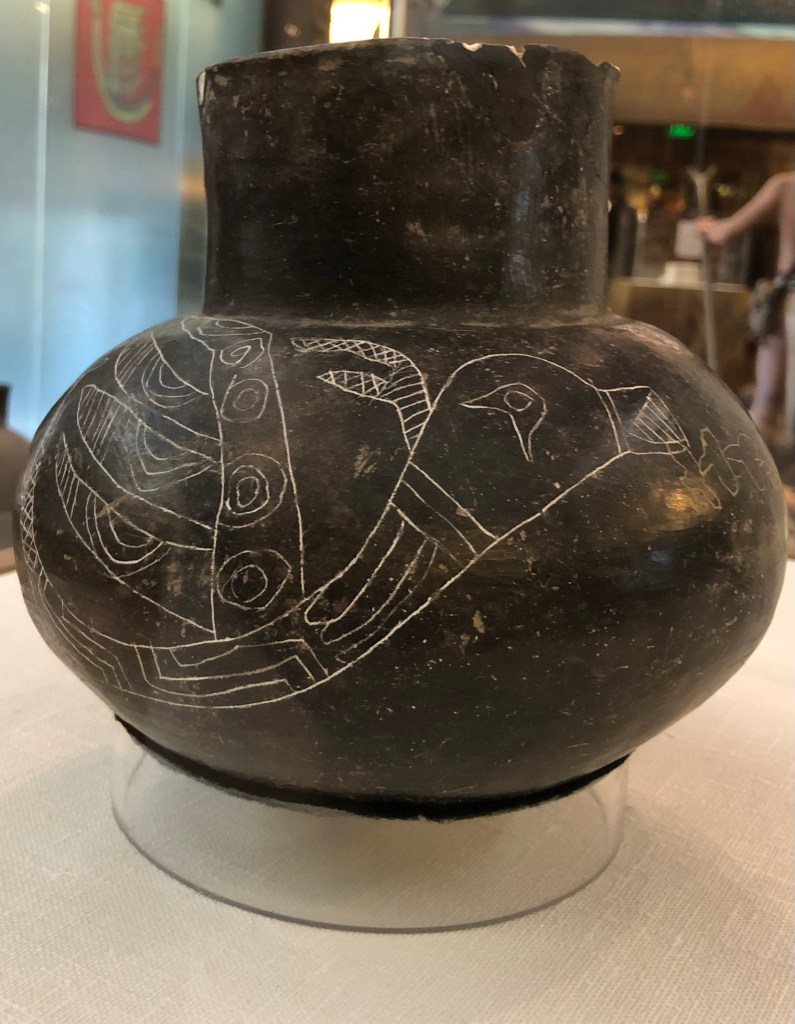
Next stop was Moundville – the site of a large city settled by indigenous people coming up from Central America hundreds of years ago. It ultimately became a political and burial site, and consists of large dirt mounds on which wooden structures rested. It was brutally hot, but we nonetheless climbed one of the mounds to see the view of what must have been a sprawling development. Their ceramics were masterful. Many depict a flying snake that my uncle thought might have reflected imagery of tornadoes common in the area.

As we drove back to Tuscaloosa, I was overwhelmed by the miles and miles of undeveloped, presumably privately owned land. That simply doesn’t exist in Florida.

The next day we headed for the Mississippi Delta, driving through thick Alabama forest, crisscrossing the Tombigbee River to Columbus, Mississippi. It’s chockfull of antebellum homes dating from the 1830s on, and is also the birthplace of Tennessee Williams.

The Southern Writers theme continued with a journey through the hill country to Oxford, Mississippi, where we stopped at William Faulkner’s home, Rowan Oaks. Although the town was crowded with newly arriving freshmen about to embark on their college careers at Ole Miss, we were the only visitors to Mr. Faulkner’s abode. The house was built in the 1830s and he bought it about a 100 years later. It’s very small, although Faulkner added a number of rooms, and has opulent grounds, including a riding stable. Apparently Faulkner’s wife commented on the nature of the light on the porch in August – the genesis of the title of the novel, Light in August. I think I’ll have to go back and re-read his tales of Yoknapatawpha County.

We finally reached the flat, soil rich delta and the Shackup Inn – our home for the night and a location that I discovered on the internet. It’s just outside of Clarksdale, and is a collection of old sharecroppers’ cabins that have been gentrified with electricity and bathrooms, but are totally quirky. Rusting farm equipment, old signs, and a large area for music festivals. We could have stayed in a cotton gin silo, but instead picked a cabin called “Shorty’s.” It’s one of the strangest places I’ve stayed since the barrels on Mt. Elbrus in 2014. ( https://fromswamptosummit.com/2014/07/02/looking-down-the-barrel/ )

We checked in and then drove down a pothole ridden road to Clarksdale itself. Clarksdale prides itself as the home of the blues, and hosts many festivals, but it was a little dead on a Tuesday night. The Delta Blues Museum is magnificent and moving. The entire place was a huge contrast to Columbus – here’s the home of the people on whose backs all that wealth was created. It was a left alone little town, enabling the blues to develop and flourish on their own terms. Photos weren’t allowed in the museum, otherwise I’d have posted a lot!

The temperature finally dropped about ten degrees. After a beautiful sunset, we were looking forward to a spectacular night sky.

Transitions – Back to the U.S.A.

When last I left this blog, J, S, M and I had just completed our 77 mile hike through the Yorkshire Dales. After our celebration in Kettlewell (where I am pretty sure I inadvertently donated my now no longer manufactured hiking baseball hat to the Bluebell Inn) and an overnight in Grassington, the next day we took a horribly crowded train back to King’s Cross in London. Our original train was canceled, which led to mass confusion on the next train for those who had reserved seats versus those who didn’t or originally did or….you get the picture.

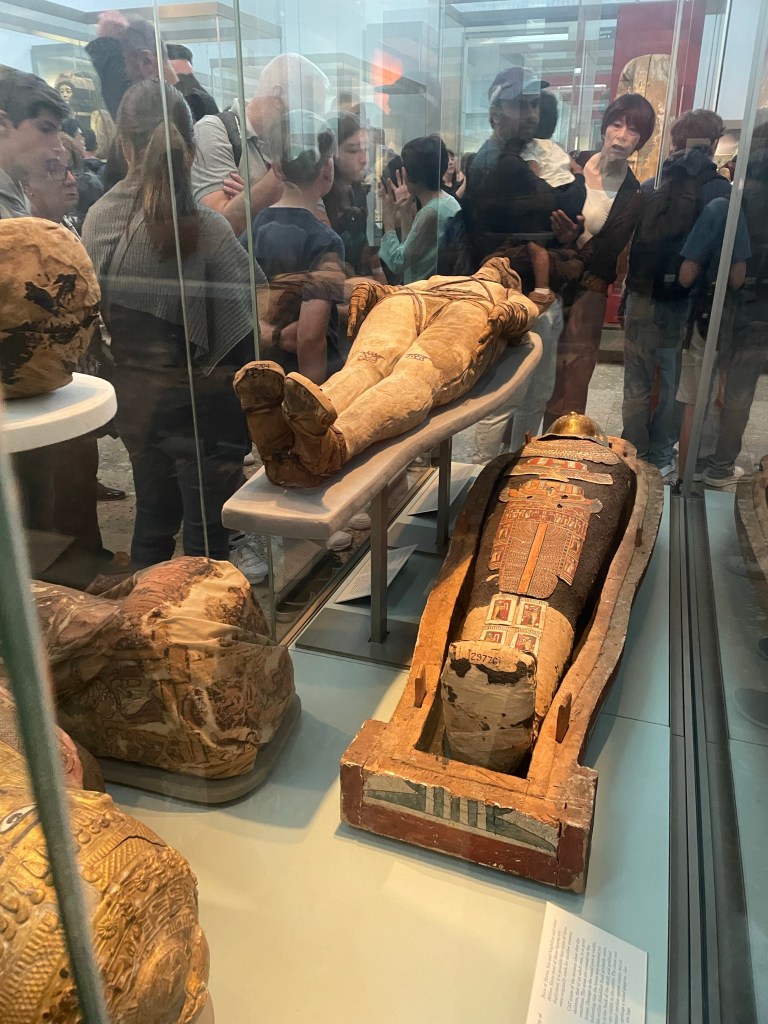
Once in London, M and S’s daughter, B (of Balkans fame) ( https://fromswamptosummit.com/2019/07/20/things-we-brought-to-the-balkans-were-on-our-way/ ) joined us and we all enjoyed a “cruise” down the Thames to Greenwich where S could indulge all of his astronomical interests by standing on either side of the Greenwich meridian at the Royal Observatory. J and I also had a look at the British Museum (incredibly crowded and apparently mummies are much more popular now than when I used to go inspect them in the 1970s). Also, the entire first floor is set up like a quasi shopping mall, which does cast the whole experience in a different light.

Regardless, I loved London as much as ever and J and I spent two of our three nights there going to the theater – Aspects of Love (really strange Andrew Lloyd Webber musical based on a novella by David Garnett) and a classic English comedy/farce, The Play That Goes Wrong.

Our final phase of the trip left a little to be desired. On an airline that shall not be named the following happened:

(1) Reached Orlando at the time of a massive thunderstorm that closed the airport;

(2) Circled Orlando until we were close to running out of fuel;

(3) Landed in Melbourne to refuel;

(4) Sat on tarmac because storm moved to Melbourne and it was too dangerous to refuel;

(5) So many hours had passed our crew was no longer legally able to work;

(6) Alternate crew was to be sent from Orlando via taxi;

(7) Were permitted into a secured hallway of airport (we hadn’t gone through customs) where the local airport officials doled out the world’s worst junk food from large cardboard boxes (think Combos filled with pizza cheese) – it was a bit like being one of the animals at feeding time in the zoo;

(8) After 6 hours in Melbourne the new flight crew arrived (to sardonic applause from the passengers);

(9) Flew 15 minutes at under 6000 feet to Orlando and landed;

(10) Were informed that we were so late that all the customs officers at the glitzy Terminal C had gone home;

(11) Taxied around the airport looking for a parking place (think looking for a spot at the mall during the Christmas shopping season [back when malls were a thing]); and

(12) Were finally welcomed at Terminal A in one of the Spirit gates. You know you’ve reached a new low when that’s your home port.

Regardless, a wholly successful phase one of sabbatical. Phase two was to start only two weeks later. The changing of the guards seems an apt metaphor for phase 2 – our U.S.A. Road Trip.

The Landslide Bring It Down – The Changing Jurassic Coast, Dorset, England

On July 21, 2023 a massive landslide (aka as a “land slip” in England) moved tons and tons of cliff side onto the Seatown beach, dividing it in half. About seven miles away, on Christmas Eve, 1839, the same thing happened; that time dumping 45 acres of meadowland into the ocean at Lyme Regis, creating what is now called the Undercliff. The fallen land has been conserved since the 1960s, and allowed to revert to wilderness, creating a walk way running between the bare chalk walls rising above and the forested ravines below.

It is the area featured in Lyme Regis resident John Fowles’ The French Lieutenant’s Woman. It was Fowles’ description of the Undercliff that drew us to a three night stay at Lyme Regis. Fowles wrote: it is “cut by deep chasms and strange bluffs and towers of chalk and flint, which loom over the lush foliage around them like the walls of ruined castles *** People have been lost in it for hours, and cannot believe, when they see on the map where they have been lost, that their sense of isolation – and if the weather be bad, desolation – could have seemed so great.”

After a first night at the Nag’s Head Inn, whose pub was inhabited by elderly men watching cricket, and dinner at the very nice Royal Lion Hotel (fyi, to get free Wi-Fi you have to sign up for a million mailing lists and my gmail account is paying the price…), the next day was designated for the Undercliff Walk. The Undercliff is also part of the South West Coast Path, so it fit nicely into our theme of walking at least parts of “the greatest hits of English paths.”

The beginning of the walk is very poorly posted. We finally found a small marker by the Lyme Regis Bowling Club, which seemed a popular place to be that particular morning. I had strong memories of my great-uncle taking us to his bowling club in Skegness back in the early 1970s – but now women also get to play! Men and women alike were wearing the requisite (mostly) white outfits.

The walk starts with a never ending series of steps up to what appears to be a top ridge. but at some point you realize that you are really traversing the half way line of the land slip, with cliffs towering both above and below.

After the land slip occurred in 1839, it became a huge tourist attraction. People took boats to gaze upon it from the sea, and a “Landslide Quadrille” was even written in its honor. No one, however, seems to remember the composer!

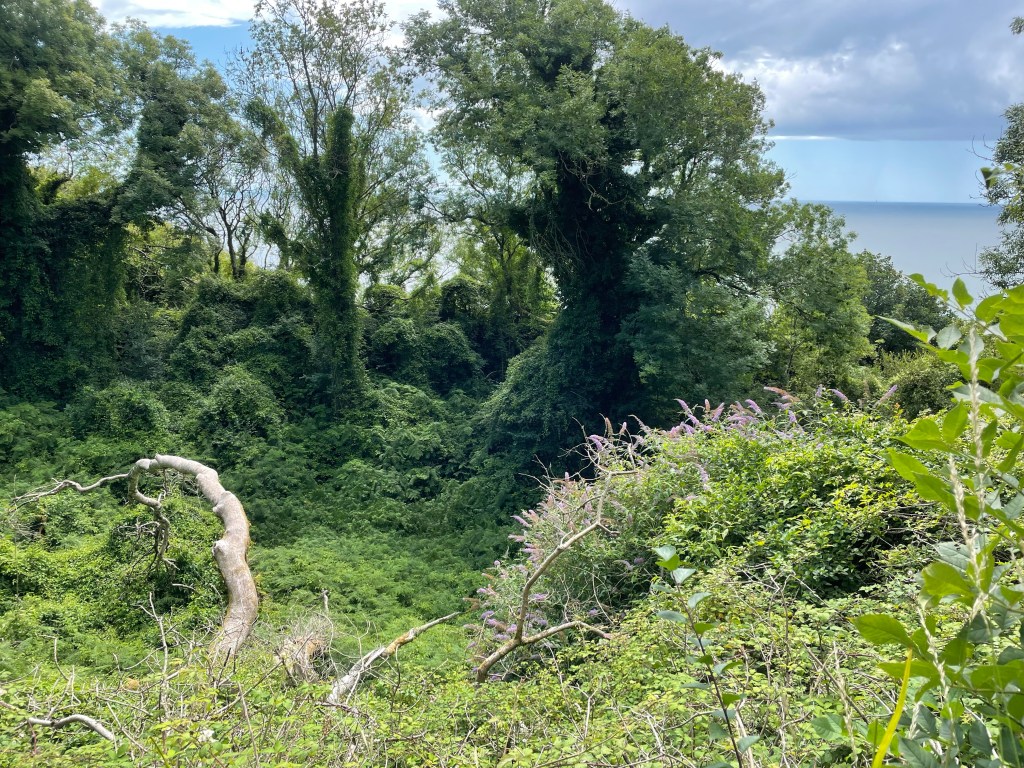
Since then, woodland and grasslands have grown up. The woods are dense and dark and mysterious. Green tunnels formed by arched trees and wild roses run through the woods. Wildflowers, including white bindweed, yellow wild snapdragons, red berries of Italian arum, and simple wild roses create patterns in the deep carpets of ferns.

Now and then the views opened up, either to see the chalk cliffs above or the ravines below and the sparkling English Channel.

It was very steep and muddy, and even though it didn’t rain, beads of water resident on the high hedgerows created their own fairy mist.

After about 7 miles, we entered into an area of very rare grasslands. If you looked closely, you could find lavender chalk fragrant orchids and pink everlasting peas enjoying the sun brushing the golden fields.

The path turns away from the sea, and ends, oddly enough, with a stroll down the middle of golf links and down a steep hill into the very small harbor town of Seaton. Apparently we began with bowls and ended with golf.

We caught the bus back to Lyme Regis. A double decker bus ride whizzing along the narrow hedge lined lanes is an experience not to be missed.

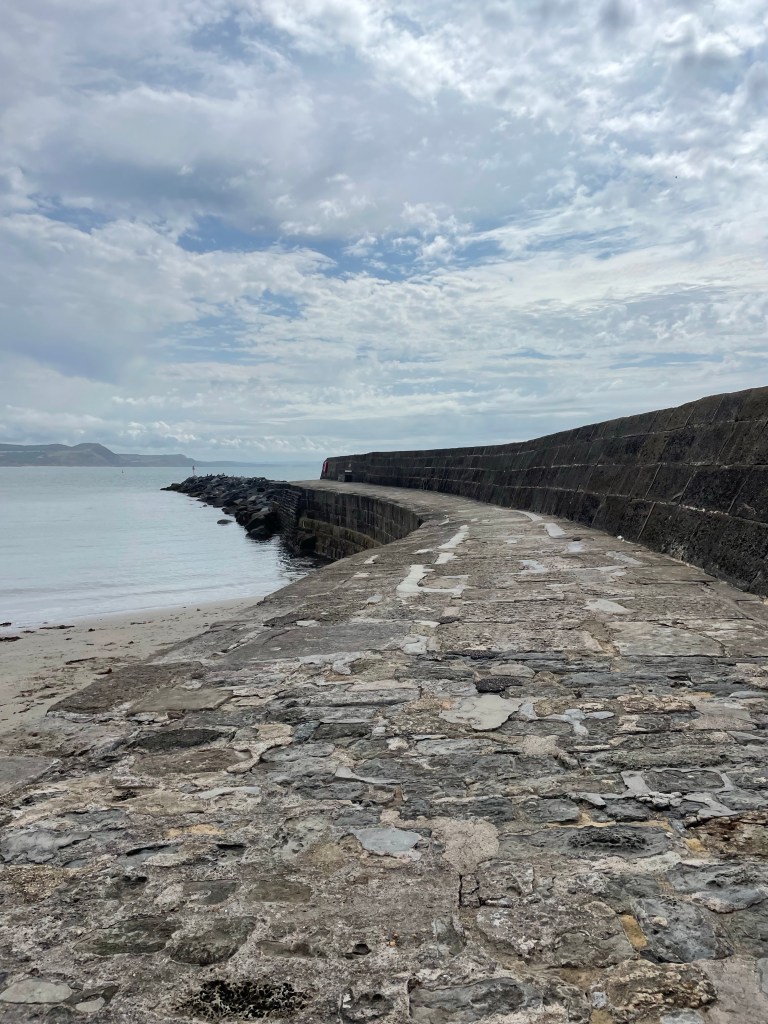
Our final full day in Lyme Regis was dedicated to visiting the Cobb and embarking on a fossil hunt. The Cobb is a stone breakwater that thrusts into the sea to protect the harbor. No one really knows why it is called the Cobb. The first mention of it is in 1294, and after being destroyed on a number of occasions it was almost completely rebuilt in 1817. Fishing boats, mostly for tourist trips, still leave from the Cobb, and we watched fishermen mending their nets.

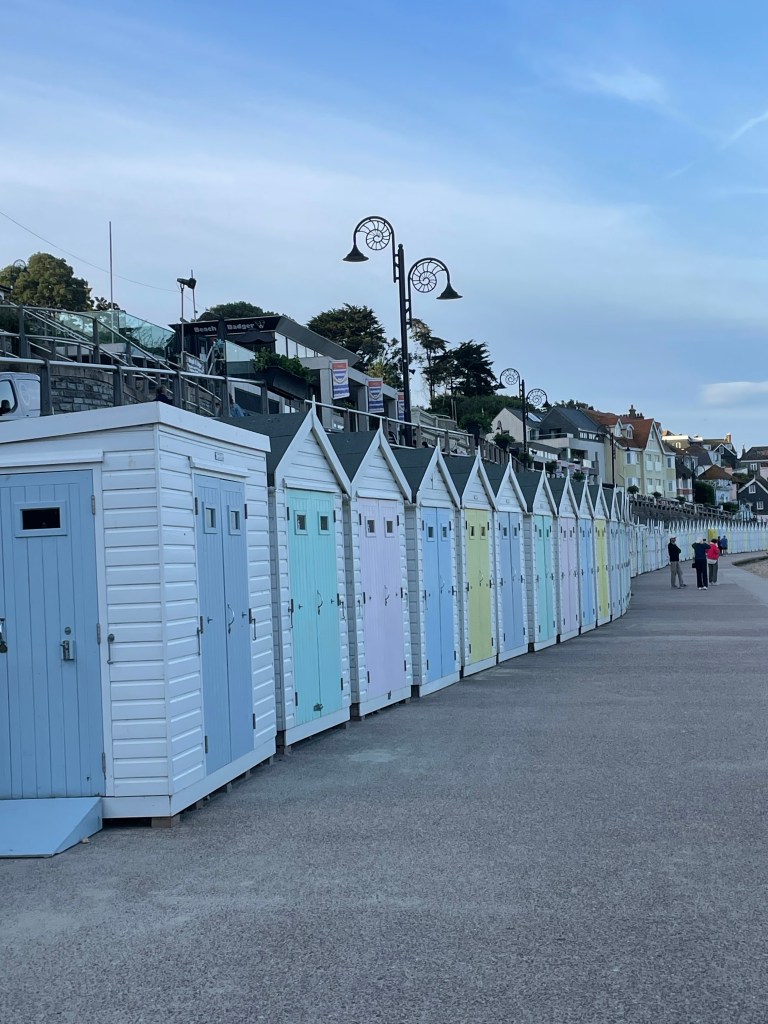
The seaside itself is lined with colorful bathing huts. We were lucky enough to see the interiors of some of them, whose residents had their doors open….featuring kettles for boiling water, shelves for holding snacks, and I’m sure there was local ale somewhere there also. Or at least canned cocktails, which seem to have taken over in England. By the way, look at the lamp posts. They are modeled after fossilized ammonites.

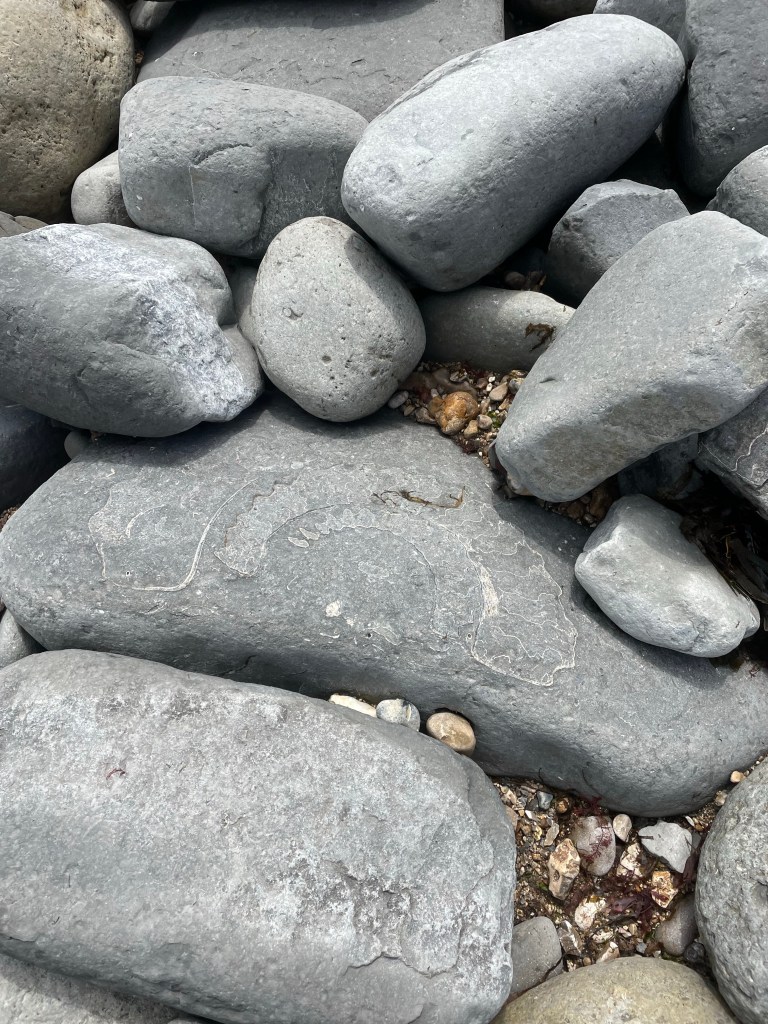
On the other side of the Cobb is rocky Monmouth Beach. Instead of seashell hunters, it is populated by amateur fossil hounds wielding mallets, this being one of the greatest spots to find fossils. Hence the name, Jurassic Coast. (In fact, in the Undercliff the various stone levels are dated, including back to Jurassic times.) Even if you don’t find one yourself (I like to think a half inch, grey ridged rock we found was one), ammonites are etched into all of the big rocks, creating a mural of fossils running along the beach floor.

After a long session of fossil hunting, we walked up the steps to the Jane Austen Garden and the Langmoor and Lister Gardens, which offer stunning sea views. They were surprisingly tropical and and natural – as was the Undercliff itself – as opposed to formal and contained.

Finished up our stay in Lyme Regis with a relaxing afternoon and some great Indian food.

Lyme Regis is full of history and tradition and fossils. But this coast is constantly evolving, as evident from the landslip just a couple of weeks ago. I keep contrasting this natural progression to what’s been happening this summer where much of the coral in parts of South Florida died in two weeks after ocean waters increased to bath water temperatures.

The land slip that formed the Undercliff was a force for creation and change and new life. That’s the sort of evolution that happens when the land is conserved and preserved and allowed to revert back to its raw, beautiful self.

The NSB of Northern Spain – Plentzia, Basque Country

Because daughter S had the strongest feelings about where we should stay in northern Spain, we left the AirBnb choice up to her. Hence, we ended up in Plentzia (Basque), Plencia (Spanish), a town that I can only describe as the New Smyrna Beach of northern Spain. Those of you from Florida will understand.

Actually, it’s an absolutely lovely small beach town about 30 minutes outside of Bilbao. And it did remind me of NSB – lots of family groups and grandparents escorting their small charges off for a day at the seaside. This was not a place for non-local tourists. We might have heard some French, but ours were practically the only U.S. accents we heard our whole time there.

Getting there was not without mishap. As there were six of us (actually, S took charge of this and ended up with really good fares), we rented two small cars. J, son in law N, and S went off to retrieve them from the airport in San Sebastián, while T, A, and I closed down the Airbnb and moved all our luggage down the three flights. All was going well – except for the fact that all the bridges in San Sebastián were shut for some unknown reason, necessitating many detours for the drivers of the rental cars as they attempted to pick up the rest of the party.

In any event, we were eventually all retrieved, and started the drive to Plentzia. On the way, we stopped at Gatevia, a nice beach town that houses the Balenciaga museum. We watched whole fish being grilled on large, flat, wood burning grills – an old seafaring tradition from when fish was grilled aboard the boats.

Ultimately, we made it to Plentzia where we had to decode Google maps to try to find what appeared to be a very unusual address. I was in the car with N and A – we somehow found ourselves making a hairpin turn down a steep narrow lane where the car got stuck on the high curb as we turned. Undaunted, we continued down the lane only to end up in someone’s front yard, where the very nice owner told us to calm down (“Tranquillo!”) and assured us his directions would take us to the correct location.

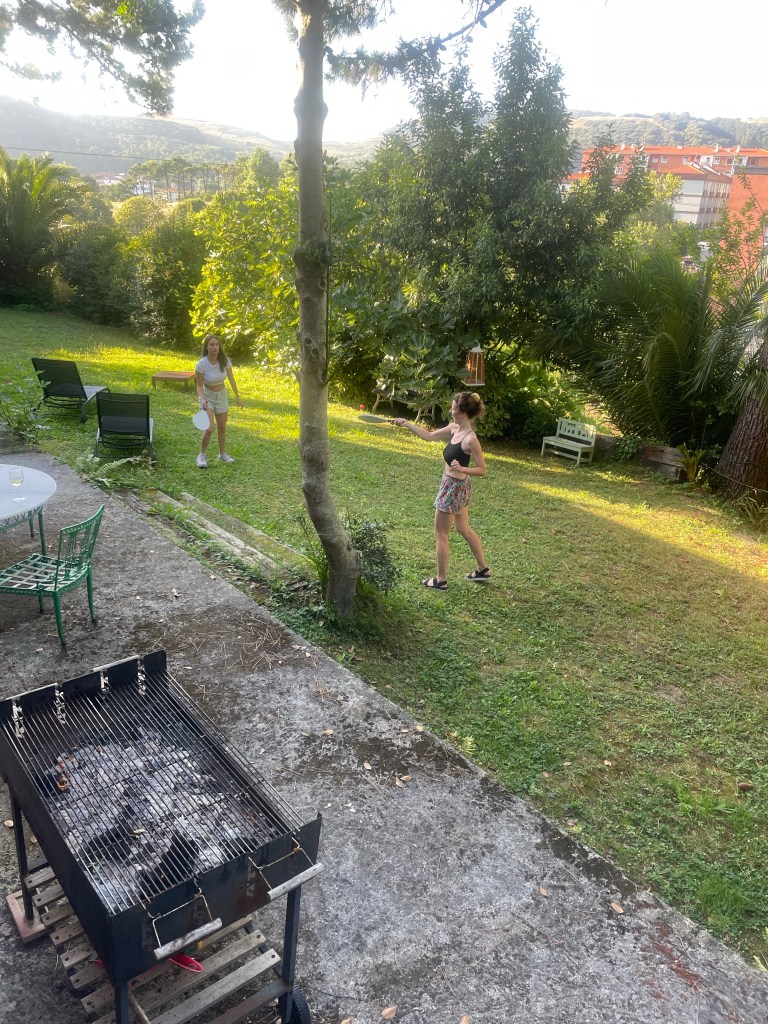
The AirBnb was of quirky “farmhouse shabby chic” design and would have been great but for the lack of screens and abundance of mosquitoes. If anyone would like to join me in starting a screen company for Spain, please let me know. I think we’d make a killing.

A nice walk down to the beach at night.

The next day, based on an inaccurate reading of weather reports, we decided should be the hiking and mountain day. We started, however, with N and me making a trip to a very local fish market in a neighboring town. The Turkish (?) fishmonger apparently found us so interesting that he threw multiple free sardines and anchovies into our order.

I was really struck by how different the small towns in Spain were from England. Many of the residences are all apartment buildings, as opposed to semi-detached or detached dwellings, even in the remote areas. I’m sure there’s some interesting social commentary there, but having walked 11 miles today in the Yorkshire Dales (we’re now on the walking portion of this trip) I’m not sure what it is right now!

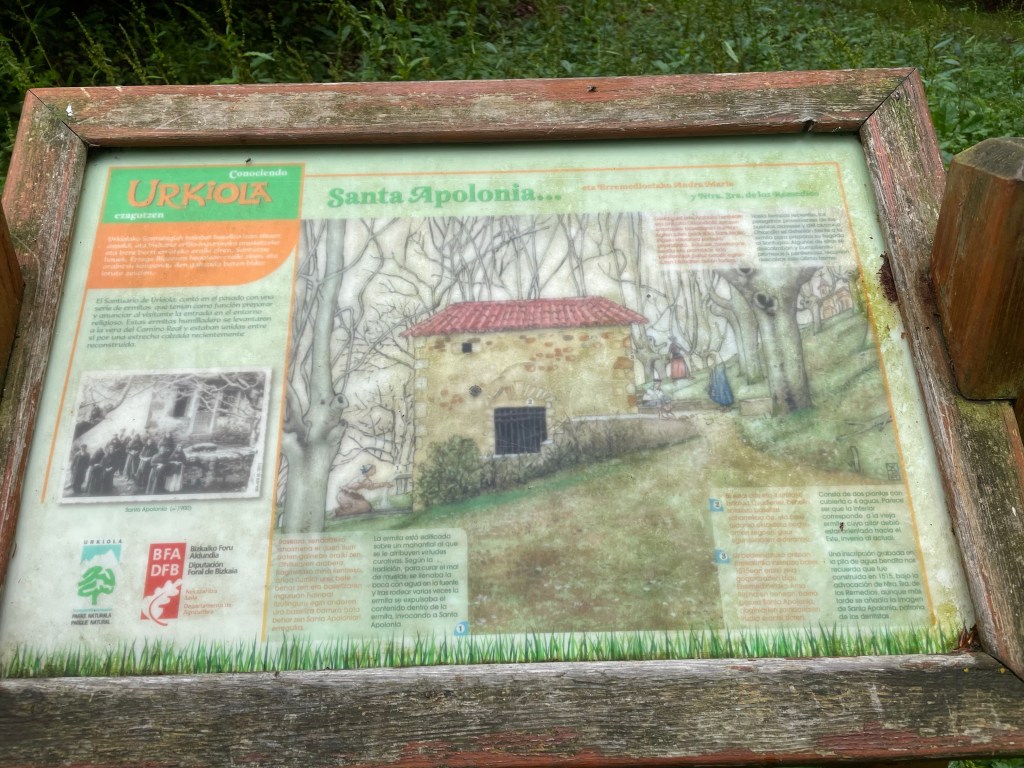
We finally got on the road in the Citroen and Toyota for what turned out to be quite a long drive into the mountains, and the weather definitely turned for the worse. But it was just a drizzling misting rain. After a series of hairpin turns we reached the Urkiola Preserve, a location chosen by A, who knew her parents wouldn’t be happy unless they’d experienced some of the Basque Country mounting.

The park office was just closing as it was almost 2 p.m. and time for siesta. The park official nonetheless left it open to give us a map and explain where to walk. Given the weather, we opted for the shorter version of the hike. This was a beautiful walk through pollarded beech trees – meaning large limbs cut for ash leaving a somewhat peculiar three pronged shape.

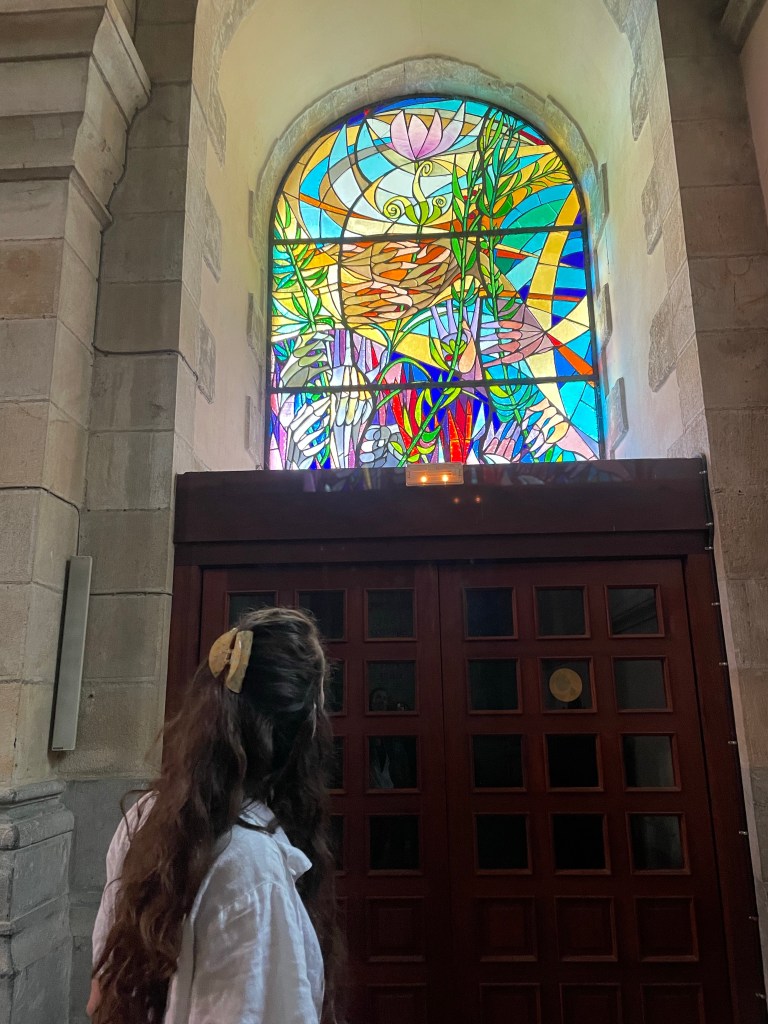
There are three or four “hermitages” on the way up to the church at the top of the mountain, although they seemed more like pilgrimage spots rather than a place a hermit lived. The church was originally built in the 8th/9th century, but has had many incarnations – a main one was in the 1970s by a group of monks. The church has beautiful stained glass windows, themed around vibrantly colored organic flowers and was never fully finished.

From the church we walked to a panoramic overlook, with a spectacular view framed by three large crosses. A number of what might have been tombstones dotted the landscape.

This was an interesting mix of Christian and pagan. Mari, the Lady of a boat, is supposed to live in a cave, looking after Urquiola. She can shape shift from animal to plant to woman.

At the top of the mountain is a nice cafe where we re-joined the 21st century with a drink.

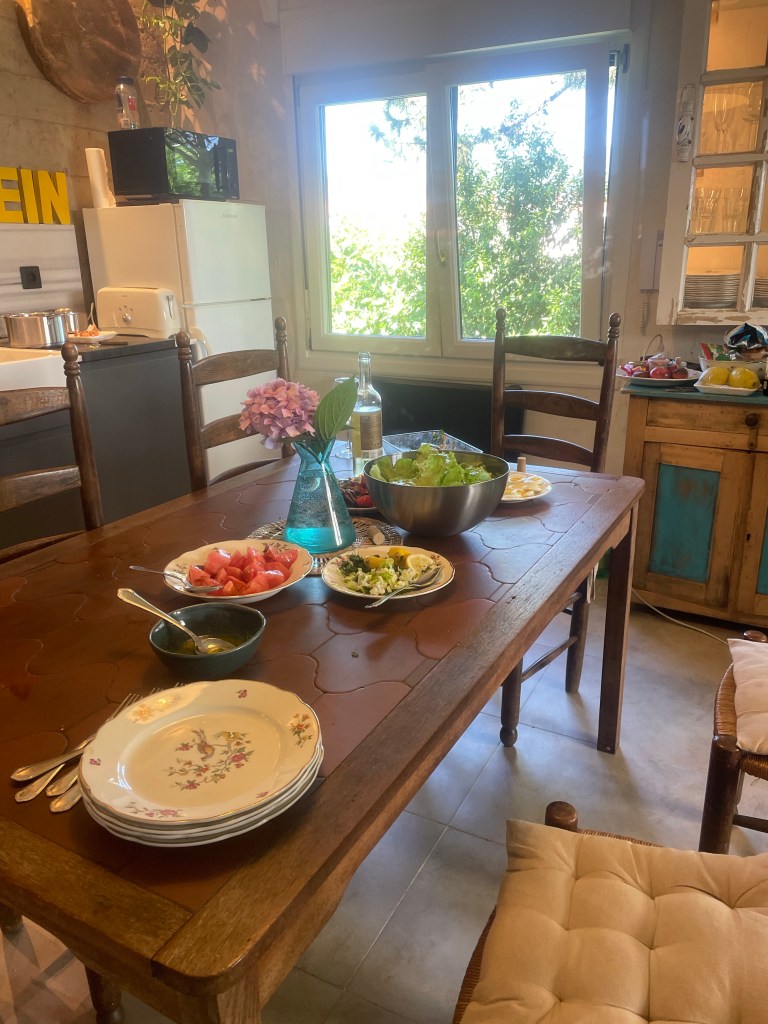
Drove the hour plus back into Plentzia, where we proceeded to create our own version of a Basque fish feast. The most marvelous thing was that we knew we still had several days ahead of us.

The Rain in Spain…and in Hastings

Except fortunately, it didn’t, in Spain. At least, unless you count a few drizzly moments, which I refuse to do.

From Rye, in East Sussex, we took train and plane to Bilbao, in the Basque Country of Northern Spain. Along the way, we disembarked in Hastings, where it really did rain. To avoid a very long wait for our 7 pm flight from Gatwick we decided to check out Hastings, which turned out to be a singularly unsuccessful pit stop.

This is the only picture I have of Hastings.

We lugged ourselves and all our luggage into the Old Town; we could see the Castle up on the hill and thought about the Battle and 1066 and all that, but that’s about as close as we got to any sights. The beach/boardwalk runs along the front – there were loads of people, but let’s just say the glory was more than faded. It didn’t take us very long to decide to trudge back (in the rain) to the train station.

We finally took off from Gatwick for a short and uneventful flight to Bilbao – except for the part where J’s water bottle (which he had cleverly stowed in the outside pocket of his back pack and placed in the overhead bin) started to leak on everyone below.

We arrived in Bilbao after 10 – there’s an hour time difference for reasons that date back to Franco and WWII – only to find we’d missed the last shuttle to the Holiday Inn Express where we were staying for a night. In any event, a taxi safely delivered us, sans any further mishaps.

After a truly excellent “continental” breakfast – why are coffee machines so much better in Europe? – we managed to take the shuttle to the airport and figure out how to purchase bus tickets to San Sebastián. It turned out the ticket machine was broken, so as always, the answer was “download the app and buy online.” At least J was able to extract my credit card when when in a moment of desperation I pushed it into the only other slot available in the ticket machine – which turned out to be for bills only.

After a longish bus ride, we arrived for more lugging of luggage, and finally made contact with A and son in law N at the Deutsche Bank where we were getting euros. Travelers note – there are two Deutsche banks near the water in San Sebastián.

The major dining experience in this part of Spain is pintxos – basically the Basque word for tapas. A language note – Basque is considered a “language isolate”, not related to any other language. It likely dates back to the indigenous peoples of the area. “X” is pronounced “ch”, similar to the pronunciations you see in the Yucatán.

Pintxos take all forms – mushrooms in rich sauces, small sandwiches, scallops, oxtail, and ubiquitous fried potatoes, to name just a few.

After sampling several for lunch, we made our way to our Airbnb, where daughter S and boyfriend T arrived at almost exactly the same time. They’d been in Biarritz the night before and appeared to have had a more seamless journey than J and I.

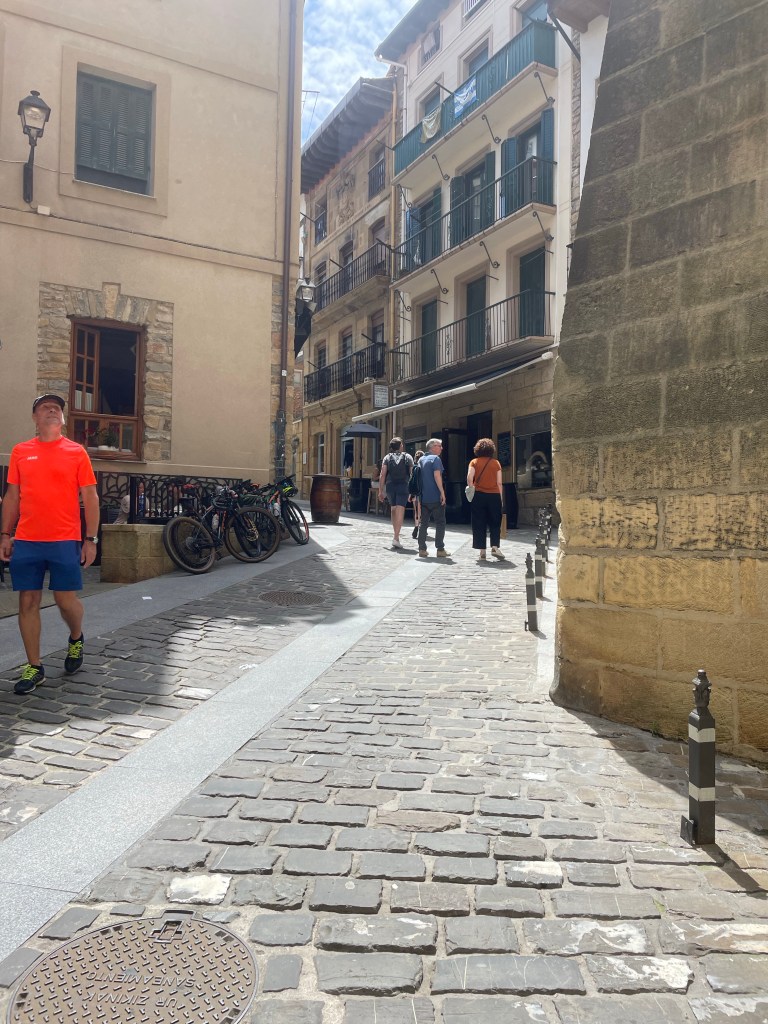
The Airbnb was on one of the city’s many pedestrian streets. There are wonderful clothes shops and elegant, balconied apartment buildings edging the avenues, The beach is a long crescent of sand packed with bathers, cliffs on either side of the bay.

As fate would have it, we were in town at the same time as a college friend, C, and his two sons and son in law. They’d been in Pamplona for the running of the bulls (which sounds as gruesome as I had feared) and were staying in Bilbao. In fact, when we arrived in Bilbao we were greeted by numerous men and women all wearing white outfits with red bandanas in honor of the event (C himself had grown a Hemingway-like beard just for the occasion). We were able to rendezvous with him and his son, and enjoyed even more pintxos (by now I had a potato overload), gelato, and a beautiful walk along the beach to see the sunset.

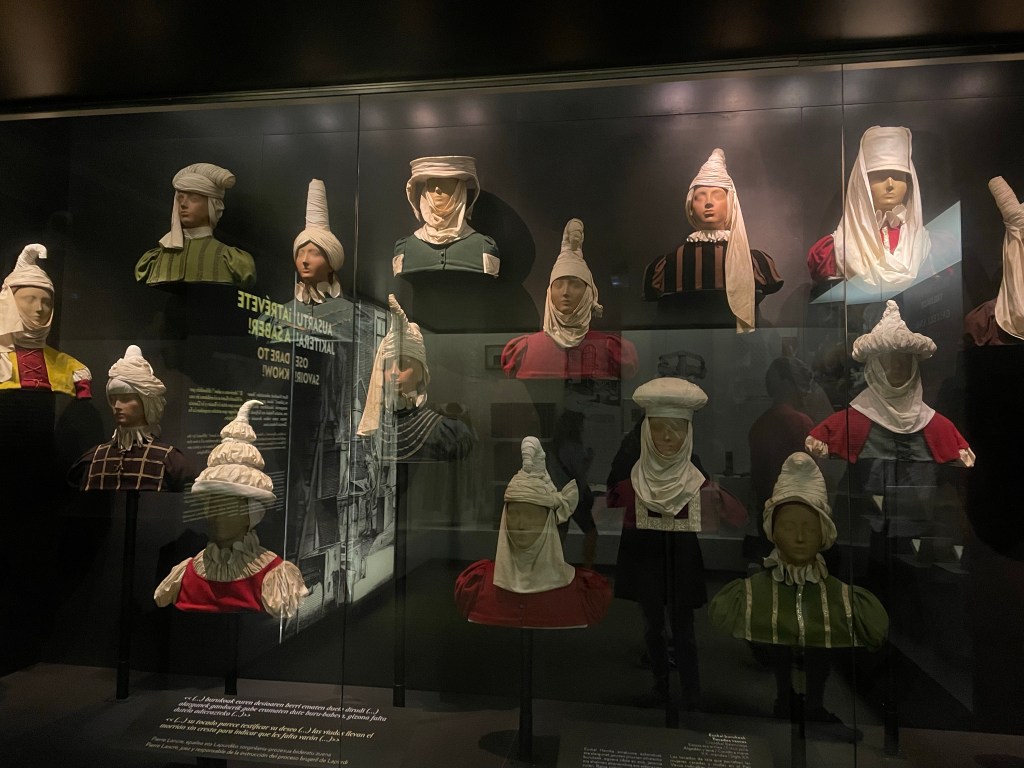
The next day was rainy and dreary. We found a hole in the wall pintxos place that was just as good as the higher end one from the day before, and then ventured off to the Museum to try to learn a little more about Basque culture, although very few explanations were translated into English.

Basque hats – some of the women’s ultimately outlawed; you can speculate why….

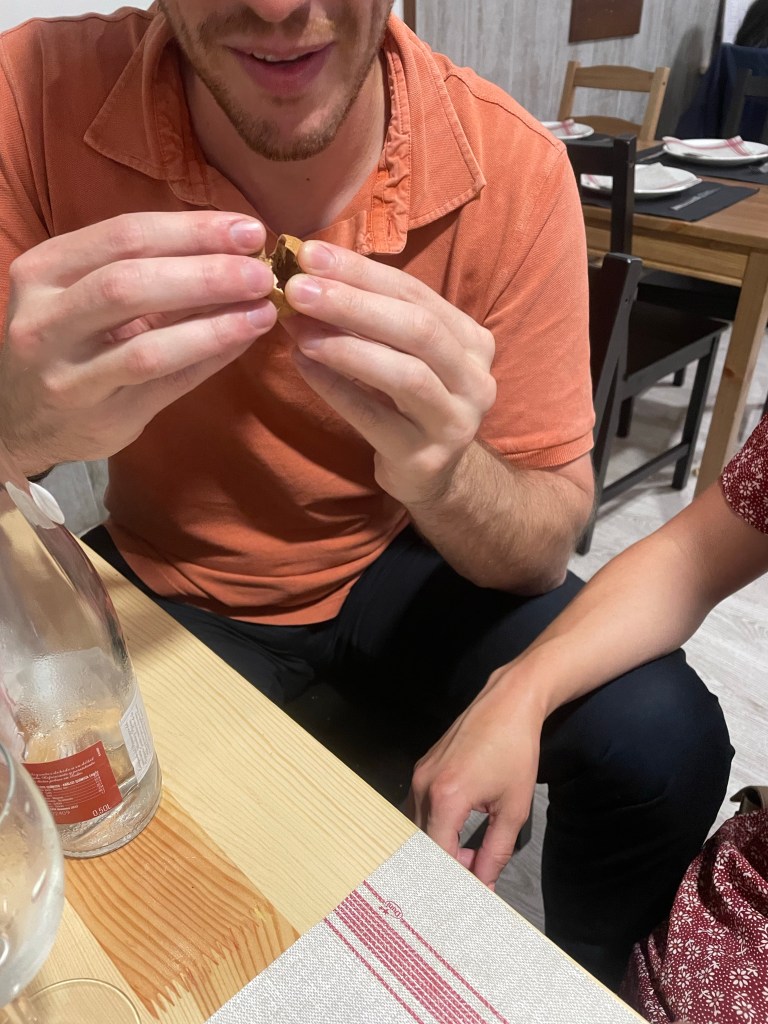
We had an absolutely marvelous dinner at a restaurant across the street from the Airbnb – prawns served with heads fully attached, fried peppers, samples of hand pulled dry cider. The star was dessert – a French toast type thing that was stuffed with custard and caramel i Ed, and a Basque Cheesecake with a vanilla sorbet. And a cheeseboard with walnuts in their shells – which led to a walnut cracking competition among certain of our party.

The cracking of the walnuts

By the way, we found Spain unbelievably inexpensive, both for food and drink. A good bottle of wine could easily be found for under 4 euros.

We only had two nights in San Sebastián before our next move – to the beach town of Plentzia, about thirty minutes outside Bilbao. All of us left feeling we needed another night in San Sebastián- but perhaps not anymore patatas bravas!

And So It Begins – A Whirlwind of London

I actually wrote this aboard a train from Rye (via Hastings) to Gatwick. But, as all good travel blogs must, I have to go several days back to start the Six Month Sabbatical Saga.

After packing some and packing more, J and I journeyed off to Orlando Airport’s Terminal C. It is so much better than A and B it doesn’t bear comparison. I can only liken it to the international vs. domestic terminals at the airport in Dubai. After a very nice preflight snack and drinks at Cask and Larder, we made our way onto our Norse Airlines plane – the new budget airline with flights hundreds of dollars less than their competitors.

The planes are lovely, but they have definitely crammed a lot of seats in them. The middle one on Row 38, which was to be my abode, would have been all right but for the fact that Row 38 had no windows at all. I could see a slight sliver of the sky from the window in front of us, but not sunrise over the Atlantic. Avoid Row 38!

Generously speaking, we might have had a couple of hours sleep.

Landed at Gatwick and took a train to Victoria, underground to Green Park, change to the Piccadilly Line, and on to Russell Square. There’s still a lift there, no escalators, to ascend to the surface. London, or at least parts thereof, is filling up with skyscrapers worthy of one of the Asian capitals of the world but still looking somewhat out of place in what I think of as a human scaled city. There are cranes everywhere. But the parts I remember well, namely Bloomsbury and around the British Museum, are still as I recall.

Every time I come to London I have this eerie sense of familiarity. Perhaps that’s natural given that I was born here – at University of London hospital and within the sound of Bow Bells – and spent my first year plus living in Brunswick Gardens near Kensington.

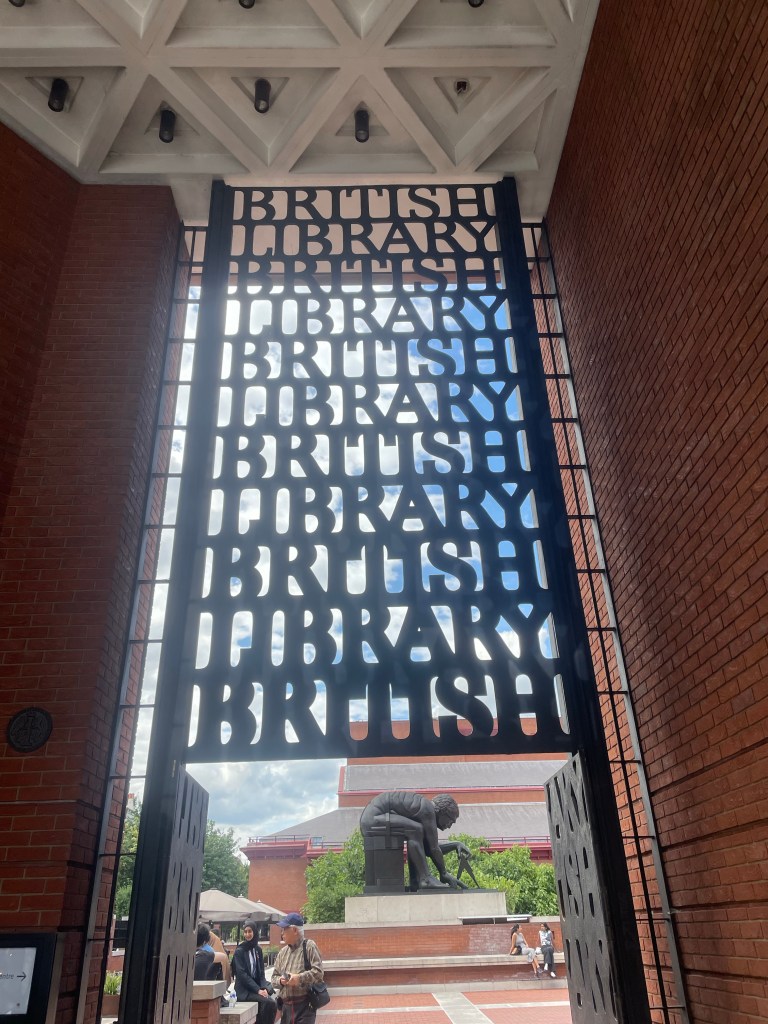
We checked into the Tavistock Hotel, where we were given a small front room with a view of the square. Despite the lack of sleep, we couldn’t let even a jet lagged day go to waste. After a brief rest, we made our way to the British Library. The old reading room at the British Museum – where my parents spent many hours working on their dissertations both before and after my arrival – is now located there. It’s free admission (as seem to be all the museums here) and well worth a visit. It houses the Magna Carta – there are actually two – a very damaged original one, and the actual charter from a couple of years later, which is in much better condition. There’s a Gutenberg Bible as well, but I was equally interested in the illuminated manuscripts and modern books. Lots of ideas for calligraphy projects to come. I still think I would have been quite happy as a monk whose mission in life was to copy and illustrate books!

An interesting walk back. We went past my mother’s old residence hall at University College (Campbell Hall) which she says still looked the same, and through Brunswick Gardens (the actual gardens, not the street in Kensington where I lived as a baby).

After a drink at the Woolf (as in Virginia) and Whistle Bar at our hotel – the Tavistock Hotel, on the site of a former Woolf residence – we had an Italian meal at the restaurant across the street and collapsed.

Next day – truly an exploration of my origins. We started with coffee and croissant that we ate at Tavistock Gardens (surrounded by pigeons attracted by crusts someone else had left – we felt we needed a sign saying “it wasn’t us” after 30 plus birds arrived). Incidentally, we are finding London very inexpensive compared to the U.S., which is a pleasant surprise. Inspected the statue of Mahatma Gandhi in the center of the square and all the benches in memory of those dedicated to peace, socialism, and against nuclear bombs.

Our next stop was the Victoria and Albert Museum, which is where my mother started to go into labor with me in 1961. I’m not sure what that says about either me or her!

Child rearing techniques? No, Achilles and his mother

On our quest to find “Britain 1790-1900” we managed to see every bit of glass at the V&A, plus architectural designs, galleries full of Victorian casts of famous sculptures from around the world, thousands of pounds of Rodin, and ironworks. Finally we realized the staircases up went to different parts of the museum, found the correct one, and located Britain 1900. Starting with the Arts and Crafts movement, we wound our way back in time – an interesting way to view things.

After we were museumed out, we realized we had way too little time to walk to Portobello Market, as was our original plan, and instead wandered around South Kensington, window shopping at all the expensive shops.

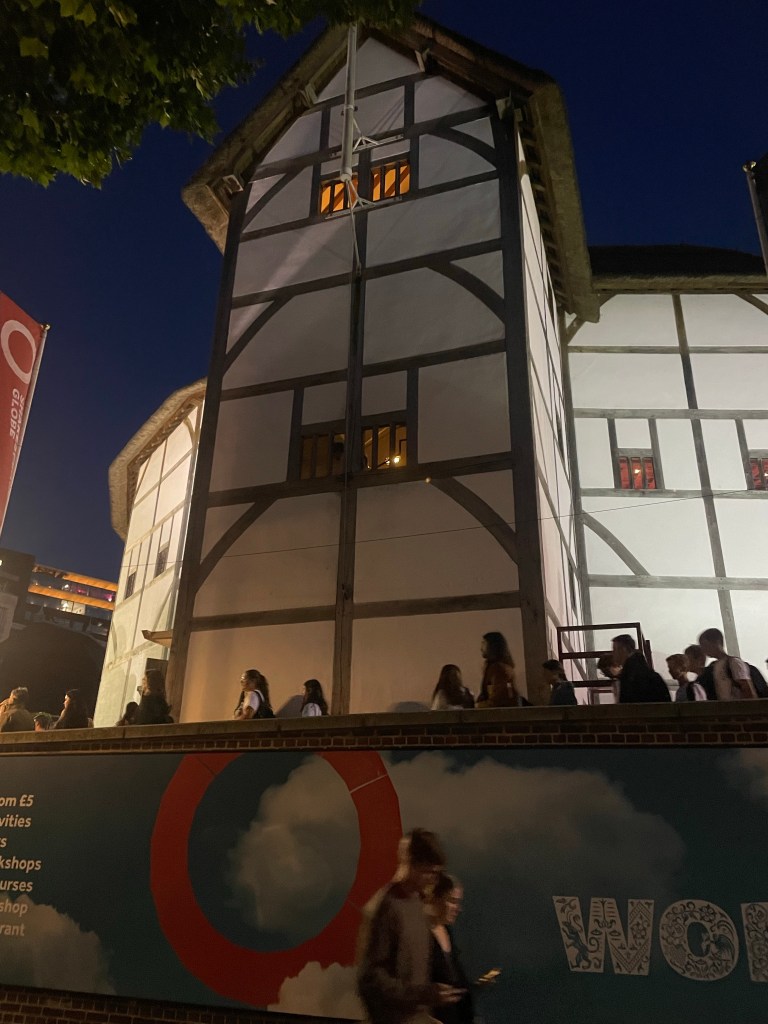
After a quick dinner at a local pub we hopped on the underground again to Blackfriars, and crossed the river over the Millenium Bridge to reach the Globe Theatre – the recreation of the Shakespeare’s theater. We were last at these spots in 2000 – the Millenium bridge had just opened and was still bouncing! They had to close it immediately after for repairs. It’s quite sturdy now, and gives a good view of St. Paul’s.

We saw “A Midsummer’s Nights Dream” – interesting production, with nearly all the roles played by women. Best line – “from now on I want to be known as ‘Bo-toom’”. (For you English majors out there. Think Heather “Bou-Kay” in Keeping Up Appearances.) Also “pro-luge” and “epi-luge.”

Next day was a travel day. On to Rye!

St. Pancreas

A Funny Thing Happened on the Way Out of Town

Does life ever seem as though it’s comprised of a neverending series of events designed to frustrate your ultimate purpose? Or, at the least, to insert various stumbling blocks along the way? And many times it’s the mechanical objects that take on the worst human qualities imaginable in an apparently intentional fashion to stymie whatever you’re trying to accomplish.

As we work our way through the checklist required for the upcoming six months of adventures, consider the following examples:

1. The new oven conspired with the outdoor lighting to malfunction. The oven issue involved a series of beeps at seemingly random times, possibly chirping displeasure over whatever was currently on television – except for the fact they also occurred in the depths of night. After a few hundred dollars and a new computer key pad (who knew ovens had such things) it appears to be somnolent. For the moment. At least the outdoor lighting was a silent malfunction, resulting from cut wires. Thanks, lawn service.

2. The bank that shall remain nameless who does not know how to receive a $10.43 cent payment. We are still battling that one. Who knew it would take over 30 days to release a lien for a home equity loan that hasn’t been in use for years?

3. The car that has decided to have a voice and buzzes out its grievances every time I go over one of our brick roads. This one is on going. I’m just trying to get used to it, and think of it as background percussion.

4. The pond project. A weeks long repair job to repair a leaking pond (that had already killed off our generations of tiny Lake Ivanhoe fish). Finally, a success story. After massive internet research, and several Ace Hardware trips, a product was found. Layers of scraping, vacuuming, epoxying, patching, stop, repeat, and finally we have a pond that appears to hold water. We’ll see. I’m not going out to catch fish in Lake Ivanhoe to transplant to it until the weather has become a bit more tolerable.

I’m sure I could add to the list. But right now my mind is on finishing up work – only 3 days left! Live-in house sitters assembled, S’s cat Boudin is ensconced in the addition as his summer residence, and Kira our own cat has been informed of the upcoming plans. First stop is London, followed by Rye, and then on to San Sebastián, Spain. But who knows what the next few days could hold – funny things always happen on the way out of town.