Originally Entitled Motivation – Or Lack Thereof

The Little Big Econ Trail

Yes, the original title of this post was “Motivation or Lack Thereof.” Only a few days ago, when I started this I was overcome by the the fact that as of that moment I had no clear goal in mind. Since 2010, I have trained for Kilimanjaro, Inca Trail, Mt. Hood, Grand Canyon, Mt. Elbrus, the Muliwai Trail in Hawaii (which turned into Mauna Kea). There has always been some journey out there that caused me to climb that extra flight of steps. And I was finding it increasingly hard to climb that extra set, even without carrying any extra weight in my backpack.

But thanks to the Labor Day weekend, and the time to spend messing about with airline reservations, we at least now have a trip to Mt. Washington in New Hampshire planned for mid-October. I am under no illusion that it will be anything like Mt. Washington in winter, when we had really wanted to climb it, but at least it is something uphill! And, in contrast to the Barrels on Mt. Elbrus, we will spend two nights with daughter number 1 and boyfriend at an inn originally built by the Baldwin family – as in Baldwin pianos. Somehow that seems significant. Due, I suppose, to 10 years of piano lessons.

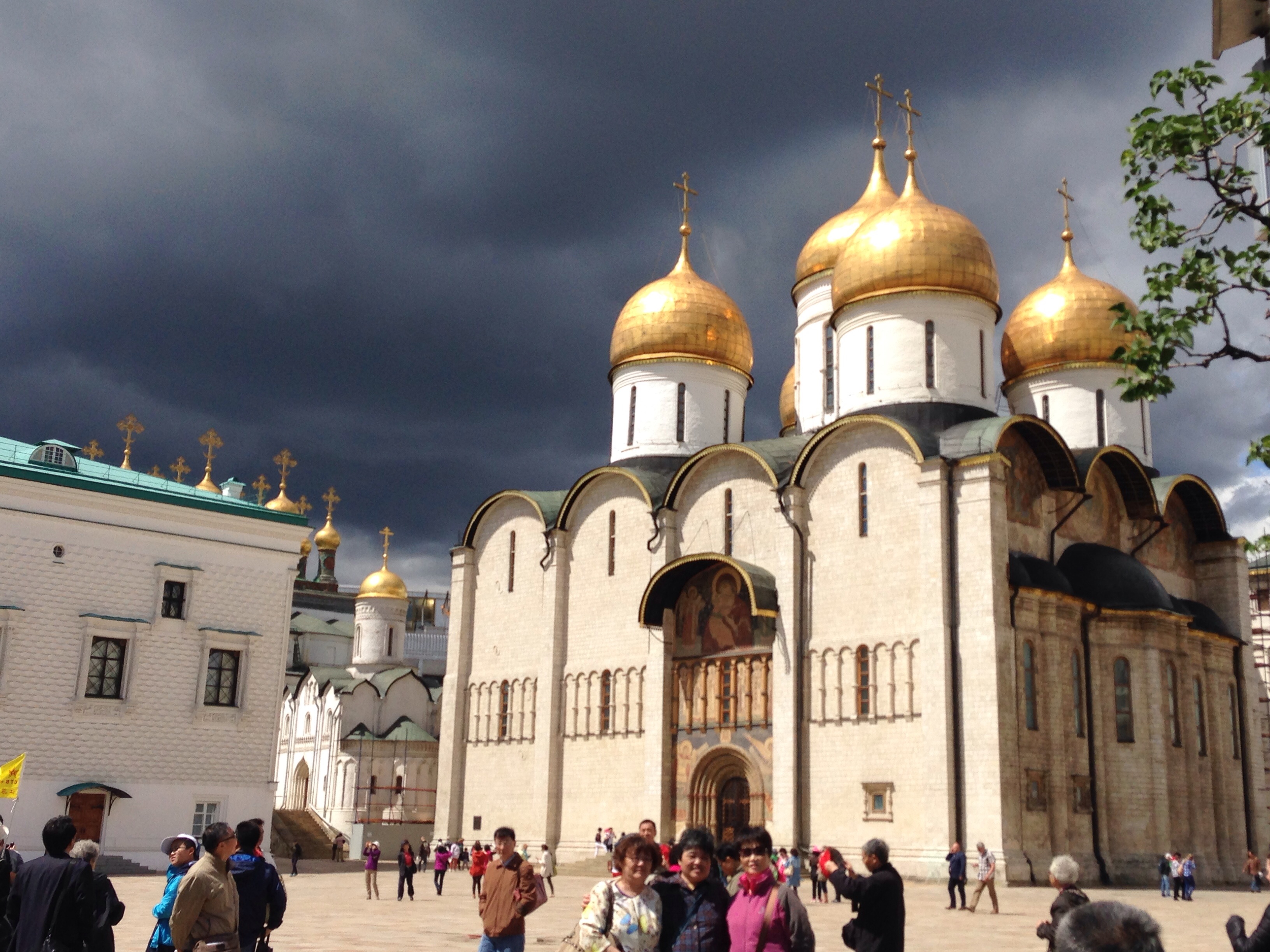
So, in celebration of at least committing to one summit in the foreseeable future, yesterday we donned our faithful hiking boots and ventured out to the Little Big Econ trail. (Econlockhatchee, for you non- Florida readers.) We hiked out the orange trail to what we have always heard referred to as the Boy Scout bridge. It’s the one trail in Central Florida where you are on what could (kindly) be described as a bluff overlooking the river. The river is remarkably still and very red, due, I believe, to the types of leaves absorbed into the water. Didn’t see any alligators sunning themselves on the very white beaches but did enjoy the many wildflowers that somehow were surviving the heat. A yellow gold flower shaped almost like a stalk of wheat, pinks formed like orchids, and all about palms, short, skinny, bushy, spiky, all different shapes and sizes. After the bridge we hiked away from the river on the white trail. Not many people take this path, presumably in part because of the 16 inch grasses that whip your legs as you walk by. But it’s beautifully shady, with Florida pines casting shadows over the undergrowth. Every now and then we went through a semi-cool spot – almost as in the ocean, when you encounter a sudden cool current. We were kept good company by a cadre of spiders who had created their own spider suburbia out there among the pine trees – their webs the equivalent of spider McMansions.

It was good to get out there and rev up the hiking engine again. With Mt. Washington anchored now in time and place, the next stop needs to be the rock climbing wall. I need to figure out if I have the courage to step off a sheer precipice and to trust the rope – both of which appear to be requirements for the Grand Teton climb we hope to do this summer. Motivation back – now if it will just stop raining I will see if I can make myself run a few miles.

Journey to Another Planet – Mauna Kea

Mauna Kea
Mauna Kea

Mauna Kea isn’t particularly well-known as a destination hike. Most people get to the top by car. But after my husband became the only person in Hawaii to come down with a severe case of flu in the middle of August 2013, thus putting the kabosh on our plan to backpack the Muliwai trail (more on that later), Mauna Kea seemed an attractive alternative.

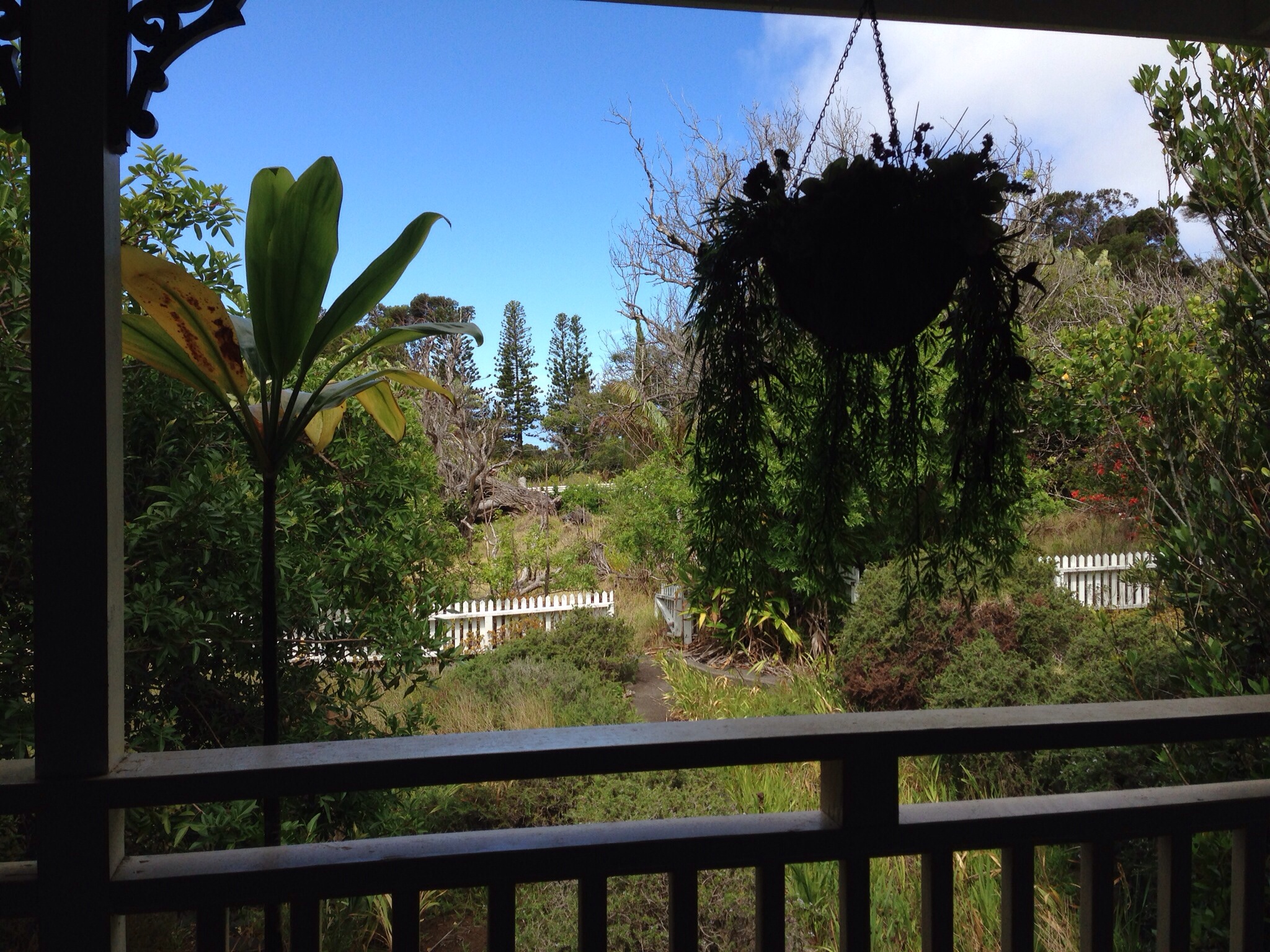
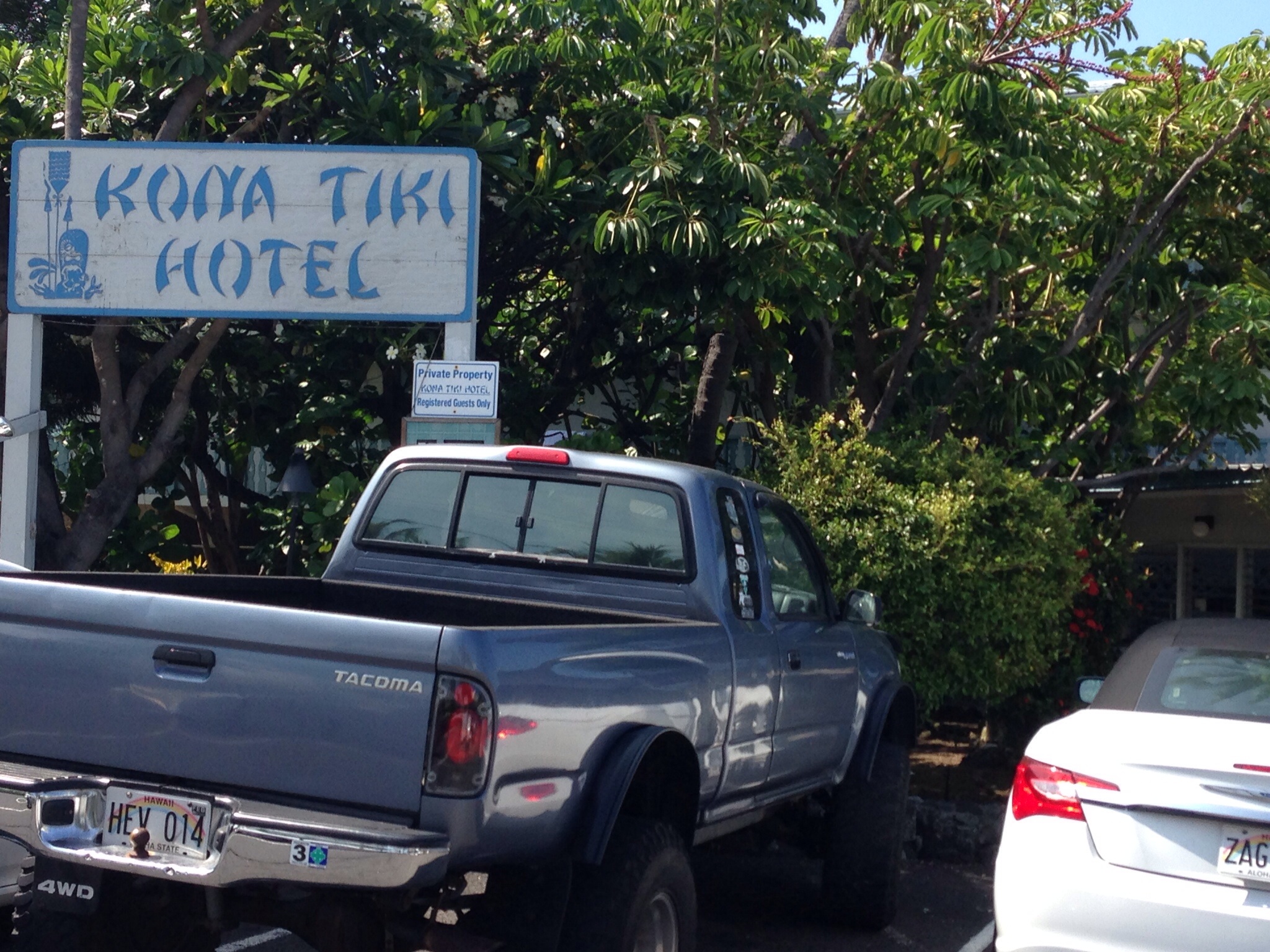
Due to the unexpected change in plans we had several wild card nights – no reservations, no nothing. Two nights before we climbed Mauna Kea we stayed at a 1970s hotel on the edge of Kona, complete with kitchenette and ancient dinette table. Ocean front was an understatement as the second floor unit we were in was bombarded with large waves throughout the night – unclear what the decibel level was. The next night we returned to the semi rundown estate of the Rockefellers outside of Waimea, now converted to a somewhat quirky bed and breakfast – without the breakfast.

View from our porch at the former Rockefeller estate in Waimea
Kona Tiki Hotel, Kona

The next day we awoke early to an hour or so drive along Hawaii’s oh so well maintained road to Mauna Kea. We parked at the ranger station at approximately 9200 feet elevation about 7 am and signed in. Little did we know that only two other hikers would sign in that entire day.

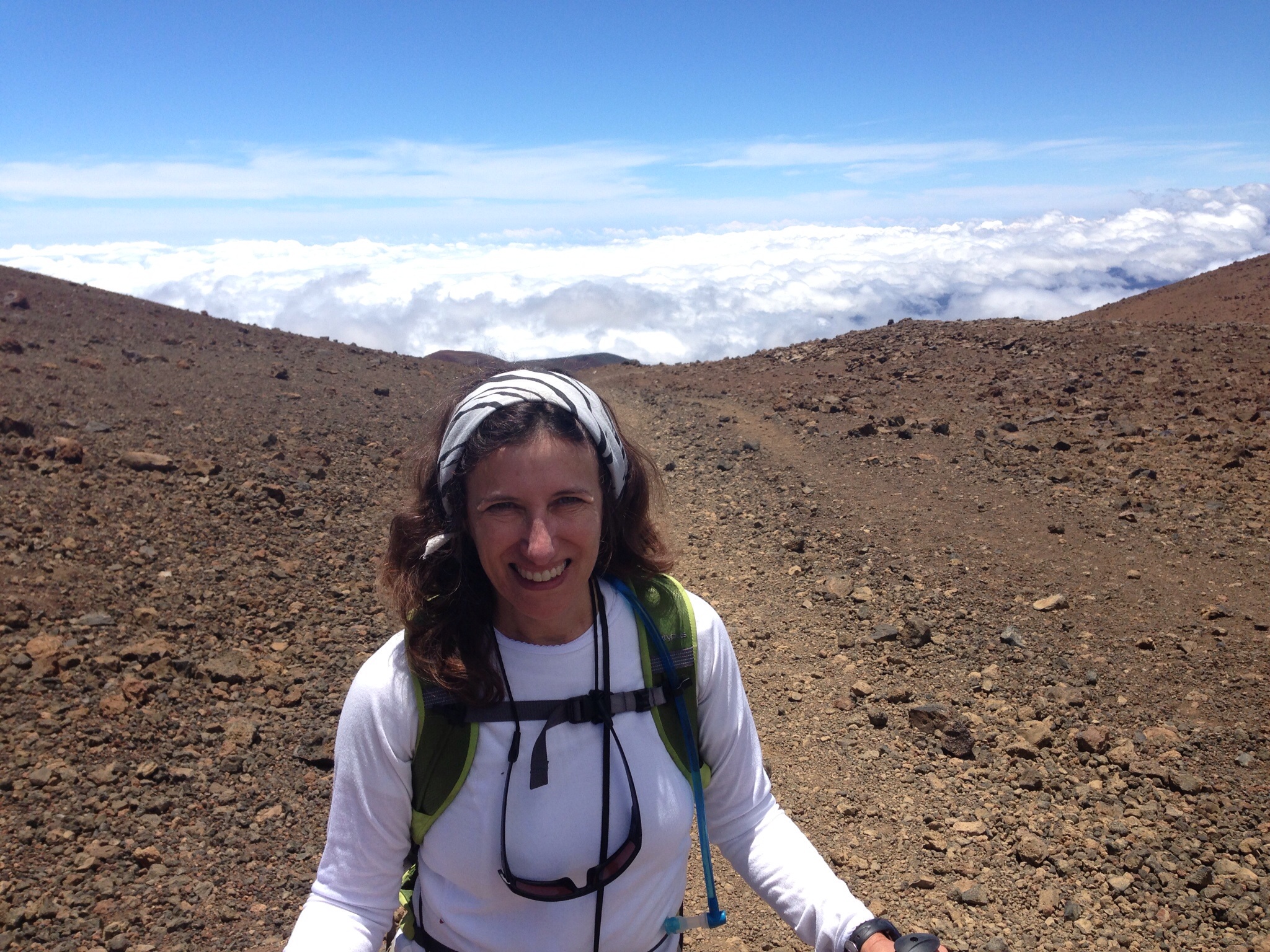
After the first bit of the hike – some fields, some green – we might as well have been hiking on Mars, or at least my idea of Mars. Black and red lava rocks, occasional prehistoric (maybe) cairns of rocks, and very little that resembled vegetation. The temperature varied between extremely hot and downright chilly during the few moments when the sun went behind the clouds.

One of the more peculiar features was that even though the road up would occasionally pop into view I felt more isolated on Mauna Kea than anywhere on Kilimanjaro, much less Mt Elbrus. The trail wasn’t always well marked and it was not hard to imagine being found years later after suffering an unhappy death from dehydration.

Making the trip even more interesting was the rapid elevation gain – literally sea level to almost 14,000 (13,796) feet – in about six hours. I usually don’t feel anything at 14,000 feet but I definitely started to have a headache near the top, combined with some dehydration.

As you approach the top, all of a sudden you start to see the telescopes. Peering up over the orange landscape and the gradual volcanic cones, it is as though you have inadvertently wandered off course and ended up on Another Planet. There’s also a set of porta-potties, a nice reminder of earth, however. I kept thinking of the novel Cloud Atlas – one part of which involves an adventure at the top of Mauna Kea by the observatories – “you’re crazy. There ain’t nothing on Mauna Kea but Old Georgie and his temples hid in ‘closure walls. He’ll not let you in unless you’re ‘ready died an’ your soul is his.”

Telescopes on Mauna Kea

There we encountered the only two other hikers we saw the entire day. But the last mile or so up requires walking along the side of the road, with cars whipping past you. Resentment toward the motorists kicks in – they hardly deserved the summit! The summit itself involves a trek down one indentation and then up to the peak – flat on top – with various offerings to the Hawaian volcanic gods placed on a small stone altar. The wind is much more intense and as we had no idea how long it would take to go down we didn’t stay long.

It turned out our fears were unfounded. While we hiked to the summit in under 5 hours we got down in just over two – scree skiing most of the way. The sun went in and we had a good 45 minutes of walking through clouds – very refreshing after the blazing sun of earlier.

Clouds on the descent

Once at the ranger station, we were met by bus loads of tourists there for night sky observation tours. While it wasn’t exactly a return to a space station, our seven hours of hiking felt like light years.

Summits of All Sorts

The Swamp - not sure how thus translates to climbing granite cliffs -
The Swamp – not sure how this translates to climbing granite cliffs –

I’ve been in the saddle the last couple of weeks – that is, the place between summits. Actually, that’s not true at all. Instead I’ve been climbing one of those sudden summits you encounter in your professional world – and, happily – have scaled it.

Which brings me to the point – there may be summits in all parts of our lives – but none quite the same as the true top of a mountain. Once you’ve reached the top of a mountain you have it forever. No one ever, ever, ever can take it away.

But even on mountains there are lots of different summits. When we hiked Kilimanjaro surviving seven straight nights of sleeping in a tent was its own summit. It is remarkable how you can put something down – your headlamp, for example – only for it to disappear 30 seconds later. And that’s not to mention getting up every day knowing you would hike, and hike and then hike some more. Elbrus was different. It was 14 hours of sheer determination and physical exertion. For me it was saying no to those snowmobiles at the very end who were just dying for us to pay them a bunch of money to save the final two hours of hiking. It was the counting in fours the last hour just so I knew I could continue to put one foot in front of the other.

But now we are thinking of a really different sort of summit – climbing the Grand Teton, the highest mountain in the Teton range. It’s only 13,775 feet but it involves rock climbing, not just bouldering, and is a class 5.4 – something we have never done before. And what most don’t know is that I historically have a pretty good case of fear of sheer vertical drops. In 1985 I froze walking down the Eiffel Tower and it was good long time before I made it to the bottom. So, if we really do decide to do this four day, three night trip it will be a summit of a type I haven’t reached before.

The more You Tube videos I watch the more intriguing it seems. There’s a practice rock climbing wall near us. Maybe it’s the next stop?

Fly Like An Eagle

Summit of Mauna Kea, Hawaii

image

One reason I am enamored with altitude may well stem back to airplane trips taken early, early in my life. These started in the 1960s, when my mother, sometimes accompanied by my father but frequently on her own, would take my brother and me to England to visit our grandparents. In my earliest memory, I was four and my brother was two. I don’t remember much of that trip but from then on, I have much firmer recall. By the time we were six and four, my brother and I had realized that the coloring books dispensed by the flight attendants – then called stewardesses – made fine swords and the little Pan Am wing pins were potentially even better weapons to use against each other.

But, fast forwarding to the 1970s, my interest in how to torment my brother on long airplane trips had ceased to be my major in-flight activity. In those days you had to pay for headphones, which would enable you to listen to the single movie being projected on a drop down screen or the few “radio” channels assembled by the airline. This was an expenditure my parents saw as completely needless. Undaunted, however, my brother and I soon learned that if you pulled your armrest up to your ear you could actually hear the movie and the music – albeit risking a crick in your neck and not a very good sight line for the movie.

That particular flight – we must have been returning to the United States because it was day – the sun shone through the plane window, there were a few layers of fluffy clouds below us, below all that the Atlantic Ocean stretched as long and blue as my eyes could see, and the Steve Miller Band’s “Fly Like An Eagle” was playing through my armrest. I must have been somewhere in my teens. There above the clouds I felt safe – yet utterly free, unleashed of whatever cares pulled at me from far below. I was conscious, even then, that I would always remember that moment.

And to this day, when I board an airplane – despite the waits on the Tarmac, the ever narrowing plane seats, and the ever broadening list of things you have to pay for – I still hope that once above the clouds I’ll recapture that same feeling of serenity. Very occasionally I still do. But maybe that’s really why I climb mountains. Looking down from the summit at the rolling surf of clouds below gives a lightness to your soul that rarely happens anywhere else.

The “What Nexts”

I’ve puzzled greatly what the next post topics should be post Elbrus. And as I am on what seems to be my never ending quest to climb stairs during the hamster wheel of my work day, I have come up with numerous topics, all of which are duly recorded on the notes section of my phone.

But I have resisted the urge for an in-depth examination of my sunburned lips (although an expose of the sunscreen industry may be forthcoming) – and I similarly am not going in the direction of laundry, dogs and calling the kids. Instead, I finally settled for some thoughts on what’s next.

The “what’s nexts” can come up any time – I’ve had it happen after a big case is finally over, after any milestone reached. But there’s something particularly difficult – yet exciting – about the what nexts after a climb.

For one thing, at age 53, there simply is no such thing as stopping the training. So that’s not a what next. Maybe I’m not lugging 23 pounds around on my back while climbing stairs at the moment, but if I stop climbing stairs altogether, I don’t think there’s any amount of time that could get me back to where I am. It’s like the Woody Allen line from Annie Hall – if a shark doesn’t keep moving forward it dies. OK, he was talking about relationships but you get the point.

But more than just that – there is a world of infinite possibility out there – tempered only by some reality of space, time, and physical ability. Time and space – I truly don’t see how, until I actually retire, I can take three weeks off work to climb Mt. Vinson in the Antarctic, for example. Two weeks is hard enough. As for physical ability – I have to recognize it probably is not within my being to carry 65 pounds and drag a 100 pound sled. Unless I quit my job, do Cross Fit everyday and invent some other form of training that presently doesn’t exist – that’s just out – which means Denali is too.

So – what next? There is Cotopaxi in Ecuador. Maybe trekking in the High Atlas Mountains in Morocco? And I am still determined to summit Mt. Hood one of these days. Mt. Adams? And we are seriously discussing a trip with friends to Iceland in March. There has to be some fine climbing there.

I just want to use my ice axe again. Right now the most likely near term possibility may be a winter ascent of Mt. Washington in New Hampshire. And maybe I can even convince the daughters to come along.

I’ll throw it open for comments – from the north, south, east or west. Which summit next?

20140717-230013-82813796.jpg

A Wild Card Day or Summits Don’t End

Now that I’m back in the swamp, Internet speeds are much faster, so I’ll start this post with another visit to the summit:

Stepping onto the summit of Mt. Elbrus:

20140709-065850-25130349.jpg

At the summit:

20140709-065927-25167059.jpg

We made it!

20140709-065952-25192097.jpg

We reached the summit Tuesday morning, July 1, and spent Wednesday reversing our trajectory back down the mountain, via chair lift and gondola, having a celebratory lunch and returning the much maligned puffy jackets to the rental store.

20140709-070312-25392412.jpg

20140709-070310-25390732.jpg

20140709-070309-25389393.jpg

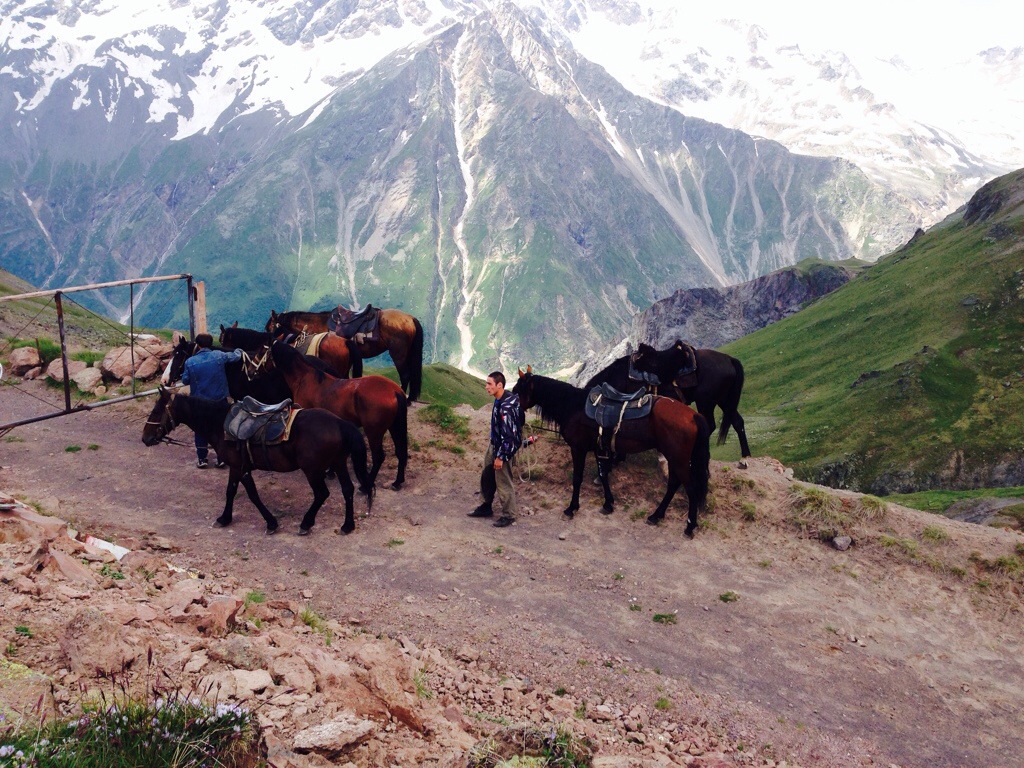
Because we summited a day early, Thursday was what my family affectionately refers to as a wild card day – one of those days with no plans, no reservations, that stretches out before you like a vast plain of infinite opportunity. Well, maybe not always that poetic. We decided to go horseback riding and take a picnic lunch. We rode back up the observatory trail that we had hiked, enjoying the different perspective on the still beautifully in bloom fields of windflowers.

The ride wasn’t without its share of danger, though, as the horses now and then veered ever so closely to the steep precipices below. I just kept thinking – remember, the horse doesn’t want to fall any more than you do. I felt I had a particularly western swagger since I spent most of the ride with my bandana covering the lower half of my burned face for the masked bandit look.

20140711-175610-64570781.jpg

That evening we celebrated at a restaurant by the Baksan River with its own trout pond. Ordering fish meant being handed a fishing pole. After I almost impaled our guide with a fish hook in my zeal to pull my first trout out of the water, I did manage to catch one. Fortunately others on our team were a bit more successful.

The next day we were supposed to drive the three hours back to the Minerale Vody airport, and arrive back in Moscow by noon. The best laid plains…..I can only sum up our 4 a.m. to 6 p.m. travel day in a series of bullet points:
– Board plane and wait for 45 minutes. Maintenance person goes in cockpit and doesn’t come out. Bad sign.
– Plane is broken.
– Get off plane and wait in terminal.
– Instructed to walk to another terminal to pick up luggage and recheck bags. Unclear why bags couldn’t be loaded directly onto another plane. Ours is not to reason why.
– Go through security again.
– Wait.
– Offered liter bottles of coke or sprite. But if you are a party of two or less you are given a paper cup with no lid instead of a bottle.
– Get in little bus to go to airplane on runway, together with open cup of coke or sprite with no lid if you are a party of two or less. Bus stops by plane; door opens. Instructed not to get out of bus. Bus door closes; continue tour of runway. Return to terminal. Unclear what purpose was except to distract restless passengers. Ours is not to reason why.
– Instructed to pick up bags again and recheck them.
– Go back through security.
– Riot almost breaks out among delayed passengers, who have lost patience with the interminable treks to pick up baggage, recheck and go through security. Multiple people filming confrontation of passenger vs Aeroflot rep vs Aeroflot rep on cell phones.
– Wait.
– Told to get back on little bus and finally onto a plane, six hours late.

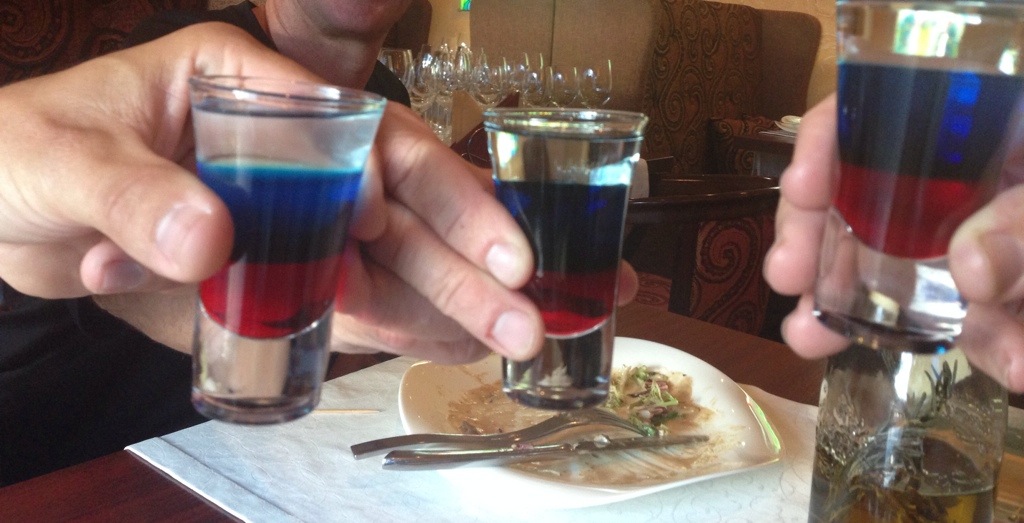
It was July 4, and we clearly needed to celebrate. As we were all exhausted from a very long and frustrating day we did what any red blooded Americans in Moscow would do – we went to an Italian restaurant near the hotel. There, a number of our group drank to the 4th with a red, white and blue drink appropriately named a “Russian flag.” I decided to stick to white wine. Our waitress didn’t seem overly enthusiastic – think the Soup Nazi on Seinfeld. She apparently regarded it as a personal insult if something was ordered from the menu that the restaurant didn’t have. Nonetheless, we were all still on the high that comes from the summit, and a little bit of brusqueness was not going to rain on our parade.

20140711-185035-67835571.jpg

July 5 we flew back to the swamp. But even though the Elbrus trip has ended – at least in real time – the lessons learned, friends made, and summits reached are still with me. And one other thing I have learned – I like writing this blog. So, neither it nor the trip is over. There are all sorts of summits – and I’m going to write about lots of them. And no sooner do you reach one summit then you need to be looking for the next, and that’s what I’m doing right now.

In fact, when I returned to work on Monday, I was already back climbing the stairs by Tuesday.

Steps on the Summit

Summit Date, July 1, 2014. Should be said with the appropriate Captain Kirk, Star Trek inflection.

We all awoke about 1:20 am, dressed, and had breakfast at 2. Yes, it really does take that long to get all the gear on. By 3 we were in the snow cat going up to the Rocks where we had climbed the day before – we had already rejected, as a group, the notion of taking the snow cat to a higher elevation. Alec, always the gentleman, felt compelled to ask me if I wanted to ride in the enclosed cab, but that held no appeal to me. The ride up was gorgeous – the Milky Way clearly visible, stars strung against the black velvet sky like the diamonds and pearls adorning the intricate gowns we had seen at the Armory museum in Moscow.

Once off the snow cat, our skiers broke off fairly soon to zoom up the mountain – or zoom as fast as you can uphill with skies. The rest of us – three climbers including myself and my husband, Alec (our Russian guide), and Alec’s friend (who spoke no English, had never climbed the mountain, and had accompanied us in the various acclimatization hikes) – plodded on up, along the snow cat trail to the higher drop point. Always a little disheartening to walk along what is essentially a road. Finally passed that point, and started up steeper and steeper hills. The sun started to rise behind us – streaks of pink wafting over the tops of the mountain, but I was so busy following Alec’s footsteps in front of me I could barely look up to see it.

After one particularly steep area, we emerged onto the traverse. This is a flatter area that runs along the side of the east peak. It is a relatively narrow path with a steep drop to the left. Needless to say, foot placement is important – and we had been using various of the steps we had worked on the day before. By this time, the altitude was kicking in. I had been using the rest step – step, all weight on one leg to let the other rest, breathe out, breathe out, breathe out, and step again – on the steep sections. Like some slow wedding march up the mountain. The traverse, for all its potential for slipping and falling, was a relief.

The traverse took us down to the saddle – the area between the east and west peak. We had been resting every hour; in fact, Alec had take our guide’s instruction so seriously he had set his phone to ring every hour. We had a longer break at the saddle, as that was the point to ready for the final push. There were a number of other large groups, and one area off the track seemed to have unofficially evolved as the place all the women went to the bathroom, and another for the men. This is also the spot where I should have done a much better job applying zinc to my face and lips.

20140706-071054-25854003.jpg

We left our packs In the saddle, as did nearly all the other groups, taking with us only our ice axes, a hiking pole, and some water. After the saddle came what our guide said could only generously be called a “head wall,” the part of the mountain right below the ridge that takes you to the summit. My standards being much lower than our guide’s, I will willingly call it a head wall! At this point, Alec roped us all together, since this is the steepest part of mountain, and we started to use our ice axes to climb up.

Now a quick digression on the ice axe. You do not use the hatchet part to claw your way up in some sort of Spiderman position (unless you are climbing the Matterhorn). Instead, you use it like a short walking stick – it is always in your uphill hand – you plant the point at the bottom of the ice axe handle, plant your pole, which is in your downhill hand, and step. It provides way more stability than poles alone.

Although the weather was absolutely perfect, little wind and azure blue skies, it was still very cold. Yet we were all sweating from the exertion. We made our way up the head wall to the exposed ridge, and after a certain point, Alec unroped us. There the mountain taught more of its lessons. Any number of rises appeared before us, each of which looked as though it could be the summit. And each time it wasn’t. So, we just went on and on until finally we reached what was indisputably the top.

I don’t want to minimize the effort this was taking by now. We had made good time and reached the summit only half an hour later than our guide predicted as the standard time, which I felt was an achievement in and of itself. Every single step I was taking, though, required each of those flights of stairs, that extra mile of running, and those final few pounds of weight to lift. I didn’t feel any of my training was a waste.

A lot of it, for me at least, was psychological. Just keep going forward, living in your own head in the moment. My thoughts ranged from deep metaphors about what I was doing to reciting the entire Bikram dialogue to myself. Which reminds me to give special kudos to my various yoga teachers for teaching me to breathe and control my heart rate.

Immediately below the summit is one last extremely steep section, almost like one last tease from the mountain, just to see if you can do it. But with the summit within feet, there’s no debate.

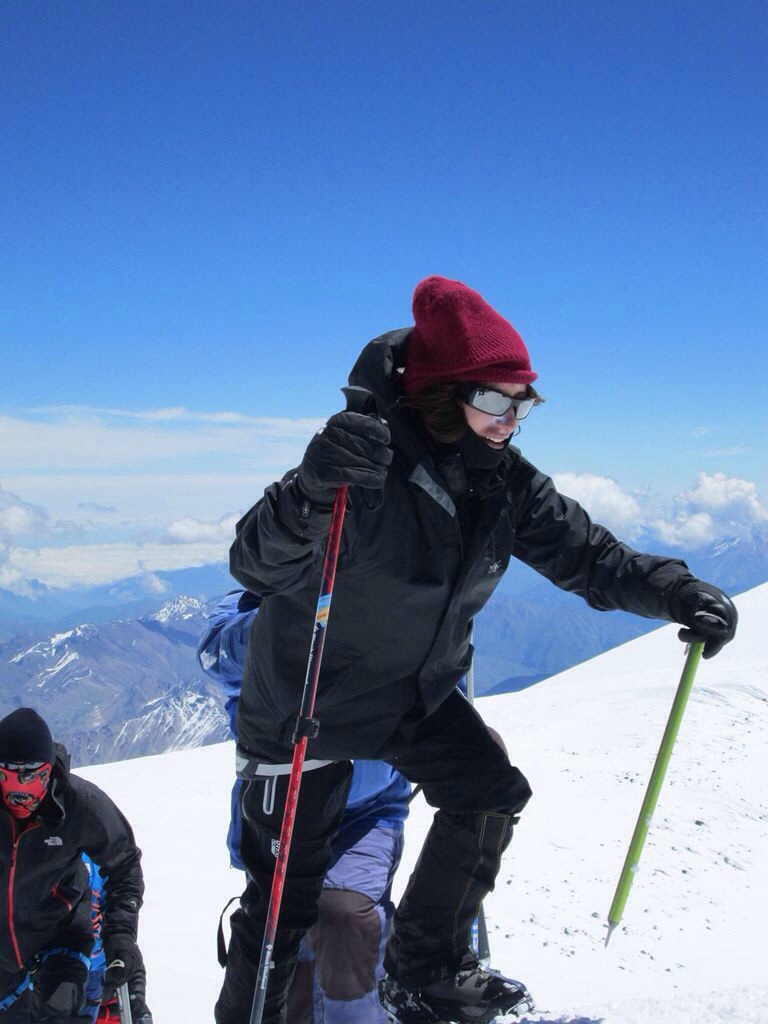
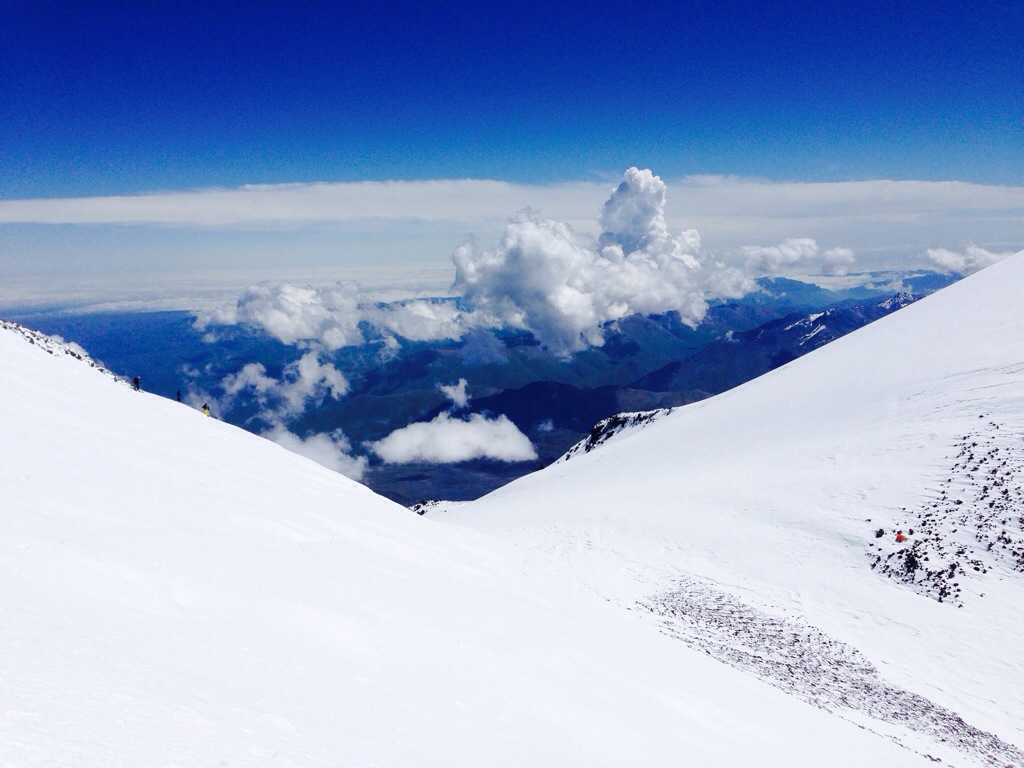
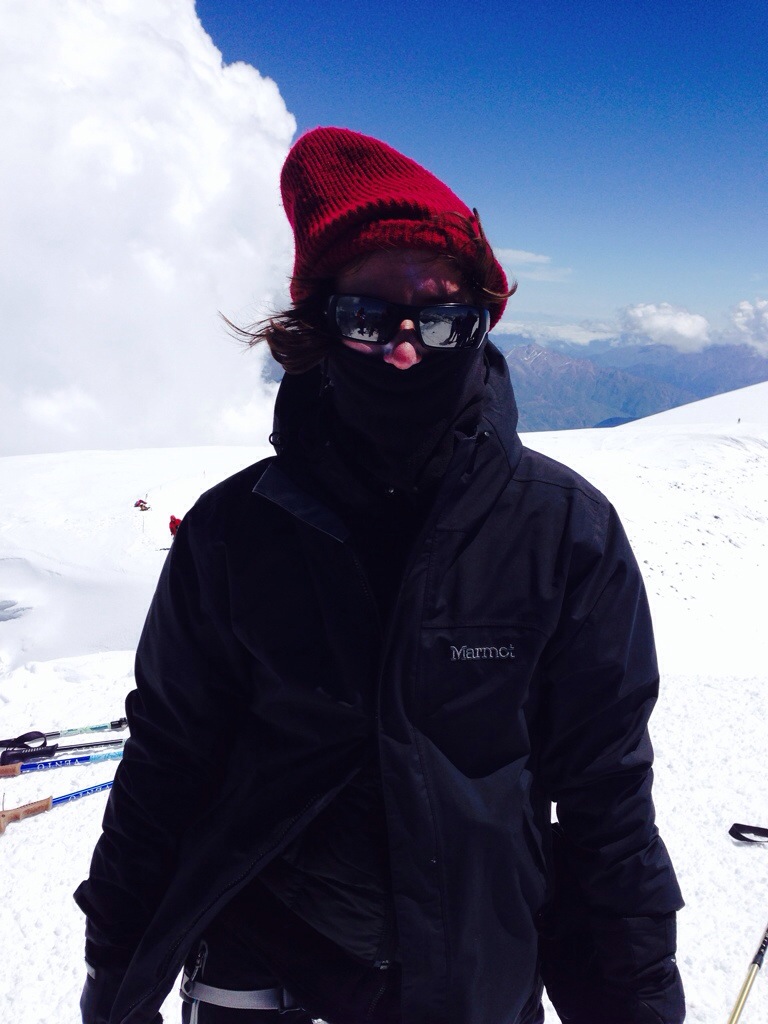
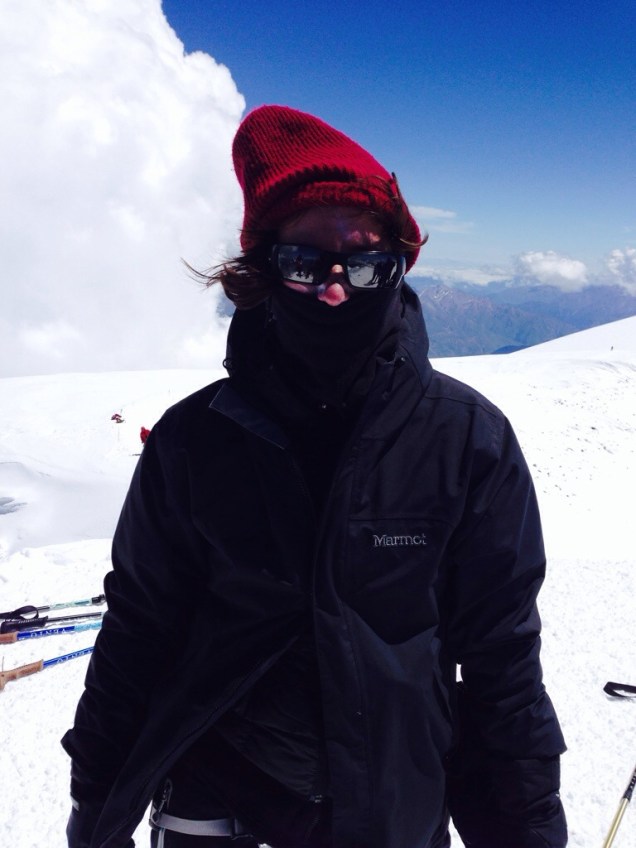
We reached the summit at 12:30 pm, 18,510 feet, about 8 1/2 hours after we started. It was cold and windy and blue, a few puffy clouds below. All beneath us was laid out the tremendous jigsaw puzzle of the Caucasus, each ridge and valley fitted into each other, seamed together with white ice and snow. The feeling at the top is pure euphoria – the culmination not just of that day’s work, but the months of training leading up to it, and the sheer bliss of being only in that moment, at that time, in that space.

I’m inserting the one summit photo I currently have access to. Once my teammate gets his photos up, I’ll post them. My phone, which had earlier died, reawakened itself just enough for one summit snap.
20140706-070947-25787156.jpg

But the cardinal rule of climbing mountains is that everything that goes up must come down, and so we did. After retracing our way along the ridge, we got back to the head wall. To my utter amazement, Alec handed me the end of the rope and clipped me in. I somehow just assumed more rope would appear ahead of me – but no, I was indeed to be the first person to pick our way down the very steep section. Despite the altitude, I mustered enough brain cells and energy to pick out the correct footsteps to follow and gradually wend our way down. I really enjoyed doing his – it was like solving a maze and. gave me something to think about besides being tired and burned and cold.

It took us 5 1/2 hours to get down – 1 1/2 hours beyond what it should have. It’s a long slog down, the hardest part of which was trudging through the by now very slushy snow cat tracks. Moreover, starting at the Rocks, snowmobile drivers are waiting, tempting you with the promise of a ride, albeit expensive, back to the barrels. But not being ones to give in to temptation we struggled on down. I hadn’t hydrated enough and had to keep stopping to drink, which slowed our progress. Also, by then it was becoming apparent that my lack of appropriate lip protection had resulted in something resembling third degree burns, which didn’t help matters either. I’m convinced that if I had a do-over I could get it right!

Around 6 we were back at the barrel, and never has a barrel looked more welcoming. Our third climber had gone ahead of us, so it was just my husband, Alec and myself, and it was great to rejoin our team. After a 7 pm dinner we collapsed into bed – although I must admit I awakened in the night feeling that my mouth was on fire.

But it turns out summits aren’t the end – they are just the beginning of other adventures. Our trip wasn’t over, and with an extra day in the valley there were still some things waiting that amaze, and bewilder. Next up – horses, trout fishing, and a tour of the airport runways.

Looking Down the Barrel

Our multiple methods of transportation continued as our team moved camp from a nice hotel with electricity, toilets and running water to a compound consisting of six oil barrels converted to lodgings, several similarly converted cargo containers, and exactly three outhouses, one of which didn’t have a door. But it was more than made up for by the view from the outhouses (and the entire area) of mountain peaks and green valleys.

The Outhouse:

20140702-190422-68662370.jpg

The View From the Outhouse

20140702-210236-75756395.jpg

To get to the Barrels, we loaded our luggage, ourselves and food and water into a taxi to the starting point of a gondola that took us over the valley and up to the first level of ski runs. Then we unloaded and reloaded and did exactly the same thing for yet another gondola ride higher up. And finally, for a grand finale, we loaded one piece of luggage onto each chair of a single person chair lift – whose only safety feature was a metal bar that loosely swung in front of the rider as he or she soared hundreds of feet over the snow covered ground. The bar actually created more danger because it gave an illusion of slight security, encouraging the rider to lean forward to see the sights below.

Our team was assigned Barrel #3, altitude 3900 meters (12,795 ft.). My husband and I had the first two “beds,” which were cots on each side of the barrel with a bedspread and pillow. There was a half wall (no door) dividing this area from the remainder, in which there were four more cots, two on each side, where our teammates and guide slept. Cozy quarters, to say the least. Prior residents had stuck all sorts of things on the walls, ranging from guiding company stickers to car ads (a high-end Mercedes). Each day, at some unexpected moment, electricity would suddenly be turned on for a couple of hours.

Home sweet home: in the top picture our backs are to the entry way to the barrel. We are facing the other cots.

20140702-211115-76275202.jpg

20140702-211113-76273883.jpg

Breakfast, lunch and dinner were all served in a converted cargo container a few feet from our barrel, although it was still treacherous to navigate the icy snow and broken concrete slabs between the barrel and container. Breakfast – oatmeal (and lots of it), unspecified sausage, cheese, bread, fruit, yoghurt. Lunch – soup, sausage, cheese, bread, and the ubiquitous cucumber and tomato salad. Dinner – more soup, entree of different stews and potatoes or pasta, and salad. Our cook’s name was Olga. At each meal, including breakfast, there was a bowl of chocolates.

The first day in the barrels we hiked with our Russian guide Alec – who seemed to know everyone on the mountain – up to the Diesel Hut for acclimatization. It’s a complex of three or four “buildings” and one stone hut that campers can rent. It was built on the site of the old Priut 11 hut that burned in 1998. Renters or not, everyone is allowed to go in. It took us 2 hours to reach that spot the first day. We had cut that down to 45 minutes by day 3. Tells you something about the body making more red blood cells at altitude.

The second day we hiked one level further, up to the Pastukhov Rocks, at about 4700 meters (15,420 ft.). By now we were feeling much more adept with our crampons, plastic boots, and poles. The two members of our team who were going to ski down Elbrus, in the meantime, were practicing skiing and “skinning” up the mountain.

20140702-214614-78374895.jpg

All was going smoothly until the dread zipper problem reared its ugly head again. To understand this paragraph fully, you must read the earlier entry, Gear Check #2 or How to Break Your Equipment Before You Start. Just as we were about to leave for the Pastukhov Rocks, the side zipper pull on my oh so expensive hard shell, full side zippered pants separated itself from the zipper yet again. Our resourceful guide safety pinned the offending area together, but it wasn’t enough to survive a crash and burn slip and fall on the snow. There’s a wonderful photo of me (that shall not be posted here) having a Janet Jackson wardrobe malfunction moment on the mountain. Fortunately I was wearing long underwear. Later that night our guide was able to fix the zipper – which required the use of pliers from his ski repair kit – but I was under strict instructions not to touch those side zippers again.

Day 3 in the barrels was supposed to be a rest day with some skills training. We spent an hour or so in the morning just below the Diesel Hut working on self arrest, footwork, what it’s like to be roped, and how to use an ice axe. Finally getting to use all the gear, the acquisition of which had consumed so much time, money and soul (at least in the part of my husband). I found I actually remembered some of the lessons from our unsuccessful Mt. Hood attempt. We spent a leisurely rest of the day trying to sleep, reading, etc. By now the barrel was starting to feel like home.

Although theoretically the two days for the summit attempts were days 4 and 5, everything in the mountains is about change. Because the weather looked good for Monday night into Tuesday morning, our guide made the decision we should attempt the summit a day early, and have an extra day in the Valley.

Monday night we had a huge 5 pm dinner of chicken and pasta. Although I was pretty well acclimatized by then I had lost my appetite and had to force myself to eat. We had spent much of the day packing our packs for summit day, no easy feat, and were supposed to be ready for a 1:15 am wake up call to have breakfast and get on yet another mode of transportation – a snowcat – that would take us to the Pastukhov at 3 am. By 7 pm we were all in bed, headlamps turned off, trying to sleep.

Life in the Baksan Valley

After planes, trains and automobiles – or rather, van, Aeroflot jet, van – and 12 hours of traveling we made it to the small village of Cheget. The three hour drive from Mineralye Vody to Cheget was fascinating: transitioning from pastures and fields to the rugged Caucasus Mountains. As we neared the mountains, the villages became much more middle eastern in appearance – wide gates fronting compounds of small houses. The van driver spent a lot of time dodging the many cattle who preferred standing in the road to the fields.

In sharp contrast to these villages, which appeared not to have changed in any significant way for hundreds of year, we drove through a very small town that catapulted us forward to the Soviet era. Despite the vast surrounding land, its main street was lined with five story communal apartment buildings in varying states of poor repair. Lots of empty factory buildings with the profile of the mountains in the background. Common green areas apparently designed to reduce the wild landscape into safe homogenized parks to fit the needs of generic human beings. The attempt to force uniformity onto this wild landscape wholly unsuccessful. I managed to upload a photo below – but it was taken out of the van window and doesn’t quite capture it.

20140627-161245-58365477.jpg

We then came to some sort of border, which we drove straight through, but one car had been detained and the driver was being questioned. Just on the other side of the border was a tank.

We are staying at the very nice Hotel Povorot. It’s at the edge of Cheget, and about 10 minutes from Terskol. Both are small villages that cater to skiers, climbers and hikers. It’s not ski season right now, and I suspect the villages are more lively then.

Our team consists of five climbers: one lawyer, two professors, and two investment bankers. We have one US guide and a Russian guide, an older gentleman who is said to have climbed Elbrus 200 times. As I suspected, I am the only woman. Fortunately everyone in our group has a good sense of humor!

On day one we climbed Mt. Cheget, about 11,000 feet, as our first acclimatization hike. There was a fair degree of scrambling and it was steep in places. There’s a fast group and a slow group and my husband and I are squarely in the middle of the slow group (except for downhill where I should be in a middle group). Scenery is spectacular – craggy, snow capped mountains, waterfalls. At one point we heard a roar and it wasn’t a tornado as we Floridians would assume – it was an avalanche on a mountain across the valley. It looked like a train of snow plummeting down the side of the mountain.

20140627-163253-59573245.jpg

Today was another acclimatization hike up to the observatory, about 10,000 feet. Instead of snow and glacier, this trail took us by fields of wildflowers – pinks, purples, blues, yellows and a white flower made of multiple small petals like lace, whose buds look like broccoli. I tried to post more photos but the ones above are all the wifi here can apparently handle, so they will have to wait.

Tomorrow we leave for the barrel huts at 12000 feet up Mt. Elbrus to prepare for our summit attempt. Probably no more posts until we are back down some time early next week.

Now I must go and pack/repack yet again. I feel I have been packing and repacking for weeks, but I guess that’s the essence of steps to stairs to summits!

MCO to Moscow

20140624-100758-36478936.jpg

Perhaps not an iconic photo of Moscow, but that was the view from our hotel room at 3:30 a.m. this morning when my eyes popped wide open. We are staying at the Hotel Gamma Delta in the Izmailov area, just a few metro stops from downtown Moscow. The hotel is part of a tourist complex built for the 1980 Olympics and there are presently just as few Americans here as I suspect there were back then.

The trip to Moscow went smoothly, although accompanied by the usual hiccups – such as the last minute search for ski baskets for my trekking poles (none to be found in Orlando in June) only for the original six we had purchased months ago to be located under the pile of gear in the guest bedroom. And I shouldn’t omit the re-packing of all our carry-on luggage at the airport when we became concerned our backpacks exceeded the maximum 22 inches in length.

Our first day started with a long traffic jam as we left the airport, during which our non-English speaking taxi driver seemed to take particular delight in playing games of chicken with much larger vehicles. Our route took us past innumerable high rise apartment buildings. Some rehabbed; many not. They stood in stark contrast to the incredible green surrounding the airport. We spent the afternoon recovering from jet lag and exploring the Izmailov area, which includes a reconstruction of a wooden Russian church and brightly painted castle and surroundings, now used for the History of Vodka Museum and weddings. There’s very little English here, and I’ve been looking up how to say “please” and “thank you,” not to mention trying to gain some understanding of the Cyrillic alphabet.

image

After dinner at a traditional Russian restaurant last night with our guide and one of our climbing companions (who has climbed Denali and Acongagua, among others), we spent the day touring Moscow. The Armoury Museum at the Kremlin – itself surrounded by 15th century walls, is incredible. The opulence of the dress, crowns, carriages, and jewels rivals Versailles. No wonder there was a revolution. Particularly interesting was seeing the two presidential helicopters land only a couple of blocks from us in the Kremlin, then take off again, and shortly after we saw the presidential car with its two security vehicles exit the Kremlin.

We ended the day with dinner at a very ultra modern Italian restaurant that embodies the new Moscow. Now it’s back to re-packing everything for a long travel day to the Baksan Valley in the Caucasus Mountains where our mountaineering will really begin.

And who knew? The name “Red Square” has nothing to do with the
Soviet Union. The word red means beautiful.

At Red Square
At Red Square