Road Trip U.S.A. – Tasting the Waters From the Mississippi Delta to Hot Springs

Unfortunately, this blog has only taken us thus far to Clarksdale, Mississippi, and there is much more of the country to cover before J and I leave again in a couple of weeks for Europe.

After we woke up in the Mississippi Delta in our gentrified sharecropper’s cabin, we met a ZZ Top looking guy who must have been a home health person because he’d come to check on our neighbors, who seemed to be permanent residents (that is, unless they were traveling with a cat). He immediately asked what we’d heard the night before but recognized that Tuesday wasn’t the best night for music in Clarksdale. His wife was from Wyoming so he provided some travel hints for the upcoming weeks. He clearly resided in Clarksdale just for the music, and we vowed to come back over a weekend or during a festival.

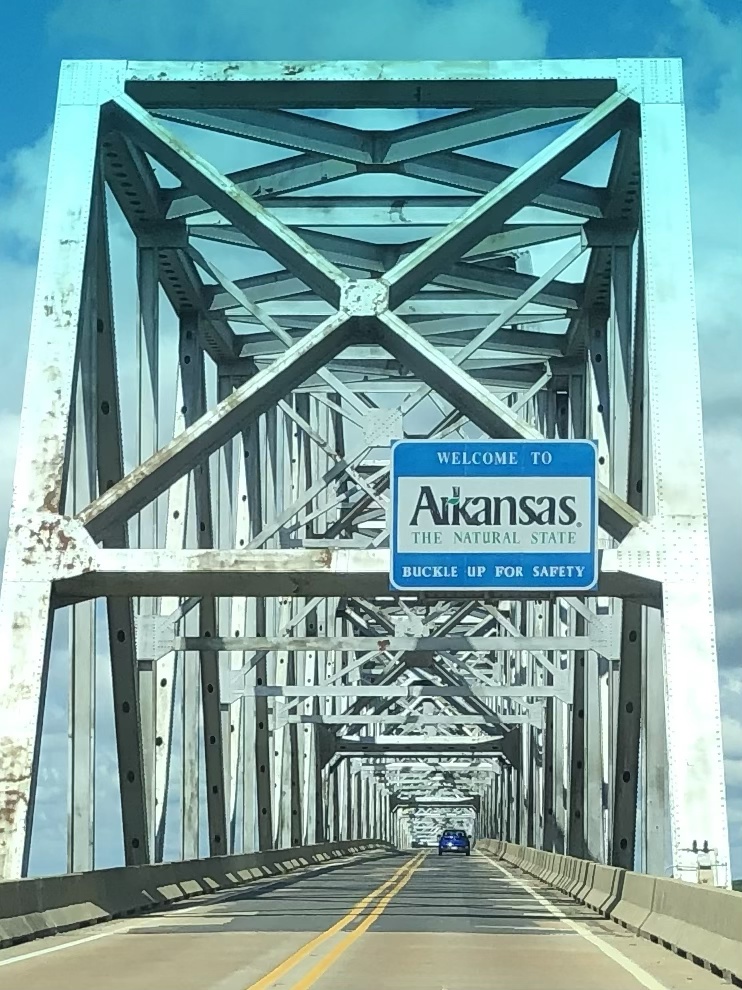
After repacking the Explorer in a more logical fashion, we drove miles upon miles of Mississippi Delta fields of cotton and soy…and finally crossed the Mississippi River itself, which divides Arkansas and Mississippi. The bridge was two lanes, no shoulder, and very high – just like the ones that terrified me as a child when we crossed the Tombigbee or Black Warrior Rivers when going to visit my grandparents. Once across, the roads improved and it seemed – almost imperceptibly – a little less flat.

More and more agriculture but no sight of the opulent plantation towns we’d been traveling through in Mississippi. Our “grey” road finally merged onto I-40 outside of Little Rock. It was awful, and our rapidly learned lesson was to avoid interstates whenever possible on a cross country trip. There was nothing but huge truck traffic, an unfortunate contrast to the rural roads we’d been traveling.

Ultimately we exited I-40 and I-30 (even worse than 40), onto U.S. 70 and into Hot Springs, also the site of Hot Springs National Park (which must be one of a kind). What a place. Verdant green and rolling hills. Apparently my grandfather came here in the 1940s to “take the waters.”

In the 1830s, well before the national park system, the federal government took control of four sections of land as a “national reservation” due to the alleged healing properties of the hot water bubbling up from the ground below (and I can personally vouch for the fact that it is hot). The park itself is shaped like a doughnut, with the town in the center. One side of the Main Street (Central Avenue) is part of the national park, and is lined with seven or more of the original “bath houses” that are still in operation of various kinds. One is still used for spa treatments and bathing, another is a visitor center/museum, another is a brewery, and some are still waiting to see what the future brings.

At one point, the poorer folks were so upset they couldn’t afford the “spas” that they started their own “ral” (short for “neuralgia”) camps to bathe in the 135 degree waters up on the hills above the spas. Ultimately federal troops arrived to stop them from “corrupting” the waters, but in some type of concession, erected some free bath houses.
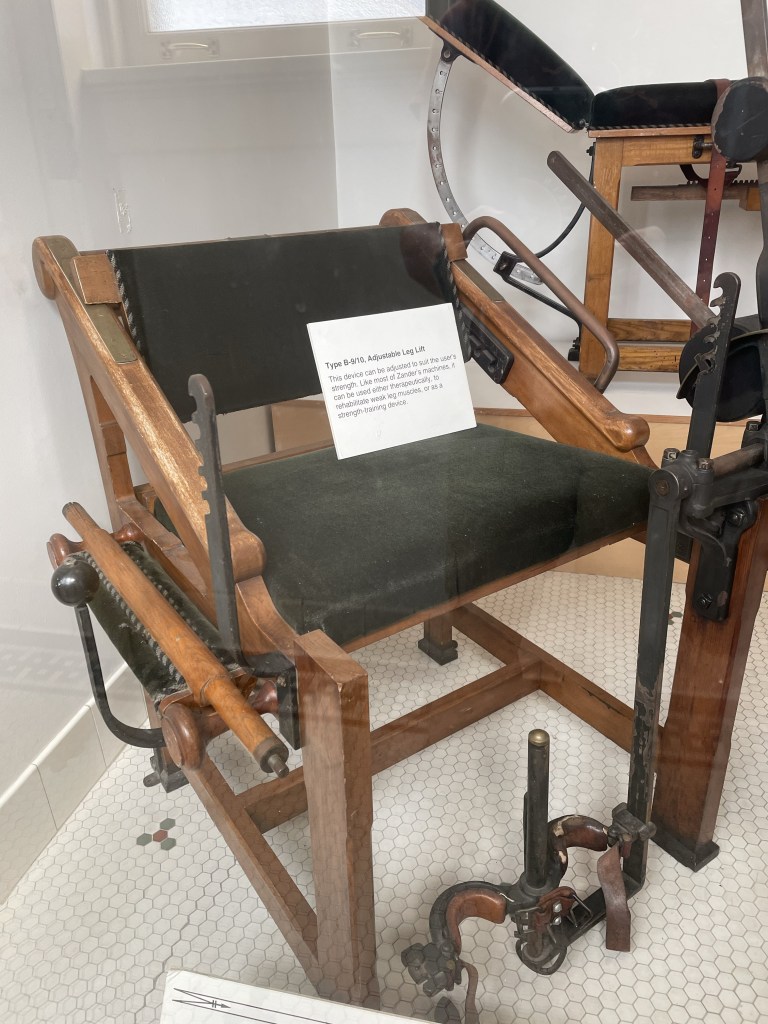
What struck me was how before their time some of these “treatments” were – mechanized machines (tension and resistance) that are only a step removed from the machines we use at the Y today.

After a thorough inspection of the museum, which truly was fascinating, we walked along the Grand Promenade on the hill behind the bath houses, which is of a much more recent vintage, up the Peak Trail to the Mountain Tower. I steeled myself and J and I climbed the 21 flights up the metal staircase to the observation deck. I didn’t look down once. We did take the elevator down.

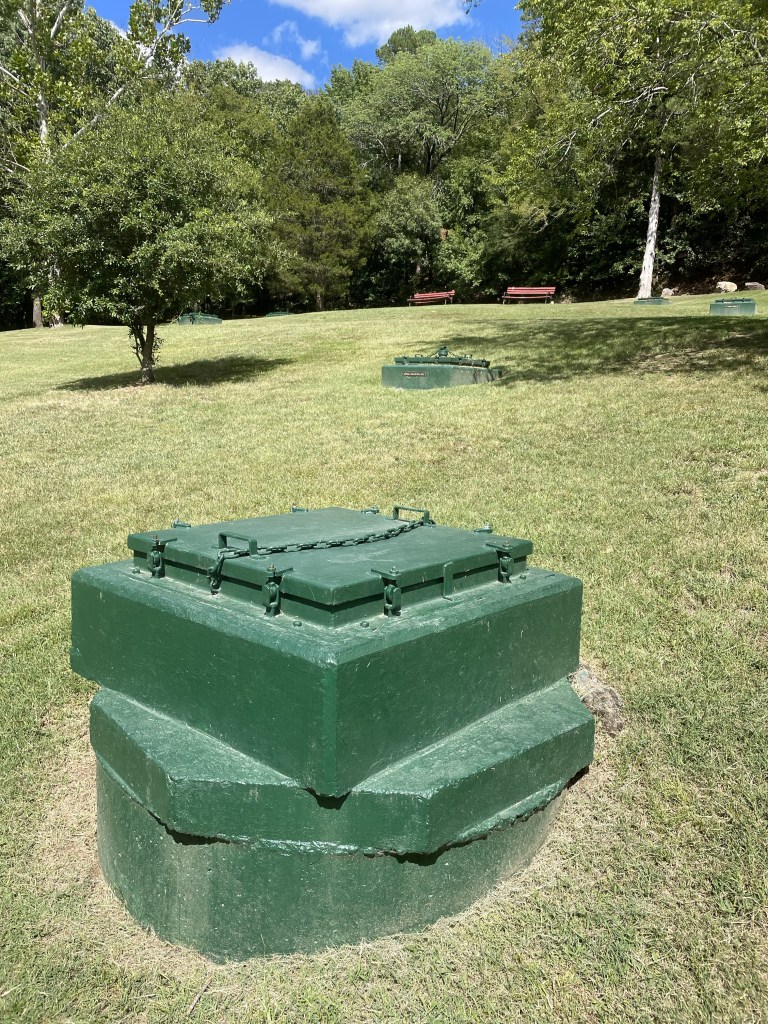
The entire area is checkered with green metal boxes that serve as collection sites for the water. Which, by the way, we tried at the visitor’s center and it tasted like plain H2O.
After a quick descent down the trail, we decided to take advantage of the Superior Bath House Brewing Company, which uses the thermal water to make the beer. I’m pretty sure it is now also are the home of my visor, which was never to be seen again after our visit.

After a beer, we located our AirBnb, not an opulent section of town, but quite nice. Back on the main Street, we stumbled upon the Brick Grill, a very reasonably priced and pleasant restaurant – many here were quite expensive.

Coming up – out of the flatlands and into the “steep and crooked” Ozarks.

Road Trip USA – Deep South Reveries

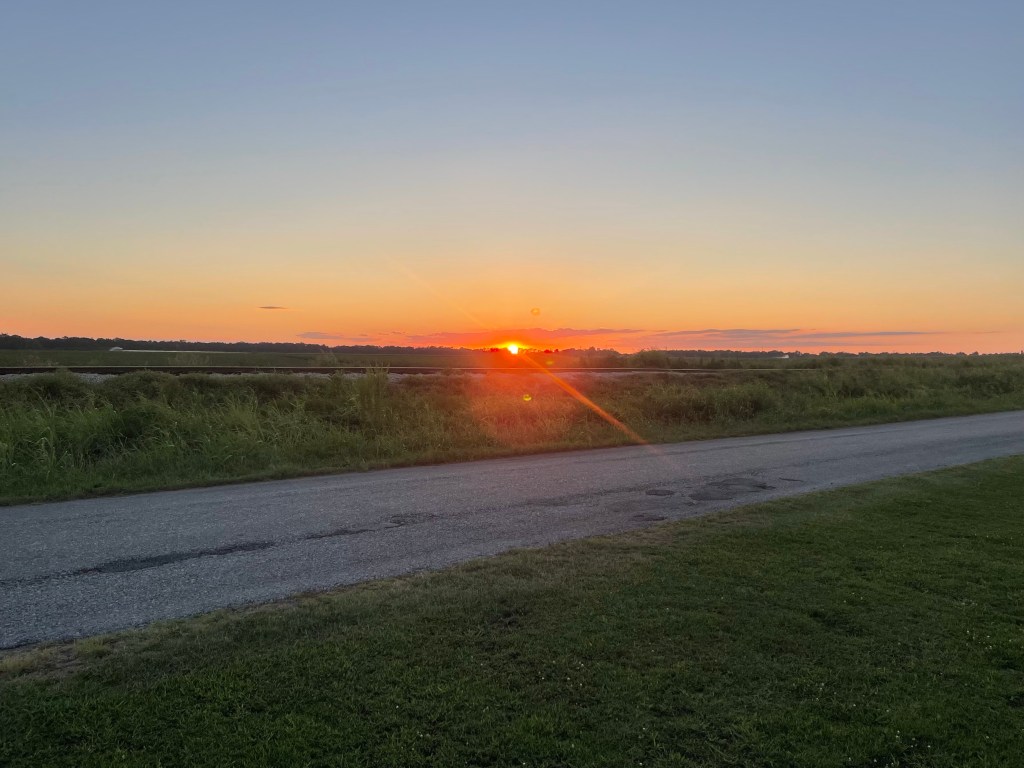
Clarksdale, Mississippi. I was watching the sun set over flat delta cotton fields. Pink blossomed into deep peach while rich grape paintbrushed the sky.

After two weeks at home in Orlando after our England and Spain adventure, we took off again on Sunday, August 13, this time by way of our 2016 Ford Explorer with a rooftop tent, as opposed to the airline that shall not be named. Both J and I lay awake the night before thinking about what we’d forgotten to pack for a four week road trip, what we should be taking instead, etc etc.

We finally got off about 9:15, driving along the turnpike to I-75 into Georgia. The turnpike was as excruciatingly boring as always. Ultimately, we exited I-75 and made our way to US 82, which goes all the way to Tuscaloosa.

After the monotony of the interstate, 82 took us through many small Georgia towns, which made the drive much more interesting. Lots of peanut (I think) fields, a large and elaborately patterned black and gold snake that we narrowly avoided running over, the red brick Andrew Junior College in Cuthbert, Georgia, pecan tree groves, so uniform and graceful.

At some point we realized one of the eight bolts attaching the rooftop tent crossbars to the roof of the Explorer was missing. We stopped at the parking lot of – I kid you not – a BBQ place called “Hog ‘n Bonz” (apparently meant to reference Haagen Dazs?) to replace it. My three pound weight that I’d thrown in at the last minute, with some vague idea I could sit in the passenger seat and do arm exercises (not) served as a surprisingly good mallet to push everything back into place. Regular bolt checking quickly became part of our daily protocol.

We crossed the state line into Eufaula, Alabama – beautiful antebellum homes with a dying downtown. Eventually reached the outskirts of Montgomery – many boarded up and overgrown motels, clearly victims of Covid.

Around Montgomery we encountered a drenching Florida style rainstorm. Surmounting other problems – such as the demise of the weatherstripping around the Explorer’s front windshield (purely cosmetic, or so they say), we finally pulled into the driveway of my uncle R’s house, which, by the way, was designed by a student of Frank Lloyd Wright. That explains all the wood, curved walls, and long lines.

The next day R gave us a detailed walking tour of the huge U of A campus, including the stadium with statues of the winningest coaches, fraternity houses with more columns than you could count, the president’s mansion, and the new school of engineering which is as big as many a college campus.

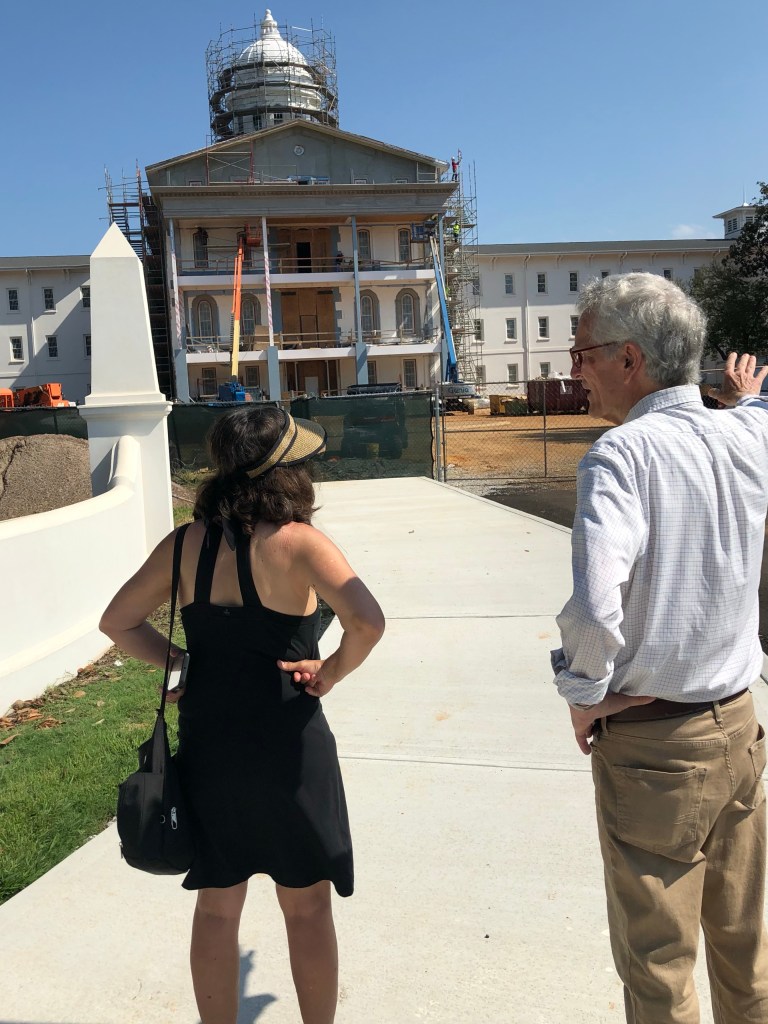
Most interesting – Bryce Hospital – which was originally a hospital dedicated to the moral treatment of the insane, a revolutionary theory for the mid 19th century. My uncle, an art historian, has done much of the work of mapping the hospital and its environs. Straitjackets and similar restraints were banned, each patient had their own room, and there were beautiful park grounds – the theory being that if you treated patients with dignity and respect in a calming environment they could recover. As they improved, they were moved into increasingly social environments. A surprisingly enlightened approach in days long before drug treatments and the like. The building is now being transformed into a museum and performing arts center.

We also enjoyed a visit to the natural history museum which houses the Hodges meteorite that landed on Elizabeth Fowler Hodges in Oak Grove, Alabama in 1954. She’s the only human known to have survived such an onslaught.

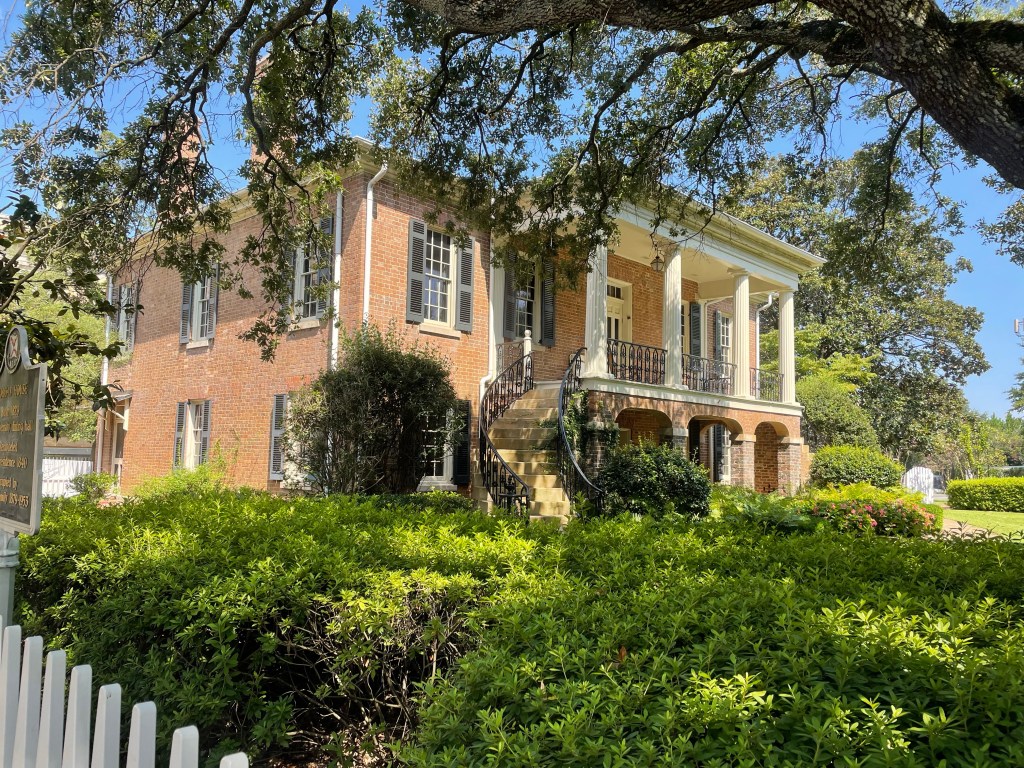
A surprise was the tour of the Gorgas House, lived in by the descendants of the 8th president of the university, until the 1970s or so. It was originally the dining hall for the university and is one of the few buildings to have survived the civil war. Accordingly to the posted chronicles, college students in the antebellum south were hardly paragons of good behavior, especially in the dining hall.

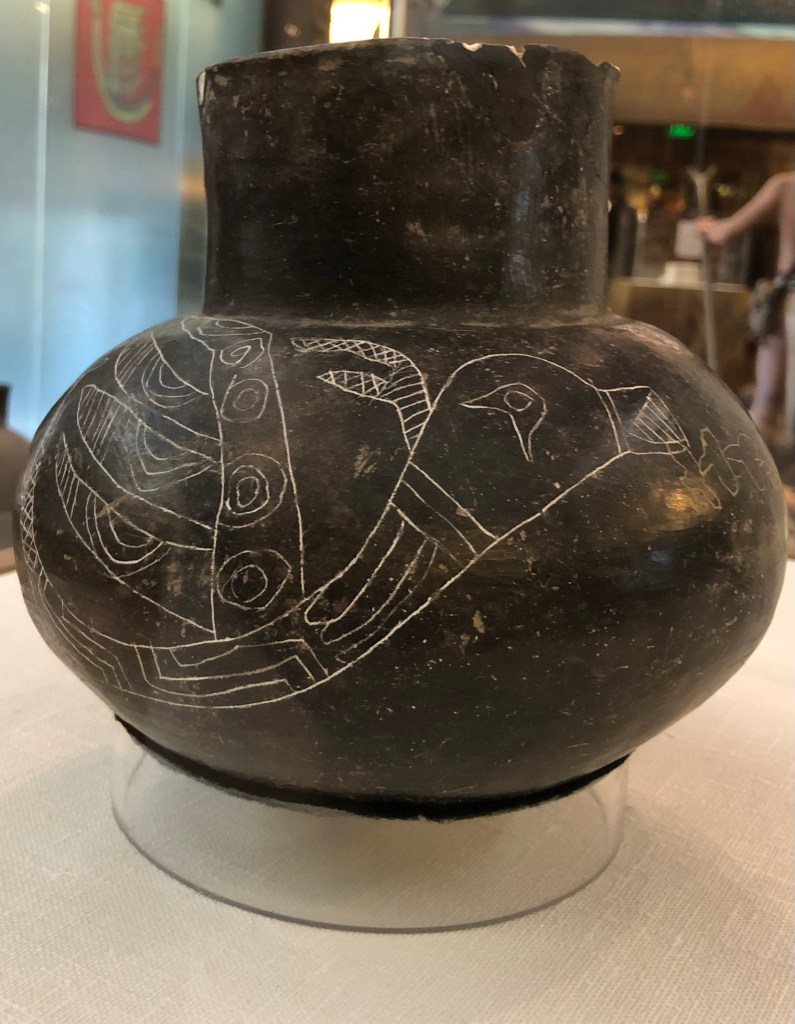
Next stop was Moundville – the site of a large city settled by indigenous people coming up from Central America hundreds of years ago. It ultimately became a political and burial site, and consists of large dirt mounds on which wooden structures rested. It was brutally hot, but we nonetheless climbed one of the mounds to see the view of what must have been a sprawling development. Their ceramics were masterful. Many depict a flying snake that my uncle thought might have reflected imagery of tornadoes common in the area.

As we drove back to Tuscaloosa, I was overwhelmed by the miles and miles of undeveloped, presumably privately owned land. That simply doesn’t exist in Florida.

The next day we headed for the Mississippi Delta, driving through thick Alabama forest, crisscrossing the Tombigbee River to Columbus, Mississippi. It’s chockfull of antebellum homes dating from the 1830s on, and is also the birthplace of Tennessee Williams.

The Southern Writers theme continued with a journey through the hill country to Oxford, Mississippi, where we stopped at William Faulkner’s home, Rowan Oaks. Although the town was crowded with newly arriving freshmen about to embark on their college careers at Ole Miss, we were the only visitors to Mr. Faulkner’s abode. The house was built in the 1830s and he bought it about a 100 years later. It’s very small, although Faulkner added a number of rooms, and has opulent grounds, including a riding stable. Apparently Faulkner’s wife commented on the nature of the light on the porch in August – the genesis of the title of the novel, Light in August. I think I’ll have to go back and re-read his tales of Yoknapatawpha County.

We finally reached the flat, soil rich delta and the Shackup Inn – our home for the night and a location that I discovered on the internet. It’s just outside of Clarksdale, and is a collection of old sharecroppers’ cabins that have been gentrified with electricity and bathrooms, but are totally quirky. Rusting farm equipment, old signs, and a large area for music festivals. We could have stayed in a cotton gin silo, but instead picked a cabin called “Shorty’s.” It’s one of the strangest places I’ve stayed since the barrels on Mt. Elbrus in 2014. ( https://fromswamptosummit.com/2014/07/02/looking-down-the-barrel/ )

We checked in and then drove down a pothole ridden road to Clarksdale itself. Clarksdale prides itself as the home of the blues, and hosts many festivals, but it was a little dead on a Tuesday night. The Delta Blues Museum is magnificent and moving. The entire place was a huge contrast to Columbus – here’s the home of the people on whose backs all that wealth was created. It was a left alone little town, enabling the blues to develop and flourish on their own terms. Photos weren’t allowed in the museum, otherwise I’d have posted a lot!

The temperature finally dropped about ten degrees. After a beautiful sunset, we were looking forward to a spectacular night sky.